
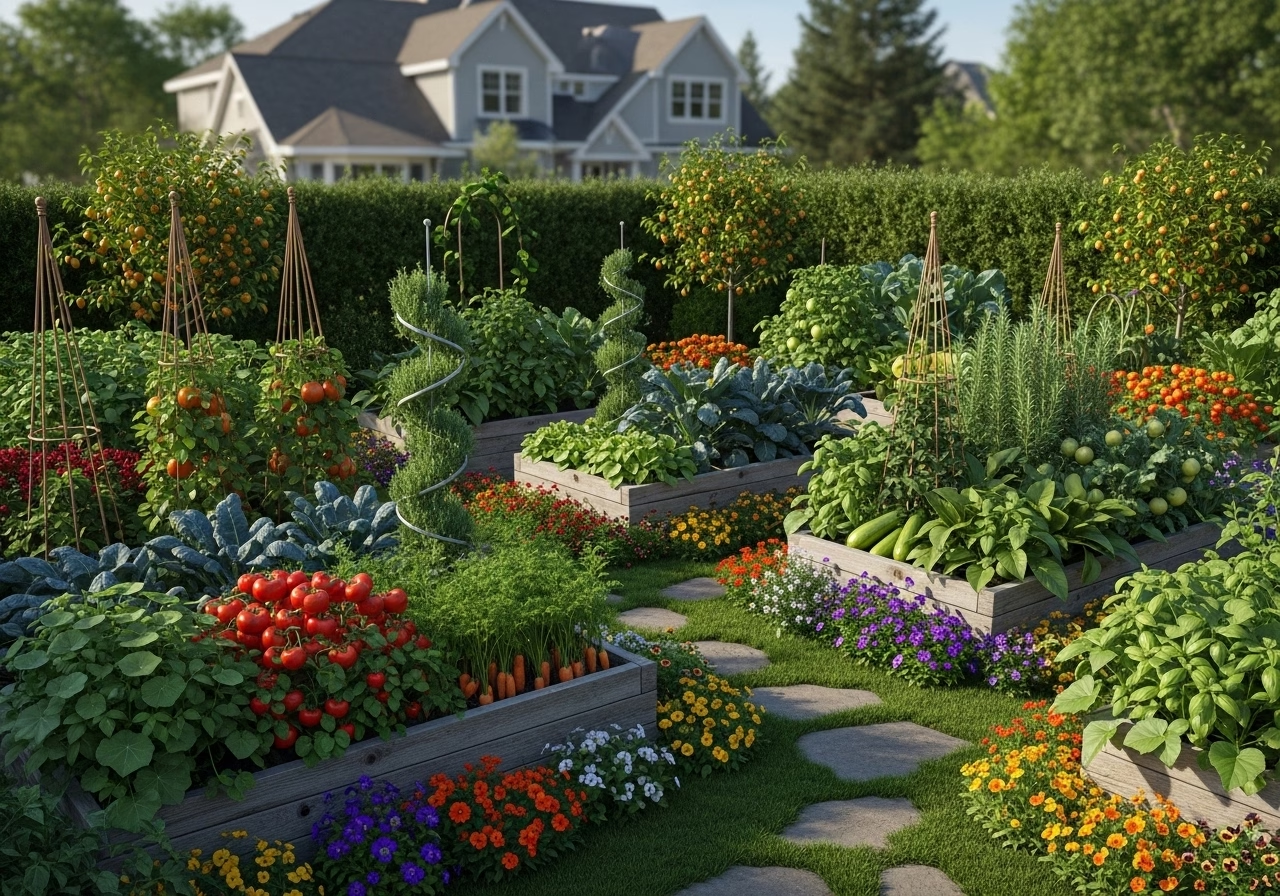
Tired of mowing, watering, and maintaining a lawn that gives nothing back? Today, however, many homeowners are replacing traditional grass with productive landscapes. As a result, edible landscaping ideas are becoming one of the biggest gardening trends in 2026. Not only that, but these gardens also improve sustainability and reduce maintenance.
Edible landscaping replaces traditional grass lawns with visually appealing plants that also produce food, such as herbs, vegetables, fruit trees, and edible flowers. By combining design principles with productive plants, you can create a low-maintenance, eco-friendly garden that saves water, supports pollinators, and provides fresh harvests year-round.
Key Information Table
| Factor | Recommendation |
|---|---|
| Sunlight | 6–8 hours of full sun for most edible plants |
| Watering | Moderate; drip irrigation recommended |
| Soil Type | Well-draining, nutrient-rich soil |
| Difficulty | Beginner to Intermediate |
Benefits Section
Switching to edible landscaping ideas offers more than beauty:
- First, it reduces water consumption compared to traditional lawns.
- In addition, it provides fresh organic food just steps from your door.
- Furthermore, it supports pollinators like bees and butterflies.
- As a result, your garden becomes more environmentally friendly.
- Finally, it can increase property value and visual appeal.
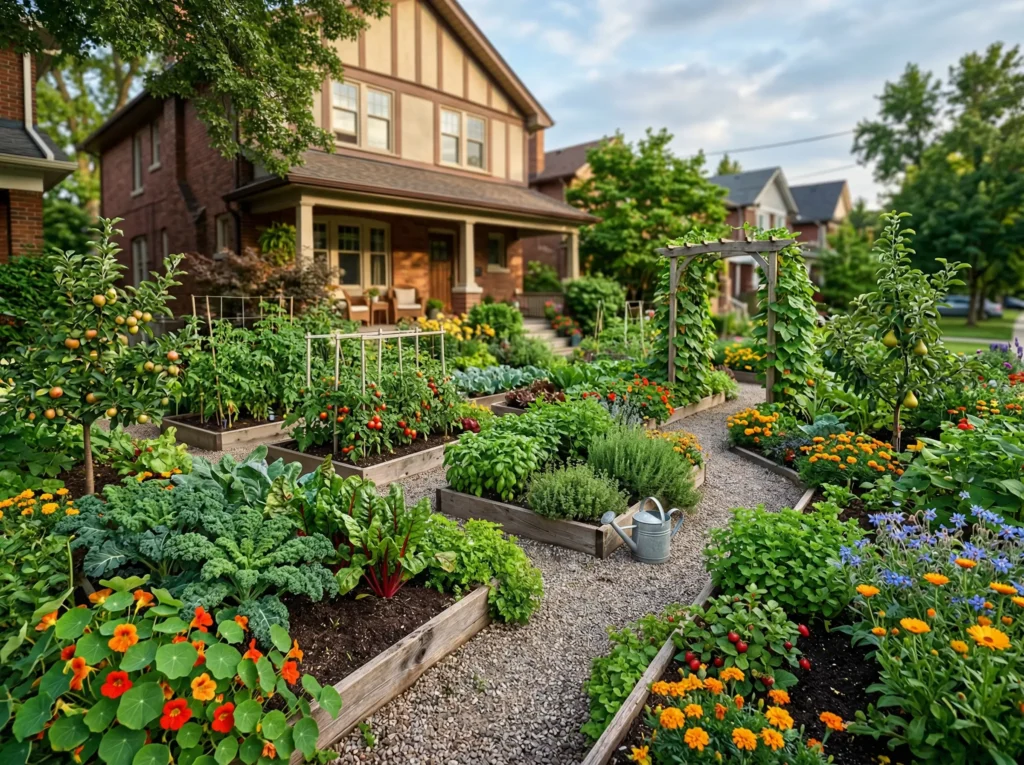
Step-by-Step Edible Landscaping Ideas for Beginners
Step 1: Plan Your Space Using Edible Landscaping Ideas
First, evaluate sunlight exposure and soil quality. Then, decide which areas receive the most sun.:
- Sun exposure throughout the day
- Drainage patterns after rain
- Existing soil quality
- Available space for pathways or beds
Take notes before removing any grass.
Step 2: Remove Existing Grass
Next, remove the existing grass using sheet mulching or sod cutting. This way, the soil remains healthy.:
- Sheet mulching (cardboard + compost)
- Sod cutter for quick removal
- Solarization using plastic sheeting
- Natural smothering with mulch layers
Sheet mulching is beginner-friendly and improves soil health.
Step 3: Improve Soil Quality
After that, enrich the soil with compost and organic matter. As a result, plants establish faster.
Add:
- Compost
- Organic matter
- Worm castings
- Natural fertilizer
Test soil pH (most edibles prefer 6.0–7.0).
Step 4: Choose Edible Plants That Look Beautiful
Meanwhile, choose plants that combine beauty and productivity. For example, herbs and colorful vegetables work very well.
Low-growing plants (lawn alternatives):
- Thyme
- Oregano
- Creeping rosemary
- Alpine strawberries
Colorful options:
- Rainbow chard
- Purple kale
- Red lettuce
- Nasturtiums
Structure and height:
- Blueberry bushes
- Dwarf fruit trees
- Trellised tomatoes
- Climbing beans
Design like a landscape, not a farm.
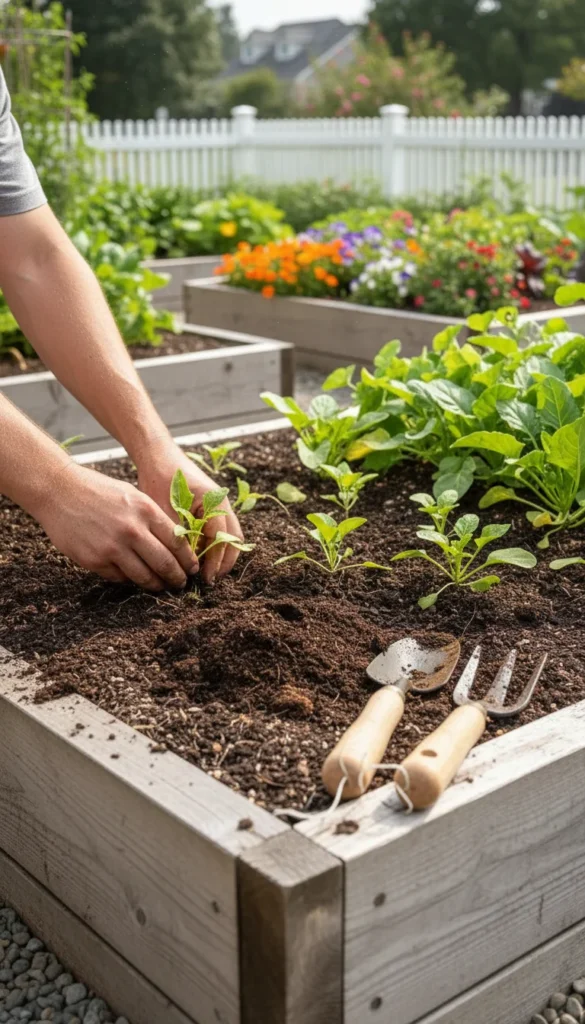
Step 5: Add Structure to Your Edible Landscaping Ideas Garden
In addition, add pathways to improve accessibility. Not only does this help visually, but it also makes harvesting easier:
- Gravel paths
- Stepping stones
- Wooden edging
- Brick borders
Organized layouts increase visual appeal.
Step 6: Install Irrigation for Low-Maintenance Edible Landscaping Ideas
Similarly, installing drip irrigation reduces water waste. Therefore, plants receive consistent moisture.
Best options:
- Soaker hoses
- Drip lines
- Smart irrigation timers
Water early morning for best absorption.
Step 7: Maintain and Harvest Regularly
Finally, maintain the garden by pruning and harvesting regularly. As a result, plants continue producing throughout the season.
- Pruning
- Harvesting
- Mulching
- Seasonal planting rotation
Frequent harvesting encourages more growth.
Expert Tips from Experienced Gardeners
In fact, mixing ornamental plants with edible crops creates a professional landscape design. Additionally, vertical gardening saves space in smaller yards. Most importantly, start small and expand gradually.
- Mix ornamentals with edibles for a professional look
- Plant perennial foods first (berries, herbs)
- Use vertical gardening to maximize small spaces
- Group plants with similar watering needs
- Start small and expand each season
- Include pollinator-friendly flowers
Common Edible Landscaping Ideas Mistakes to Avoid
However, many beginners plant without checking sunlight conditions. Consequently, plants may grow slowly. Another common mistake is overcrowding plants, which reduces airflow. Therefore, proper spacing is essential.
- Planting without checking sunlight exposure
- Overcrowding plants
- Ignoring soil preparation
- Choosing plants unsuited to your climate
- Forgetting irrigation planning
- Expecting instant results
Edible landscapes improve each season.
Growing Conditions
Most edible plants need full sun. Ideally, they should receive 6–8 hours of light daily. Likewise, soil should be well-draining and rich in nutrients. Otherwise, plant growth may be limited.
Sunlight
Most edible plants require 6–8 hours of direct sunlight daily.
Water
Consistent watering is important, especially during establishment.
Soil
Loose, rich soil with compost produces best yields.
Climate
Choose plants adapted to your USDA zone.
Seasonal Edible Landscaping Ideas for US Climate Zones
Cool Climates (Zones 3–5)
Focus on:
- Kale
- Spinach
- Peas
- Apples
Plant after last frost.
Moderate Climates (Zones 6–8)
Wide variety grows well:
- Tomatoes
- Herbs
- Lettuce
- Berries
Two growing seasons possible.
Warm Climates (Zones 9–11)
Choose heat-tolerant plants:
- Peppers
- Eggplant
- Sweet potatoes
- Citrus trees
Provide mulch to retain moisture.
Read more about:
The Best Plants That Keep Spiders Away Effortlessly
Growing Plants in Sand: Tips for Sandy Soil Success
FAQs About Edible Landscaping Ideas
1. Is edible landscaping expensive?
Initial setup can cost more, but long-term savings on groceries make it worthwhile.
2. Can beginners create an edible landscape?
Yes. Start small with herbs and leafy greens.
3. How long does it take to replace a lawn?
Most homeowners complete the transition in 1–2 weekends.
4. Does edible landscaping increase home value?
Beautiful, functional landscapes are attractive to buyers.
5. What are the easiest edible plants to start with?
Lettuce, basil, strawberries, and cherry tomatoes.
Conclusion
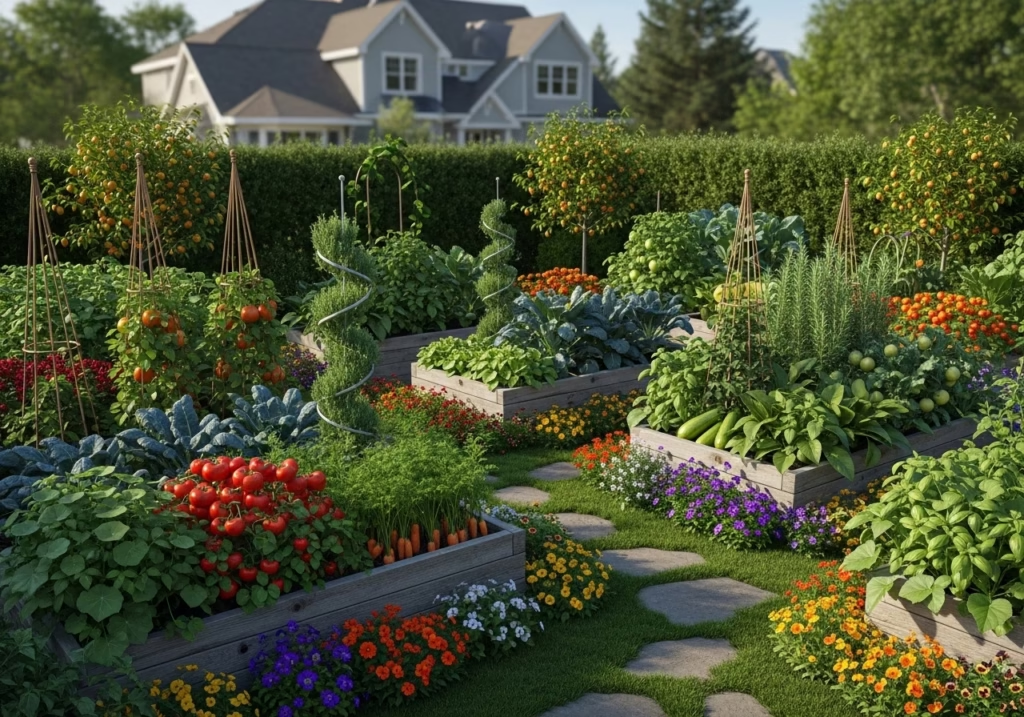
Replacing your lawn with an edible landscape is one of the smartest gardening decisions you can make in 2026. You’ll save water, grow your own food, and enjoy a yard that looks alive and purposeful. Start small, stay consistent, and watch your outdoor space transform into something both beautiful and delicious.