
Here’s the thing about front porch flower pots — they do a job that no other home upgrade can quite replicate. Before a guest even rings the doorbell, before a buyer even steps out of their car, your front porch is already making a statement. And honestly? Front porch flower pots are one of the fastest, most affordable ways to make that statement a great one.
I’ve seen a single pair of well-chosen planters completely transform the look of a home — taking it from “fine, I guess” to “wait, who lives there?” That kind of curb appeal magic doesn’t require a landscaper or a big budget. It requires the right pots, the right plants, and a little know-how. Fortunately, that’s exactly what this guide covers.
Table of Contents
What Are the Best Flowers for Front Porch Flower Pots?
This is the question everyone starts with, and the answer depends on one thing above all else: how much sun your porch gets. Get that right first, and the rest becomes easy.
| Light condition | Best flowers | Bonus plants to mix in |
|---|---|---|
| Full sun (6+ hrs) | Geraniums, petunias, marigolds, zinnias | Sweet potato vine, angelonia |
| Partial sun (3–6 hrs) | Impatiens, begonias, calibrachoa | Creeping Jenny, coleus |
| Full shade (<3 hrs) | Ferns, caladiums, torenia | Heuchera, wishbone flower |
| Mixed / variable | Pansies, snapdragons, violas | Dusty miller, lobelia |
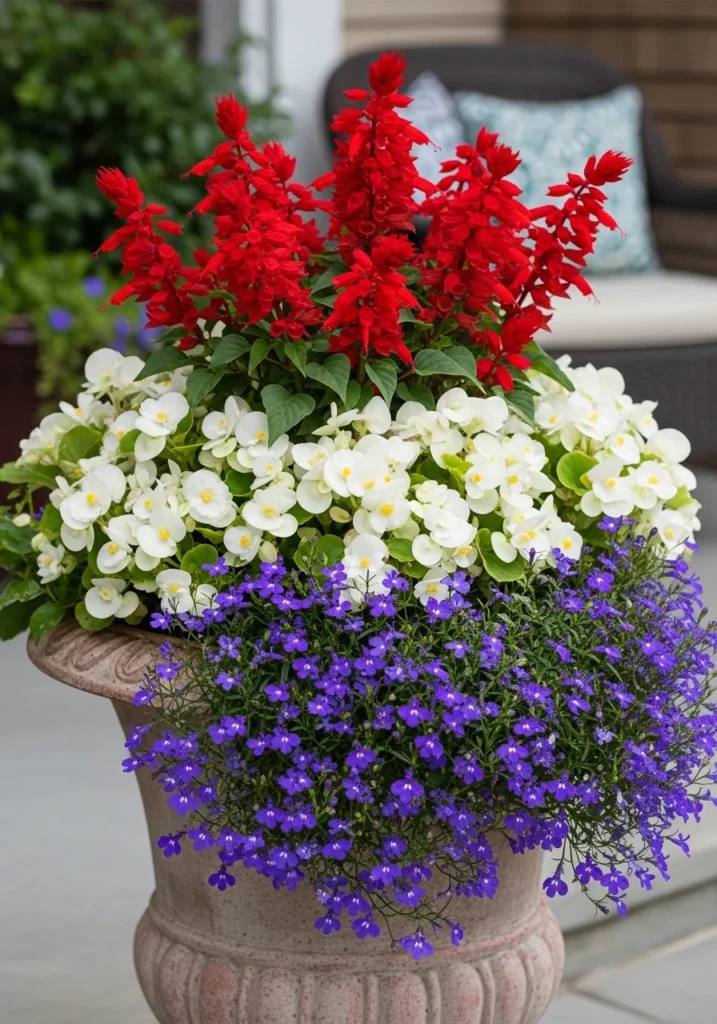
As a general rule, geraniums and petunias are the classic workhorses of the porch planter world — reliable, colorful, and surprisingly tough. For a more designer look, try combining a thriller (tall, dramatic center plant), a filler (bushy mid-height plant), and a spiller (trailing plant that drapes over the edge). That three-part formula creates the kind of lush, layered look you see on magazine covers.
“The thriller-filler-spiller formula is the single best trick for turning a basic porch pot into something that looks professionally designed.”
How Big Should Front Porch Planters Be?
Bigger than you think. Seriously — this is the mistake I see most often. People buy adorable little pots, put them on a wide porch, and they look lost. Here’s a quick sizing guide based on porch width:
- Narrow entry (under 5 ft): One medium pot (12–16 inches) centered or offset beside the door
- Standard porch (5–8 ft): Two large pots (16–20 inches), one on each side of the door
- Wide porch (8+ ft): Two oversized pots (20–24 inches) plus a smaller accent grouping on steps or railings
Additionally, larger pots have a practical advantage: they hold more soil, which means more moisture retention and less frequent watering. A 20-inch pot gives roots room to breathe and cuts your watering schedule almost in half compared to a 10-inch pot. That’s not a small detail — that’s the difference between thriving plants and struggling ones.
What Kind of Pots Work Best on a Front Porch?
Material matters more than most people realize — both aesthetically and practically. Here’s how the main options stack up:
| Material | Look | Weight | Weather resistance | Best for |
|---|---|---|---|---|
| Terracotta | Classic, warm | Heavy | Moderate (cracks in hard freeze) | Mediterranean, cottage, farmhouse styles |
| Fiberglass | Versatile, realistic | Light | Excellent | Any style; best for large pots |
| Glazed ceramic | Colorful, bold | Heavy | Good (avoid freeze/thaw cycles) | Modern, eclectic, colorful porches |
| Concrete / cast stone | Formal, architectural | Very heavy | Excellent | Traditional, colonial, craftsman homes |
| Resin / plastic | Functional | Very light | Good | Budget builds, windy porches |
| Wood / cedar | Natural, rustic | Medium | Good (with sealant) | Farmhouse, coastal, cottage styles |
One thing to never skip: drainage holes. Every front porch flower pot, regardless of material, needs at least one drainage hole at the bottom. Without it, roots sit in standing water, rot sets in, and even the toughest plants give up. If you fall in love with a pot that has no drainage, simply drill one — most materials allow it.
Best Front Porch Planter Ideas by Home Style
Matching your pots to your home’s architecture is one of those details that elevates a porch from “nice” to “intentional.” Here are some combinations that genuinely work:
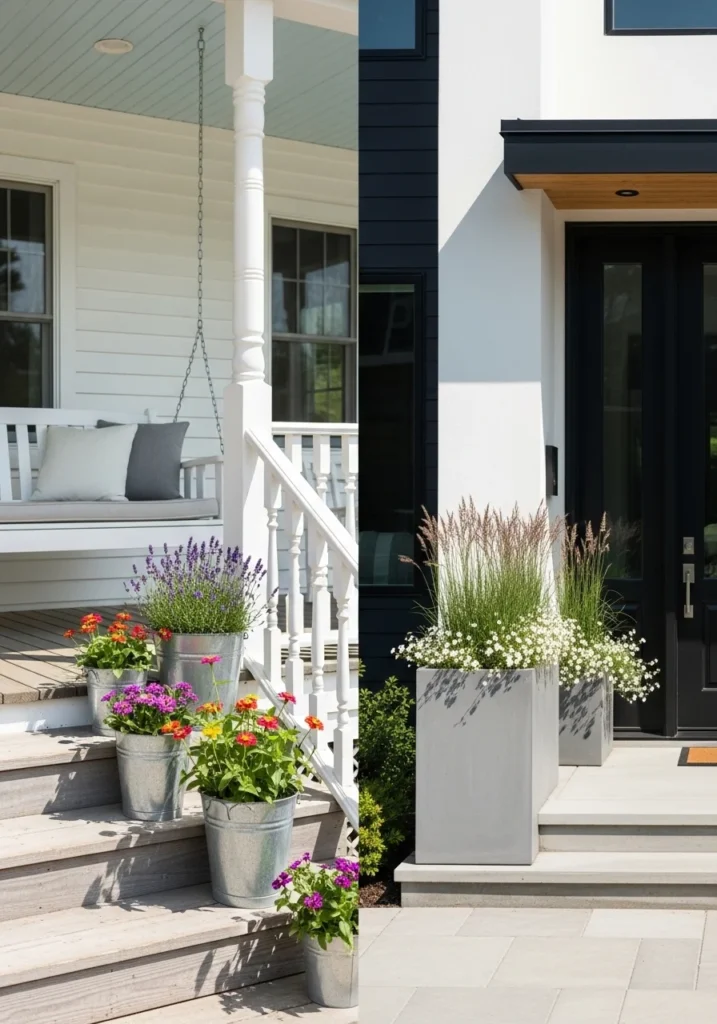
- Farmhouse or cottage: Galvanized metal buckets, whitewashed wood boxes, or aged terracotta — planted with lavender, zinnias, or sunflowers
- Modern or contemporary: Sleek rectangular concrete or matte black fiberglass pots — planted with ornamental grasses, agave, or simple white petunias
- Traditional or colonial: Symmetrical cast stone urns or large glazed pots in navy or hunter green — planted with boxwood spheres flanking dramatic seasonal color
- Craftsman or bungalow: Earthy glazed pots in terra cotta, olive, or rust tones — planted with hostas, ferns, and trailing sweet potato vine
- Coastal or beach: Whitewashed wood, blue ceramic, or rope-wrapped pots — planted with ornamental grasses, blue salvia, or white geraniums
How to Arrange Multiple Flower Pots on a Front Porch
Arrangement is where a lot of people freeze up — and I get it. More pots means more decisions. However, there are a few simple rules that make groupings look intentional rather than chaotic:
- Use odd numbers. Groups of three or five are more visually interesting than pairs. If you use pairs, make them symmetrical flanking the door.
- Vary the heights. Mix tall planters, medium pots, and low bowls to create layers. Put the tallest at the back or sides.
- Repeat one element. Use the same pot color, same plant, or same texture across multiple pots to tie the grouping together.
- Use steps strategically. Stagger smaller flower pots for front steps, placing them at alternating sides going up — it draws the eye toward the door.
- Leave breathing room. Don’t crowd pots so tightly that the plants can’t spread. A little negative space makes everything look more intentional.
Seasonal Front Porch Planter Ideas: Year-Round Curb Appeal
One of the best things about front porch container gardening is that it’s endlessly refreshable. Unlike in-ground planting, you can swap out your pots with the seasons and keep things looking fresh all year.
| Season | Best plants | Color palette |
|---|---|---|
| Spring | Pansies, tulips, hyacinths, snapdragons | Soft pastels — blush, lavender, lemon |
| Summer | Petunias, geraniums, zinnias, marigolds | Bold and saturated — coral, red, orange |
| Fall | Mums, ornamental kale, pansies, asters | Warm earth tones — burnt orange, burgundy, gold |
| Winter | Evergreen branches, holly, ornamental cabbage | Classic — deep green, red, silver |
For year-round appeal without constant replanting, try anchoring your pots with a hardy evergreen shrub — dwarf boxwood, dwarf spruce, or ornamental grasses all work beautifully — and simply swap out the surrounding annuals with each season. Same pot, same anchor, fresh look every few months. It’s the porch planter equivalent of a capsule wardrobe.
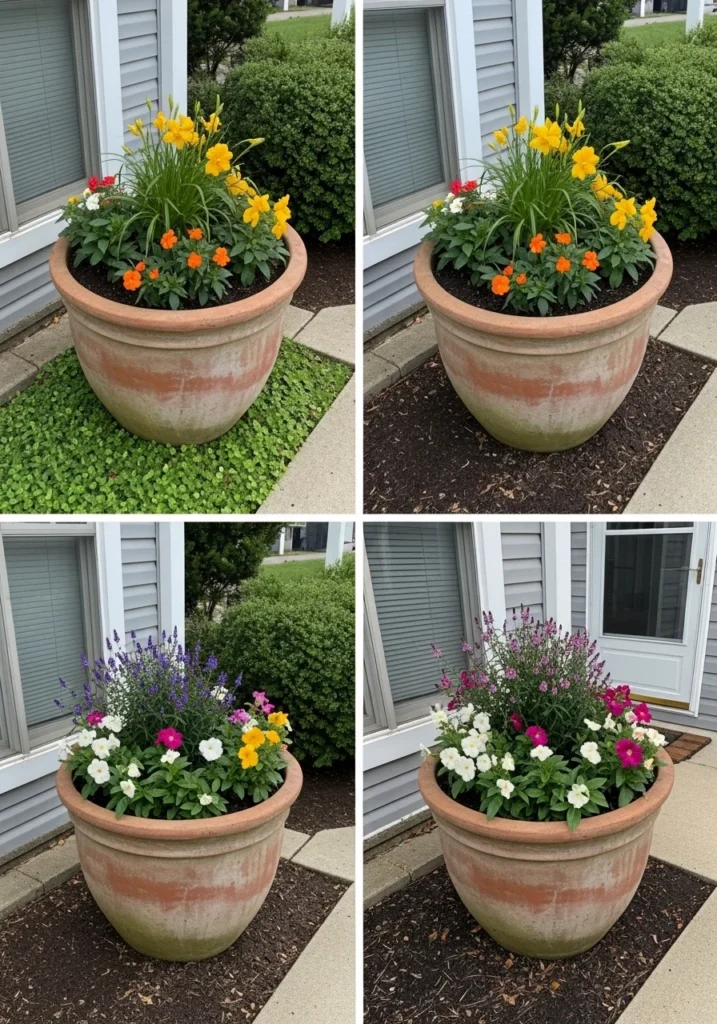
Low-Maintenance Plants for Porch Pots
Not everyone has time to water every day — and that’s completely fine. These plants are forgiving, tough, and still genuinely beautiful:
- Portulaca (moss rose): Thrives in heat and drought, blooms all summer
- Lantana: Heat-tolerant, attracts butterflies, needs almost no attention
- Ornamental grasses: Wind-resistant, architectural, looks great even when dry
- Succulents: Perfect for hot, dry porches — water once a week maximum
- Caladiums: Shade lovers that look exotic with almost zero maintenance
- Sedum: Drought-tolerant ground cover that fills pots beautifully
How to Make Cheap Porch Pots Look Stylish
Budget doesn’t have to mean boring. In fact, some of the most charming porch pot displays I’ve ever seen were built almost entirely from thrift store finds and dollar store plants. Here’s how to pull it off:
- Spray paint plain plastic pots in matte stone, terracotta, or black — instantly looks high-end
- Group mismatched pots in a unified color family — all whites, all earthy tones, or all black
- Use grocery store mums or petunias — they’re cheap, lush, and dramatic when you squeeze three or four into one oversized pot
- Add height for free — stack a small pot on an overturned pot or a brick to create visual levels without buying a tall planter
- Lean into the DIY porch planter trend — a painted cinder block or a woven basket with a liner can look completely intentional with the right plants
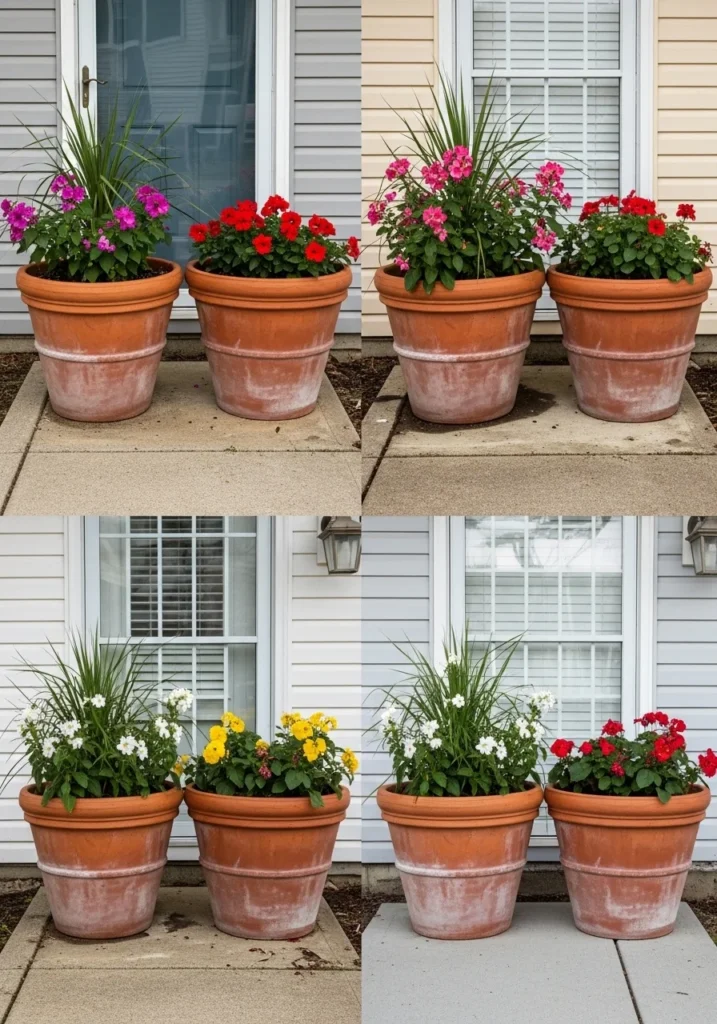
How to Keep Porch Pots Looking Good All Season
Even the most beautifully planted porch pot needs a little ongoing love. Fortunately, the routine is simple:
- Water consistently. Most porch pots in full sun need watering every 1–2 days in summer heat. Stick a finger an inch into the soil — if it’s dry, water deeply until it runs from the drainage hole.
- Deadhead spent blooms. Removing faded flowers redirects the plant’s energy into producing new ones. Five minutes of pinching twice a week keeps plants blooming for months.
- Fertilize regularly. Container plants exhaust their nutrients fast. A slow-release granular fertilizer at planting plus a liquid feed every two weeks keeps colors vibrant all season.
- Secure against wind. For tall or top-heavy pots, place a few heavy stones in the bottom before adding soil to lower the center of gravity. Alternatively, tuck the pot into a decorative plant stand with feet that anchor it.
- Refresh mid-season if needed. If a plant goes leggy or stops blooming, cut it back hard — most annuals bounce back within two weeks looking fuller than before.
Frequently Asked Questions
Can I use front porch flower pots year-round?
Absolutely — in fact, that’s the goal. The key is choosing pots made from freeze-resistant materials (fiberglass, concrete, or resin) if you live in a cold climate, and swapping plants with each season. Terracotta can crack in hard freezes, so either bring those pots inside over winter or choose freeze-proof alternatives for year-round outdoor use.
How do I stop porch pots from tipping over in wind?
Add weight to the bottom of the pot before planting — gravel, broken terracotta pieces, or even a few large rocks. Heavy pots like concrete or ceramic naturally resist wind. For lightweight resin pots on exposed porches, use adhesive pot feet or a pot anchor stake pushed into the soil. Grouping pots together also reduces individual wind exposure.
What soil is best for front porch flower pots?
The bottom line? Front porch flower pots are one of the highest-return investments you can make in your home’s exterior — in terms of both visual impact and pure personal enjoyment. Whether you’re working with a grand colonial entry or a tiny apartment stoop, the right pots and plants can make your front door feel like the most welcoming spot on the block. And ultimately, isn’t that exactly what a home should feel like?
Ready to upgrade your front porch planters?
Share your porch pot setup in the comments — we’d love to see what you’re growing this season!