

White leaves that haunt, green leaves that thrill — here’s everything you need to grow this showstopper.
There’s something almost magical about a plant whose new leaves emerge ghostly white — as if the jungle itself decided to go monochrome for a season. If you’ve been scrolling rare plant accounts and keep seeing this ethereal beauty, welcome to the Florida Ghost Philodendron obsession. You’re in the right place.
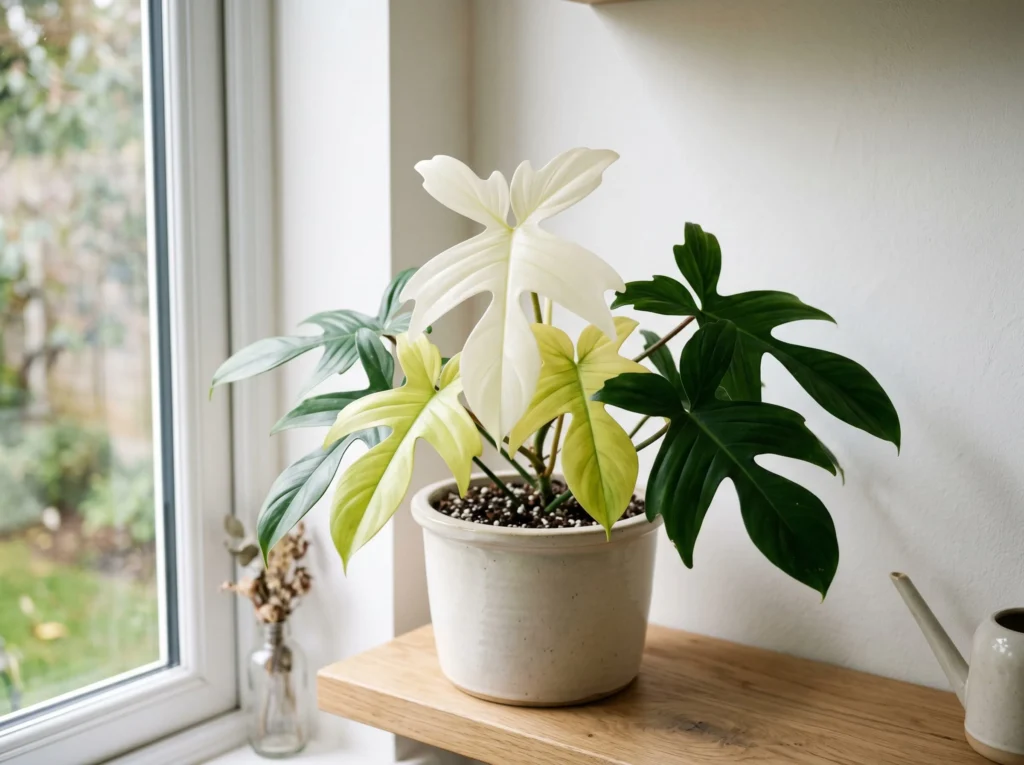
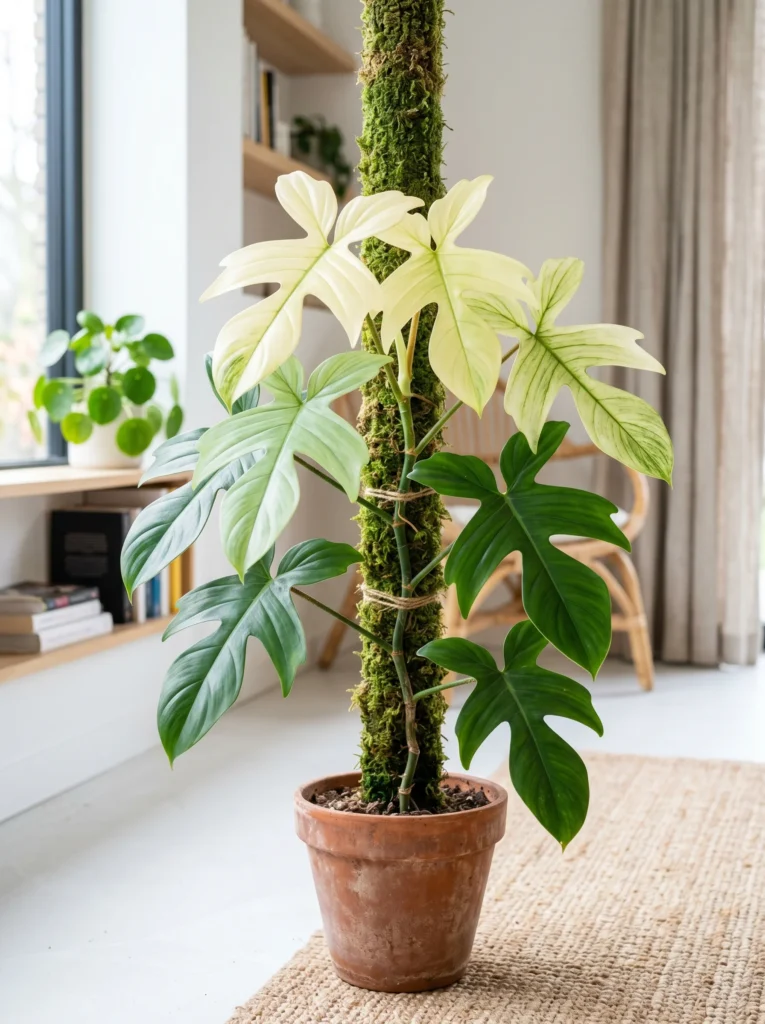
I’ll be honest: the first time I saw a Florida Ghost Philodendron in person, I did a double take. The leaves looked fake. Porcelain-white, deeply lobed, almost architectural. Then I noticed the older leaves — rich, glossy green — and realized this single plant was having a whole identity journey right in front of me. That’s exactly what makes it one of the most talked-about rare philodendrons in the U.S. plant community right now.
Whether you’ve already got one or you’re thinking about adding it to your collection, this guide covers everything — from why those ghostly leaves turn green, to light, water, soil, propagation, and beyond. Let’s get into it.
Table of Contents
What Is a Florida Ghost Philodendron, Exactly?
The Philodendron Florida Ghost is a climbing aroid hybrid — a cultivar believed to be a cross between Philodendron pedatum and Philodendron squamiferum. What sets it apart from almost every other plant you’ll ever own is its dramatically variable leaf color across its life cycle.
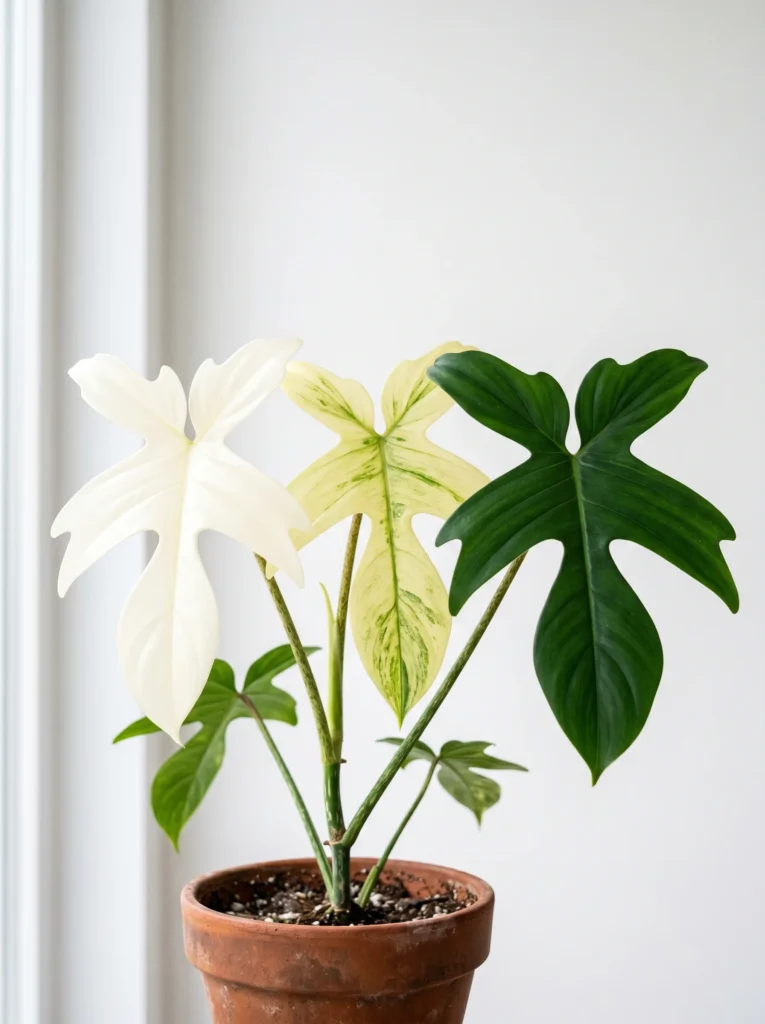
New leaves emerge pale cream to bright white. As they mature, they slowly transition through yellow and light green before settling into the deep, rich green of a fully adult leaf. The effect is like watching a slow-motion color reveal happen on your windowsill. Some collectors — understandably obsessed — prefer to keep the plant conditions optimized specifically to maximize that white phase.
It’s a climbing philodendron by nature, meaning it wants to grow upward. Give it a moss pole or trellis and it will reward you with larger, more deeply lobed leaves over time. Without support, it’ll still grow, just more horizontally and with smaller foliage.
Quick Care Reference — Florida Ghost Philodendron
| Light | Bright indirect light; avoid direct afternoon sun |
|---|---|
| Watering | Every 7–10 days; let top 1–2″ of soil dry out first |
| Humidity | 60–80% ideal; tolerates 50% indoors |
| Soil | Chunky, well-draining aroid mix |
| Temperature | 65–85°F (18–29°C); no frost |
| Fertilizer | Balanced liquid feed monthly in growing season |
| Support | Moss pole or coco coir pole strongly recommended |
| Toxicity | Toxic to cats, dogs, and humans if ingested |
7 Essential Florida Ghost Care Tips You Need to Know
Here’s the real talk version of Florida Ghost care — not the same generic advice copy-pasted across a hundred blogs, but the actual things that make a difference.
1- Bright Indirect Light Is Non-Negotiable
The Florida Ghost needs
bright, indirect light
— think 2–4 feet back from an east or north-facing window, or filtered light near a bright south/west window. More light = better white coloration on new leaves. Too little light and leaves go green faster (or the plant sulks and barely pushes new growth). Direct harsh afternoon sun will scorch those delicate white leaves quickly.
2- Water Thoughtfully, Not on a Schedule
Stick your finger 1–2 inches into the soil. Dry? Water thoroughly until it drains from the bottom. Still moist? Wait. Overwatering is the number one killer here. Because this plant likes chunky, porous soil, it dries out faster than a dense potting mix — but always check rather than assuming. Roughly every 7–10 days in summer, less in winter.
3- Build the Right Soil Mix
Don’t use regular potting soil straight from the bag. A great
Florida Ghost soil mix
is roughly: 40% perlite, 30% orchid bark, 20% standard potting soil, 10% coco coir. This gives the chunky aeration aroids love while retaining just enough moisture. Good drainage = healthy roots = gorgeous leaves.
4- Humidity Is Your Secret Weapon
Aim for
60–80% humidity.
In most U.S. homes (especially in winter with heating running), that means either a humidifier nearby, a pebble tray with water, or grouping plants together. Misting leaves is largely theatrical — it evaporates too fast. An actual humidifier is worth it for this plant.
5- Give It a Moss Pole and Watch It Transform
This is a
Florida Ghost climbing plant
at heart. When it has something to climb — a moss pole, coco coir pole, or even a wooden stake — the leaves get noticeably larger and more deeply lobed. That’s the plant doing what it was evolutionarily designed to do: reach for the forest canopy. Keep the moss pole moist to encourage aerial root attachment.
6- Fertilize Consistently but Gently
During spring and summer, feed monthly with a balanced liquid fertilizer (like a 20-20-20) diluted to half strength. Over-fertilizing can cause salt buildup and brown leaf tips. In fall and winter, back off completely. The plant is resting and doesn’t need the extra nutrients.
7- Repot When Roots Get Crowded
You’ll know it’s time to repot when roots start circling the bottom of the pot or poking through drainage holes. Go up only one pot size (1–2 inches in diameter) to avoid drowning the roots in excess soil. Spring is the best time for
Florida Ghost repotting
— it gives the plant the whole growing season to settle in.
Why Are the New Leaves White — And Why Do They Turn Green?
This is the question everyone asks first, and rightfully so — the white leaves are the whole point of this plant.
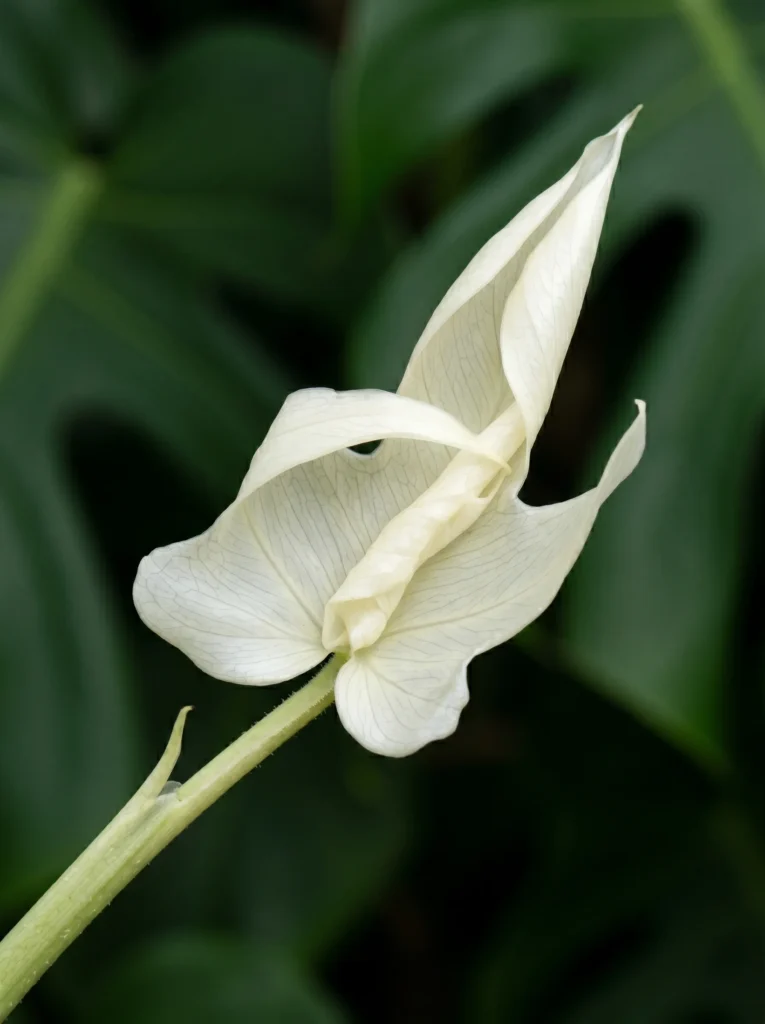
The ghostly pale color in new Florida Ghost leaves comes from the absence of chlorophyll. When a leaf first unfurls, it hasn’t yet developed the full chlorophyll content needed for photosynthesis. As the leaf matures and the plant ramps up its energy production, chlorophyll floods the leaf and it progressively turns green. It’s completely natural and doesn’t indicate anything is wrong.
Think of it like a Polaroid developing in slow motion. The white leaf is the undeveloped image — beautiful in its own right, but on its way to becoming something different.
Pro tip
Want to prolong that white phase? Higher light levels and slightly cooler temperatures can slow the greening process — giving you more time to enjoy those ethereal new leaves before they mature.
Why are my Florida Ghost leaves turning yellow or brown? Yellow leaves usually signal overwatering, poor drainage, or nutrient deficiency. Brown tips often mean low humidity, inconsistent watering, or fertilizer salt buildup. Brown edges alongside mushy stems? That’s root rot — act fast, trim the affected roots, and repot into fresh dry mix.
How to Propagate Florida Ghost Philodendron
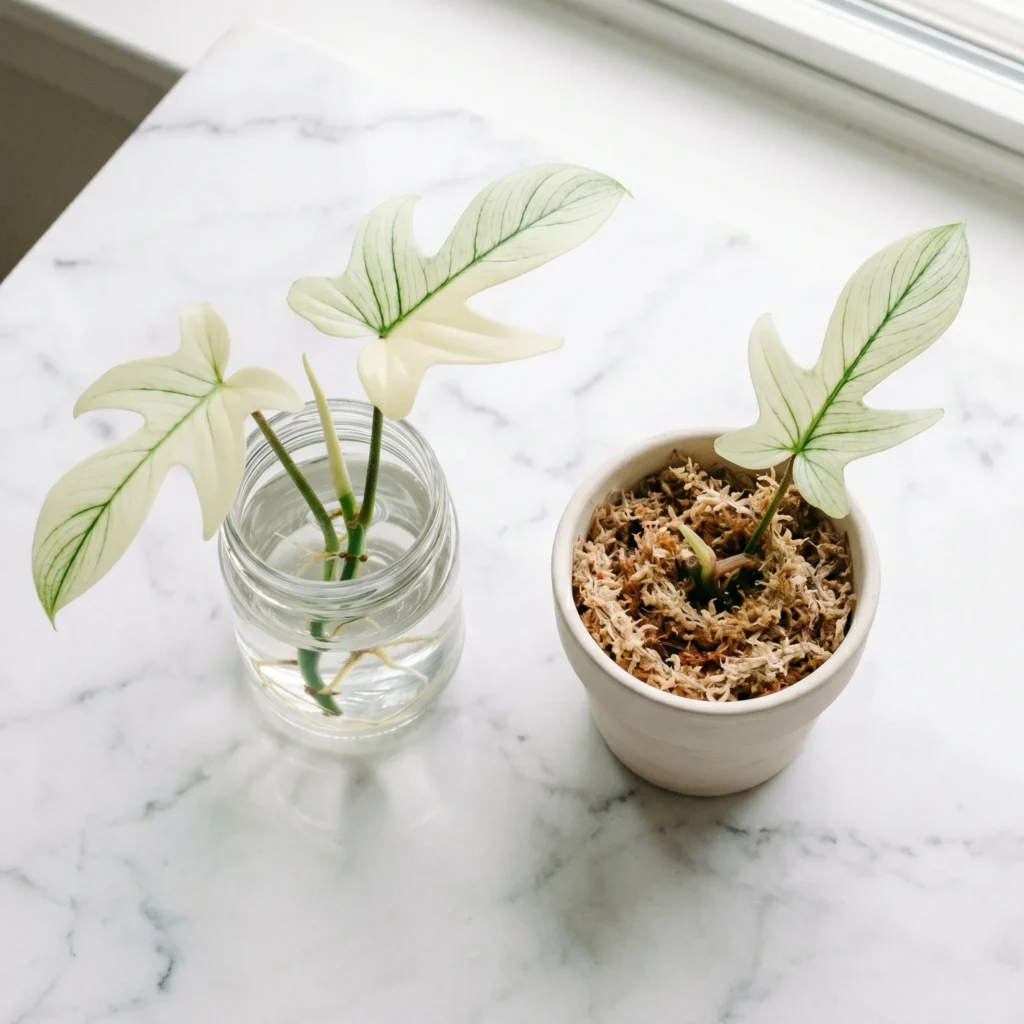
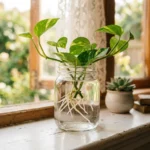
Good news: Florida Ghost propagation is genuinely doable for home growers. The most reliable method is stem cutting propagation in water or sphagnum moss.
- Take a cutting just below a node (the bump where a leaf meets the stem)
- Make sure your cutting has at least one node and ideally one leaf
- Let the cut end callous over for 30–60 minutes
- Place in a jar of water (node submerged, leaf above) or nestle into moist sphagnum moss
- Keep in bright indirect light and wait 3–6 weeks for roots to develop
- Once roots are 2+ inches long, pot up into your aroid soil mix
Patience is key here. The Florida Ghost isn’t the fastest rooter in the philodendron family, but once it takes hold, it grows steadily. Don’t rush the transition to soil — weak, stubby roots struggle to adapt.
Is the Florida Ghost Philodendron Actually Rare?
A few years ago, yes — absolutely. Florida Ghost rare plant listings were going for hundreds of dollars on Etsy and Ebay, with bidding wars for single cuttings. Today, the market has cooled somewhat as more growers have propagated their plants and supply has grown.
It’s still not something you’ll find at your local big-box garden center, but a well-stocked independent plant shop or an online aroid specialty seller will often have them. Expect to pay somewhere between $25–$100 depending on size and variegation quality. It’s no longer stratospherically rare, but it’s far from common.
Florida Ghost vs. Florida Beauty vs. Pedatum — What’s the Difference?
| Feature | Florida Ghost | Florida Beauty | Philodendron Pedatum |
|---|---|---|---|
| New Leaf Color | White/cream, turns green | Variegated green + cream/yellow patches | Pale green, quickly turns darker green |
| Mature Leaf | Solid deep green, deeply lobed | Green with irregular cream variegation | Solid green, deeply multi-lobed (oak-leaf shape) |
| Stem Texture | Smooth green stems | Smooth to lightly textured | Fuzzy red/orange petioles — very distinctive |
| Growth Habit | Climbing | Climbing | Climbing |
| Rarity / Price | Moderate | More common | Most common of the three |
The key visual tell? Florida Ghost vs Florida Beauty: the Ghost’s new leaves are uniformly white and fade to solid green. The Beauty has irregular, marbled variegation that persists on mature leaves. And Florida Ghost vs Pedatum: Pedatum has those signature fuzzy reddish petioles (leaf stalks) and doesn’t have the dramatic white-leaf phase.
Is Florida Ghost Philodendron Toxic to Pets?
Yes, unfortunately. Like all philodendrons, the Florida Ghost is toxic to cats, dogs, and humans if ingested. It contains calcium oxalate crystals, which cause mouth irritation, drooling, vomiting, and difficulty swallowing. Symptoms in pets are usually mild and short-lived, but a vet call is always the right move if ingestion is suspected.
Keep it on a high shelf, a plant stand your pets can’t reach, or in a room they don’t access. The plant doesn’t need to be a source of anxiety — just a bit of thoughtful placement.
Frequently Asked Questions
Is Florida Ghost Philodendron easy to care for?
Yes, relatively. It’s a forgiving plant for intermediate growers. The main things to get right are light (bright indirect), drainage (chunky soil), and avoiding overwatering. Humidity helps, but it tolerates average indoor conditions better than some aroids.
Can Florida Ghost Philodendron grow indoors?
Absolutely — it’s primarily grown as a houseplant in the U.S. It thrives indoors year-round in most American climates. Outdoors it can live in USDA zones 10–12 (think South Florida), but for most of the country, it’s strictly an indoor plant.
How often should I water Florida Ghost Philodendron?
Generally every 7–10 days in spring/summer and every 2–3 weeks in fall/winter. But always check the soil first — let the top 1–2 inches dry out before watering again. Seasons, pot size, humidity, and light all affect the schedule.
Why are my Florida Ghost leaves turning green too fast?
Insufficient light is the most common reason. In low light, the plant speeds through the white phase and pushes out green leaves faster to maximize photosynthesis. Move it to a brighter spot (still indirect) to slow the transition and extend that ghostly white stage.
Does Florida Ghost Philodendron need a moss pole?
Not strictly required, but highly recommended. With support, leaves become larger and more architectural. Without it, the plant trails or sprawls with smaller foliage. A moist moss pole is ideal — the aerial roots can attach and absorb moisture directly from it.
Final Thoughts: Is the Florida Ghost Worth It?
Without question. The Florida Ghost Philodendron is one of those rare plants that earns its place in a collection through sheer visual drama — not fussiness, not impossible care requirements, just genuinely beautiful leaves that change color like nothing else in the plant kingdom.
It’s approachable enough for an intermediate grower, dramatic enough to impress anyone who sees it, and rewarding enough that each new leaf feels like a small event. Give it bright light, well-draining soil, decent humidity, and something to climb — and it will thrive.
Ready to Add One to Your Collection?
Share your Florida Ghost journey in the comments — we’d love to hear how yours is doing. And if you found this guide helpful, pass it along to a fellow plant obsessive who could use it.




1 thought on “Florida Ghost Philodendron: The Complete Care Guide for This Stunning Rare Plant”