

Turn a $5 project into a butterfly magnet — and a garden moment you’ll actually stop to watch.
Ever noticed butterflies landing on wet mud or damp patches of soil and just… hanging out? Like they found the best spa in the neighborhood? That’s called puddling, and it’s one of the most fascinating (and underrated) butterfly behaviors out there.
Table of Contents
Here’s the thing — you can recreate that spa experience right in your own backyard. A DIY butterfly puddler is one of the simplest, most rewarding garden projects you’ll ever make. We’re talking minimal supplies, maximum butterfly drama. Whether you’re building a full butterfly habitat garden or just want to bring a little more life to your patio, this project is for you.
Let’s get into it.
What Is a Butterfly Puddler (And Why Do Butterflies Love Mud)?
Why Are Butterflies Attracted to Muddy Puddles?
So, what’s actually going on when butterflies gather around a puddle? It’s not random. Butterflies — especially males — sip moisture from wet soil to absorb sodium, amino acids, and minerals they can’t always get from nectar alone. Think of it as their version of a multivitamin, just served in a mud bath.
This behavior is so common it has a name: puddling. And a butterfly mud puddle or butterfly puddling station is simply a human-made version of that natural phenomenon.
A butterfly puddler is a shallow container filled with moist sand or soil, small rocks for perching, and a little water — designed to mimic the damp ground butterflies naturally seek out for minerals.
It’s low-effort garden magic. And honestly? Watching a group of swallowtails gather at your homemade station is the kind of moment that makes you put down your phone.
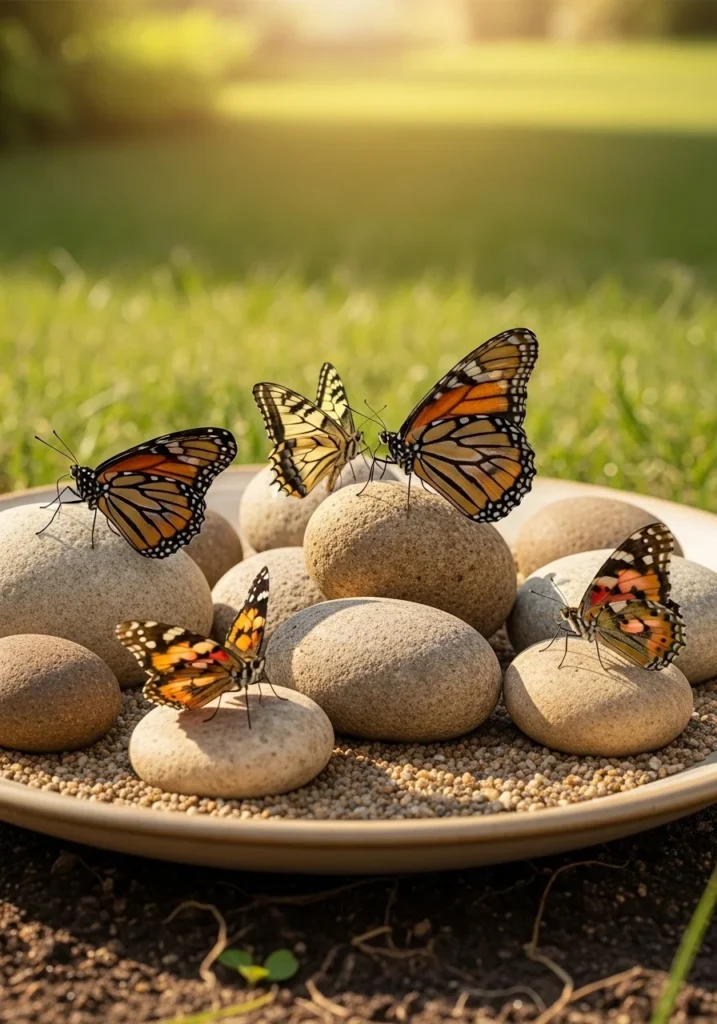
What You Need: Materials for a DIY Butterfly Puddler
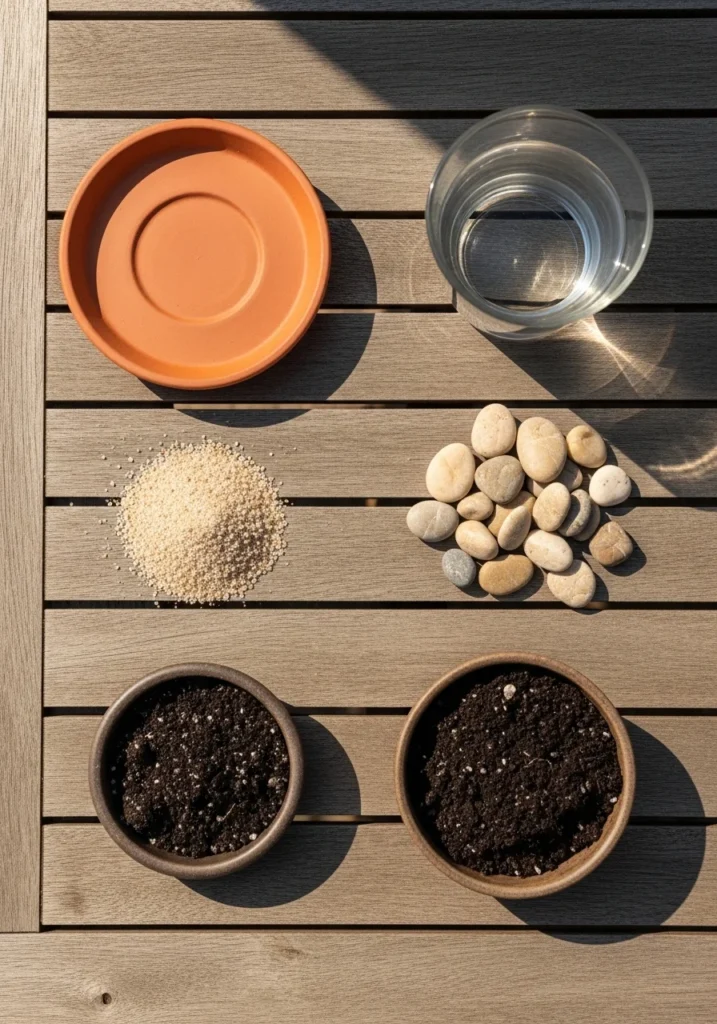
What Materials Do You Need for a Butterfly Puddler?
The good news? You probably already own most of this stuff.
| Material | Purpose | Notes |
|---|---|---|
| Shallow dish or container | Holds the mixture | Terracotta saucer, pie dish, or old birdbath |
| Sand (coarse) | Base material | Play sand or garden sand works great |
| Soil or compost | Adds minerals | A small amount mixed with sand |
| Small rocks or pebbles | Perching spots | River rocks, gravel, or flat stones |
| Water | Moisture source | Dechlorinated or rainwater preferred |
| Optional: pinch of salt | Extra sodium boost | Just a tiny pinch — don’t overdo it |
| Optional: composted manure | Mineral-rich amendment | Adds nutrients butterflies love |
That’s it. No special tools, no trips to a specialty store. A butterfly puddler with rocks and damp sand is already a complete setup.
How to Make a Butterfly Puddler: Step-by-Step
How Do You Make a Butterfly Puddler?
Here’s the part you’ve been waiting for. These butterfly puddler instructions are beginner-friendly, kid-approved, and take less than 20 minutes start to finish.
Step 1: Choose Your Container
Go shallow. Butterflies need easy access — a container that’s 1–3 inches deep is ideal. Think:
- Terracotta saucer (classic, breathable, looks great in a garden)
- Ceramic pie dish (wide surface = more landing space)
- Old birdbath basin (already designed for outdoor use)
- Plastic plant tray (budget-friendly, functional)
A shallow butterfly dish works better than a deep one every time.
Step 2: Fill with Sand (and a Bit of Soil)
Pour coarse sand into the container, filling it about ¾ of the way. Mix in a small amount of soil or compost — roughly a 3:1 ratio of sand to soil. This combo creates the mineral-rich, slightly gritty texture that butterflies go wild for.
Should you use sand, soil, or compost in a puddler?
All three work. Sand drains well and stays loose. Soil and compost bring minerals. A blend of all three? That’s the sweet spot for a butterfly mineral station.
Step 3: Add Rocks for Perching
This step is non-negotiable. Butterflies won’t wade through wet sand — they need dry landing zones. Press a few flat rocks or pebbles into the surface so they sit just above the waterline.
What kind of rocks work best in a butterfly puddler?
- Flat, smooth river rocks (easy grip, good sun warmth)
- Tumbled gravel (aesthetically pleasing)
- Irregular pebbles (natural look)
Avoid sharp-edged rocks. Butterflies have delicate legs — they need safe footing.
Step 4: Add Water
Slowly pour water into the dish until the sand is thoroughly moist but not flooded. You want damp, not soggy. The rocks should still be above the waterline so butterflies have dry surfaces to land on.
If you have access to rainwater or let tap water sit overnight to dechlorinate, even better.
Step 5: Optional Extras
Want to turn your butterfly mud bath into a true five-star experience?
- Pinch of sea salt — adds sodium butterflies crave
- Small piece of overripe fruit — doubles as a feeding station
- Composted manure — mineral-rich and butterflies love it (yes, really)
READ MORE:
15 Butterfly Bush Landscaping Ideas That’ll Make Your Yard the Talk of the Neighborhood
Where to Place Your Butterfly Puddler
Where Should I Place a Butterfly Puddler in My Garden?
Location is everything. You could make the most mineral-rich butterfly watering station on the block, but if it’s tucked in a shadowy corner, butterflies won’t find it.
Here’s what works:
- Full sun or partial sun — Butterflies are cold-blooded and need warmth to be active. A sunny spot heats the rocks and makes your station irresistible.
- Near nectar plants — Place it close to your backyard butterfly garden. Zinnias are a butterfly magnet — if you haven’t already, check out Zinnia garden ideas: why zinnias deserve a spot in every yard for planting inspiration.
- Low to the ground or on a stable surface — Ground level mimics natural puddles. A garden pedestal or a flat rock also works.
- Away from foot traffic — Give butterflies a quiet, undisturbed spot.
- In a visible area — Because honestly, you’re going to want to watch.
Do butterflies prefer sun or shade for puddling stations?
Sun, hands down. Warmth is key. Aim for at least 4–6 hours of direct sun per day.
Maintenance: Keeping Your Puddler Fresh
How Often Should I Refill a Butterfly Puddler?
Check it every couple of days during summer. In hot, dry weather, it can dry out fast — especially in a terracotta dish (which is breathable by design). Top up with water as needed to keep the sand moist.
How do I keep a butterfly puddler from drying out?
- Use a deeper layer of sand (2+ inches) to retain moisture longer
- Place a small saucer underneath a porous container
- Mulch around the base to reduce heat evaporation
- Use a plastic or glazed ceramic dish in very hot climates
No need to change the sand frequently — just keep it moist and pick out any debris.
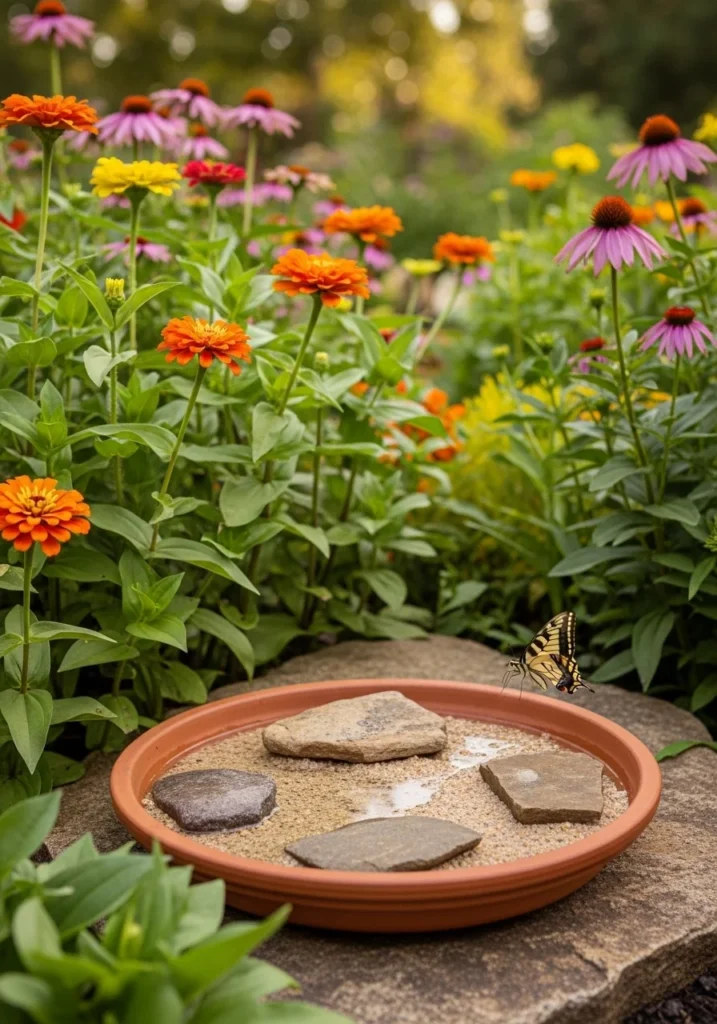
Bonus: Can You Use a Birdbath as a Butterfly Puddler?
Can I Use a Birdbath as a Butterfly Puddler?
Yes — with modifications. A standard birdbath is too deep and too smooth for butterflies. But if you:
- Fill the basin with sand and soil
- Add flat perching rocks
- Keep water levels shallow (just enough to moisten the sand)
…you’ve got yourself a dual-purpose bee and butterfly watering station. Win-win for your pollinators.
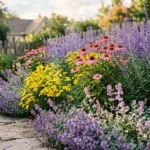
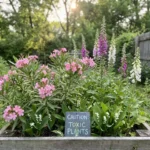
Speaking of which — pair your puddler with a thoughtful planting scheme. A full sun perennial garden plan gives butterflies the nectar they need while your puddler covers their mineral needs. That’s a complete butterfly habitat garden setup right there.
6 Pack Bee Watering Station, Metal Bee Bath, Butterfly Feeder with Flower Design, Colorful Butterfly Bath for Outdoor Garden Yard Patio Decor
Amzon affilliate: https://amzn.to/4fQVYYb
FAQs: Everything Else You Might Be Wondering
Do Butterflies Need Water or Just Nectar?
Both. Nectar provides energy (sugar), but butterflies also need water and dissolved minerals — especially sodium — that they get through puddling. A butterfly water station addresses a real nutritional gap.
What Do You Put in a Butterfly Puddler?
Moist sand or soil, small perching rocks, water, and optionally a pinch of salt or composted material. That’s your butterfly puddler for pollinators sorted.
Can a Butterfly Puddler Attract Bees Too?
Absolutely. Bees also need water, especially in summer. A bee and butterfly watering station with perching rocks gives bees a safe landing pad too. Expect a busy little watering hole.
Is a Butterfly Puddler Safe for Kids to Make?
100%. This is one of the best butterfly garden projects for kids. No sharp tools, no complicated steps. Let them pick the rocks, pour the sand, and add the water. Instant pride, instant connection to nature.
Quick-Reference Summary
| Element | Recommendation |
|---|---|
| Container | Shallow, 1–3 inches deep |
| Filler | Coarse sand + small amount of soil/compost |
| Perches | Flat river rocks above waterline |
| Water level | Moist sand, not flooded |
| Placement | Full sun, near nectar plants |
| Maintenance | Top up every 2–3 days in dry weather |
| Extras | Pinch of salt, overripe fruit, composted manure |
Final Thoughts
A DIY butterfly puddler is proof that the best garden additions don’t have to be expensive or complicated. A dish, some sand, a handful of rocks, and a little water — and suddenly your garden has a new kind of life happening in it.
It’s one of those projects where the payoff genuinely surprises you. You set it up on a Tuesday, forget about it, and then one morning there are three swallowtails perched on your rocks like they own the place.
That’s the magic of gardening, honestly. Give nature a small invitation and it shows up in the most beautiful ways.
So grab a terracotta saucer from the back of your shed, fill it with sand, and see who comes to visit. Your local butterflies have been waiting for exactly this.


This is what I need to do!
How can I save this post?