

Let me paint you a picture. It’s a Saturday morning. Your neighbor walks past, pauses, and stares at your front yard with that slightly envious, slightly confused look — like they’re wondering why your garden looks like it belongs in an Architectural Digest spread while theirs still has that sad patch of dying grass.
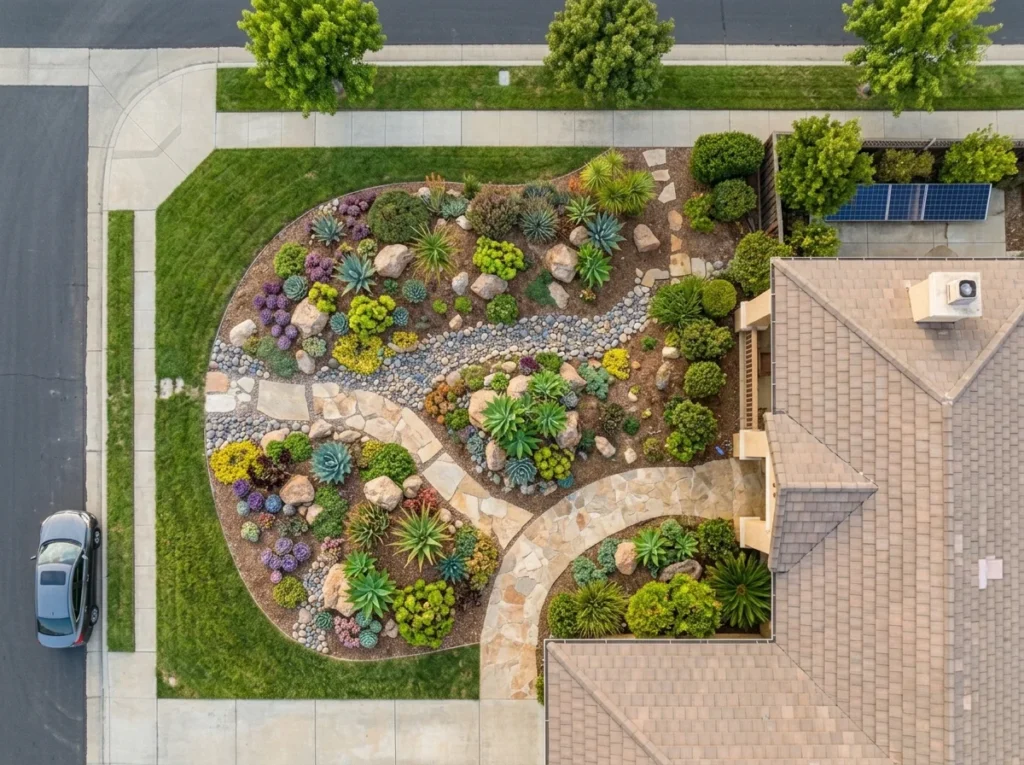
That’s what a well-designed succulent rock garden does for a yard. It’s bold, it’s low-effort once it’s set up, and it honestly makes people stop and stare. And the best part? Succulents are basically plants for people who forget to water things.
Whether you’re working with a sun-blasted slope, a tiny front yard, or a boring flat patch that needs a personality transplant, this list has something for you. Here are 15 succulent rock garden ideas that range from beginner-friendly to seriously showstopping — with practical tips built right in.
Table of Contents
1. The Classic Desert Vignette
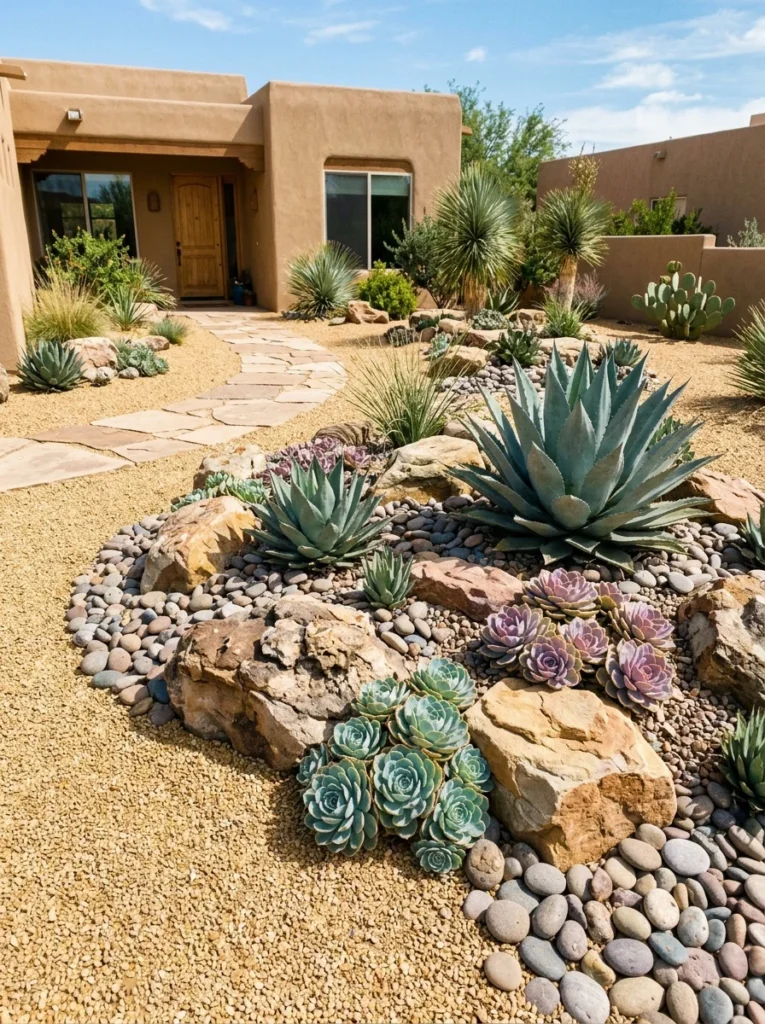
This is the one that started the whole movement. Imagine a generous layer of crushed granite or decomposed granite as the base, a few chunky boulders placed asymmetrically, and a mix of low rosette succulents like Echeveria elegans and Sempervivum popping up between them. It reads natural, timeless, and — importantly — it barely needs water.
This style works especially well for front yard rock garden designs where curb appeal matters. You get visual interest without the constant upkeep of traditional flower beds. Pair it with a few smooth river rocks for landscaping to soften the look and add contrast.
Best for: Front yards, full sun areas, drought-tolerant landscaping
2. Tiered Hillside Rock Garden
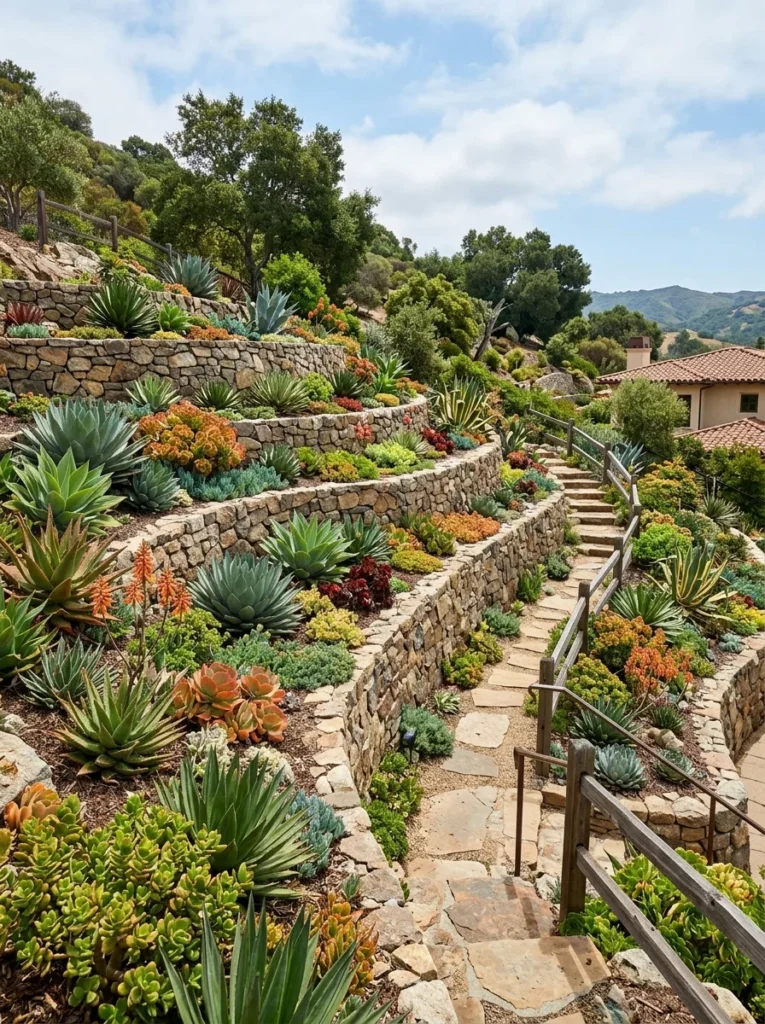
Can you build a succulent rock garden on a slope or hillside? Absolutely — and it might actually be the best place for one. Slopes naturally provide the drainage succulents desperately need. Water runs down and off, rather than pooling at the roots and causing rot.
The trick is creating gentle terraces using flat flagstones or fieldstones to hold the soil and plants in place. You can see this approach described in our guide to natural rock retaining walls — the principles translate beautifully to succulent garden design.
Plant the heaviest, most drought-tolerant varieties at the top — agave, larger aloes — and cascade smaller sedums and sempervivums down toward the base.
Best for: Sloped yards, erosion control, hillside landscaping
3. Modern Geometric Rock Garden
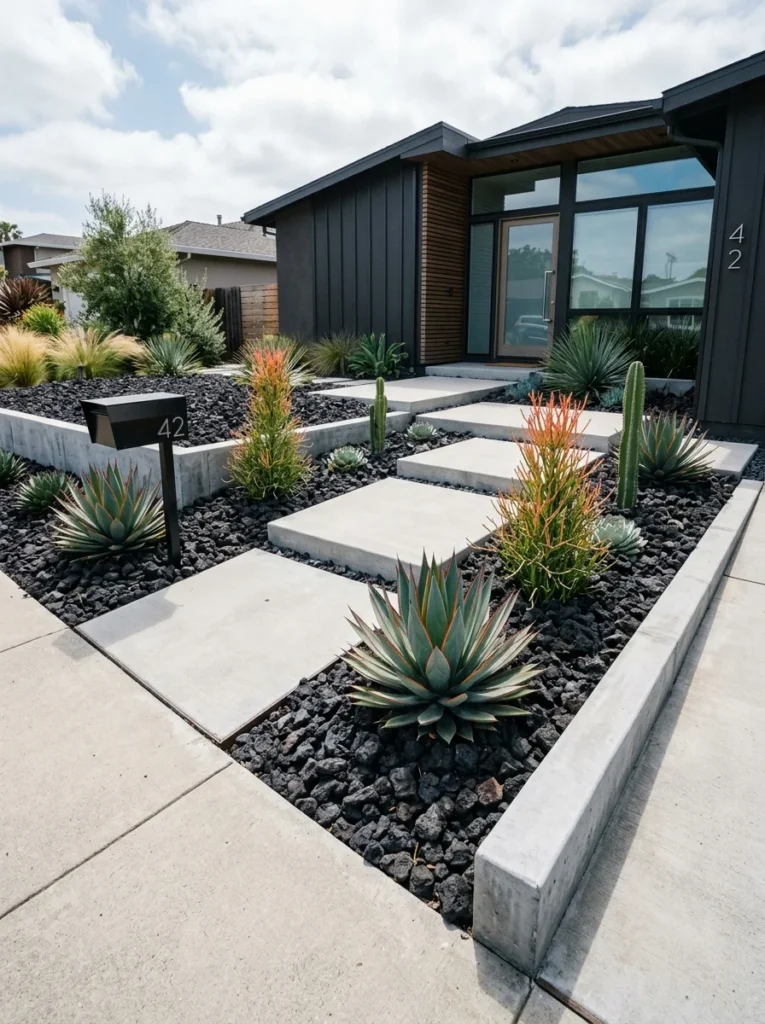
Not into the rustic desert look? This one’s for you. A modern rock garden uses clean geometry — rectangular planting zones, uniform gravel or black lava rock, and spiky architectural succulents like Agave ‘Blue Glow’, Aloe ferox, or Euphorbia tirucalli (pencil cactus) — to create something that looks intentionally designed rather than naturally occurring.
Black lava rock is a design MVP here. It’s lightweight, excellent for drainage, and creates stunning contrast against the blue-green or silvery tones of most succulents. Think of it as the matte black wardrobe piece of rock garden design.
This style pairs beautifully with modern home architecture and concrete hardscaping — especially if you’re exploring paver patio ideas to complement the front yard design.
Best for: Contemporary homes, minimalist landscaping, front yard curb appeal
4. Small Raised Rock Bed Garden
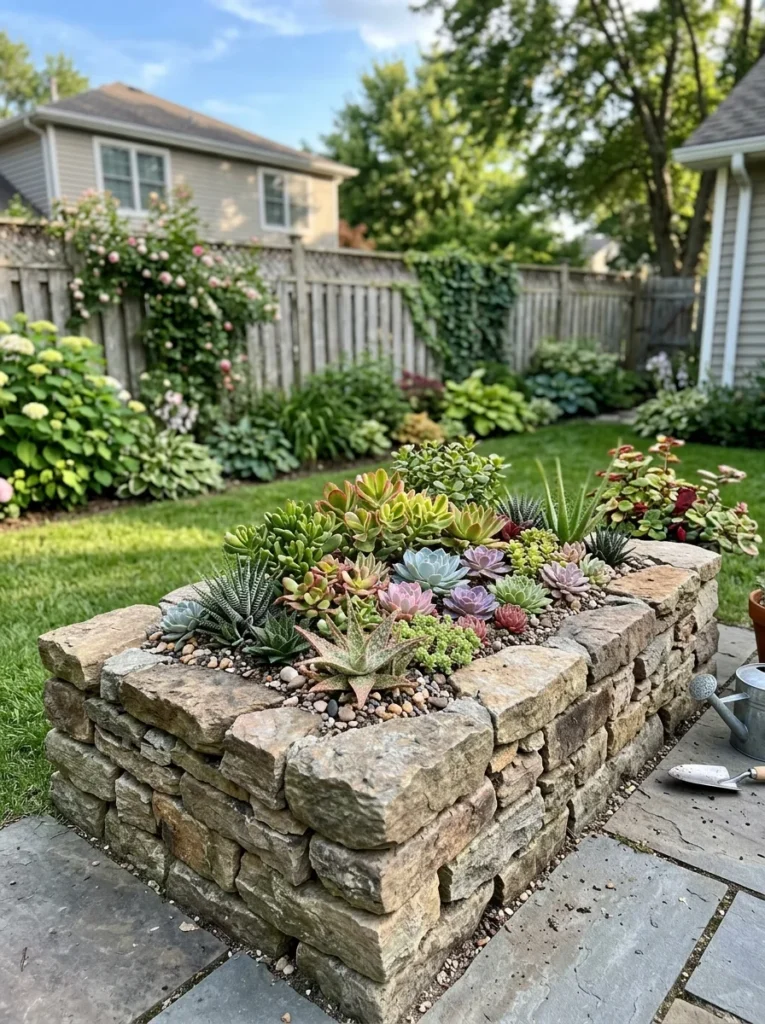
Got a small backyard and big dreams? A raised rock bed gives you incredible control over your soil, drainage, and aesthetics — even in tight spaces. The walls themselves become a design feature, especially when you use stacked fieldstone, limestone, or even reclaimed brick.
Fill it with a gritty mix of cactus soil and coarse perlite or pumice (more on soil below), and you’ve got yourself a micro-habitat that most succulents will absolutely thrive in.
This is also one of the best succulent rock garden ideas for beginners, because the raised walls mean you can see exactly what’s happening with the soil. No guessing games about whether it’s too wet underground.
Best for: Small backyards, beginners, urban gardening
5. Gravel River Bed Design
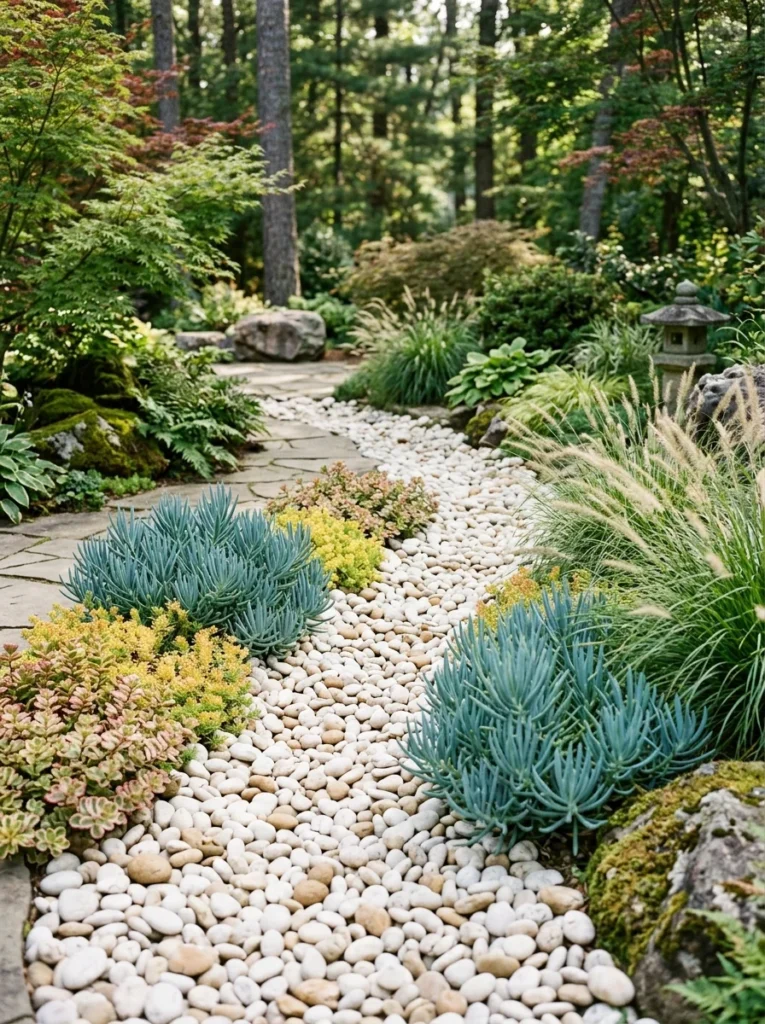
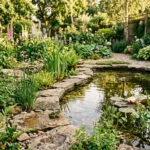
Here’s a design move that looks like it took years of landscape architecture knowledge but actually just requires some rocks and a vision: a dry river bed through your garden.
Lay out a curving path of rounded river rocks — mixing sizes from fist-sized to pebble — to simulate the look of a dry stream. Then plant the “banks” with Blue Chalk Sticks (Senecio serpens), trailing sedums, and low ornamental grasses to blur the lines between planned and natural.
This is especially effective in drought-tolerant or xeriscape garden designs where water conservation is the goal. It channels stormwater visually and, with a bit of grading, literally.
Best for: Xeriscape gardens, backyard focal points, water-wise landscaping
6. Cactus and Succulent Mixed Garden
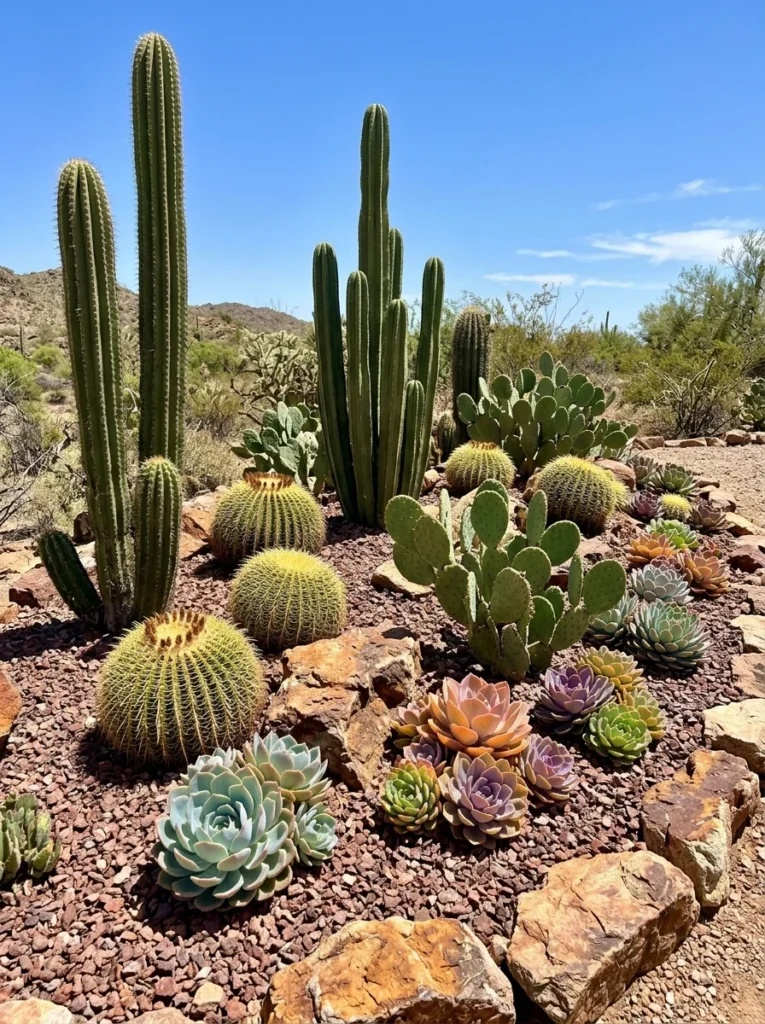
Can you combine cactus and succulents in the same rock garden? Yes — with a bit of planning. Both need similar conditions: excellent drainage, full sun, and infrequent watering. The main thing to watch is that you don’t crowd cacti so tightly that you can’t maintain them without becoming a human pincushion.
The visual payoff is spectacular, though. The textural contrast between soft, plump echeveria rosettes and the imposing silhouette of a barrel cactus or columnar Cereus is hard to beat.
Quick design tip: Use rusty-toned flagstone or red decomposed granite as the base. It complements the warm tones of many cacti and makes the whole arrangement feel cohesive rather than random.
Best for: Hot, dry climates (Southwest, Texas, California), bold statement gardens
7. Rock Border Along a Pathway
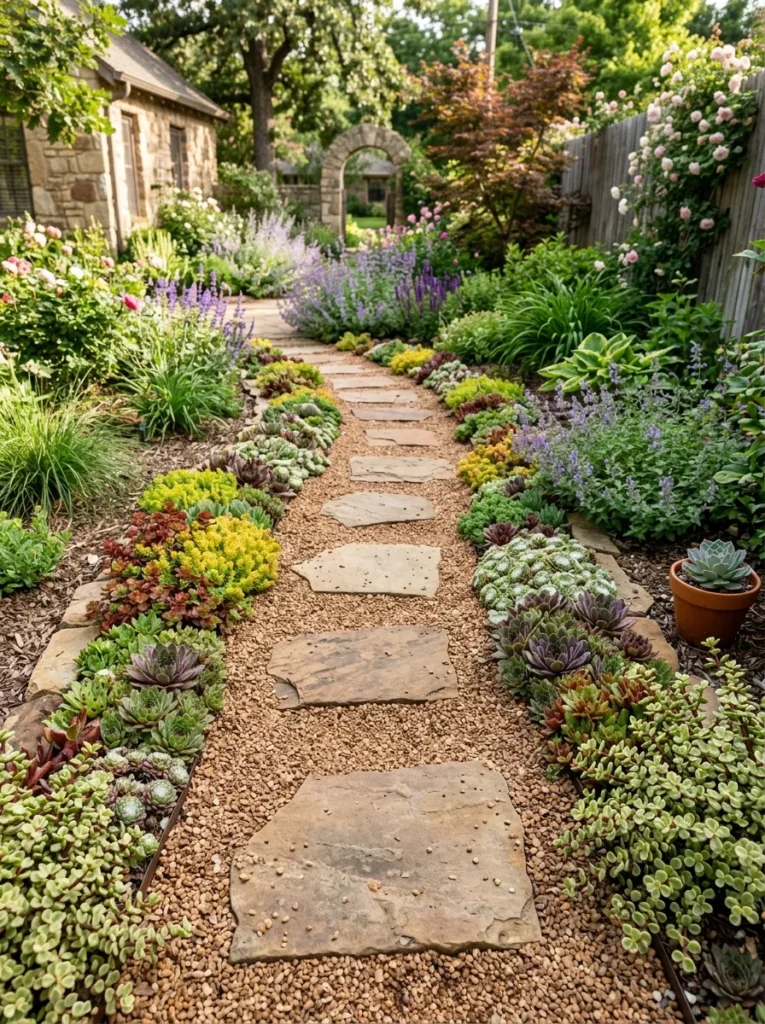
This is the gateway drug of succulent landscaping — low commitment, high visual impact, and almost impossible to mess up. Line either side of a garden path or driveway edge with flat stepping stones or irregular flagstone, and tuck low-growing succulents into the gaps and borders.
Sedum ‘Angelina’, Sempervivum varieties (hens and chicks), and Portulacaria afra (elephant bush) are all stellar choices here. They handle light foot traffic vibration, they spread slowly to fill gaps, and they stay tidy with almost no intervention.
Best for: Pathway edges, driveway borders, beginner-friendly landscaping
8. Rock Garden in a Slope Retaining Wall
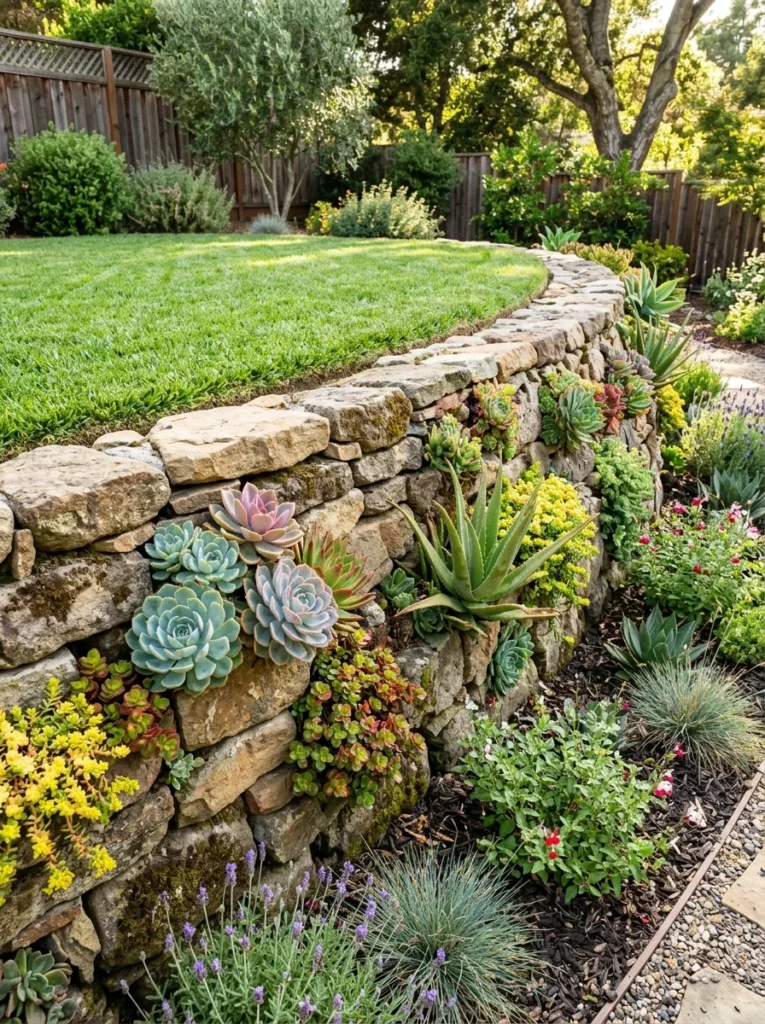
A retaining wall doesn’t have to be purely functional. When you build it dry-stacked (without mortar) and leave intentional gaps between the stones, you’ve got yourself planting pockets that succulents will adore.
Push succulent cuttings directly into the crevices with a little cactus soil mix packed around the roots. The wall face provides excellent drainage and airflow, and the visual effect — a living, plant-studded stone wall — is genuinely stunning.
For detailed construction guidance, check out our in-depth post on building a natural rock retaining wall. The structural principles matter here — you want a wall that holds.
Best for: Sloped properties, erosion control, decorative retaining structures
9. The Sunken “Bowl” Garden
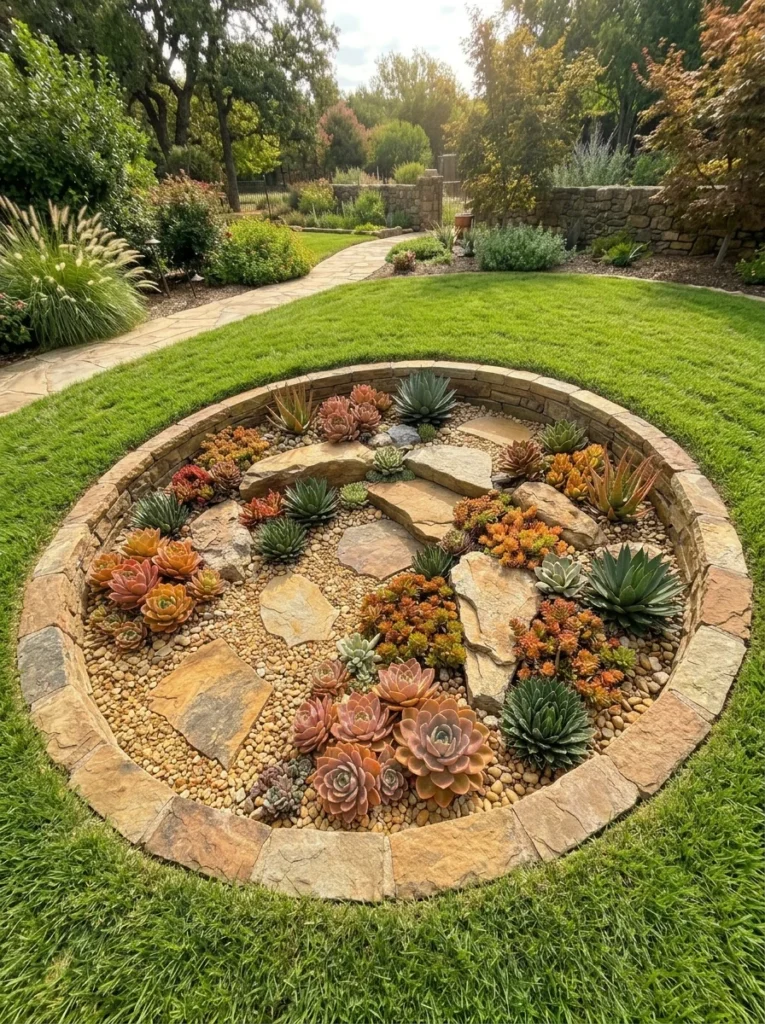
Think of this as creating a natural amphitheater for your plants. A sunken garden bed — slightly recessed into the earth and ringed with boulders or flat rock edging — draws the eye down instead of up, which creates a sense of depth and intrigue that flat beds simply can’t match.
The visual center is usually a single dramatic specimen plant — a large agave, a sculptural aloe, or a striking Dasylirion (desert spoon). Everything else radiates outward in concentric rings of color and texture.
This works brilliantly in modern desert landscaping schemes and looks absolutely at home in Southwest-style xeriscape designs.
Best for: Focal point gardens, modern/desert landscapes, artistic statement pieces
10. Front Yard Curb Appeal Overhaul
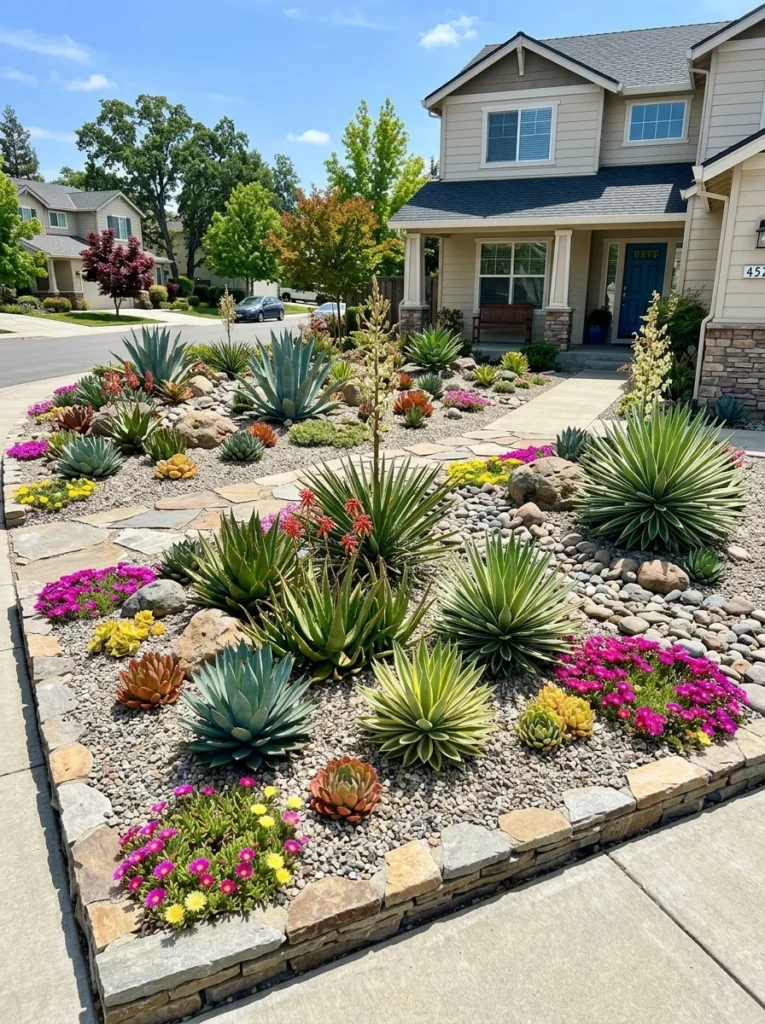
More and more homeowners — especially in California, Arizona, and Texas — are replacing their lawns entirely with succulent rock gardens. And honestly? The before-and-after is dramatic every single time.
The key to a front yard succulent garden that looks polished rather than neglected is layering: tall specimens at the back, mid-height varieties in the middle, and low-growing ground covers at the front. A clean rock border or edging strip separates the garden from the pavement and gives it that finished look.
Good choices for front yards that need to look good year-round: Agave americana, Aloe varieties, Sedum spurium (dragon’s blood), and ice plant (Delosperma) for color.
Best for: Full lawn replacement, curb appeal, water bill savings
11. Mini Rock Garden in a Pot or Container
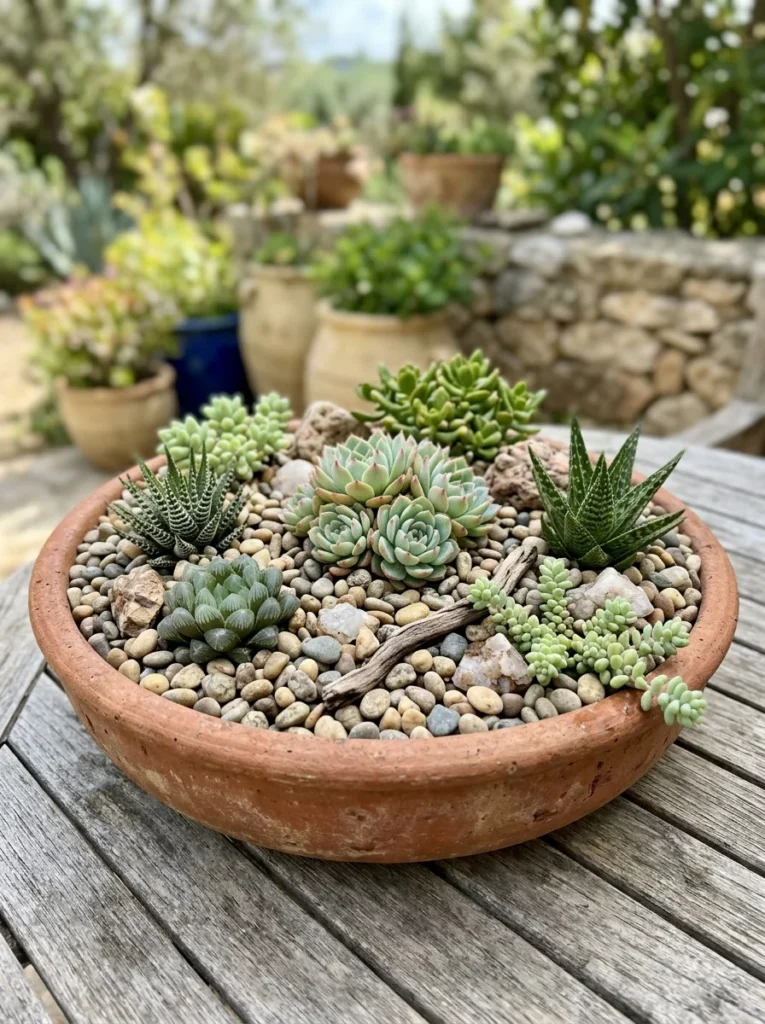
No yard? No problem. A mini rock garden in a wide, shallow container (a terra cotta pot, a vintage trough, or even a large wooden box) is a fully self-contained garden that you can put on a balcony, porch, or patio.
The rules are the same as a ground garden, just scaled down: drainage hole is non-negotiable, cactus mix soil with added perlite, top-dressed with fine gravel or small pebbles. Place the container somewhere that gets at least 6 hours of direct sun per day.
This is also a fantastic gift idea for the gardener in your life who “doesn’t have space” — it’s disarming how much charm fits in a single pot.
Best for: Apartments, balconies, patios, gift ideas
12. Rock Mulch Succulent Landscape
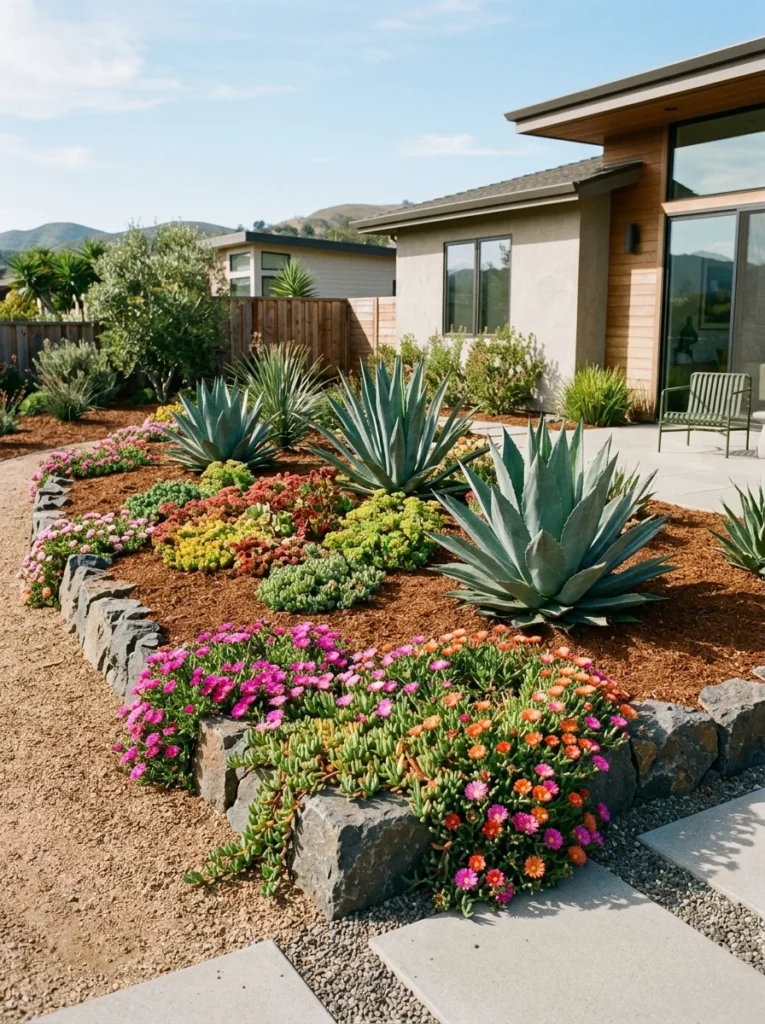
Rock mulch — whether it’s decomposed granite, pea gravel, or crushed quartz — is one of the unsung heroes of the succulent rock garden world. It replaces organic mulch (which retains too much moisture for succulents) and does something organic mulch never could: it reflects heat upward, which many succulents actually love.
It also suppresses weeds, stabilizes the soil, and honestly just looks really clean and finished. Pick a color that complements your house and your plants — warm rust tones for warm-colored plants, pale grey or white gravel for blue-grey succulents.
Best for: Backyard landscapes, weed suppression, heat-loving plant varieties
13. Succulent Rock Garden Around a Tree
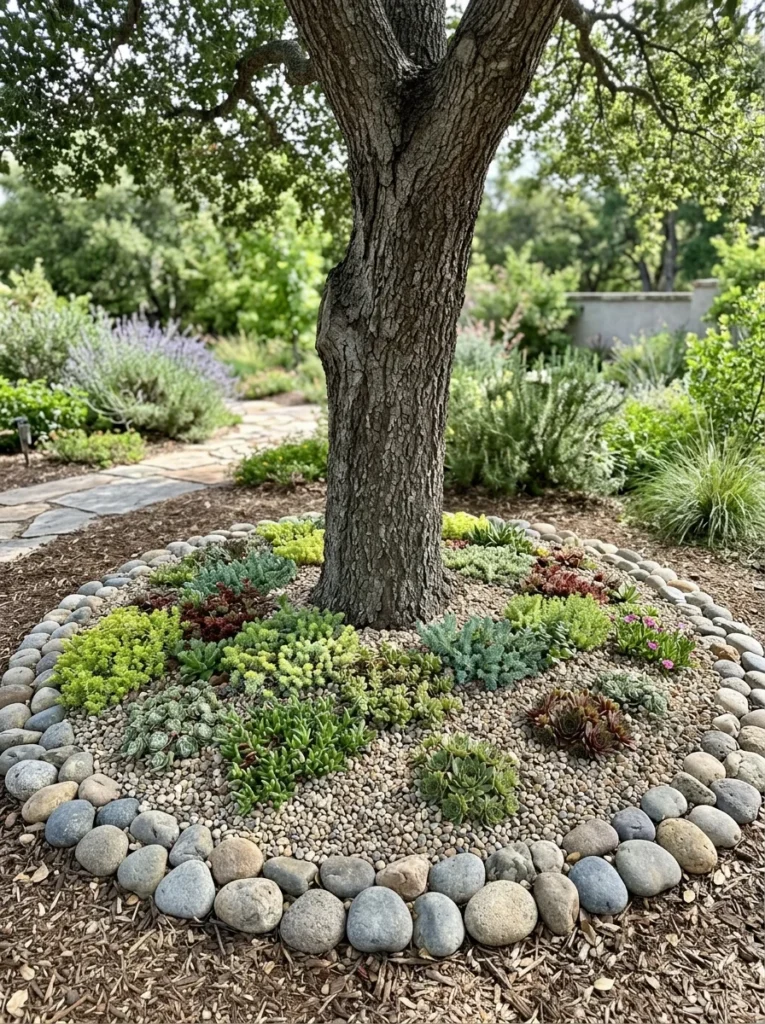
That dead zone around tree trunks where grass refuses to grow? Succulents will happily colonize it. Ring the base of the tree with a neat border of river stones or medium cobbles, fill with cactus mix, and plant low-growing varieties like Sedum rupestre ‘Angelina’ or Sempervivum that won’t compete aggressively with tree roots.
This is smart for two reasons: it looks intentional and well-designed, and it protects the tree trunk from lawn mower damage.
Best for: Tree rings, shaded garden edges (morning shade only), lawn problem areas
14. Water-Wise Xeriscape Design
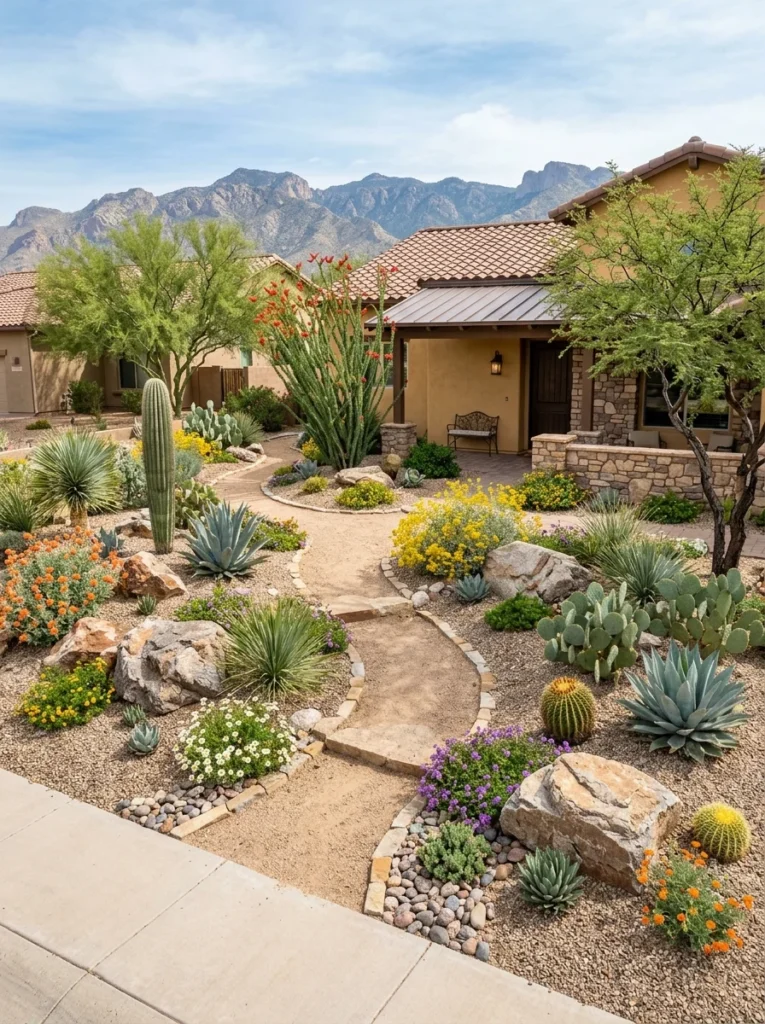
Xeriscape isn’t just a landscaping style — it’s a philosophy. The word comes from the Greek xeros (dry), and the idea is simple: design your landscape around plants that thrive in your region’s natural rainfall without supplemental irrigation once established.
Succulents are xeriscape MVPs. Pair them with native grasses, desert wildflowers, and boulders that echo the natural landscape of your region, and what you get is a garden that looks utterly natural, requires almost no water after the first season, and supports local pollinators like bees and hummingbirds.
If you’re in the Southwest, Pacific Coast, or Texas, this is arguably the most responsible — and frankly beautiful — landscaping choice you can make.
Best for: Drought-prone regions, eco-conscious homeowners, sustainable landscaping
15. Night-Interest Rock Garden With Light-Colored Stone
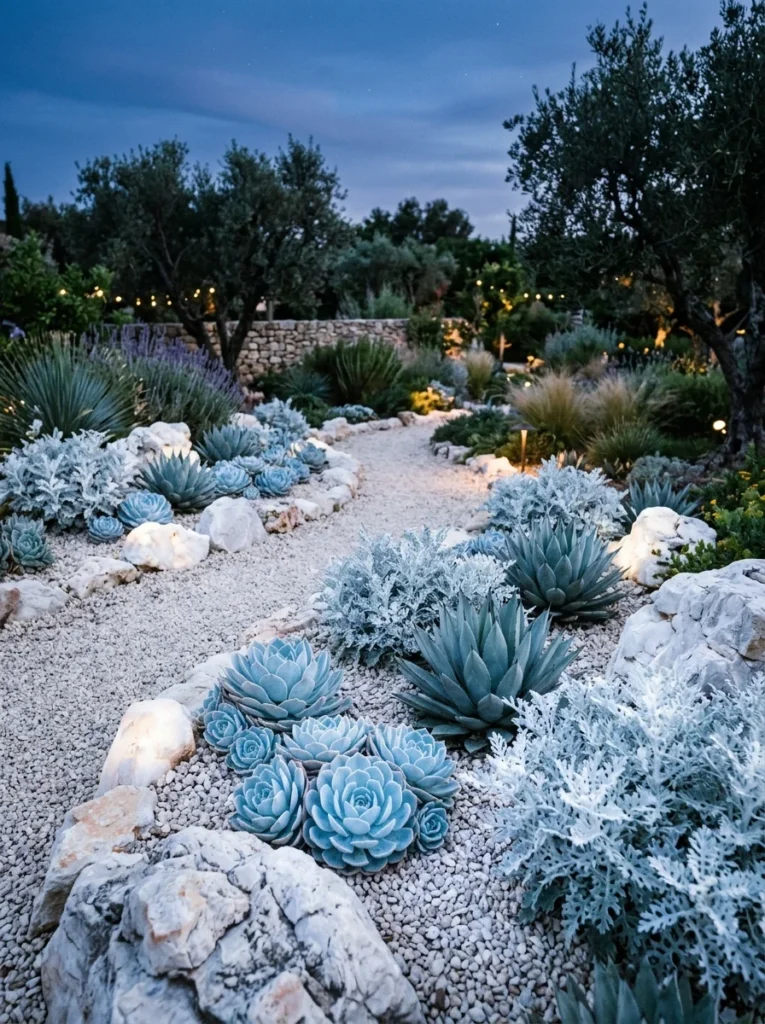
This is a niche but absolutely gorgeous idea: design your rock garden to look stunning at night. Use white quartzite boulders, pale decomposed granite or marble chips, and choose succulents with silver, blue-grey, or near-white coloring — Echeveria ‘Perle von Nürnberg’, Agave ‘Blue Glow’, Sedum ‘Cape Blanco’.
These plants and rocks catch moonlight, low-voltage garden lighting, and even streetlights in a way that dark-colored plants simply can’t. Add a few warm-toned uplights and you’ve got a garden that earns compliments even at dinner party time.
Best for: Entertaining spaces, front yards with evening street traffic, artistic garden designs
The Essential FAQ: Everything You Need to Know Before You Start
What rocks are best for a succulent garden?
There’s no single “right” answer, but the most versatile options are decomposed granite, river rock, lava rock, limestone, and flagstone. Avoid rocks that can raise soil pH significantly (like pure marble chips in large quantities) or trap moisture against plant crowns. The goal is a rock that drains fast, looks natural, and doesn’t cook your plants with excessive reflected heat in extreme climates.
Do succulents need special soil in a rock garden?
Yes — this is the most important factor new gardeners overlook. Succulents need extremely well-draining soil. Standard garden soil will kill them slowly through root rot. Use a cactus/succulent mix blended 50/50 with coarse perlite or pumice. In raised beds or native soil that drains poorly, amend deeply — at least 12 inches — before planting.
How often should I water a succulent rock garden?
Less than you think. In summer, established succulents in the ground typically need water every 2–3 weeks. In winter, monthly or even less. The mantra is: water deeply, then let it dry completely before watering again. Stick your finger 2 inches into the soil — if it’s still moist, wait.
How do I prevent root rot in a succulent rock garden?
Three words: drainage, drainage, drainage. Make sure your planting area slopes slightly away from the plants (even 2–3 degrees helps enormously), amend soil with pumice or perlite, use rocks as mulch rather than organic materials, and never let water pool at the base of stems. If you’re in a rainy climate, choose raised beds or hillside locations where excess water naturally runs off.
How much sunlight do succulents need?
Most succulents want 6–8 hours of direct sunlight per day. In hotter climates (zones 9–11), they appreciate some afternoon shade to prevent sunburn. In cooler, foggier climates, they need all the sun they can get. Always check the specific requirements of your chosen varieties — some (like Haworthia) tolerate and even prefer partial shade.
Can I plant succulents directly in rocks or gravel?
Technically yes — some succulents can be planted in pure coarse gravel or crushed granite with minimal soil mixed in. In practice, pure rock planting works best with very drought-adapted varieties like certain sedums and sempervivums in climates with some natural rainfall. In arid climates, even succulents need some soil to establish roots and access the occasional deep watering.
Which succulents are best for hot, dry climates?
For truly brutal heat (Texas, Arizona, Southern California), go with: Agave (most varieties), Aloe vera, Opuntia (prickly pear), Yucca, Dasylirion, and Hesperaloe parviflora. These handle 100°F+ temperatures without breaking a sweat. Literally.
Rock Type Cheat Sheet
| Rock Type | Best For | Drainage | Aesthetic |
|---|---|---|---|
| Decomposed Granite | Ground cover, paths | ★★★★★ | Natural, warm |
| River Rock | Borders, dry streams | ★★★★ | Smooth, classic |
| Lava Rock | Modern beds, mulch | ★★★★★ | Bold, contemporary |
| Flagstone | Walls, pathways | ★★★ | Rustic, structured |
| Limestone | Borders, walls | ★★★ | Natural, light |
| White Quartzite | Night gardens, contrast | ★★★★ | Striking, ethereal |
| Pea Gravel | Container top dressing | ★★★★★ | Clean, minimal |
Putting It All Together
The best succulent rock garden is one you’ll actually enjoy maintaining — and since succulents are so beautifully low-maintenance once established, “enjoying” it mostly means sitting nearby with a cup of coffee and admiring your work.
Start with one idea from this list that matches your space and sun exposure, get the drainage right, choose plants suited to your climate zone, and give it one full season to settle in. You’ll be surprised how quickly it looks established and intentional.
And if you’re looking for more hardscaping inspiration to complete the picture, check out our guides on river rock landscaping ideas, natural rock retaining walls, and paver patio designs — because a great succulent garden deserves equally great surroundings.
Got questions about your specific space or climate? Drop them in the comments — we’d love to help you design something beautiful.



5 thoughts on “15 Stunning Succulent Rock Garden Ideas That’ll Transform Your Yard (With Zero Drama)”