
There’s something almost magical about a butterfly drifting through your garden. One minute your yard is just… a yard. Then you plant the right flowers, and suddenly it’s a living painting — wings in every color, pollinators working overtime, and you standing there with your morning coffee wondering why you didn’t do this sooner.
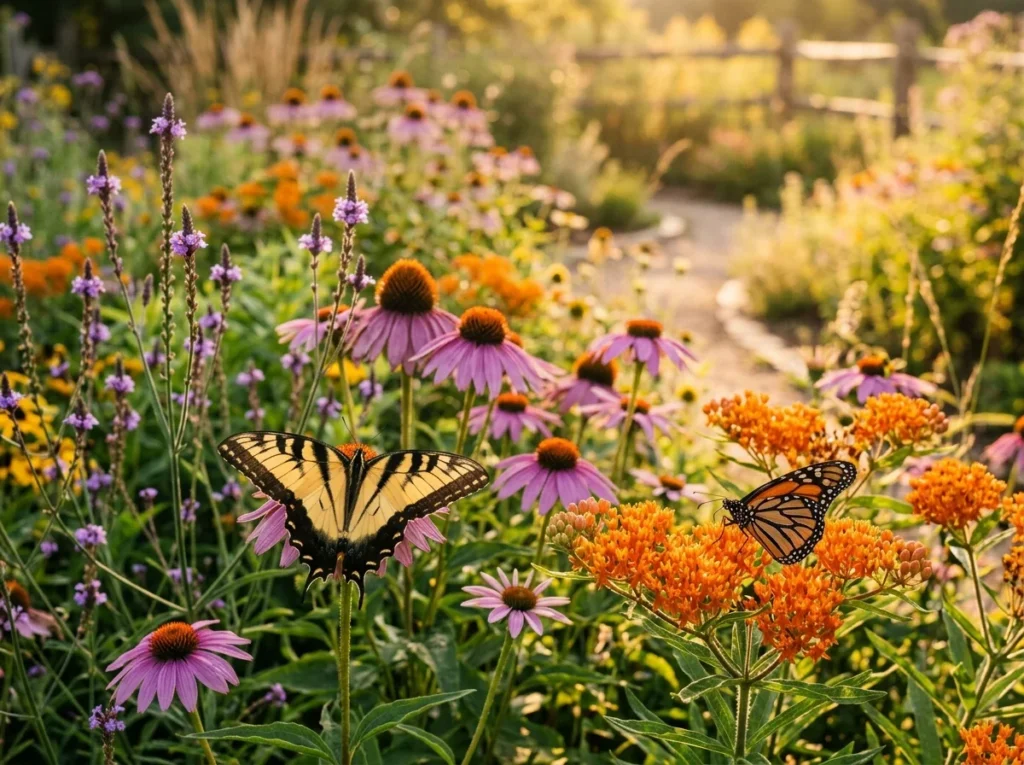
But here’s the thing: butterflies aren’t random visitors. They’re picky. They want nectar-rich blooms, the right host plants, and ideally a spot in full sun that feels like their personal buffet. Get the plants right, and they’ll keep coming back all season long.
I’ve put together this list of the best flowers for butterfly gardens — organized by type, bloom time, and what they attract — so you can build a garden that’s both gorgeous and genuinely wildlife-friendly.
Table of Contents
Why the Right Flowers Actually Matter
Before we get into the list, here’s a quick truth: not every pretty flower is a butterfly magnet. Butterflies have co-evolved with specific plants over thousands of years. Some flowers offer nectar but aren’t suitable as host plants (where butterflies lay eggs and caterpillars feed). Others are fantastic hosts but low on nectar.
The best butterfly gardens have both — nectar sources to feed adult butterflies and host plants to support their full life cycle. Keep that in mind as you plan.
Best Perennial Flowers for Butterfly Gardens
Perennials are the backbone of any butterfly-friendly space. Plant them once, and they come back year after year — delivering reliable nectar season after season.
1. Coneflower (Echinacea purpurea)
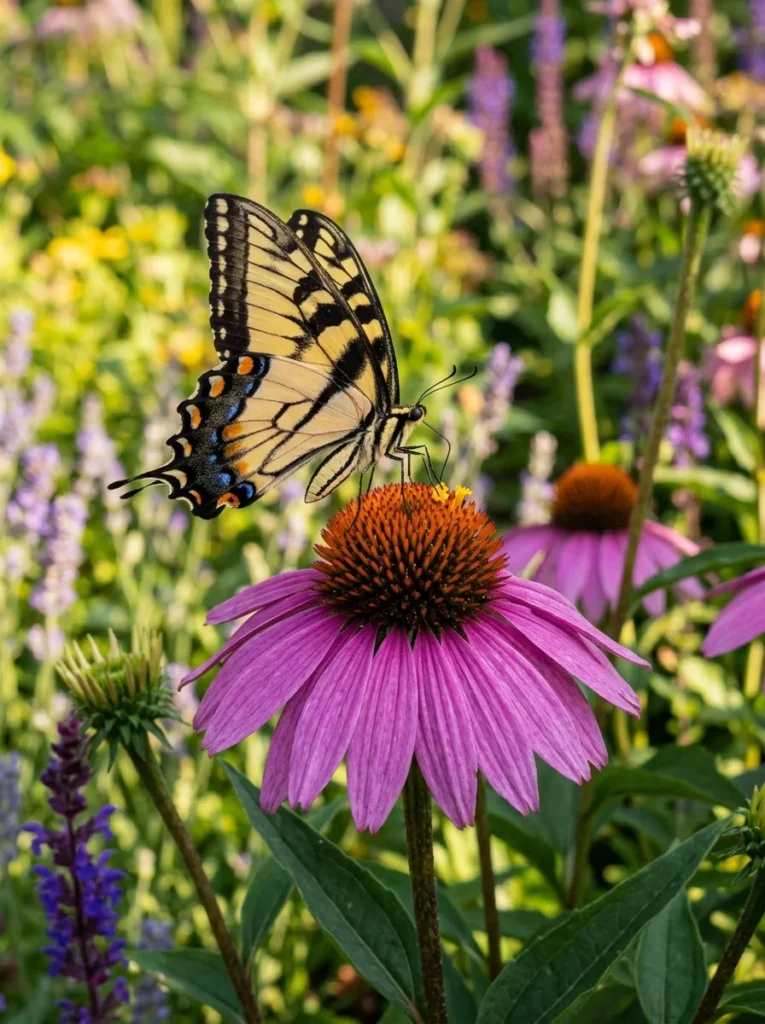
If there’s one plant every butterfly garden needs, it’s coneflower. The wide, flat landing pad of blooms is perfectly designed for butterflies to feed. Swallowtails, fritillaries, and skippers absolutely love it.
- Bloom time: June–September
- Sun: Full sun
- Bonus: Also attracts bees, goldfinches, and other pollinators
It’s drought-tolerant once established, deer-resistant, and basically impossible to kill. What more do you want?
2. Black-Eyed Susan (Rudbeckia hirta)
Bright, cheerful, and tough as nails — black-eyed Susans bloom prolifically from summer well into fall, bridging that awkward gap when many other flowers are done. They’re native to North America and a top pick for native pollinator flowers.
- Bloom time: June–October
- Sun: Full sun
- Tip: Let the seed heads stand through winter to feed birds
3. Bee Balm (Monarda didyma)
Don’t let the name fool you — butterflies go absolutely wild for bee balm. The tubular flowers in red, pink, or purple are loaded with nectar, and the fragrance is intoxicating. Monarchs and tiger swallowtails are regulars.
- Bloom time: July–September
- Sun: Full sun to partial shade
- Note: Spreads vigorously, so give it room or divide it every few years
4. Aster (Symphyotrichum spp.)
Here’s your fall hero. When most flowers are wrapping up, asters burst into bloom in purple, pink, and white — giving late-season butterflies (like the monarch heading south) one last nectar source before winter. They’re among the best long-blooming butterfly flowers for the end of the season.
- Bloom time: August–October
- Sun: Full sun
- Native pick: New England aster (S. novae-angliae) is a standout
5. Phlox (Phlox paniculata)
Garden phlox brings rich fragrance and dense clusters of blooms that butterflies can’t resist. Swallowtails in particular seem drawn to its pink and purple shades. For border flowers that look polished while doing serious pollinator work, phlox delivers.
- Bloom time: July–September
- Sun: Full sun to light shade
- Care tip: Good air circulation prevents powdery mildew
6. Milkweed (Asclepias spp.)
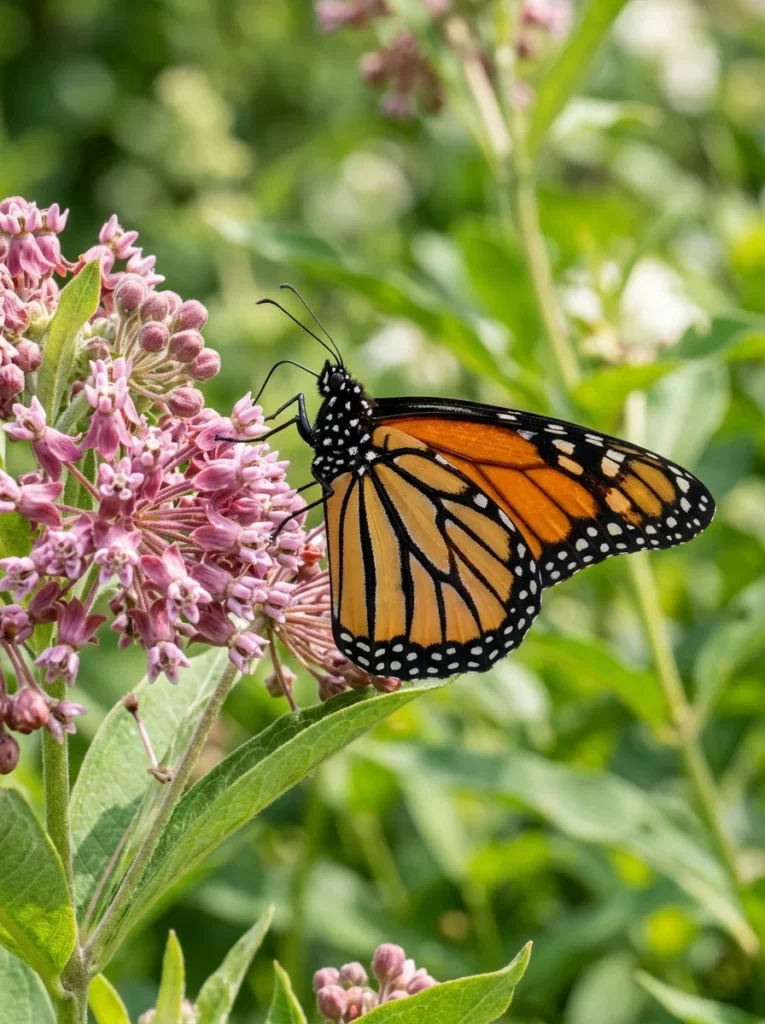
This one’s non-negotiable if you care about monarchs. Milkweed is the only host plant for monarch butterflies — females lay their eggs on it, and it’s the sole food source for their caterpillars. Without milkweed, there are no monarchs. Full stop.
- Best varieties: Common milkweed (A. syriaca), butterfly weed (A. tuberosa), swamp milkweed (A. incarnata)
- Bloom time: June–August
- Sun: Full sun
Butterfly weed (A. tuberosa) is especially striking — brilliant orange blooms, compact form, drought-tolerant. It’s one of the best monarch butterfly plants and honestly one of the prettiest natives you can grow.
7. Lavender (Lavandula spp.)
Lavender isn’t native to North America, but butterflies don’t care. The long blooming season, delicate purple spikes, and aromatic nectar make it a constant stop for painted ladies, skippers, and swallowtails. It also doubles as a drought-tolerant butterfly flower — ideal for drier climates.
- Bloom time: May–August
- Sun: Full sun
- Bonus: Repels deer and rabbits
Best Annual Flowers for Butterflies
Annuals give you maximum color and nectar from late spring straight through frost. They’re perfect for filling gaps between perennials or packing a container garden.
8. Zinnia (Zinnia elegans)
Zinnias might be the single most reliable annual for attracting butterflies. They’re easy to grow from seed, come in every color, bloom from summer until hard frost, and produce abundant nectar. Plant them in masses for the best effect.
- Butterflies attracted: Monarchs, swallowtails, fritillaries, painted ladies
- Sun: Full sun
- Pro tip: Direct sow after frost, thin to 12 inches, water at the base to prevent powdery mildew
9. Verbena (Verbena bonariensis)
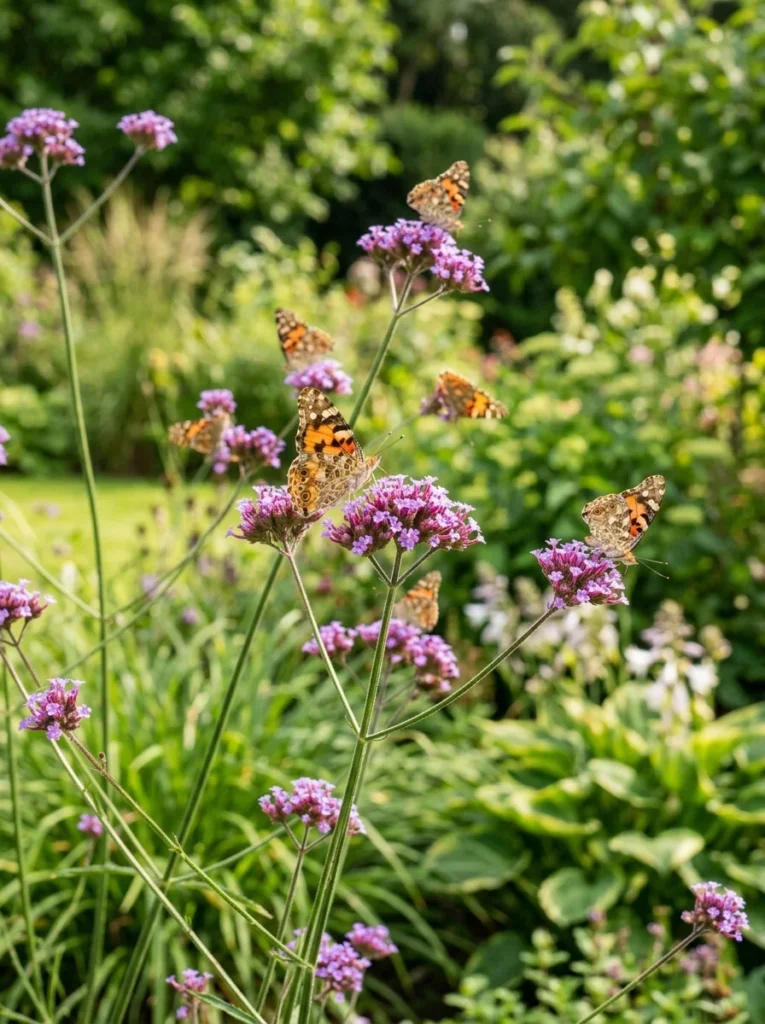
Tall, airy, and absolutely covered in tiny purple flowers all season — verbena bonariensis is a butterfly garden staple. It self-seeds generously (which most people consider a feature, not a bug), so once you plant it, it tends to return.
- Bloom time: Summer through frost
- Sun: Full sun
- Height: 3–4 feet tall — great for mid-border
10. Lantana (Lantana camara)
If you want a flower that butterflies genuinely mob, grow lantana. The multicolored clusters of tiny blooms are essentially an all-you-can-eat nectar bar. It thrives in heat, handles drought reasonably well, and keeps blooming long after other annuals slow down.
- Bloom time: Summer through frost
- Sun: Full sun
- Note: Toxic to pets — plant accordingly
Native Flowers for Butterfly Gardens
Native plants have co-evolved with local butterfly species. They’re better food sources, better host plants, and generally lower maintenance than non-native alternatives.
11. Wild Bergamot (Monarda fistulosa)
The native cousin of bee balm, wild bergamot is a prairie wildflower that blooms in lavender-pink and attracts a remarkable diversity of butterflies and bees. It’s tougher and more drought-tolerant than the cultivated varieties.
12. Joe Pye Weed (Eutrochium purpureum)
Towering at 5–7 feet, Joe Pye weed makes a dramatic statement while serving as one of the most important late-summer nectar sources for migrating monarchs. The dusty-pink, vanilla-scented blooms are irresistible.
- Bloom time: August–September
- Sun: Full sun to partial shade
- Scale: Needs space — use at the back of a border
13. Wild Columbine (Aquilegia canadensis)
An early-spring bloomer in red and yellow, wild columbine bridges the gap before most butterfly flowers kick in. It supports early-season hummingbirds AND butterflies — making it a great pick if you’re building a combined flowers for butterflies and hummingbirds garden.
Flowers for Butterflies AND Bees
The best pollinator gardens work for multiple species. These flowers are top performers for both butterflies and bees:
| Flower | Butterflies | Bees | Bloom Season |
|---|---|---|---|
| Coneflower | ✅ | ✅ | Summer–Fall |
| Bee balm | ✅ | ✅ | Midsummer |
| Black-eyed Susan | ✅ | ✅ | Summer–Fall |
| Lavender | ✅ | ✅ | Early–Late Summer |
| Wild bergamot | ✅ | ✅ | Midsummer |
| Phacelia | ✅ | ✅ | Spring |
Best Full-Sun Flowers for Butterfly Gardens
Most butterfly-attracting flowers prefer full sun (6+ hours daily), which aligns perfectly with most open garden beds. Your top full-sun picks:
- Butterfly bush (Buddleja davidii) — High-impact nectar source, though it’s non-native; choose sterile cultivars. For creative ways to use it in your landscape, check out these [15 Butterfly Bush Landscaping Ideas That’ll Make Your Yard the Talk of the Neighborhood].
- Zinnia — Unbeatable summer annual for full-sun spots
- Coneflower — Native, tough, and stunning
- Black-eyed Susan — Thrives in heat and drought
Drought-Tolerant Butterfly Flowers
Got a hot, dry spot? These plants handle drought without complaint — and still bring the butterflies:
- Butterfly weed (Asclepias tuberosa) — Beautiful AND a monarch host plant
- Lavender — Fragrant and tough
- Verbena — Heat-loving and constant-blooming
- Coneflower — Established plants handle dry spells well
- Lantana — Practically indestructible in heat
Don’t Forget: Butterfly Host Plants
Here’s what separates a good butterfly garden from a great one — host plants. These are plants where butterflies lay eggs, and where caterpillars feed and develop. Without them, butterflies visit but don’t stay.
| Host Plant | Butterfly Species Supported |
|---|---|
| Milkweed (Asclepias spp.) | Monarch |
| Parsley, fennel, dill | Black swallowtail |
| Spicebush (Lindera benzoin) | Spicebush swallowtail |
| Passionflower (Passiflora) | Gulf fritillary, zebra longwing |
| Violet (Viola spp.) | Great spangled fritillary |
| Wild cherry / oak | Eastern tiger swallowtail |
Pro tip: if you notice chewed leaves on your host plants, that’s not damage — that’s success. It means butterflies are using your garden to reproduce.
Adding Water to Your Butterfly Garden
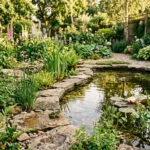
Flowers bring them in. Water keeps them. Butterflies need to “puddle” — sipping moisture from damp soil to get minerals. A shallow dish of wet sand or a simple mud station does the trick. If you want to build one yourself, this guide on a [DIY Butterfly Puddler: How to Build a Butterfly Mud Station Your Garden Deserves] walks you through the whole process.
Bloom Timeline: Keeping Butterflies Fed All Season
The goal is staggered bloom times so there’s always something flowering from spring to frost.
| Season | Top Picks |
|---|---|
| Spring | Wild columbine, phlox, early lavender |
| Early Summer | Bee balm, milkweed, verbena |
| Midsummer | Coneflower, zinnia, lantana, butterfly weed |
| Late Summer | Black-eyed Susan, Joe Pye weed, rudbeckia |
| Fall | Aster, goldenrod, late-blooming verbena |
Quick Picks by Need
Low maintenance: Coneflower, black-eyed Susan, milkweed, aster For monarchs specifically: Milkweed (all varieties), zinnia, aster, lantana For borders: Phlox, coneflower, lavender, aster For containers: Zinnia, lantana, verbena, lavender
Final Thoughts
Building a butterfly garden doesn’t require a massive yard or a green thumb. It just requires the right plants, a bit of sun, and the willingness to let things be a little wild. Start with a handful of these — milkweed, coneflower, zinnia, aster — and watch what happens by midsummer.
You’ll be surprised how fast word gets out among the butterfly community.
Ready to start? Pick 3–5 plants from this list, choose varieties native to your region when possible, and plant them in a sunny spot. Then stand back and enjoy the show.
FAQs: Best Flowers for Butterfly Gardens
What are the best flowers for butterfly gardens?
Coneflower, milkweed, black-eyed Susan, zinnia, bee balm, verbena, aster, and lavender consistently top the list. A mix of natives and long-blooming annuals gives the best results.
Which flowers attract butterflies the most?
Zinnias and verbena are among the most reliable butterfly magnets, especially in summer. For native options, milkweed and coneflower draw the widest variety of species.
What flowers do monarch butterflies like best?
Monarchs rely on milkweed as a host plant, but they also feed heavily on zinnia, aster, lantana, and goldenrod.
What are the best nectar plants for butterflies?
Bee balm, butterfly bush, verbena, lavender, coneflower, and phlox are all nectar-rich choices.
What perennial flowers attract butterflies?
Top perennial picks include coneflower, bee balm, aster, Joe Pye weed, black-eyed Susan, phlox, and milkweed.
What annual flowers attract butterflies?
Zinnia, verbena, lantana, and marigolds are excellent butterfly-attracting annuals.
What flowers attract butterflies AND hummingbirds?
Bee balm, wild columbine, phlox, and salvia attract both.
What low-maintenance flowers are best for butterfly gardens?
Coneflower, black-eyed Susan, milkweed, aster, and lavender are all low-maintenance once established.