

There’s something almost meditative about a well-placed river rock. Smooth, patient, shaped by millions of years of water — it just belongs in a landscape. And yet, so many yards sit there looking either overly manicured or completely uninspired, when all they really need is a bag (okay, maybe a few tons) of river stone and a little vision.
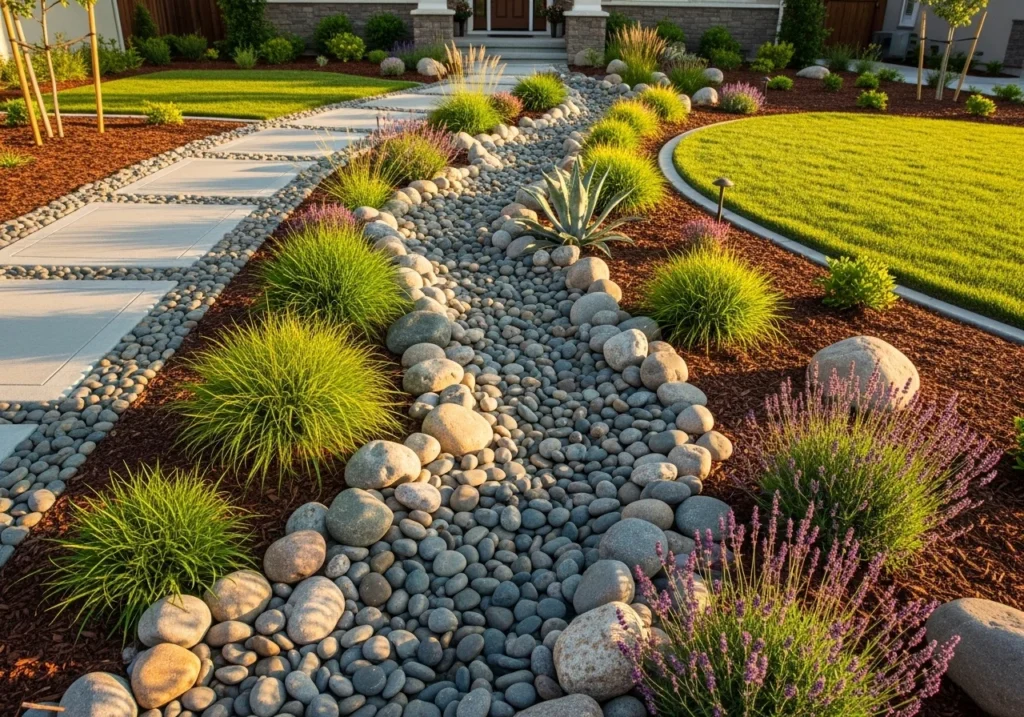
River rock landscaping has quietly become one of the most searched-for outdoor design trends in the US right now. Whether you’re trying to fix a soggy drainage problem, cut your weekend lawn mowing habit, or just make your front yard the prettiest one on the block — river rocks might honestly be the most versatile tool you’ve got.
I’m going to walk you through 15 creative, practical river rock landscaping ideas that you can actually use. From dry creek beds to xeriscape front yards, drainage fixes to garden borders — this is your complete guide to doing river rock right.
Table of Contents
What Is River Rock Landscaping?
River rock landscaping is exactly what it sounds like: using smooth, naturally rounded stones — the kind you’d find lining a riverbed — to decorate, define, and solve problems in your outdoor space. These aren’t your crushed gravel driveway pebbles. River rocks are larger, rounder, and come in beautiful natural tones: gray, tan, rust, cream, and sometimes even speckled or striped.
They work as mulch alternatives, pathway materials, drainage solutions, decorative borders, and full-on garden centerpieces. And the best part? Once they’re down, they basically take care of themselves.
15 River Rock Landscaping Ideas for 2026
1. Build a Dry Creek Bed
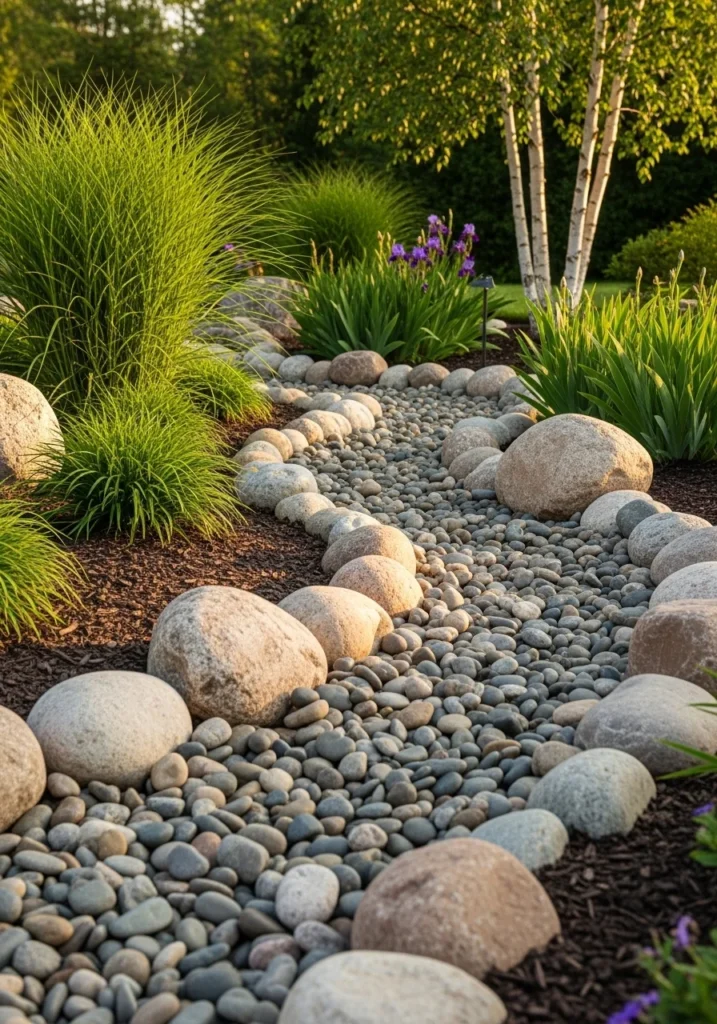
If your yard has a drainage issue, a dry creek bed is the single most useful and most beautiful thing you can do about it. The idea is simple: you design a winding channel that mimics a natural streambed, filled with river rocks in varying sizes. During a storm, it quietly directs water away from your foundation and into a drainage area. The rest of the time, it looks like a gorgeous piece of natural sculpture.
How to build one:
- Dig a shallow, curved trench (6–8 inches deep) in the natural water flow direction
- Lay landscape fabric to suppress weeds
- Place larger boulders (4–6 inch rocks) along the edges for a natural bank look
- Fill the center with 2–3 inch river rocks
- Add ornamental grasses, sedge, or iris plants along the banks
This is one of those projects where doing it yourself is totally feasible. And if you’re already dealing with runoff and soggy patches, check out this deep-dive on water runoff landscaping solutions that covers everything from French drains to rain gardens alongside your creek bed project.
2. Use River Rock as Mulch
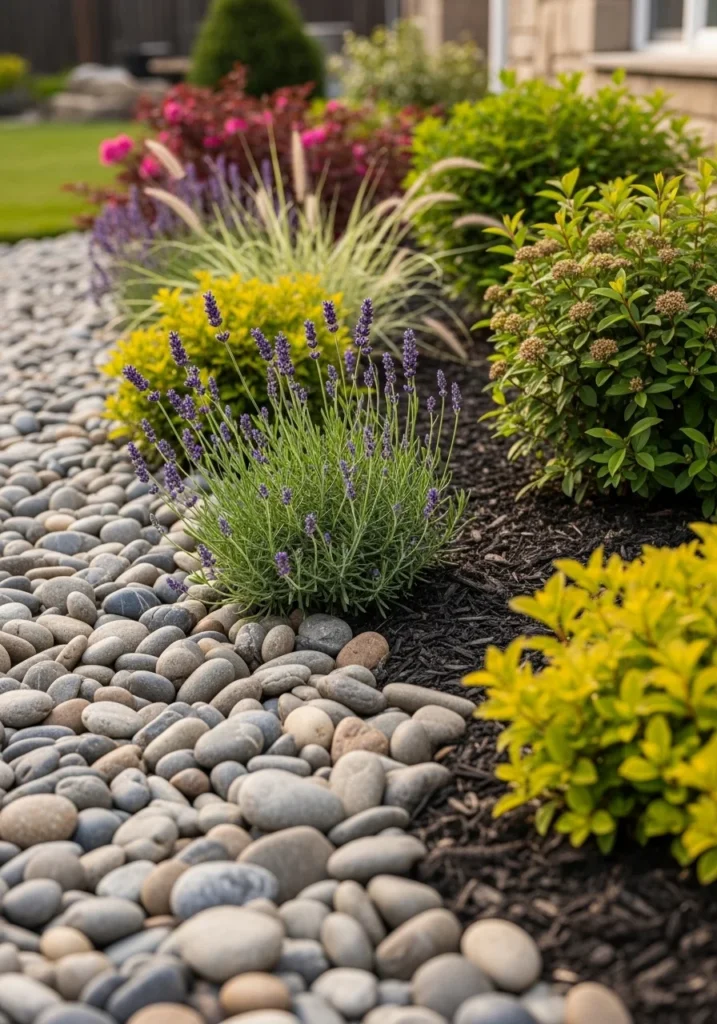
One of the most common questions I hear is: is river rock better than mulch? Honestly, it depends on your goals — but for low-maintenance yards, river rock mulch wins by a landslide. Wood mulch breaks down every year and needs replacing. River rock? It just sits there looking good for decades.
Use a 2–3 inch layer of small river rocks (1–2 inch size) around your shrubs, trees, and flower beds to:
- Retain soil moisture
- Prevent weed growth (especially with landscape fabric underneath)
- Regulate soil temperature
- Eliminate yearly mulch replacement costs
The catch: river rock absorbs and radiates heat, so it’s better for drought-tolerant plants than moisture-loving ones. More on that in the plant pairings section below.
3. Create a River Rock Pathway
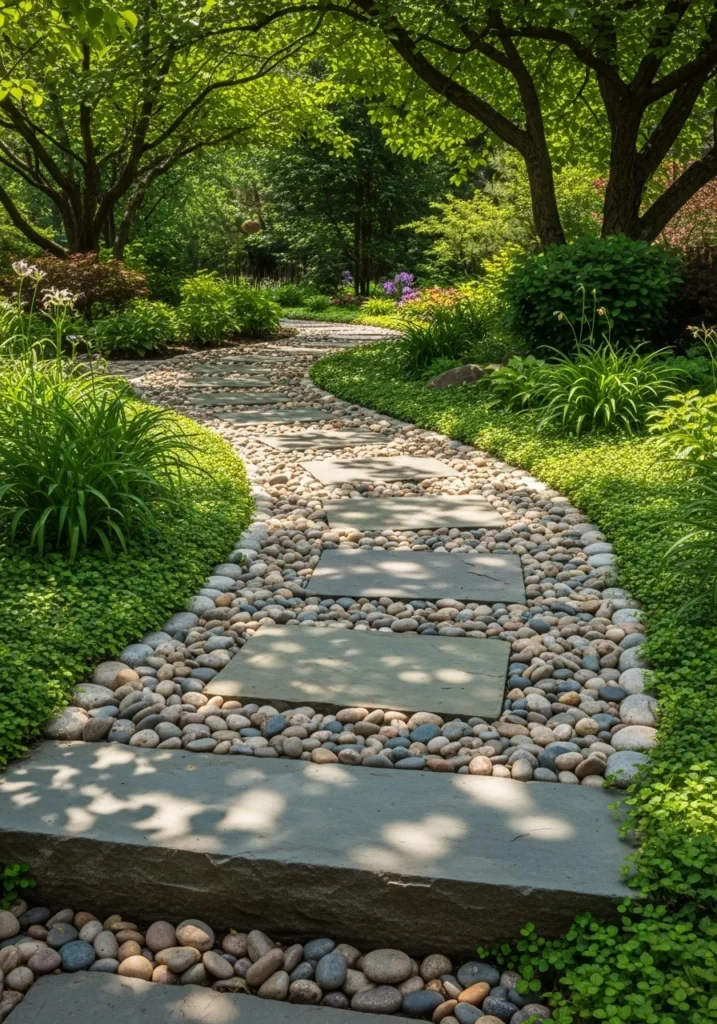
A winding river rock pathway through your garden is one of the most charming things you can add to a yard. It slows people down, adds a natural texture underfoot, and it’s a genuinely fun DIY weekend project.
For pathways, use 1–3 inch river rocks, set into compacted decomposed granite or between stepping stones. Larger flat stones as the actual stepping surface, with river rocks packed tightly between them, gives you that “Japanese garden meets Pacific Northwest” aesthetic that is everywhere in 2026 landscaping.
Want to define the edges? That brings us to number four.
4. Install River Rock Edging and Borders
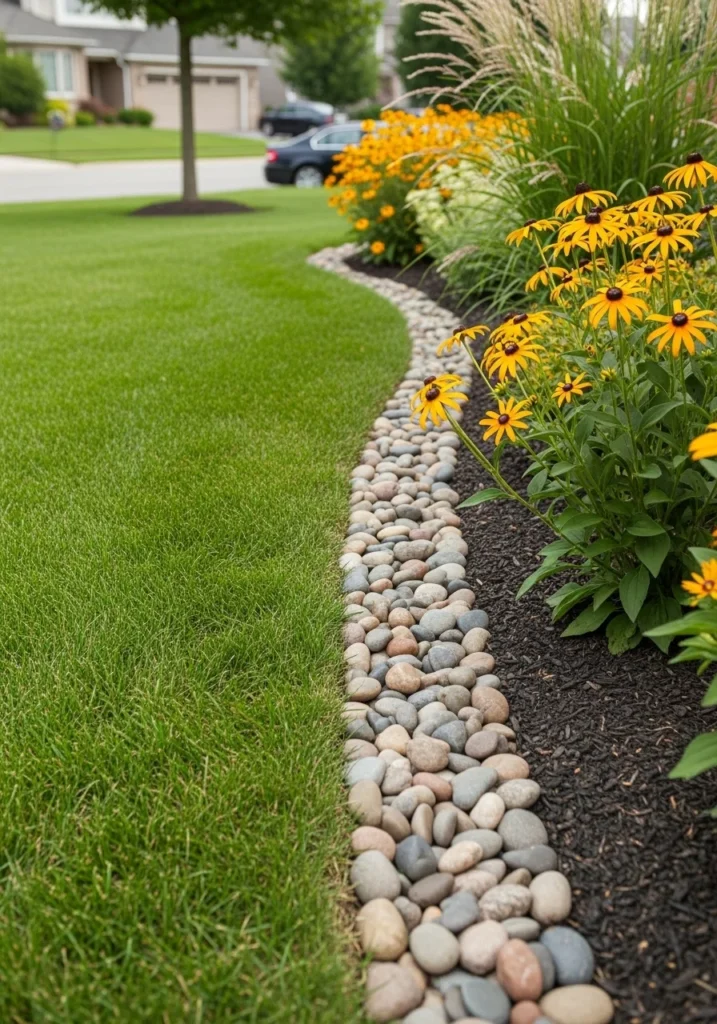
River rock edging is the secret weapon for making any garden bed look intentional. Line the border between your lawn and planting beds with a single or double row of smooth rocks (3–5 inch size works beautifully), and suddenly everything looks designed rather than accidental.
It also solves a practical problem: it keeps mulch or soil from washing onto the lawn and gives mowers a clean edge to work with. Pair this with a budget-friendly fence line for a fully defined yard — if you’re working with limited funds, here’s a great resource on cheap fence ideas that actually look good.
5. Design a River Rock Zen Garden
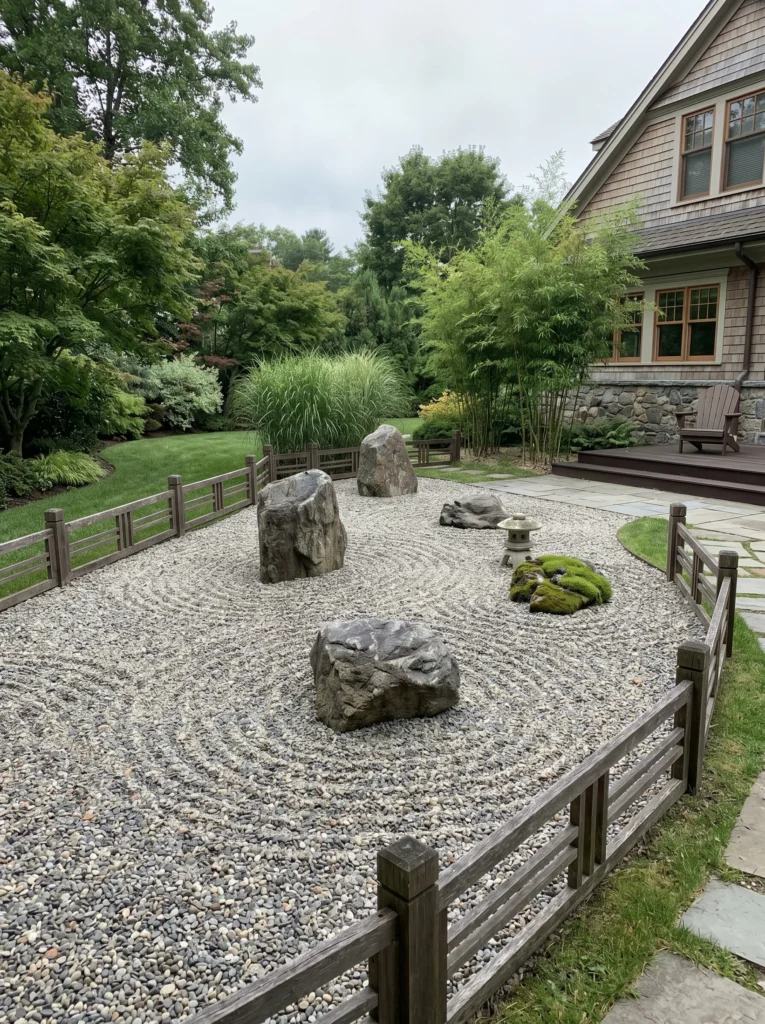
If you have a corner of your yard that just refuses to cooperate — maybe it’s awkward, shady, or just dead space — a river rock zen garden might be the answer. Rake-pattern designs, large anchor stones, and a backdrop of bamboo or ornamental grass create a genuinely serene, meditative space.
This is especially popular in smaller urban yards where you want maximum visual impact without much maintenance. A zen garden with river rocks doesn’t need watering, mowing, or fertilizing. Zero. It just exists beautifully.
6. River Rock Around the House Foundation
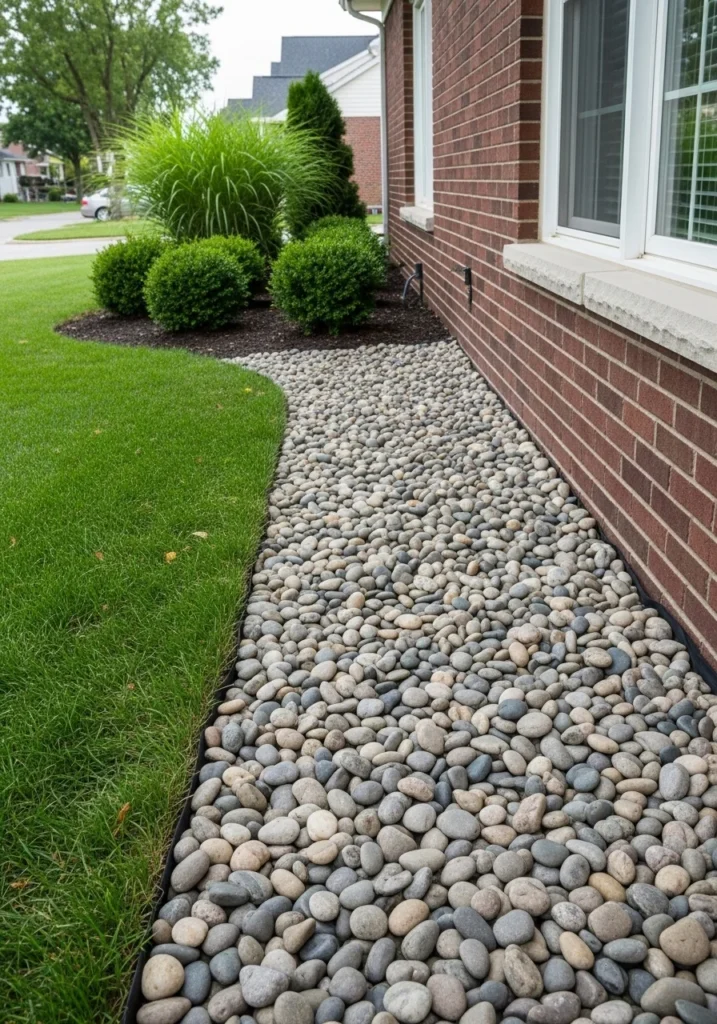
One of the most practical uses of river rock landscaping is placing it around your home’s foundation — typically 12–18 inches wide along the base of the house. This serves multiple smart purposes:
- Redirects rainwater away from the foundation
- Discourages pests (termites love wood mulch; they don’t love rocks)
- Creates a clean, finished look at the base of your siding
- Reduces moisture contact with your foundation walls
Use medium-sized river rocks (2–4 inches) here. They’re large enough not to scatter easily but small enough to fill the space naturally.
7. Xeriscape Your Front Yard
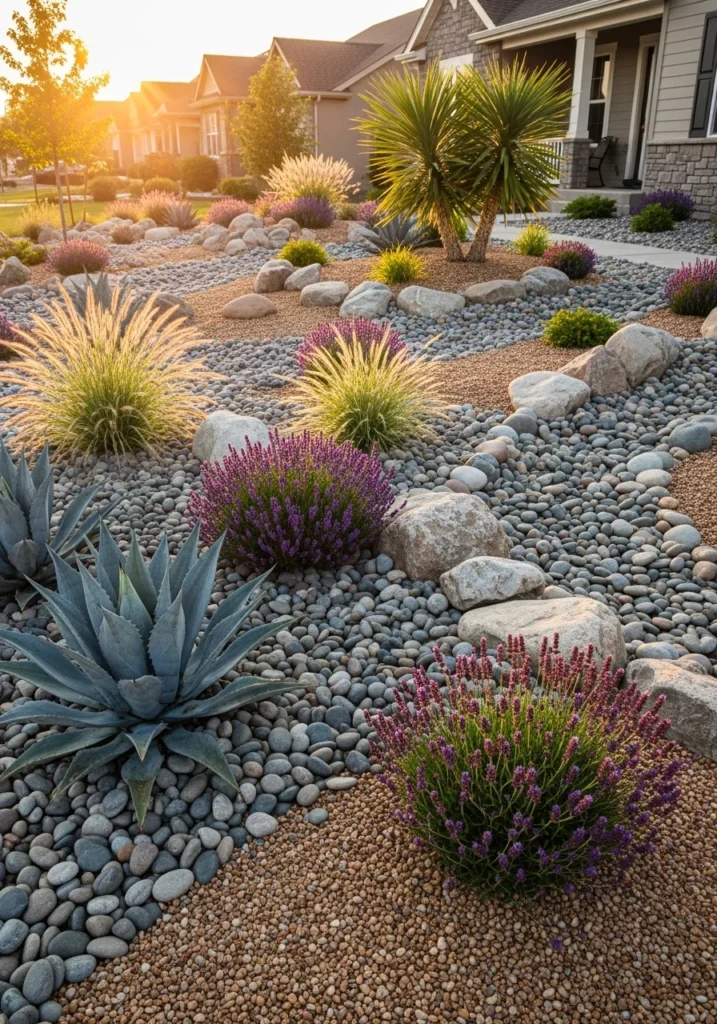
Xeriscape landscaping — designing with drought tolerance and water conservation in mind — is huge right now, especially in the Southwest, Texas, and California. River rock is the backbone material of any xeriscape design.
The recipe is simple: replace traditional grass with a base of river rocks and decomposed granite, then plant drought-tolerant species like agave, yucca, lavender, ornamental grasses, and Russian sage throughout. The result is a front yard that uses almost no water, never needs mowing, and looks like something out of a design magazine.
8. Build a River Rock Drainage Channel
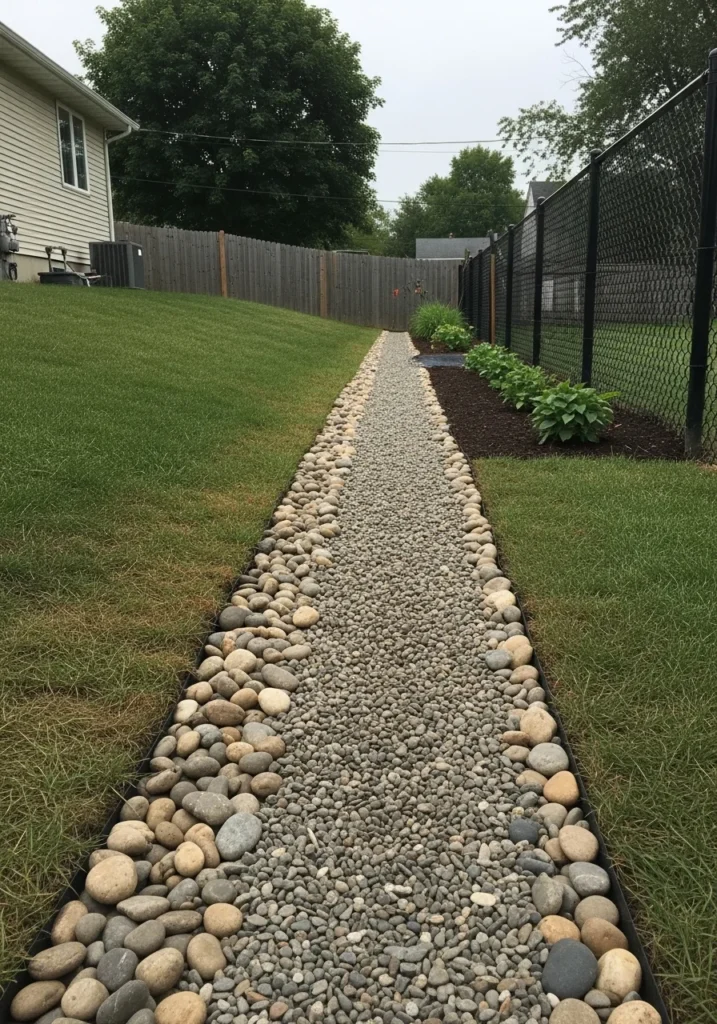
Similar to a dry creek bed but more functional than decorative, a river rock drainage channel solves real waterlogging problems in your yard. If you have spots that stay wet after rain or slopes that cause erosion, a gravel and river rock channel directs flow where you want it.
The key is using a mix: coarser 1–2 inch drainage rock underneath for actual water movement, with prettier smooth river rocks on top for aesthetics. You get the drainage performance and the good looks. Is river rock good for drainage? Absolutely — the gaps between rounded stones let water flow through at the perfect rate.
This approach pairs brilliantly with other smart solutions for managing runoff — the water runoff landscaping guide on our site covers exactly this kind of layered drainage strategy.
9. Pair River Rocks With the Right Plants
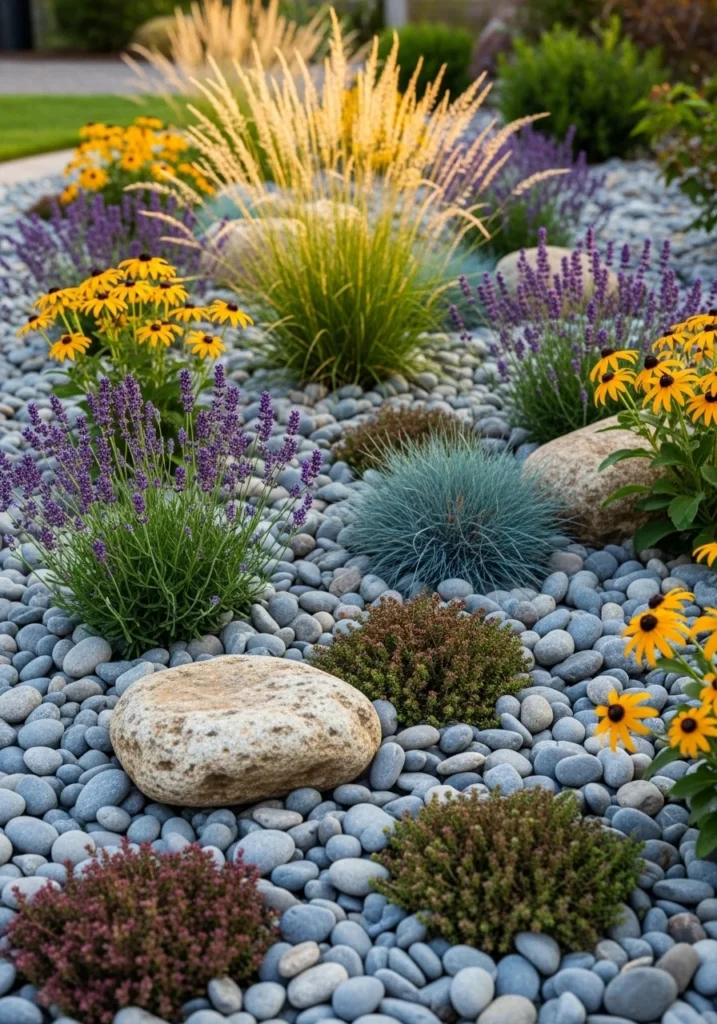
The question of what plants look good with river rock is honestly one of my favorites. The short answer: plants that look like they belong near water, or that thrive in dry, well-drained conditions.
Best plant pairings for river rock gardens:
| Plant | Why It Works | Sun Needs |
|---|---|---|
| Ornamental Grasses (Blue Fescue, Fountain Grass) | Soft texture contrasts beautifully with smooth stone | Full sun |
| Lavender | Purple color pops against gray/tan rocks, loves dry soil | Full sun |
| Agave & Succulents | Architectural, drought-proof, made for rock gardens | Full sun |
| Black-eyed Susan | Cheerful pops of gold over rock mulch beds | Full sun |
| Creeping Phlox | Cascades over rocks beautifully in spring | Full sun/Part shade |
| Japanese Forest Grass | Stunning golden-green cascading over dark river rocks | Part shade |
| Sedum (Stonecrop) | Born to live between rocks, incredibly low maintenance | Full sun |
| Iris | Elegant near dry creek bed banks | Full sun/Part shade |
If you want to add some bright, fast-growing color to your river rock beds, zinnias are a secret weapon — here’s why zinnias deserve a spot in every yard and how to tuck them beautifully into a rock-mulched bed.
10. Create a River Rock Fire Pit Circle
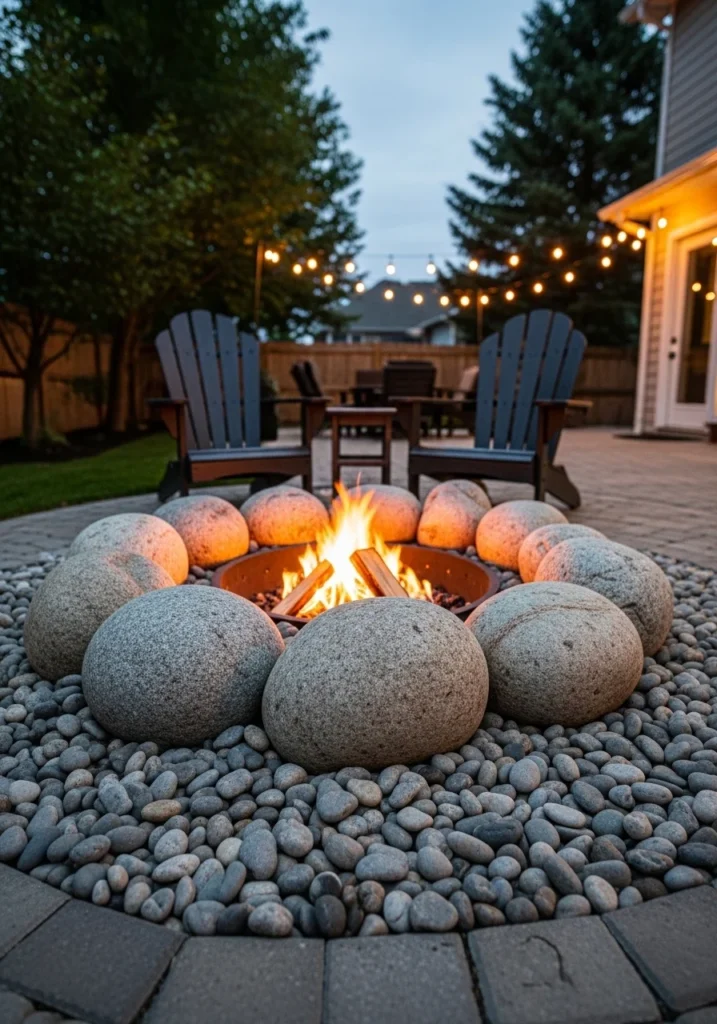
Surround a backyard fire pit with a wide ring of river rocks for a clean, fire-safe hardscape zone. Use larger rocks (4–6 inch) to form a natural-looking circle, then fill in with smaller smooth stones. It solves the muddy-shoes-around-the-fire problem and looks genuinely beautiful, especially at night with the firelight dancing off the stones.
11. Design a Stacked Rock Garden Waterfall Feature
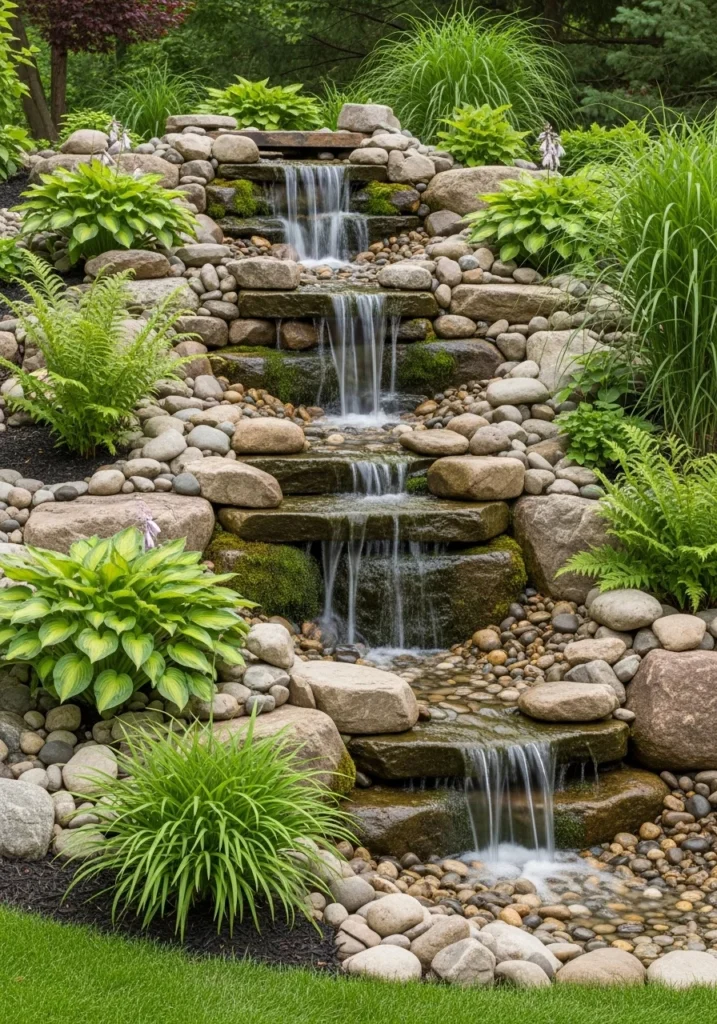
Got a sloped yard? Stacked river rocks and boulders can create a dramatic cascading water feature that doubles as erosion control. Run a recirculating pump line through a channel of stacked stones, and you’ve got the soothing sound of running water with zero natural stream required.
This is a weekend-long DIY project, but the payoff in terms of curb appeal and backyard atmosphere is incredible.
12. Use River Rock for Erosion Control on Slopes
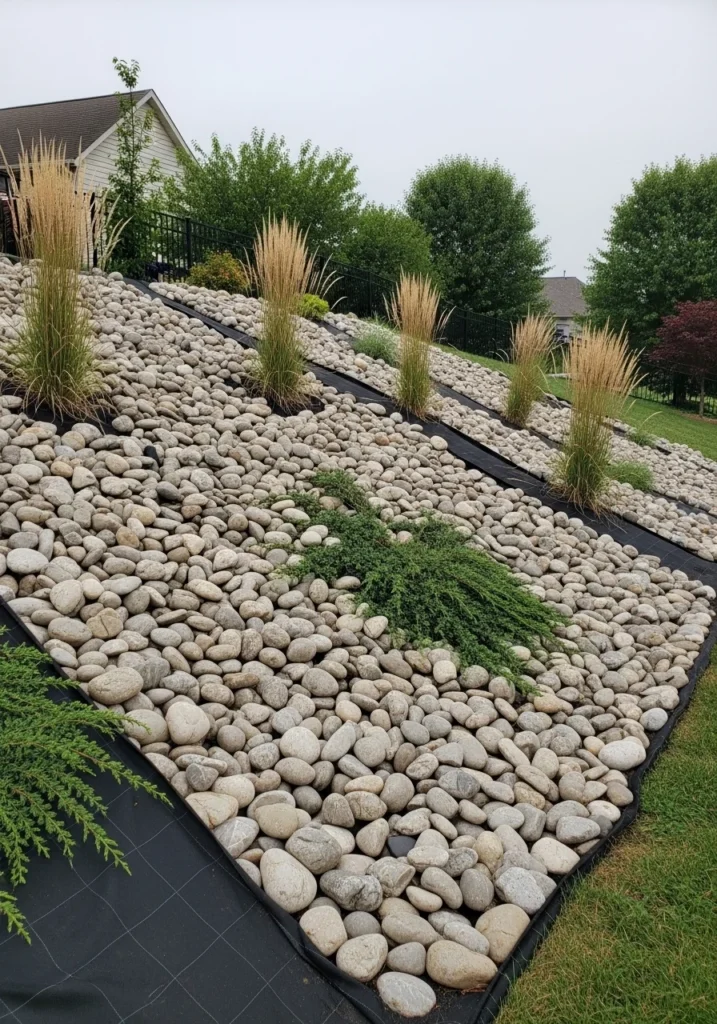
River rock isn’t just decorative — it’s genuinely one of the best natural erosion control materials available. On slopes and hillsides, cover exposed soil with a thick layer of 2–4 inch river rocks (with landscape fabric underneath). The weight and texture of the stones absorbs rainfall impact, prevents soil displacement, and holds everything in place during heavy storms.
Can river rock help prevent erosion? Without question. It’s one of its most powerful uses — and one that solves a real, persistent problem for homeowners with challenging terrain.
13. Build a River Rock Patio Mosaic
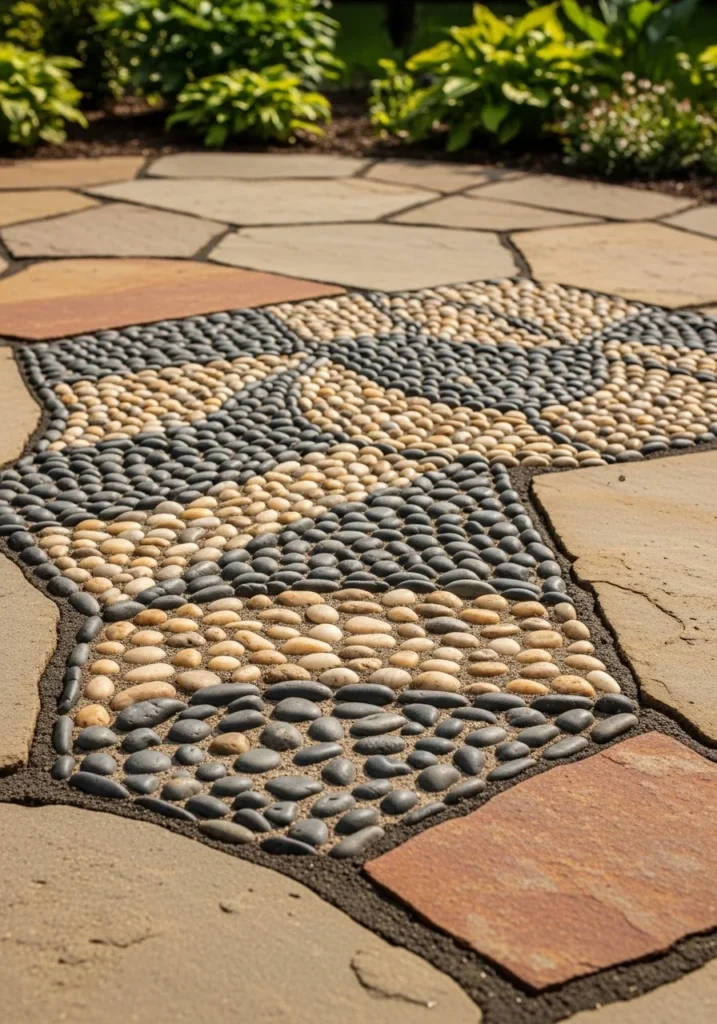
For a more artistic application, consider incorporating river rocks into a patio or courtyard as a mosaic element. Set smaller, flat river rocks into concrete between larger flagstones to create a decorative pattern — geometric, organic, or somewhere in between. The result is a truly custom surface that looks handcrafted because it is.
14. Use River Rock in a Rain Garden
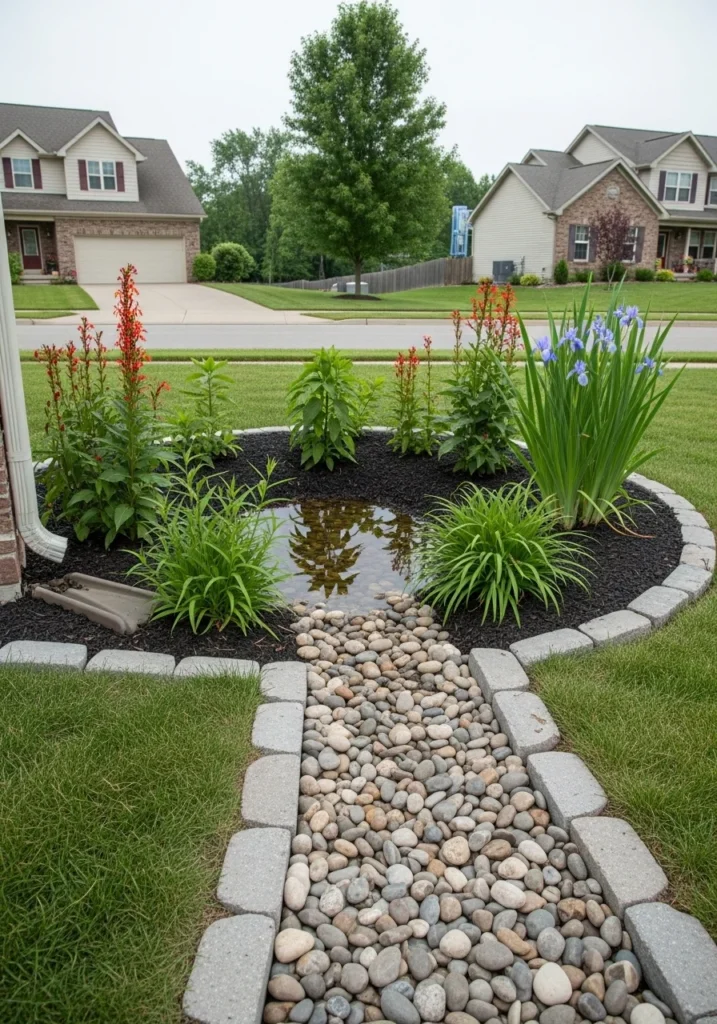
A rain garden is a shallow depression planted with water-tolerant plants, designed to collect and absorb stormwater runoff. River rocks play a crucial dual role: they line the entry point (called the inlet) to prevent erosion as water flows in, and they add a finished, natural aesthetic to what could otherwise look like a muddy dip in the yard.
If you’re managing water from a downspout or driveway runoff, a river rock-lined rain garden is both effective and beautiful.
15. Mix Rock Sizes for a Natural Look
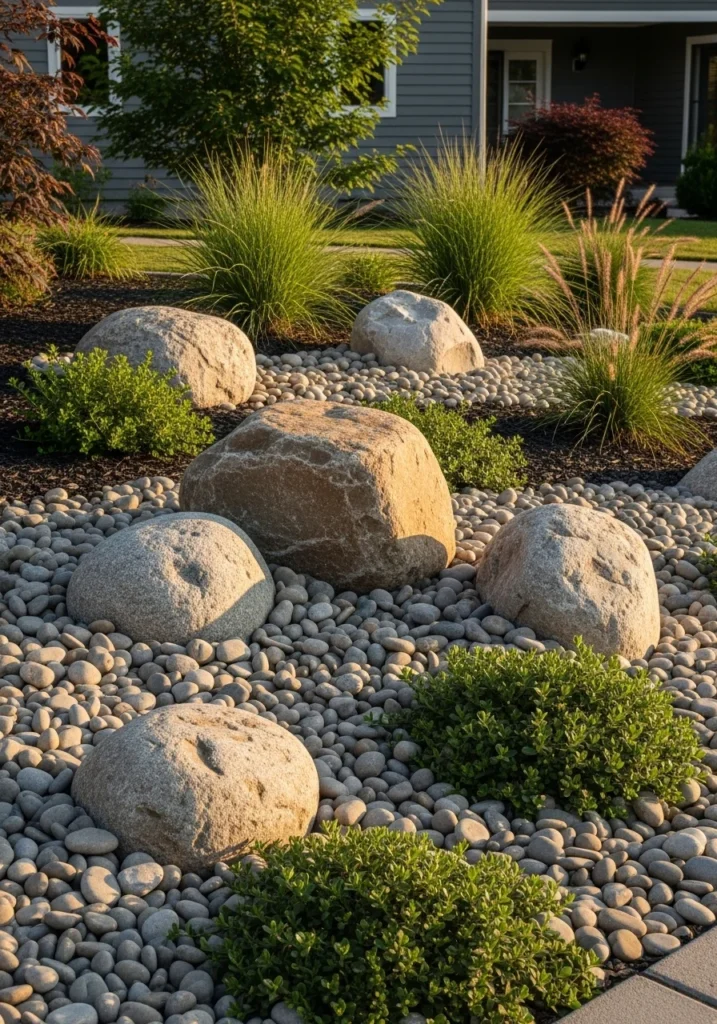
This is the landscaping secret that separates the good river rock yards from the great ones: mix your rock sizes. Nature never uses uniform stone — you’ll always find boulders, mid-sized rocks, small pebbles, and fine gravel coexisting. Mimic that in your design.
Use 8–12 inch anchor boulders as focal points. Surround them with 3–5 inch rocks. Fill in with 1–2 inch river stone. The result reads as natural and intentional rather than “someone just dumped a bag of rocks here.”
How Much River Rock Do You Need?
Here’s a quick reference table to help you estimate:
| Coverage Area | Depth | Approximate Amount |
|---|---|---|
| 10 sq ft | 2 inches | ~0.06 cubic yards / ~100 lbs |
| 100 sq ft | 2 inches | ~0.6 cubic yards / ~1,000 lbs |
| 100 sq ft | 3 inches | ~0.9 cubic yards / ~1,500 lbs |
| 500 sq ft | 2 inches | ~3 cubic yards / ~5,000 lbs |
General formula: (Length × Width × Depth in feet) ÷ 27 = cubic yards needed Add ~10–15% for settling and waste.
What’s the Best River Rock Size for Landscaping?
| Use Case | Best Size |
|---|---|
| Dry creek beds | Mix: 2–3″ center, 4–6″ edges |
| Garden borders/edging | 3–5 inches |
| Mulch replacement | 1–2 inches |
| Pathways | 1–3 inches |
| Foundation perimeter | 2–4 inches |
| Drainage channels | 1–2 inches (sub-layer) |
| Erosion control on slopes | 2–4 inches |
| Decorative/focal boulders | 8–12+ inches |
How to Keep Weeds Out of River Rock Beds
The number one complaint about river rock landscaping? Weeds. Here’s how to win that battle:
- Always install landscape fabric first. Not optional — this is your weed barrier.
- Use a quality, non-woven geotextile fabric (not plastic sheeting, which doesn’t breathe and can damage plant roots).
- Overlap seams by at least 6 inches.
- Apply a pre-emergent herbicide on top of the fabric before laying rocks.
- Top up your rock layer — once rocks thin out to less than 2 inches, sunlight reaches the fabric and weeds germinate in debris that collects on top.
- Spot-treat with a targeted herbicide (like glyphosate) for any weeds that do come through. A quick spray twice a year handles almost everything.
What’s the Cheapest Way to Landscape with River Rock?
Budget landscaping with river rock is entirely doable. Here’s how to keep costs down:
- Buy in bulk, not bags. Bulk river rock from a stone yard is typically 50–70% cheaper per ton than bagged rock from a home improvement store.
- Do the labor yourself. Installation is the biggest cost driver.
- Start small. Convert one garden bed or a problem drainage area first.
- Source locally. River rock pricing varies significantly by region — stone from a local quarry or supplier beats national retailers.
- Skip the fancy varieties. Standard gray/tan mixed river rock is the cheapest and looks perfectly natural.
Conclusion
River rock landscaping is one of those rare things in home design that’s genuinely both practical and beautiful. It handles drainage, suppresses weeds, reduces maintenance, prevents erosion, and — when done right — makes your yard look like a professional designed it.
Whether you start with a simple garden border, tackle a full dry creek bed, or go all-in on a xeriscape front yard makeover, river rock gives you a return on investment that’s hard to beat. It just works. And it keeps working, year after year, without demanding much from you in return.
So the real question isn’t should you use river rock — it’s where do you start?
Pick one idea from this list, pull up a photo for reference, and get planning. Your future low-maintenance, strikingly beautiful yard is exactly one weekend project away.
Frequently Asked Questions
Can river rock be used for pathways and borders?
Absolutely. River rock works beautifully as both a pathway fill material (especially between stepping stones) and as a clean, natural border along garden beds and driveways.
Does river rock work in front yard landscaping?
Yes — in fact, front yard river rock landscaping is one of the most popular and high-impact applications. It dramatically boosts curb appeal while slashing maintenance time and water usage.
Is river rock better than mulch?
For low-maintenance and permanent installations, yes — river rock outlasts mulch indefinitely and never needs replacing. For moisture-sensitive plants, organic mulch may be better as it doesn’t retain heat.









3 thoughts on “River Rock Landscaping: 15 Creative Ideas to Transform Your Yard in 2026”