

From tiny moss paths to twinkling lights — your complete guide to building the most magical miniature garden
You know that feeling when you walk past a neighbor’s yard and do a double-take? Not because of the flowers, but because of that tiny little door attached to a tree trunk, or a miniature stone path winding through a patch of moss. That’s the fairy garden effect — and honestly? It’s one of the most fun, creative, and surprisingly easy gardening projects you can take on.
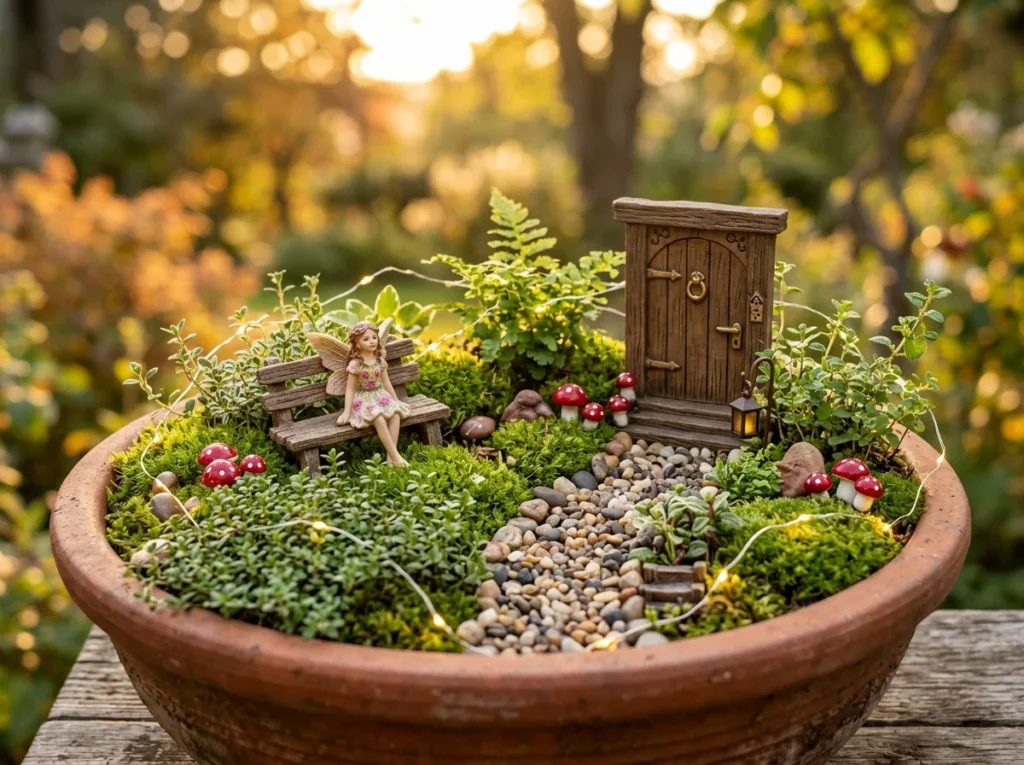
Whether you’ve got a sprawling backyard or just a sunny windowsill, fairy gardens are for everyone. They’re whimsical without being overwhelming, creative without being expensive, and satisfying in a way that bigger landscaping projects sometimes just aren’t. I’m talking about the kind of project where you step back, look at what you made, and think, “Okay, yeah. That’s actually magical.”
In this guide, I’ve rounded up 20 of the best fairy garden ideas — from classic container builds to full backyard enchanted corners. You’ll also find plant picks, decoration tips, DIY hacks, and answers to the most common questions people have when they’re just getting started. Let’s dig in (literally).
Table of Contents
What Exactly Is a Fairy Garden?
A fairy garden is a miniature landscape designed to look like a tiny world — complete with small plants, pathways, tiny houses, figurines, and decorative elements that create the illusion of a magical, fairy-inhabited space. Think of it as dollhouse meets outdoor gardening.
They can be built in containers, pots, raised beds, or carved right into a corner of your yard. They can live indoors on a bookshelf or outside next to the patio. The rules are loose, the creativity is high, and the results are — every single time — genuinely charming.
Fairy gardens became trendy in the U.S. around 2010, but the concept has deep roots in Celtic and European folklore, where leaving tiny garden spaces was thought to invite good luck from the “little people.”
20 Fairy Garden Ideas to Try This Season
1 The Classic Pot Fairy Garden
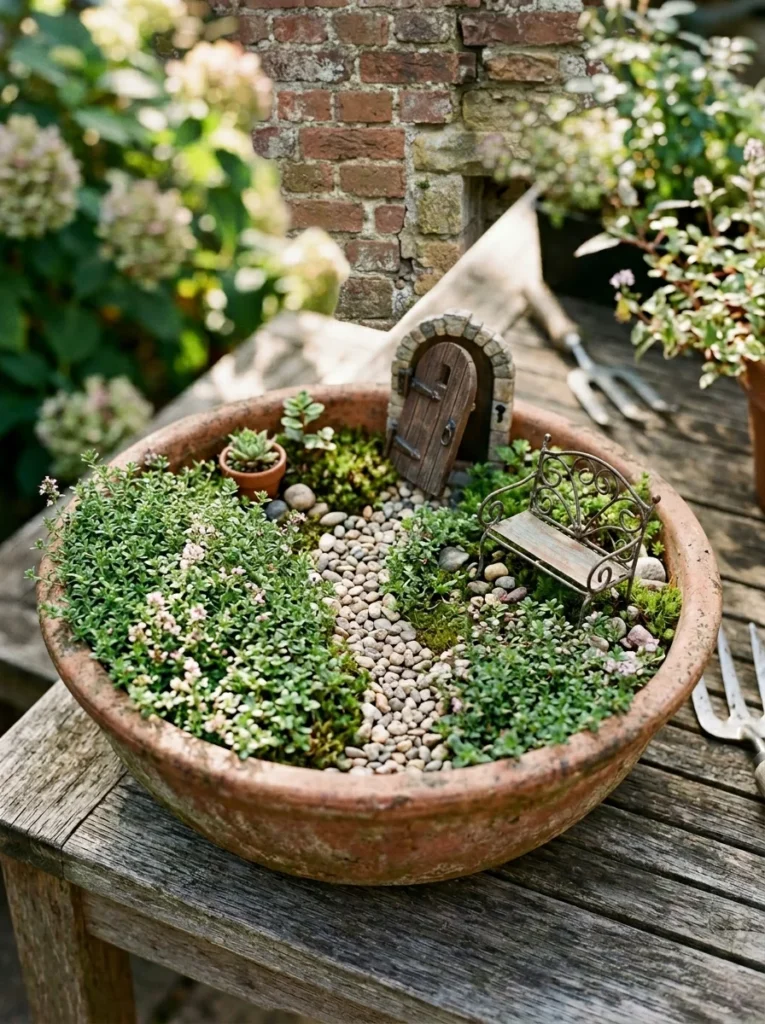
If you’re just starting out, a single terracotta pot is honestly all you need. Fill it with potting mix, add a few small plants like thyme or mind-your-own-business, and tuck in a tiny wooden door against the rim. Add a pebble path, a mossy patch, and a miniature bench. Done. Beautiful. Magical. Cost: under $20.
💡 Pro Tip: Use a wide, shallow pot — it gives you more “floor space” to work with, just like a real garden.
2 Succulent Fairy Garden
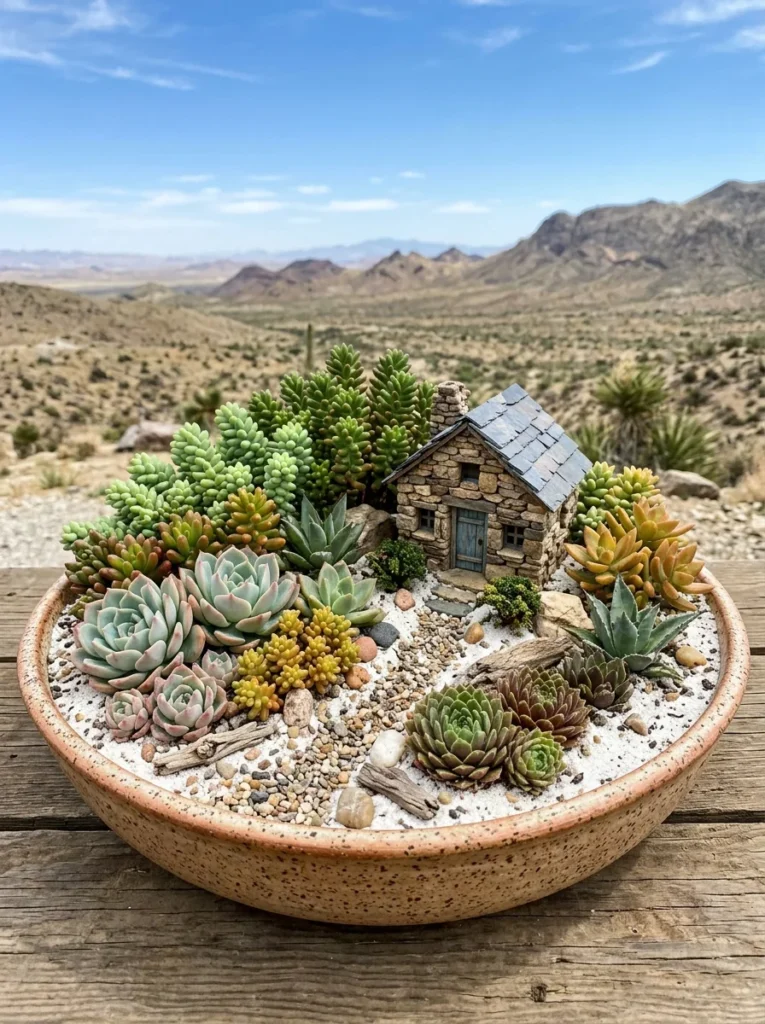
Succulents and fairy gardens are a match made in low-maintenance heaven. Their sculptural shapes — echeverias, haworthias, sedums — look like alien trees or oversized jungle plants when you’re viewing the scene from a fairy’s perspective. Build this one in a wide dish planter with sandy, gritty soil, add a few rocks and a tiny cottage, and you’ve got a desert fairy world that basically takes care of itself.
3 Moss and Rock Woodland Scene
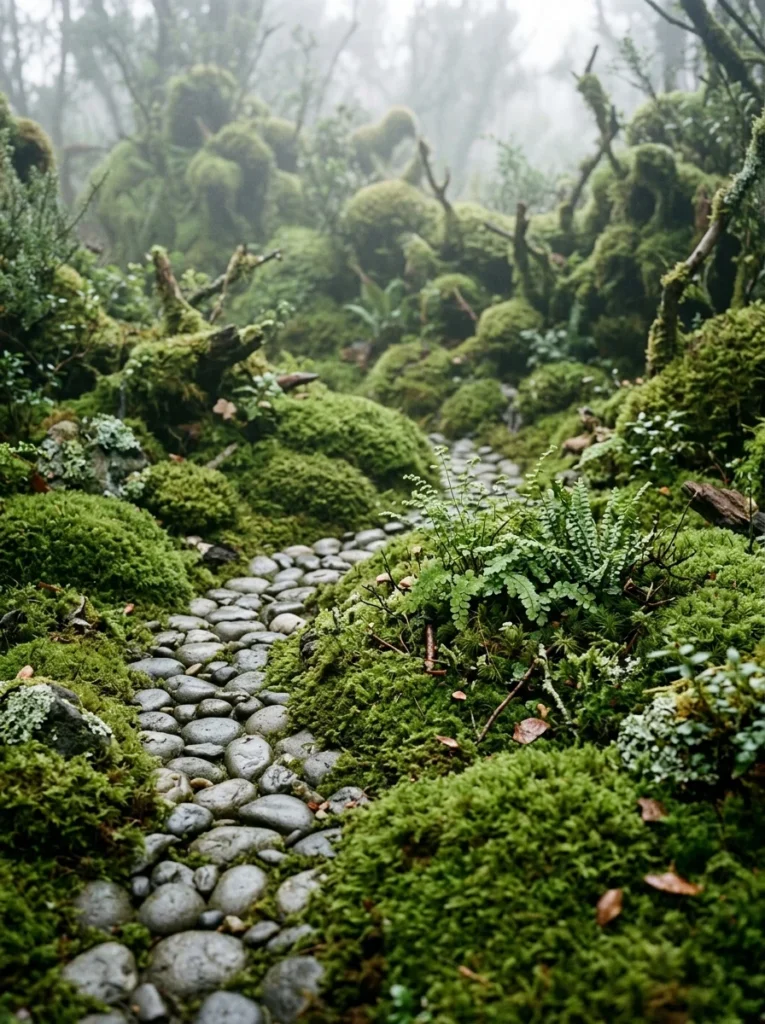
Sheet moss is probably the single most transformative ingredient in any fairy garden. Lay it down as a ground cover and immediately everything looks more ancient, more mysterious, more there. Pair it with smooth river rocks to create winding paths, add a few ferns, and you’ve got a woodland fairy realm that looks like it’s been there for centuries. This pairs beautifully with the river rock landscaping ideas we covered here if you want to extend the look beyond the garden itself.
4 Terrarium Fairy Garden
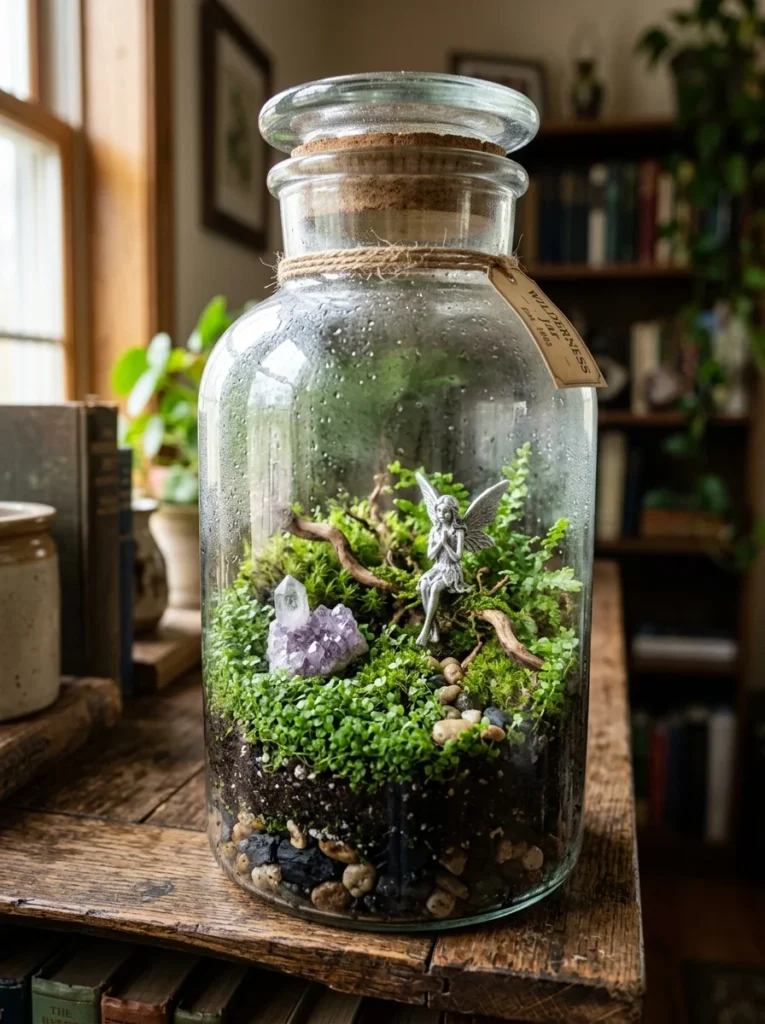
Take a large glass terrarium — the kind with a wide opening — and build your entire fairy world inside. This is especially perfect for indoor fairy gardens. Use miniature ferns, baby tears (Soleirolia soleirolii), or small mosses as the green base. The glass walls create a kind of snow-globe effect that’s genuinely magical, especially near a window.
5 Enchanted Tree Stump Garden
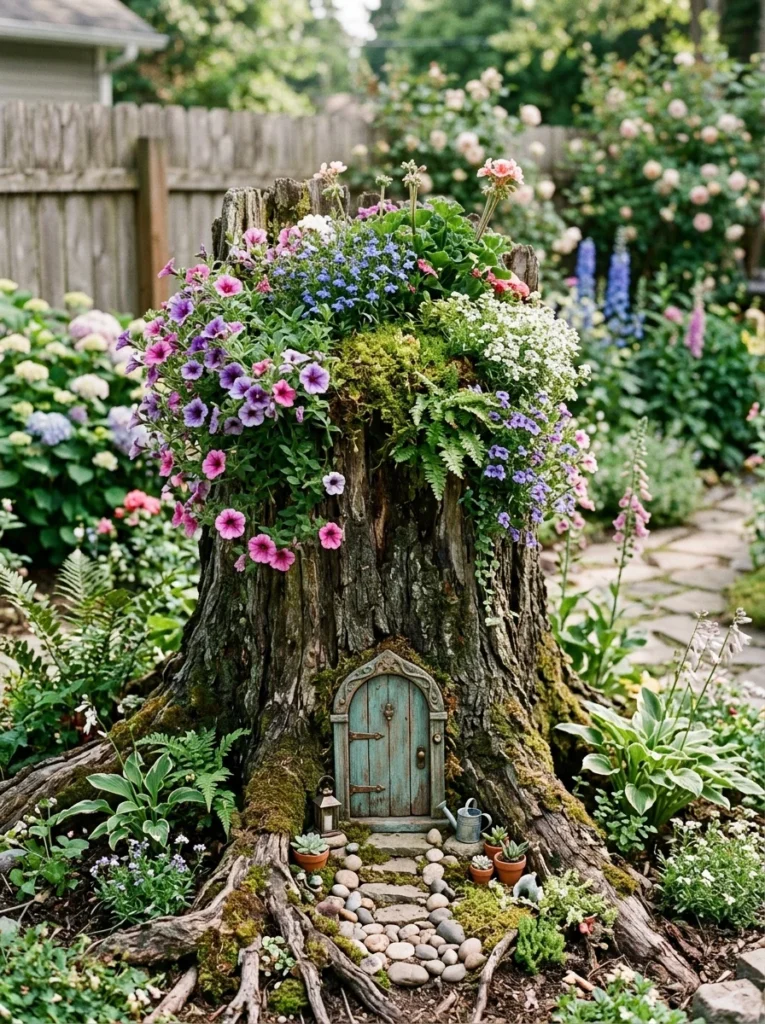
Got a tree stump in the yard? Don’t pull it out — convert it. Hollow out the top, fill it with soil, plant some moss and creeping plants, add a few tiny doors and fairy figurines to the base of the stump, and you’ve got a centerpiece that looks like it was always meant to be there. This one always gets comments from guests.
6 Fairy Garden with a Water Feature
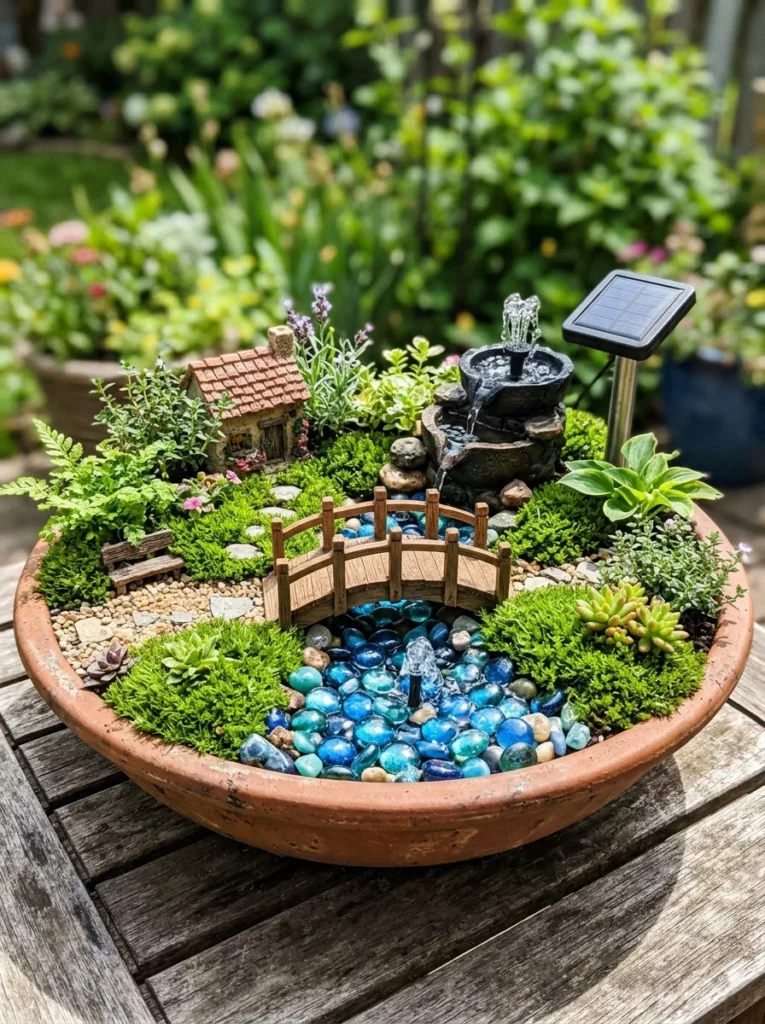
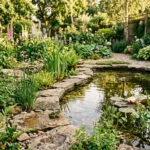
Nothing says “this place is magical” quite like tiny flowing water. A small solar-powered tabletop fountain tucked into your fairy garden creates the illusion of a babbling brook. Surround it with smooth pebbles, a small bridge figurine, and some water-loving plants like dwarf sedge or baby’s tears, and the whole scene transforms into something genuinely serene.
7 Fairy Light Garden (Evening Magic)
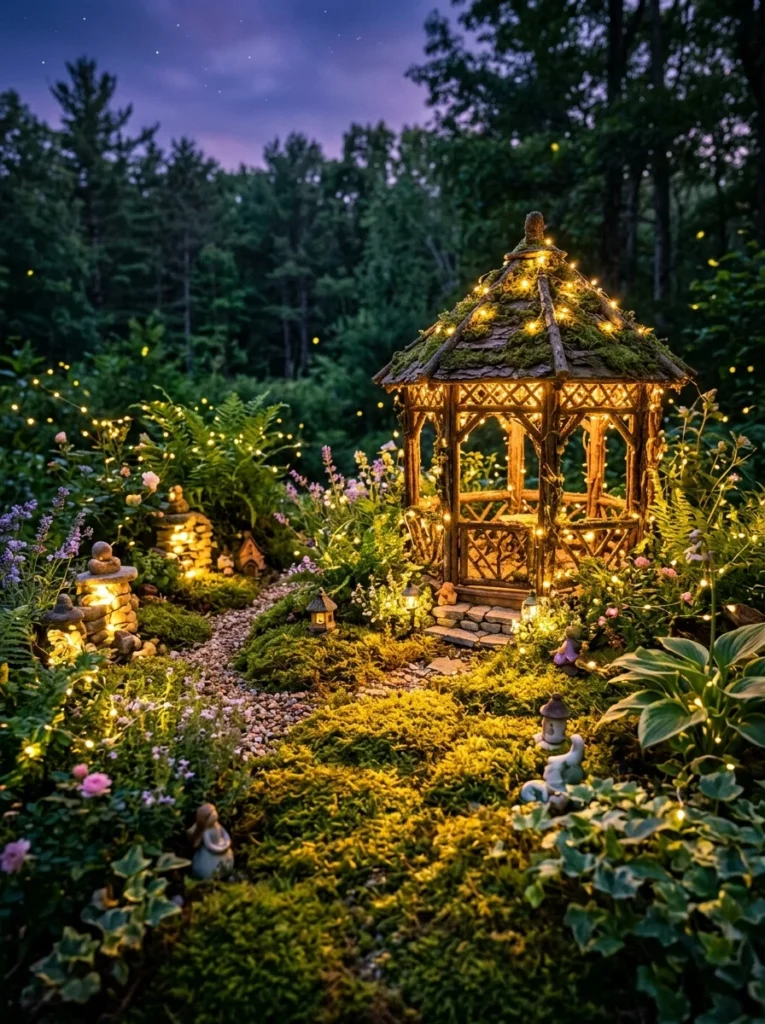
Add a string of tiny LED fairy lights — the kind on thin copper wire — winding through your garden, and suddenly the whole thing comes alive at night. Tuck them between the moss, drape them over miniature trees, wrap them around tiny posts. This is the upgrade that makes people stop on evening walks to stare.
💡 Pro Tip: Solar-powered micro LED strings are ideal — no wiring, no fuss, and they charge all day to glow beautifully all night.
8 Vintage Teacup Fairy Garden
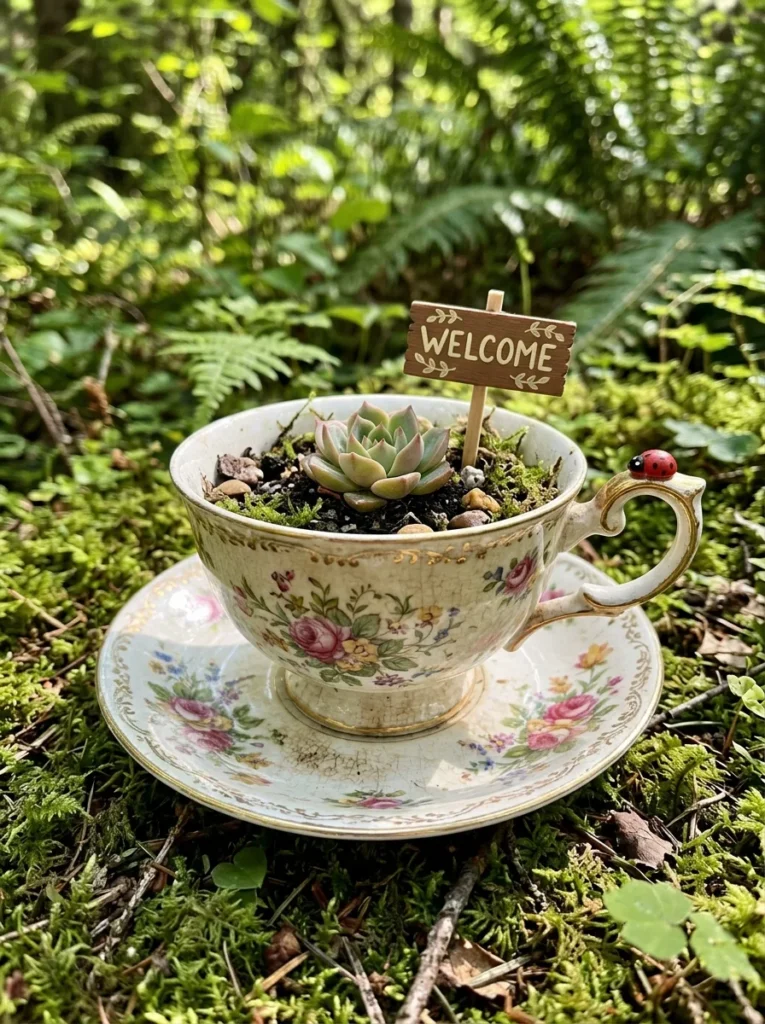
This one’s for the maximalists among us. Take a large vintage teacup and saucer, fill the cup with soil and a tiny succulent or thyme, add a miniature figure and a pebble or two, and set it on the saucer (which becomes a “courtyard”). It’s precious, it’s quirky, and it makes a genuinely wonderful centerpiece for a patio table or shelf.
9 Fairy Cottage Garden Corner
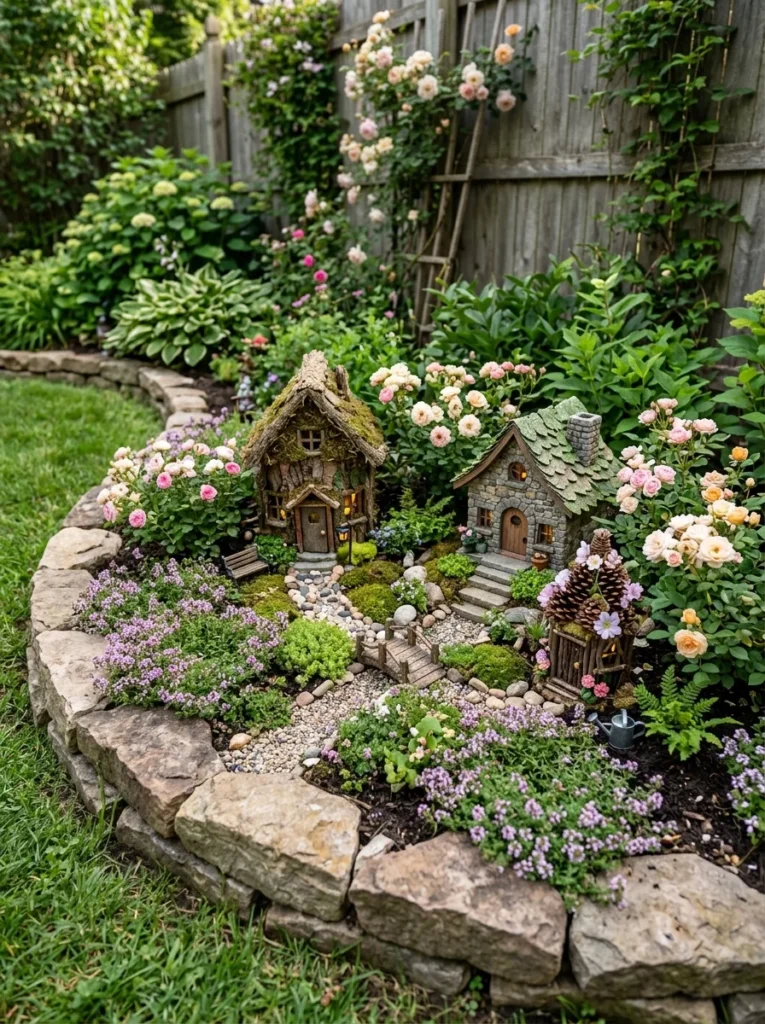
Instead of a contained garden, carve out an actual corner of your yard — maybe 3×3 feet — and dedicate it to a fairy realm. Edge it with small river rocks or a low decorative border, plant a combination of creeping thyme, hostas, and miniature roses, and scatter figurines, tiny houses, and mushroom decorations throughout. This is the outdoor fairy garden idea that truly becomes a feature of your landscape.
10 Fairy Garden with a Fire Pit Seating Area
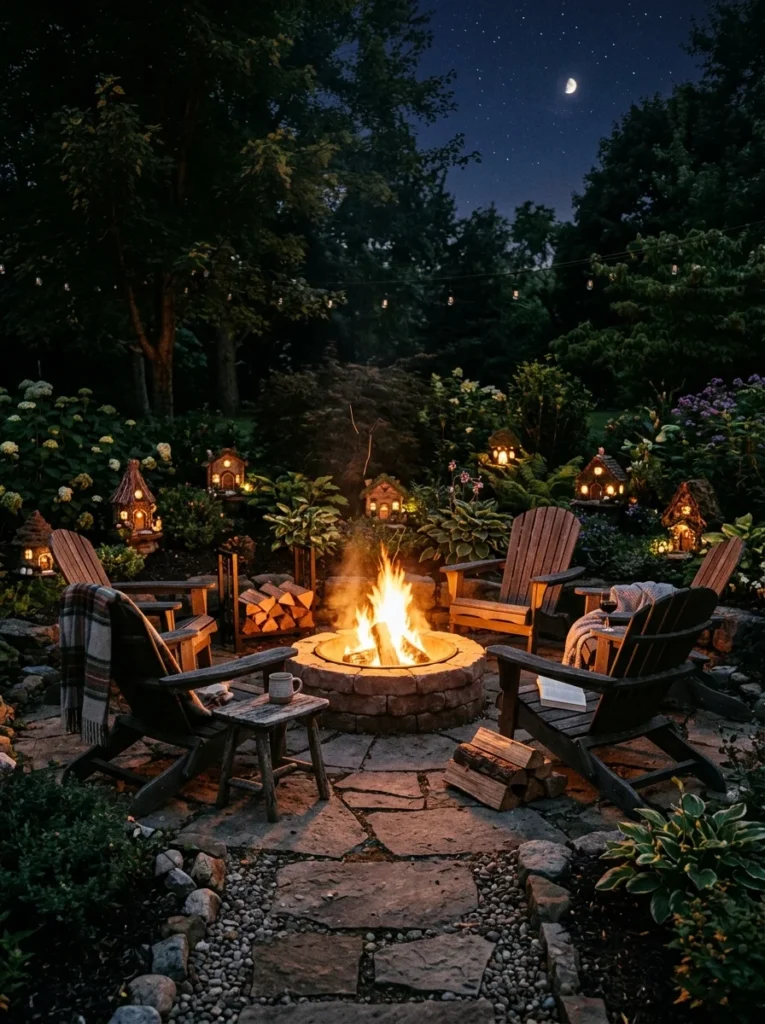
If you already have a fire pit area in your backyard, planting a fairy garden nearby creates an enchanting atmosphere for evening gatherings. Plant soft ground covers and tiny flowering plants around the perimeter, add some lit fairy doors at the base of nearby trees, and the whole seating area feels transformed. You can get seriously inspired by these backyard fire pit seating arrangements and layer the fairy garden elements right in.
11 Zen Fairy Garden
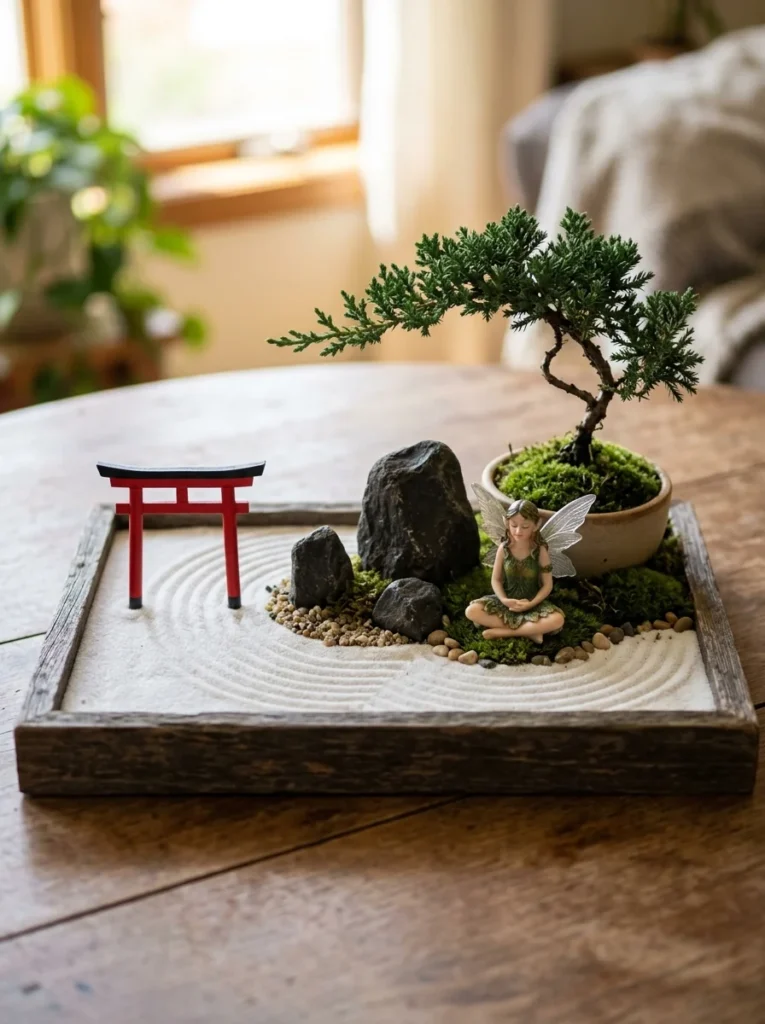
Blend the calming principles of a zen garden with fairy garden whimsy. Use fine white or grey sand as the base, add carefully placed rocks and a tiny rake, but also sneak in a miniature torii gate or a small fairy sitting on a stone. The contrast between zen minimalism and fairy-tale detail is surprisingly satisfying.
12 Beach-Themed Fairy Garden
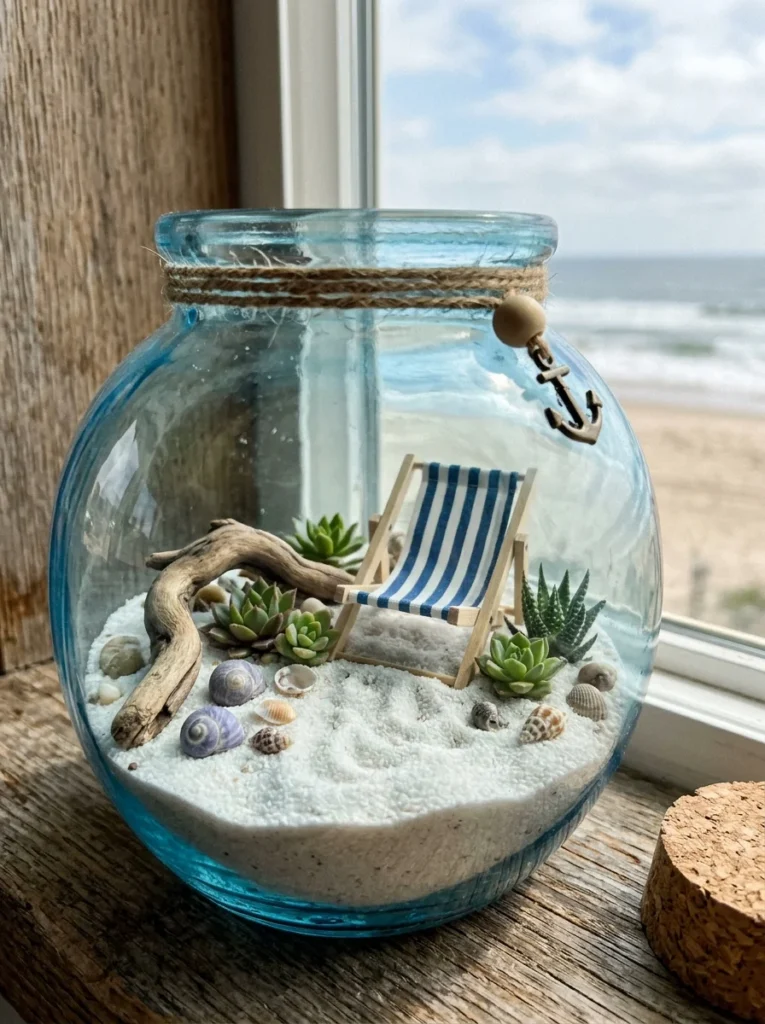
Line the base with aquarium sand, add small seashells, a tiny driftwood “log,” a miniature beach umbrella and chairs, and a few succulents for the “coastal dunes” effect. Small blue glass pebbles make a perfect “ocean.” This is a beautiful, unique theme that nobody else in your neighborhood will have.
13 Fairy Garden Under a Garden Bench
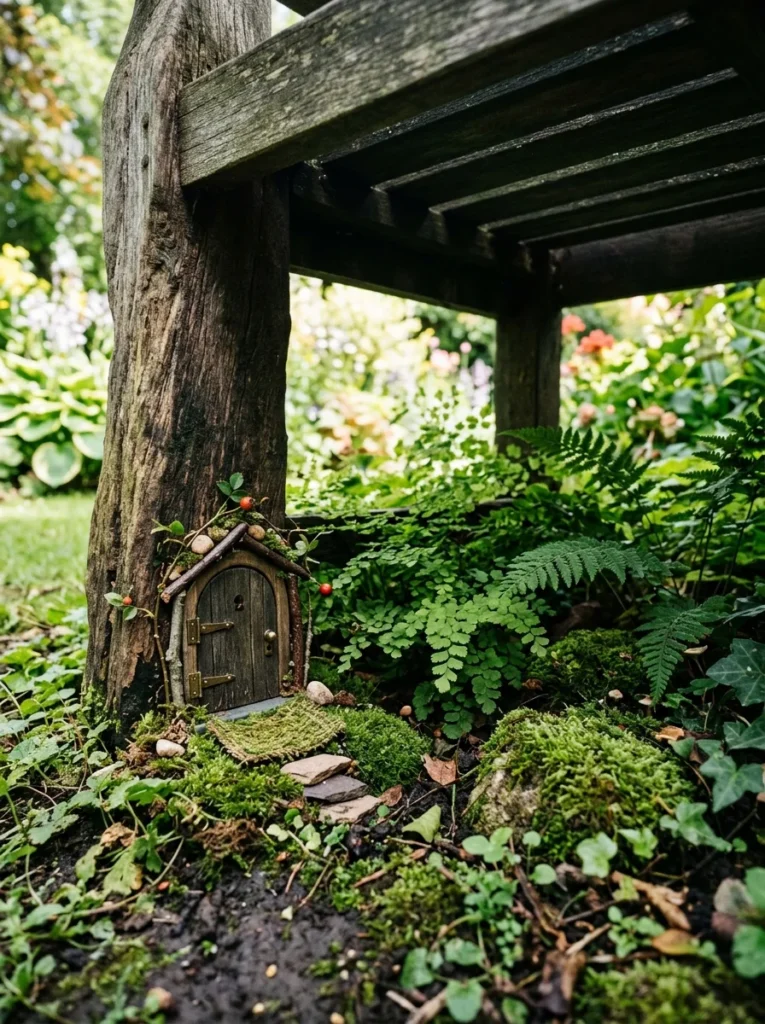
The shaded, slightly hidden space under a garden bench is fairy-garden gold. Plant shade-tolerant moss and ferns, add some tiny mushroom figurines, and tuck a small fairy door into the base of the bench leg. It’s subtle, unexpected, and absolutely delightful when someone notices it.
14 Hanging Basket Fairy Garden
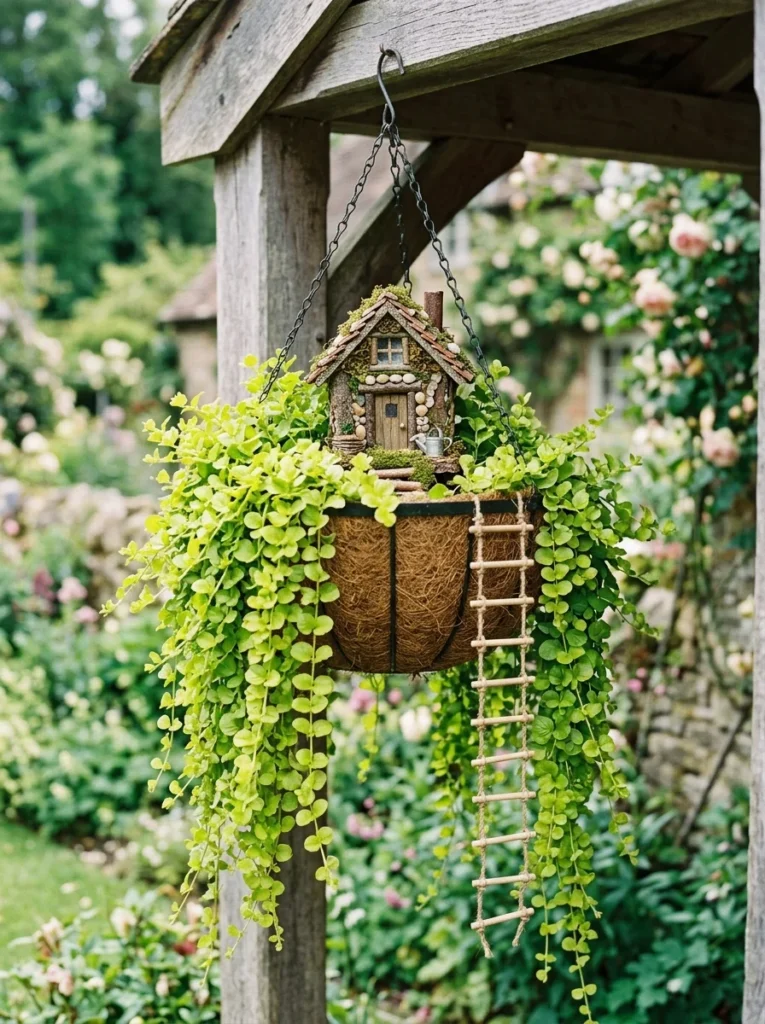
Convert a large hanging basket into a tiered fairy world. Use the top layer for trailing plants like creeping Jenny or lobularia, and nestle small figurines and accessories among them. Hang it from a porch beam or pergola at eye level, and suddenly people are walking up to it for a closer look every single time.
15 Indoor Window Box Fairy Garden
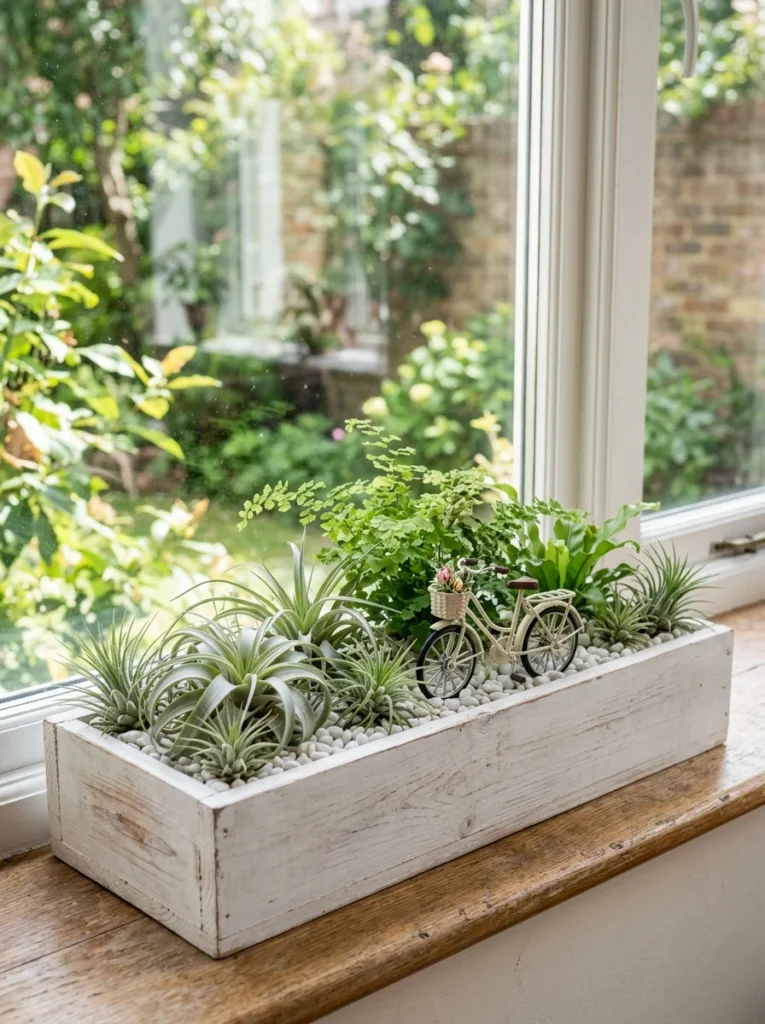
A long window box placed on an indoor sill is the perfect canvas for a miniature indoor fairy garden. Use air plants, small ferns, or mini orchids (yes, they exist), add tiny figurines and accessories, and you’ve got a living piece of art that changes with the light throughout the day.
16 Mushroom Village Fairy Garden
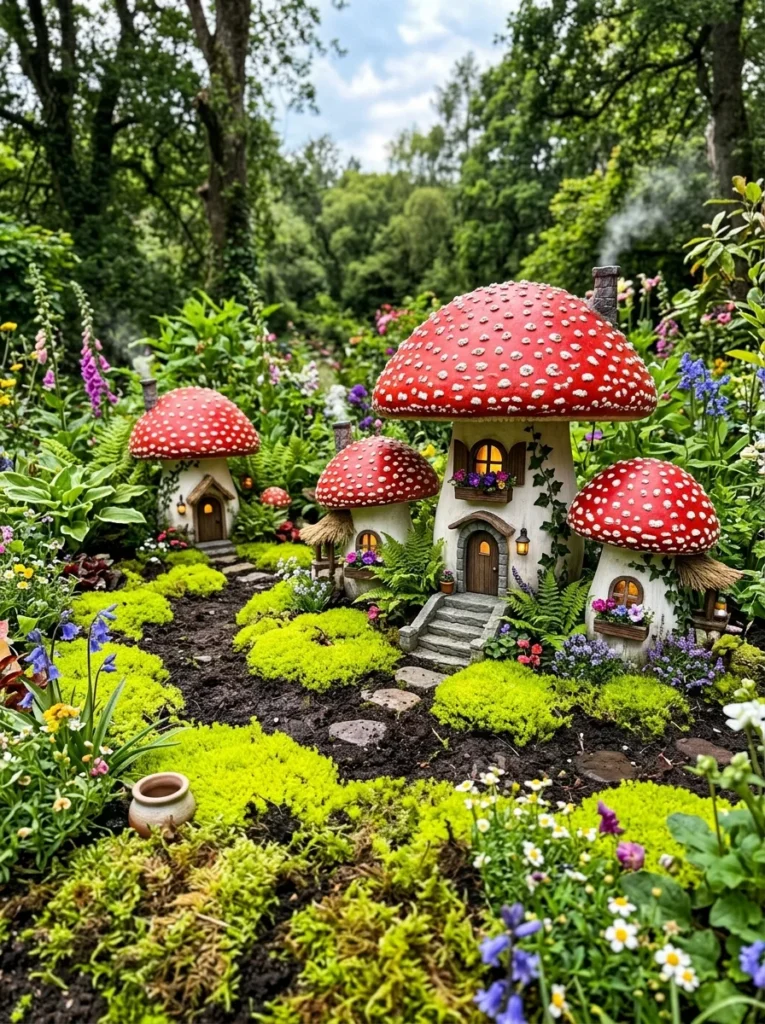
Lean into the mushroom aesthetic hard: oversized decorative mushrooms, mushroom-shaped houses, mushroom stepping stones. Pair with rich green moss, dark soil, and deep forest plants for a truly otherworldly scene. This is the fairy garden idea that goes viral on Pinterest, I promise.
17 Fairy Garden Raised Bed
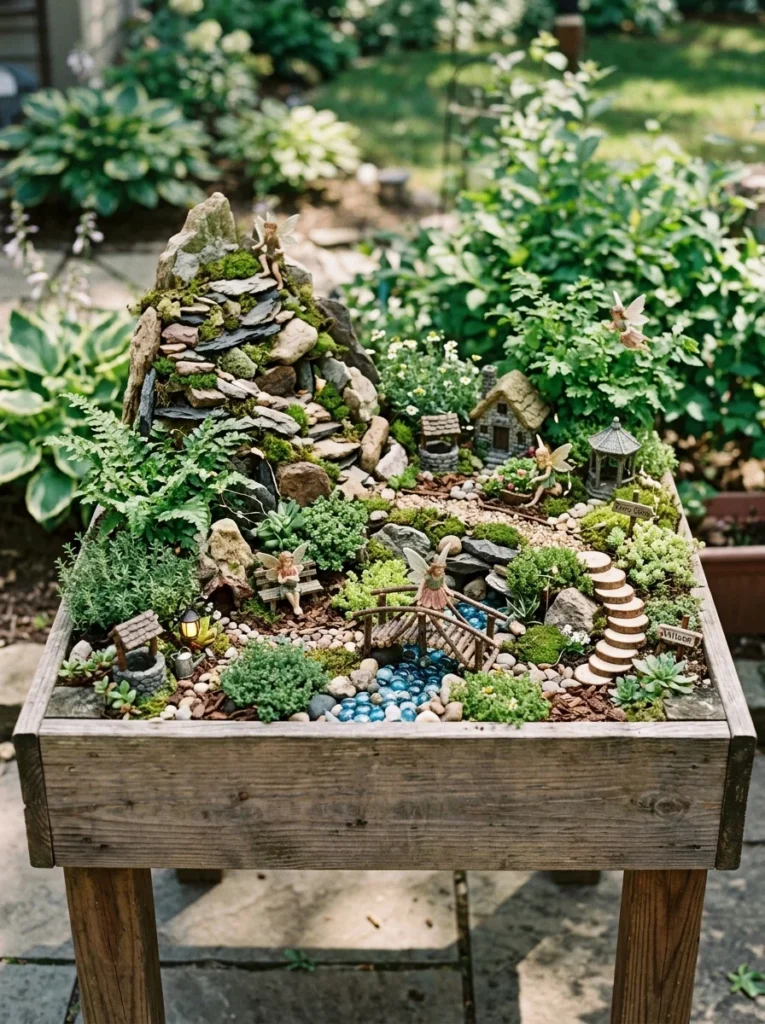
Take a small raised wooden bed — even just 2×2 feet — and dedicate it entirely to a fairy landscape. You get the depth for real plants, the visual elevation that makes it pop, and the defined border that makes the whole thing feel intentional and polished.
18 Butterfly & Fairy Garden Combo
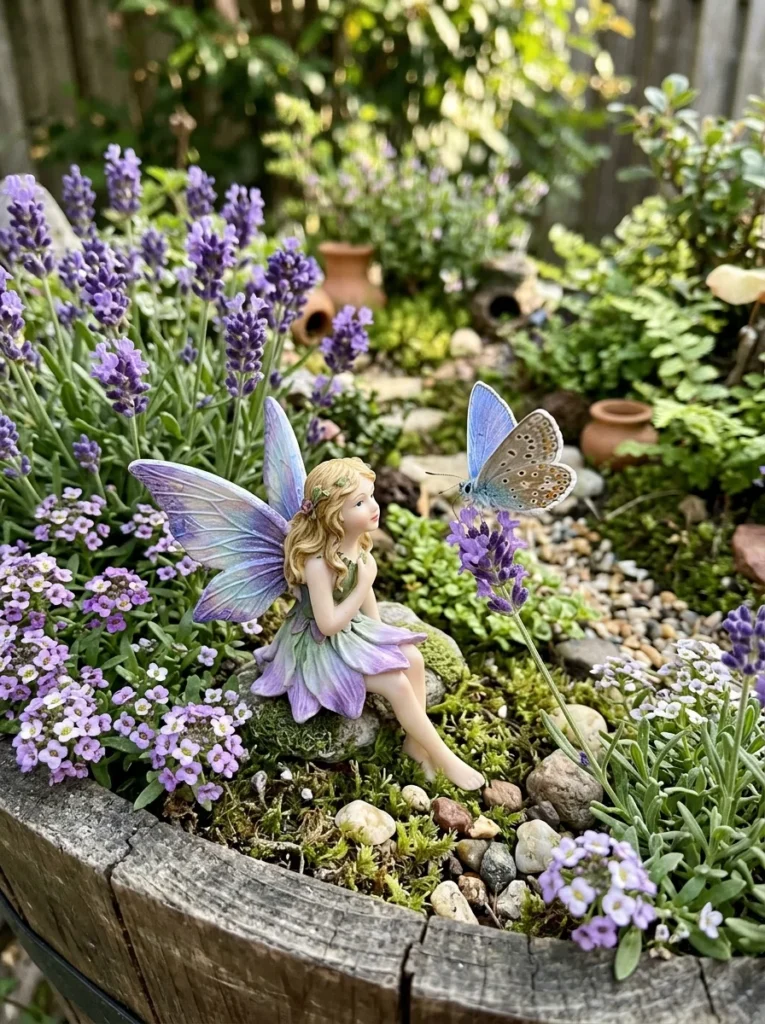
Plant lavender, alyssum, and echinacea (all miniature-sized if possible) to actually attract butterflies — then add fairy figurines and accessories that interact with the flowers. When a real butterfly lands in your fairy garden, it’s a moment you’ll want to photograph immediately.
19 Seasonal Themed Fairy Garden
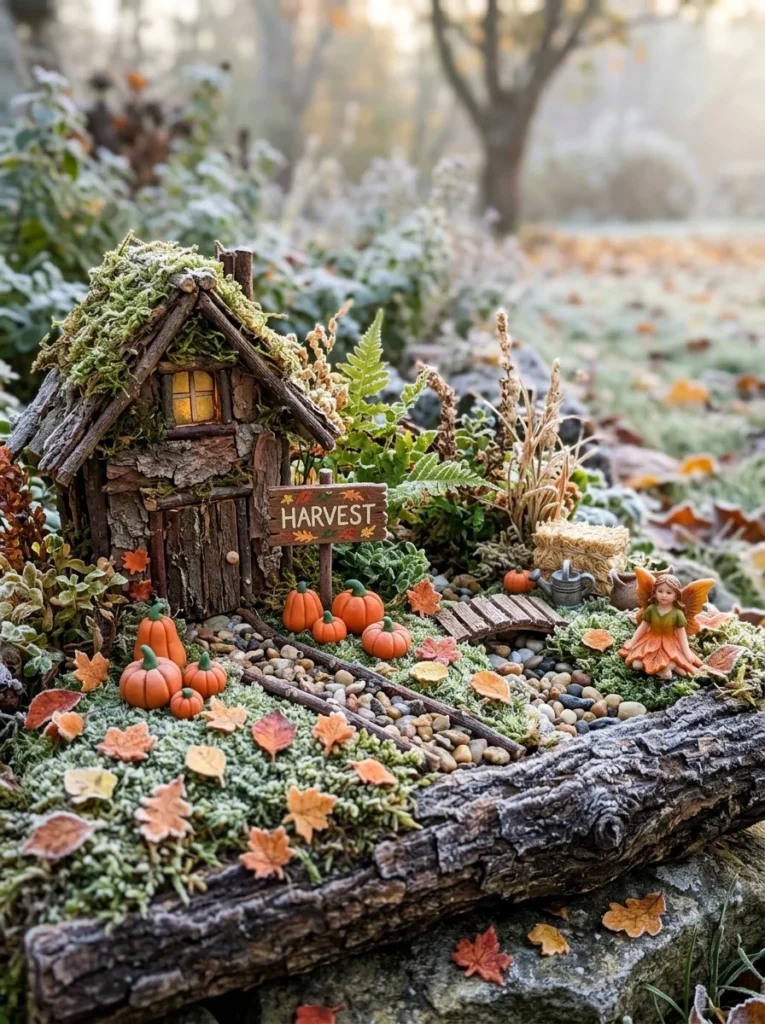
Change your fairy garden with the seasons. Spring: tiny flowers and baby animals. Summer: beach scene or meadow. Fall: miniature pumpkins, fallen leaves, tiny lanterns. Winter: snow scene (use white pebbles or cotton), tiny wrapped presents, miniature evergreens. One garden, four totally different stories throughout the year.
20 DIY Fairy Garden with Homemade Accessories
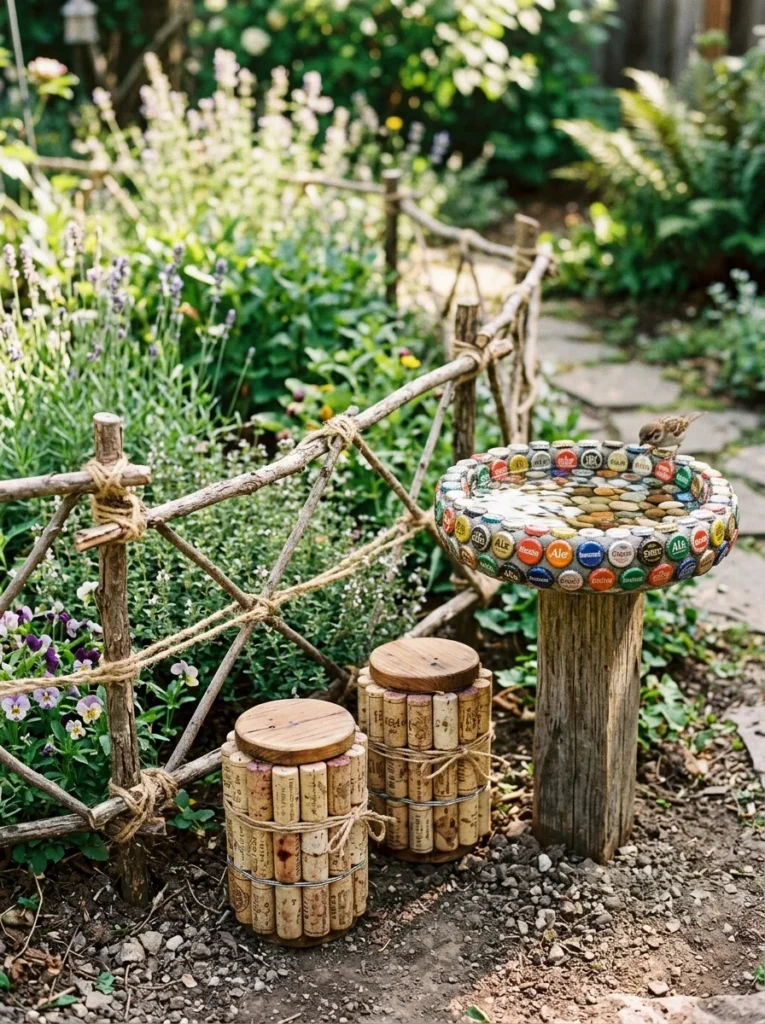
The most personal fairy gardens are the ones with handmade pieces. Use air-dry clay to make tiny pots, fairy doors, or pathstones. Use wine corks as stools, twigs as fences, bottle caps as birdbaths. The imperfection is part of the charm — and honestly, a homemade fairy garden feels a hundred times more special than one built entirely from store-bought pieces.
✂️ DIY Fairy Garden Supplies: Air-dry clay, wine corks, popsicle sticks, twigs, gravel, paint, small mirrors (for “ponds”), and seashells are all excellent starting points.
Best Plants for a Fairy Garden
Choosing the right plants is everything. You want small, slow-growing varieties that stay in scale with your miniature world. Here’s a quick breakdown:
| Plant | Type | Best For | Care Level |
|---|---|---|---|
| Thyme (creeping) | Herb/Ground cover | Paths, ground cover | Easy |
| Baby’s Tears | Ground cover | Lush green carpets | Easy |
| Sheet Moss | Moss | Woodland scenes | Easy |
| Echeveria | Succulent | Desert/dry gardens | Very easy |
| Dwarf Mondo Grass | Ornamental grass | Tall “grass” effect | Easy |
| Miniature Ferns | Fern | Woodland/shade | Moderate |
| Irish Moss | Ground cover | Dense, cushion look | Easy |
| Hens & Chicks | Succulent | Rock gardens | Very easy |
| Dwarf Lavender | Flowering herb | Butterfly gardens | Easy |
| Mini Impatiens | Annual flower | Color pops | Moderate |
How to Choose the Right Container
The container is your fairy world’s foundation — so it matters. Here’s what to look for:
- Drainage holes: Essential for any outdoor or watered garden. No drainage = root rot.
- Depth: At least 4–6 inches for most plants; 8+ for anything with real root systems.
- Width: The wider, the better — more floor space for your fairy scene.
- Material: Terracotta breathes well. Ceramic holds moisture. Plastic is lightweight. Wood is rustic-beautiful but weathers faster.
- Personality: Old wheelbarrows, broken pots, antique crates, birdbaths — any vessel with character makes a great fairy garden container.
Decorations, Accessories & How to Make It Look Magical
This is the fun part. The decorations are what turn a miniature plant arrangement into an actual fairy garden. Here’s what to collect:
| Category | Ideas | Where to Find |
|---|---|---|
| Structures | Tiny cottages, mushroom houses, tree trunk doors, stone arches | Craft stores, Etsy, Amazon |
| Figures | Fairies, gnomes, woodland creatures, butterflies | Garden centers, online |
| Pathways | Pebbles, flat stones, broken tile, stepping discs | Hardware stores, nature |
| Water features | Tiny fountain, mirror “pond,” blue pebble stream | Pet stores, craft stores |
| Lighting | LED copper wire lights, solar lanterns, tiny candles | IKEA, Amazon, Target |
| Fencing | Twig fences, wire fences, stone borders | DIY, craft stores |
| Furniture | Tiny benches, tables, swings, mailboxes | Craft stores, Etsy |
Keeping Your Fairy Garden Low Maintenance
The secret to a low-maintenance fairy garden? Match your plants to your lifestyle. If you travel often, go full succulent. If you’re a daily waterer, herbs and ground covers thrive under attention. Here are a few universal tips:
- Choose slow-growing plants so your scale stays consistent longer
- Use quality potting mix with good drainage built in
- Mulch with small pebbles or gravel to retain moisture and reduce weeding
- Trim aggressively — fairy gardens are supposed to look tidy and contained
- Bring delicate figurines indoors before hard freezes if you’re in a colder climate
- Use a diluted, balanced liquid fertilizer every 4–6 weeks during growing season
Fairy Gardens for Kids: Making It a Family Project
Honestly, fairy gardens were basically made for kids. The process of choosing tiny plants, painting little rocks, building miniature paths, and arranging furniture taps right into that imaginative play kids are wired for. A few tips to make it work:
- Let them lead the theme — pirates, dragons, and rainbows are all valid fairy garden themes
- Choose sturdy, non-toxic plants and decorations that can survive curious hands
- Give them a dedicated container that’s entirely “theirs” to arrange and rearrange
- Use air-dry clay to make custom accessories together — this becomes the craft and the decoration in one
- Add a small notebook nearby for them to write “fairy stories” about the inhabitants
Frequently Asked Questions About Fairy Gardens
What is a fairy garden?
A fairy garden is a miniature landscape — built in a container, pot, or garden corner — designed to look like a tiny magical world, usually featuring small plants, pathways, miniature houses, and figurines that create an enchanting, storybook scene.
How do I make a fairy garden?
Start with a container with drainage, fill it with quality potting mix, choose a few small plants for scale, create a pathway using pebbles or flat stones, add a miniature structure or door, then decorate with figurines and accessories. The whole process can take as little as 30 minutes.
What plants are best for a fairy garden?
Creeping thyme, baby’s tears, Irish moss, sheet moss, echeveria, miniature ferns, and dwarf mondo grass are all excellent choices. Look for slow-growing, small-scale varieties that stay in proportion with your miniature world.
Can I create a fairy garden in a pot?
Absolutely — and it’s actually the most popular approach. Wide, shallow terracotta or ceramic pots are ideal. Make sure there’s a drainage hole, and choose plants that work in the pot’s depth and light conditions.
Can fairy gardens be indoor or outdoor?
Both work beautifully. Outdoor fairy gardens can be more elaborate and use hardy plants, while indoor versions need light-tolerant plants like ferns, succulents, or air plants. Terrariums make especially great indoor fairy gardens.
What size should a fairy garden be?
There’s no rule. A single teacup (2 inches across) can be a fairy garden. So can a 10-foot backyard corner. Most popular setups are 12–24 inches wide — big enough to tell a visual story, small enough to stay cohesive and manageable.
What themes can I use for a fairy garden?
Woodland, beach, zen, seasonal, mushroom village, enchanted forest, succulent desert, butterfly meadow, vintage cottage, and even pirate-themed fairy gardens are all popular. The only limit is your imagination (and your local craft store inventory).
What are good DIY fairy garden accessories?
Wine corks as stools, twigs as fences, flat rocks painted as signs, bottle caps as birdbaths, small mirrors as ponds, and air-dry clay sculpted into tiny pots or mushrooms are all fantastic DIY options that add serious charm.
Ready to Build Your Magical World?
Start small — even one pot, a handful of pebbles, and a tiny door is all you need to begin. The magic builds from there.







1 thought on “20 Enchanting Fairy Garden Ideas That’ll Make Your Yard Look Like a Storybook”