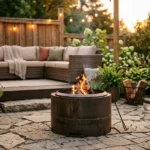

Picture this: You step outside, coffee in hand, and instead of seeing a flat green rectangle with zero personality, you’re greeted by a thoughtfully zoned outdoor living space — a cozy seating area over here, a lush garden border over there, maybe even a fire pit glowing at the far end. Sounds dreamy, right?
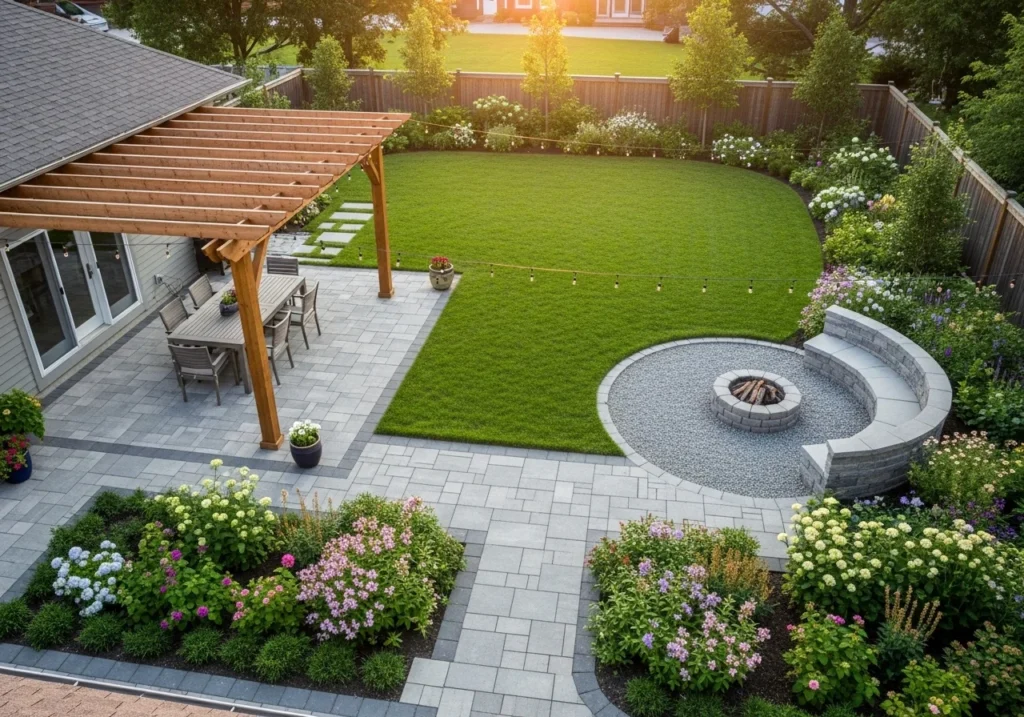
Here’s the thing — a rectangular backyard is actually one of the easiest shapes to design. Straight lines, predictable dimensions, tons of room to play. The trick is knowing how to break it up so it doesn’t feel like a landing strip.
Whether you’ve got a long narrow lot or a standard suburban rectangle, these backyard layout ideas for rectangle yards will help you turn that blank canvas into something genuinely impressive.
Table of Contents
1. Zone It Like a Pro
The best rectangular backyard layout starts with understanding how you want to use the space.
The single best thing you can do with a rectangular yard is divide it into distinct zones. Think of your backyard like rooms in a house — a dining room, a living room, maybe a little garden “library” tucked in the corner.
Common zones to consider:
- Dining area (near the house for easy access)
- Lounge/seating area (mid-yard or under shade)
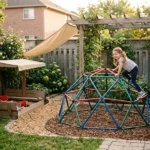
- Play zone (farther back for kids or pets)
- Garden/planting beds (along edges or rear boundary)
Using low hedges, pergolas, gravel transitions, or even a simple change in paving material can visually separate these spaces without building walls. It makes the yard feel bigger and more purposeful — two wins in one.
Pro tip: If you’re new to organizing vertical growing structures in your zones, check out Vertical Gardening for Beginners: Your Complete Guide to Growing Up (Literally) — it’s a game-changer for small and narrow spaces.
2. Anchor the Center With a Focal Point
What should go in the center of a rectangular backyard? A focal point. Full stop.
This could be:
- A statement fire pit with seating arranged around it
- A large planter or sculpture
- A water feature or small pond
- A pergola draped in climbing vines
The center of your yard is prime visual real estate. When you place something intentional there, the eye travels naturally — and the whole space feels designed rather than accidental.
3. Use Edge Planting to Frame the Space
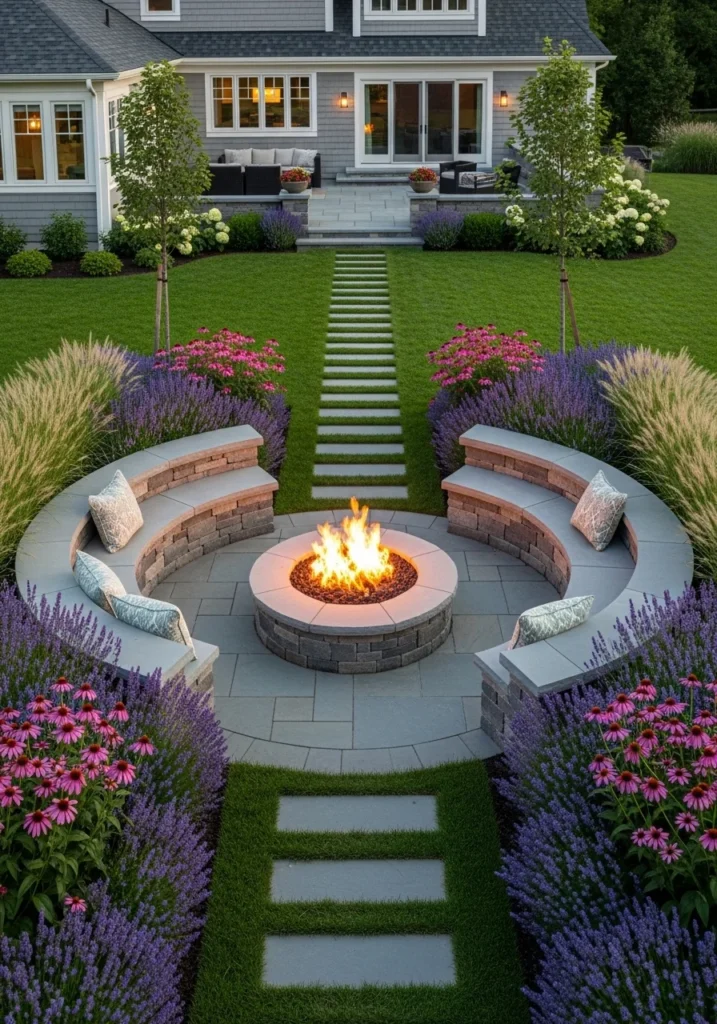
One of the most effective rectangle backyard landscaping moves is planting along the perimeter. Borders do two things: they soften the hard geometry of the rectangle, and they define where the yard ends — giving the whole space a finished, intentional look.
Best plants for edges of a rectangular yard:
- Ornamental grasses (like Karl Foerster or Miscanthus) — movement and texture
- Lavender — fragrant, low-maintenance, full sun lover
- Boxwood hedges — structure and year-round green
- Coneflowers and black-eyed Susans — color and wildlife appeal
- Climbing roses or hydrangeas — height and drama along fences
For full-sun borders especially, you’ll want tough performers. If you need inspiration, The Ultimate Full Sun Perennial Garden Plan: Soak Up the Vibes (and the Sun) has some genuinely gorgeous options suited for USA climates.
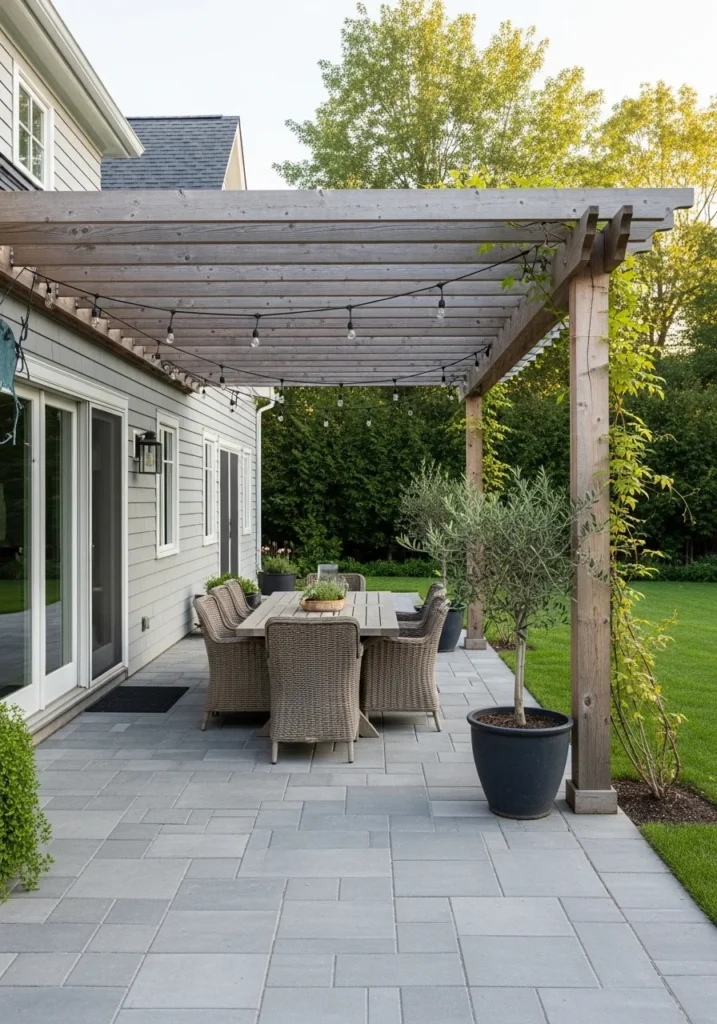
4. Add a Patio Right Off the Back Door
When it comes to backyard layout ideas for rectangle yards, the patio placement sets the tone for everything else.
A patio near the house is the most practical layout choice you can make. It creates an immediate transition from interior to exterior living — like extending your kitchen or living room outdoors.
Best patio ideas for a rectangular yard:
- A square or rectangular paver patio (mirrors the yard’s geometry — clean and intentional)
- A diagonal-laid deck for visual interest
- A covered pergola patio for shade and definition
- Stamped concrete for a polished, low-maintenance look
Keep the patio proportional. A patio that’s too small feels like an afterthought. Aim for at least 10×12 feet for a small yard, and up to 16×20 for medium or large lots.
5. Lay a Path Through the Middle
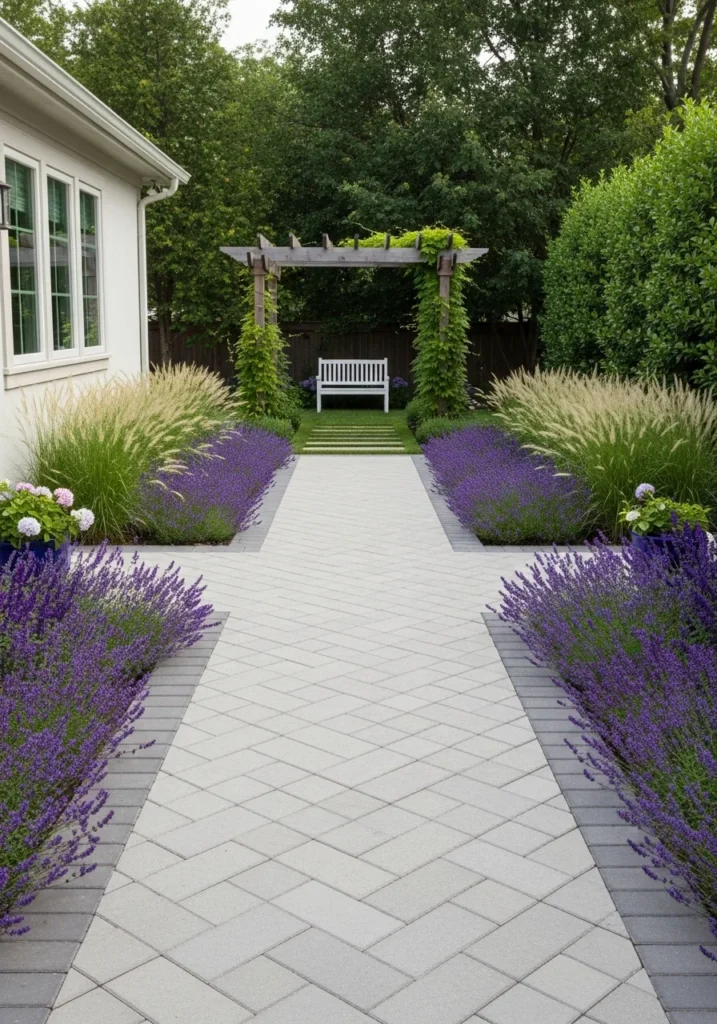
Paths do something magical in rectangular yards — they slow the eye down and create a sense of journey. Instead of a flat expanse of grass you glance at once and forget, a winding or straight path invites you to walk through the space.
Options to consider:
- Straight central path (formal, clean, works well in symmetrical layouts)
- Curved stepping stone path (softens the rectangle, adds whimsy)
- Gravel path with edging (budget-friendly and very French garden-chic)
A path from the patio to a rear focal point — a tree, a fire pit, a bench — creates a natural layout spine everything else can organize around.
6. Go Vertical for Privacy
How do you add privacy to a rectangle backyard? You think UP, not out.
In a rectangular yard where neighbors might look in from the sides or rear, vertical elements are your best friends:
- Lattice panels with climbing plants (jasmine, clematis, wisteria)
- Tall privacy fencing — and it doesn’t have to be boring or expensive. Cheap Fence Ideas on a Budget: 15 Affordable Options That Actually Look Good has some seriously stylish options that won’t break the bank.
- Bamboo screening (fast-growing, dense, and striking)
- Tall ornamental grasses or hedges along boundaries
- A pergola with curtains or shade sails
Privacy also makes your outdoor space feel more intimate and usable — especially for entertaining.
7. Make a Long Narrow Yard Feel Wider
Long narrow backyard ideas are all about visual tricks. You want to interrupt the length and draw the eye across rather than down.
Here’s how:
- Plant across the width (horizontal bands of color or plantings rather than running things lengthwise)
- Use a diagonal patio or deck layout — it immediately widens the perceived space
- Add a pergola or arch partway down to break the tunnel effect
- Use wide, horizontal furniture in a seating area
- Place a focal point at the far end — it pulls the eye forward and makes the yard feel intentional and deep, not cramped
Think of it like interior design for a narrow room. You wouldn’t hang a tall, thin painting in the middle — you’d use low, wide furniture and horizontal lines.
8. Build a Dedicated Seating and Dining Area
This is where backyard design for a rectangular yard gets personal. A good seating layout depends on how you live outside.
Do you host big dinners? A large dining table under a pergola near the house is your move. More of a lounger? A sectional sofa setup mid-yard around a fire pit is the dream.
Design tips for seating and dining zones:
- Keep dining close to the kitchen door (nobody wants to carry plates 50 feet)
- Use an outdoor rug to define a lounge area in grass or gravel
- Mix heights — tall bar stools at a counter, low lounge chairs nearby
- Add ambient lighting: string lights, lanterns, or solar path lights along borders
A rectangular yard is perfect for this because you can place zones in a clean sequence: patio → lawn → dining → garden — like a visual itinerary.
9. Straight Lines vs. Curved Lines
Should you use straight lines or curved lines in a rectangular yard?
Honestly? Both. Just be intentional.
- Straight lines reinforce the rectangle’s geometry — great for a formal, modern, or minimalist aesthetic
- Curved lines (curved paths, rounded planting beds, circular patios) soften the rigidity and add an organic, relaxed feel
The most dynamic designs use contrast — a curved lawn edge against a straight patio, or a circular fire pit area at the end of a dead-straight central path. That tension between hard and soft, structured and organic, is what gives a yard visual energy.
10. Design for Families
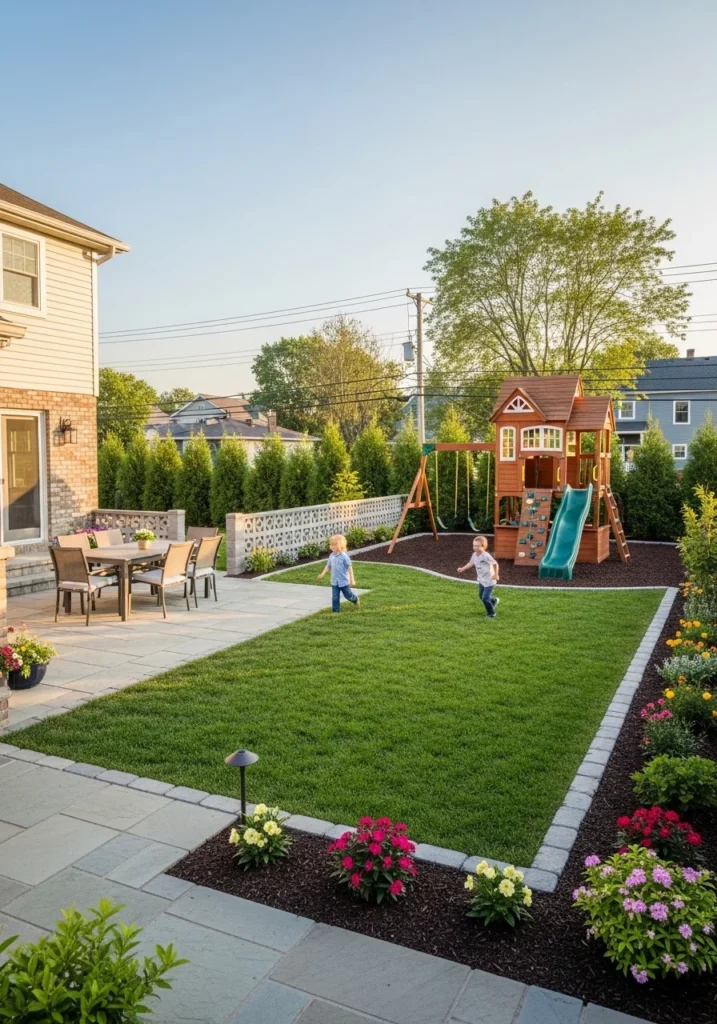
Making a rectangular backyard family-friendly is all about thoughtful zoning that serves everyone — not just the adults.
- Designate a soft turf area for kids to run and play (rear of yard works well)
- Add a sandbox or play structure in a zone that’s visible from the patio (so you can watch the kids while relaxing)
- Keep sharp-edged hardscape away from the play zone
- Use low-maintenance ground cover in transitional areas to minimize upkeep
- Plant child-safe, non-toxic species in accessible beds
A rectangular backyard is actually ideal for families because the layout is simple — one zone flows logically into the next with no confusing corners or awkward angles.
11. Fit a Fire Pit in a Rectangular Backyard
Can you fit a fire pit in a rectangular backyard? Absolutely — even in smaller yards.
The key is placement. A fire pit works best:
- Centered mid-yard as the main focal point
- At the far end of the yard, creating a destination to walk toward
- In a dedicated sunken or gravel circle that separates it visually from the lawn
Keep at least 10 feet clearance from structures, fences, and overhanging trees. Use a gravel or paver apron around the pit to define the zone and protect the lawn.
12. Go Low-Maintenance
A smart rectangular backyard design doesn’t have to mean high effort — the right materials do the work for you.
Not everyone wants to spend every weekend weeding. Low-maintenance backyard layout ideas for rectangular yards include:
| Feature | Low-Maintenance Option |
|---|---|
| Lawn | Native groundcover, artificial turf, or gravel |
| Planting beds | Perennials over annuals; mulch heavily |
| Edging | Steel or concrete edging to contain borders |
| Patio | Large-format pavers (fewer joints = less weeding) |
| Fencing | Metal or composite (no painting or sealing) |
| Watering | Drip irrigation on a timer |
The goal is to design a yard that looks lush and intentional with minimal daily effort. Good bones (hard surfaces, defined edges, evergreen structure plants) do most of the heavy lifting year-round.
13. Consider a Pergola
A pergola is one of the highest-value additions to a rectangular backyard. It creates structure, shade, and a defined “room” without closing off the space.
Pergola ideas for rectangular yards:
- Attached pergola over the patio — extends your indoor living area
- Freestanding pergola mid-yard — creates a dramatic focal point
- Pergola with climbing plants — adds natural beauty and seasonal interest
A pergola also solves the privacy problem in a stylish way. Add curtains or shade cloth panels, and suddenly you have an outdoor room that feels genuinely intimate.
14. Frame Features That Break Up Length
For a long rectangular yard, the biggest design challenge is avoiding the “hallway effect.” Features that break up the length include:
- Horizontal planting bands (stripes of color across the width)
- A pergola or arbor at mid-yard (creates a visual “room divider”)
- A change in ground material — grass to gravel to pavers signals a new zone
- A raised bed or border mid-yard (positioned crosswise, not lengthwise)
- A garden arch over a central path
Each interruption tells the eye “there’s something new here” — and that’s exactly the energy you want in a long rectangular space.
15. The Best Layout for Entertaining
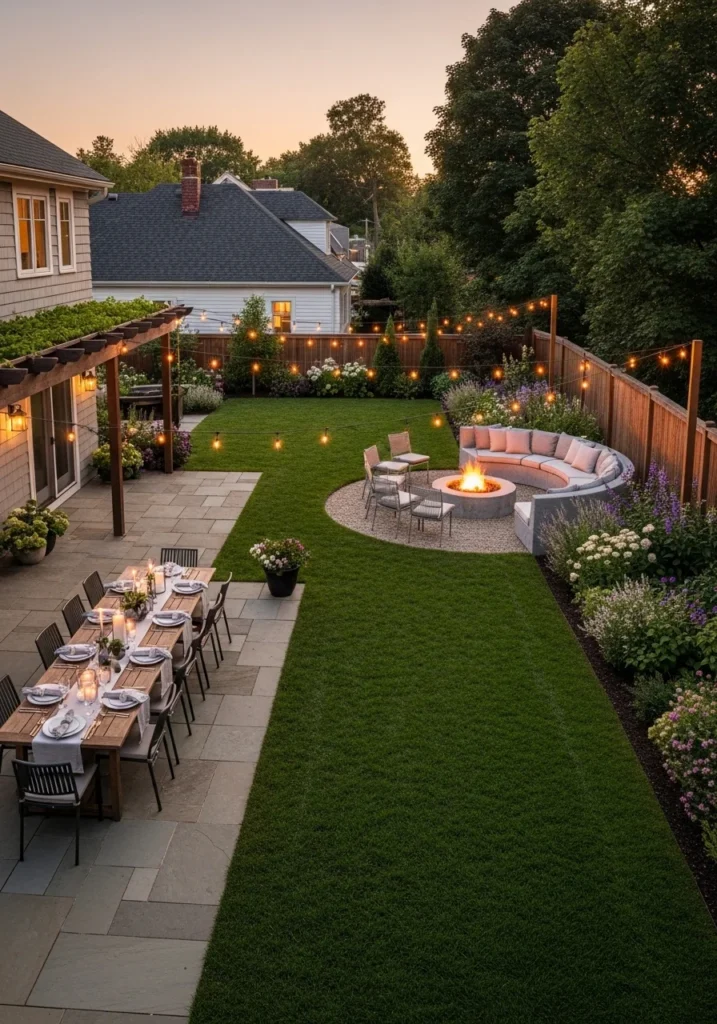
If entertaining is your primary goal, here’s a tried-and-true rectangular backyard layout formula that works:
- Large patio near house — dining + lounge setup
- Central lawn — flexible space for mingling, games, or overflow seating
- Fire pit zone at rear — evening focal point and gathering magnet
- Perimeter planting beds — adds lushness, privacy, and beauty to the frame
- String lights or ambient lighting — ties the whole space together after dark
This layout flows naturally from the house outward, has clear zones, and gives guests room to move without feeling crowded. It’s the rectangular backyard equivalent of a well-designed floor plan.
Final Thoughts
A rectangular backyard isn’t a limitation — it’s a canvas. The geometry actually makes it easier to zone, plan, and execute than an irregular plot. The secret is treating it with intention: define your zones, anchor the center, plant the edges, add height for privacy, and build paths that invite exploration.
Whether you’re working with a long narrow strip or a generous suburban square, these rectangle backyard landscaping ideas give you the tools to create something that genuinely reflects how you want to live outside.
So grab that coffee (or that rosé), step outside, and start imagining. Your dream backyard is closer than you think.
FAQs: Backyard Layout Ideas for Rectangle Yards
What is the best way to layout a rectangular backyard?
Divide it into zones (dining, lounge, garden, play) and use a central focal point to anchor the space. Work outward from the house, and define each zone with materials or plantings.
How do you make a long narrow backyard look wider?
Use diagonal paving, horizontal planting bands, and a pergola or arch partway down to interrupt the length. Avoid running elements lengthwise — it makes the tunnel effect worse.
How can I divide a rectangular backyard into zones?
Use changes in ground material, low hedges, pergolas, or raised beds to separate spaces. Even a change from lawn to gravel signals a new zone visually.
What plants work best along the edges of a rectangular yard?
Ornamental grasses, lavender, boxwood, coneflowers, and climbing roses all work beautifully as border plants. Choose based on your sun exposure and maintenance preference.
How do I make a small rectangular backyard feel bigger?
Use vertical space, keep ground-level plantings low, choose large-format pavers, and use mirrors or light-colored fencing to create the illusion of depth.