

Let me be honest with you — when I first planted a butterfly bush in my backyard, I did it mostly because I thought it looked pretty. Within three weeks, my yard looked like a butterfly convention. I’m talking dozens of swallowtails, monarchs, skippers… even a few hummingbirds crashed the party.
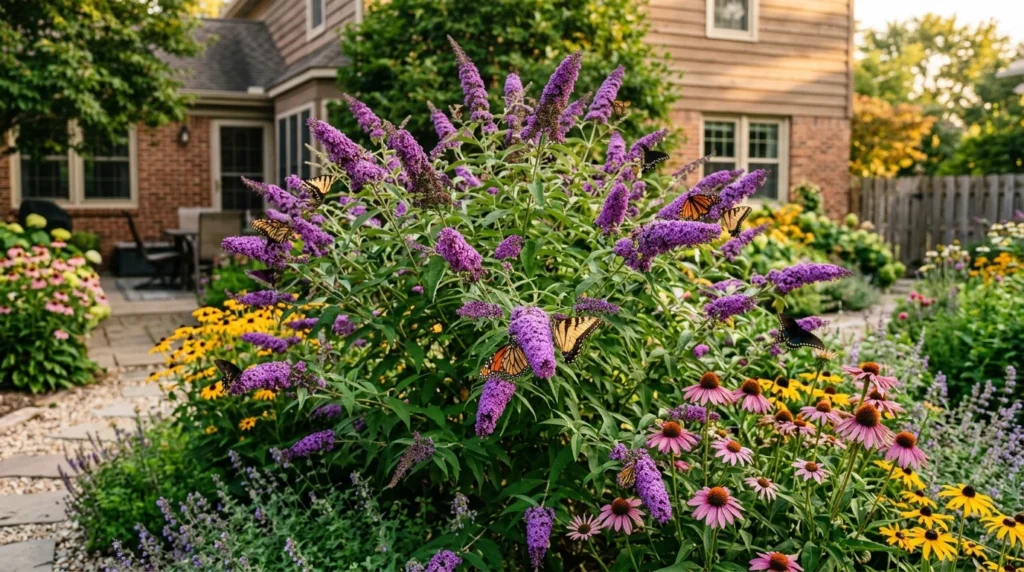
That’s the magic of butterfly bush landscaping. It isn’t just gardening. It’s creating a living, breathing ecosystem right in your backyard. And the good news? It’s shockingly easy to do well.
Whether you’ve got a sprawling suburban yard or a tight little side strip, there’s a buddleia design that works for you. Let’s dig in — fifteen ways to use butterfly bush that go way beyond just “stick it in the ground and hope for the best.”
Table of Contents
What Is Butterfly Bush Landscaping, Anyway?
Butterfly bush landscaping is simply the intentional use of Buddleia (also spelled Buddleja) in your garden design. These fast-growing, flowering shrubs produce long, fragrant flower spikes from midsummer through fall — in colors ranging from deep purple and magenta to white and soft lavender. They’re magnets for pollinators and remarkably forgiving plants to grow.
In the US, they thrive in USDA zones 5–9, love full sun, and perform best in well-drained soil. They’re drought tolerant once established, which is great news for anyone who’s killed more plants than they’d like to admit (no judgment — I’ve been there too).
🌞 Quick Tip: Butterfly bushes need at least 6 hours of direct sunlight daily. The more sun, the more blooms — and the more butterflies you’ll attract. Plant them in the sunniest spot you’ve got.
15 Butterfly Bush Landscaping Ideas You’ll Actually Want to Try
1 Use It as a Statement Shrub in a Perennial Border
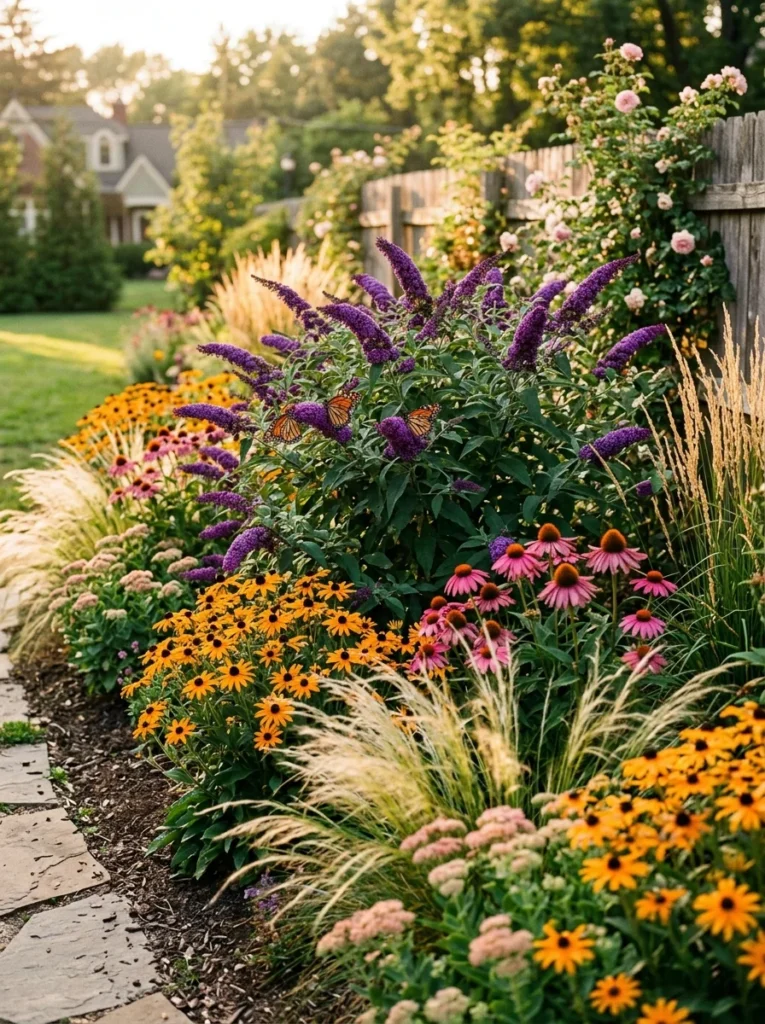
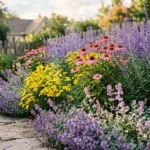
This is the classic move, and it works for a reason. Plant a mid-size butterfly bush — something like ‘Black Knight’ or ‘Empire Blue’ — in the back or middle of a mixed perennial border. Surround it with shorter companions like black-eyed Susans, coneflowers, and ornamental grasses. The result is a layered look with blooms from spring through fall.
Pair it with: Rudbeckia, Echinacea, Salvia, Catmint
2 Create a Dedicated Pollinator Garden Corner
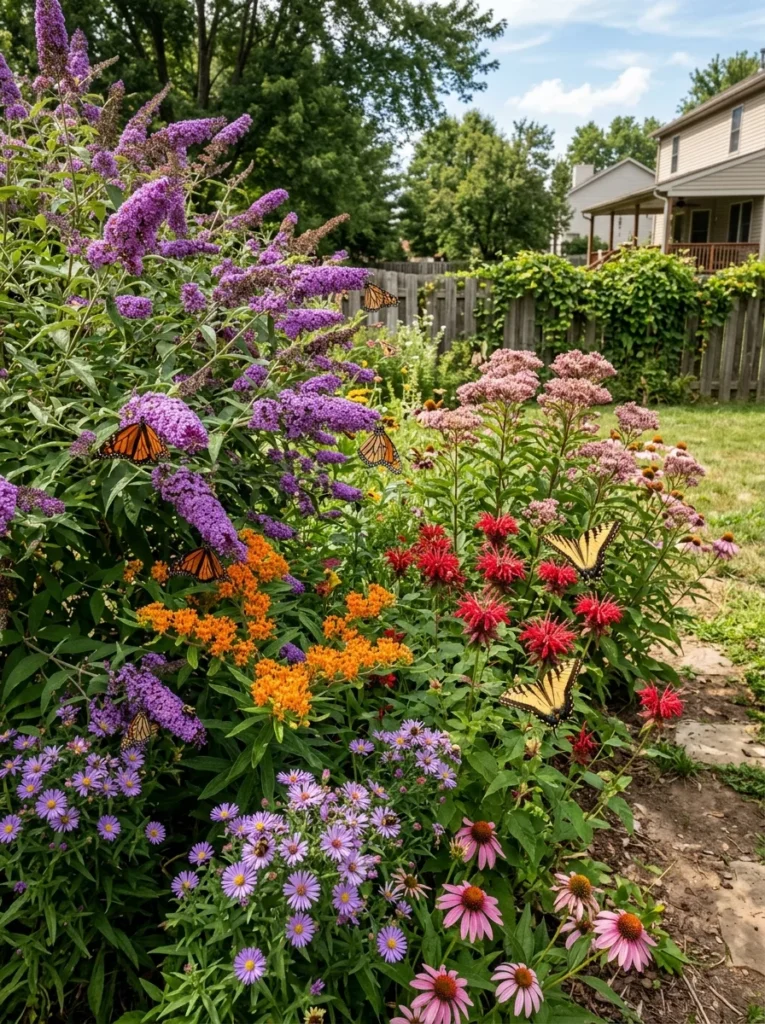
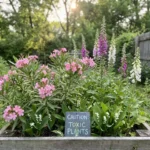
Want a pollinator garden that actually does something? Anchor it with a butterfly bush. Add milkweed for monarchs, bee balm, Joe-Pye weed, and native asters. This kind of wildlife garden design is both beautiful and deeply good for your local ecosystem. If you want to go the extra mile, check out How to Build a Butterfly Mud Station Your Garden Deserves — butterflies need water too, and a mud station is a total game-changer.
3 Line a Walkway or Driveway with Dwarf Varieties
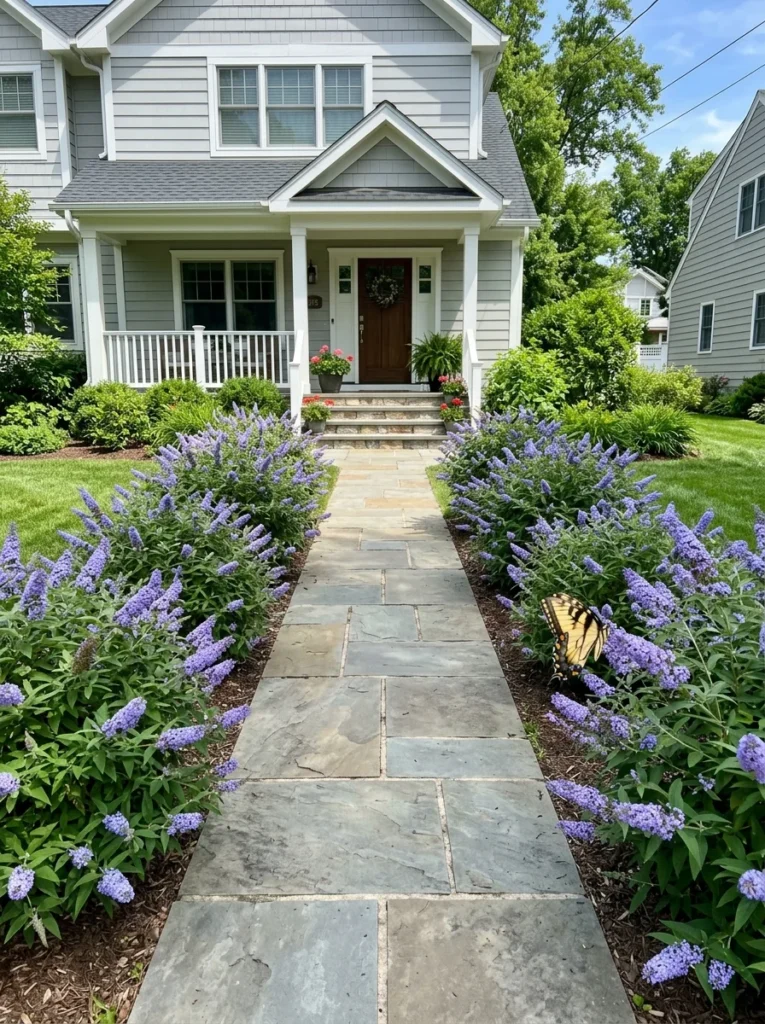
Dwarf butterfly bushes — like ‘Lo & Behold’ series — top out at 2–3 feet, making them perfect walkway border plants. Plant them 3–4 feet apart along a sunny path and watch the whole thing come alive in summer. They soften hardscape beautifully and greet every visitor with fragrance.
Best picks: ‘Blue Chip Jr.’, ‘Pugster Blue’, ‘Buzz™ Violet’
4 Plant It at the Back of a Deep Garden Bed
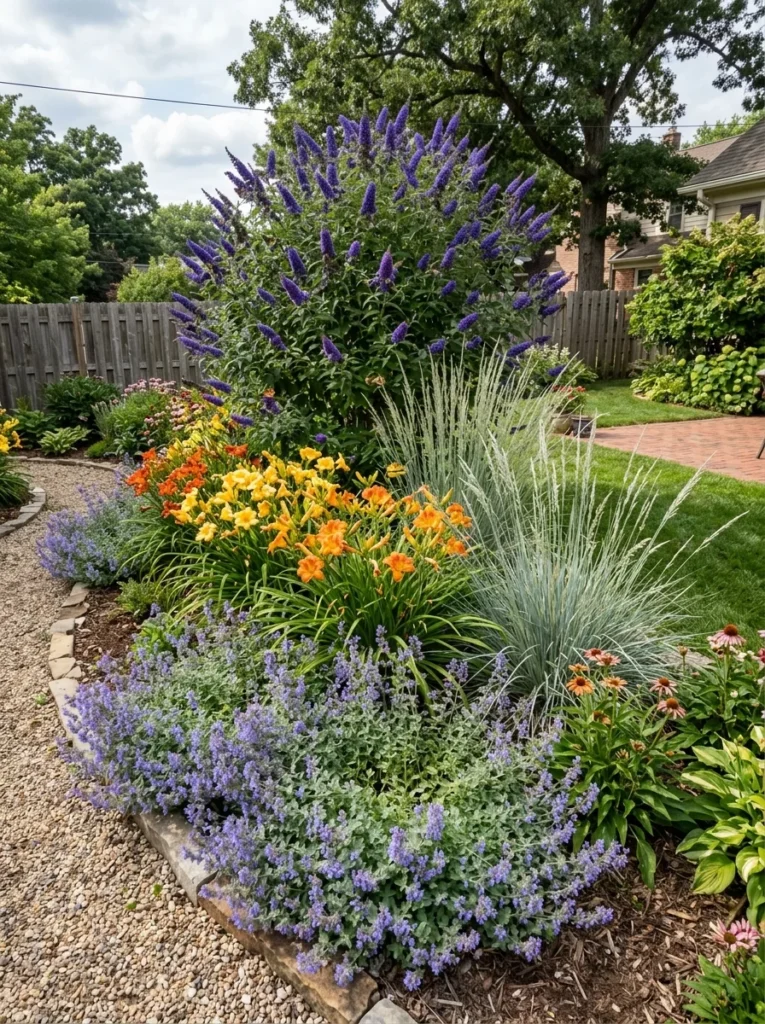
Standard butterfly bushes grow 4–8 feet tall. That makes them ideal for the back of a bed, where they add height without crowding shorter plants. Place them behind a row of daylilies or ornamental grasses and let them rise up as a flowering backdrop. It’s classic shrub border landscaping that never goes out of style.
5 Use Multiple Colors for a Designer Look
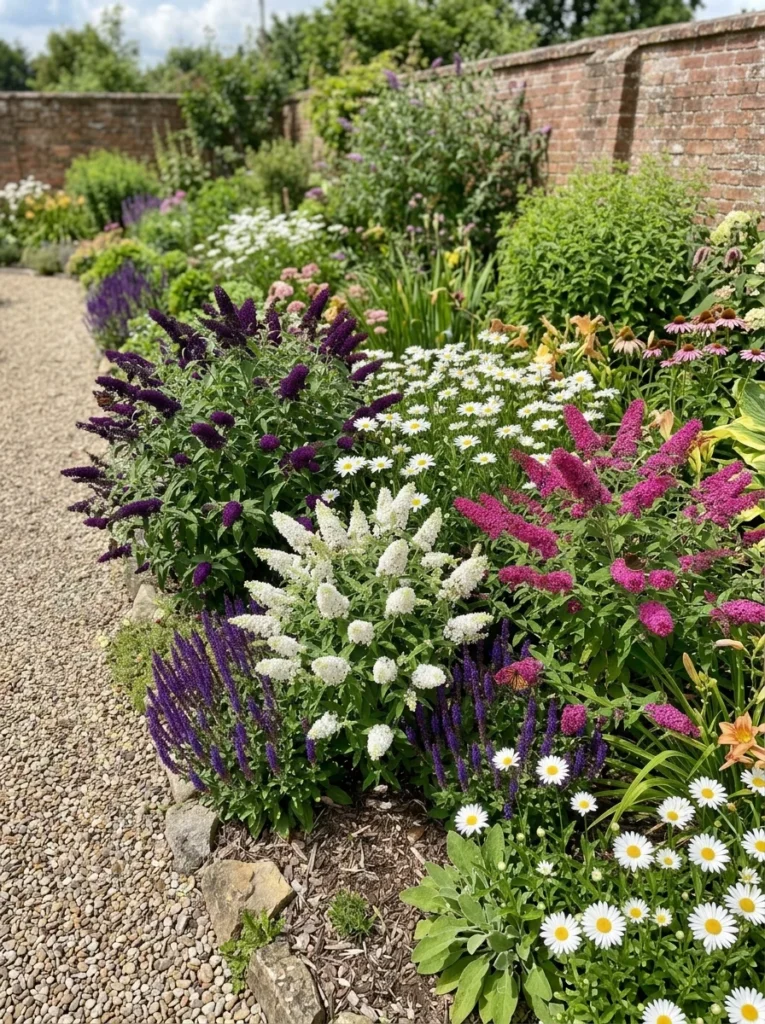
One of the most underrated butterfly bush garden design tricks is planting three different colors together — say, a deep purple ‘Black Knight’, a white ‘White Profusion’, and a pink ‘Pink Delight’. Plant them in a loose triangle or staggered row. The color contrast is stunning, especially when all three are blooming at once.
Best Plants to Pair With Butterfly Bush
Good companions do two things: they extend your season of interest and create a layered, professional look. Here’s a quick cheat sheet:
| Companion Plant | Why It Works | Height | Bloom Season |
|---|---|---|---|
| Purple Coneflower (Echinacea) | Native, pollinator magnet, similar sun needs | 2–4 ft | Summer–Fall |
| Black-eyed Susan (Rudbeckia) | Bright contrast, drought tolerant | 2–3 ft | Summer–Fall |
| Russian Sage (Perovskia) | Airy texture, same soil preference | 3–5 ft | Summer–Fall |
| Salvia (Perennial) | Spiky form echoes buddleia flowers | 1–3 ft | Spring–Fall |
| Ornamental Grasses | Structural contrast, movement in wind | 2–6 ft | All season |
| Catmint (Nepeta) | Low front border, fragrant, pollinator-friendly | 1–2 ft | Late Spring–Fall |
| Daylilies (Hemerocallis) | Easy, colorful, fills mid-layer | 2–4 ft | Summer |
6 Create a Privacy Hedge (Yes, Really)
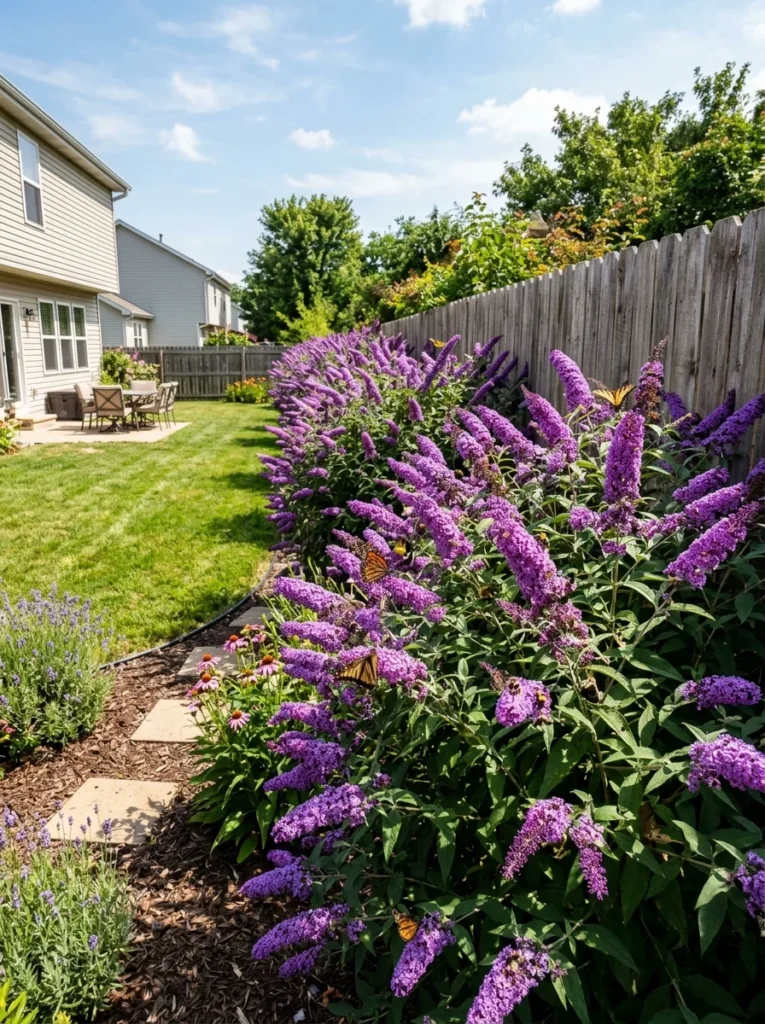
A hedge of butterfly bushes? It’s more practical than it sounds. Space them 3–5 feet apart and let them fill in over a season or two. You won’t get a solid, formal hedge — but you’ll get a dense, fragrant, flowering screen that blocks views and brings in wildlife. Perfect for sunny property lines. Just know this works best with the larger-growing standard types.
7 Frame a Patio or Outdoor Seating Area
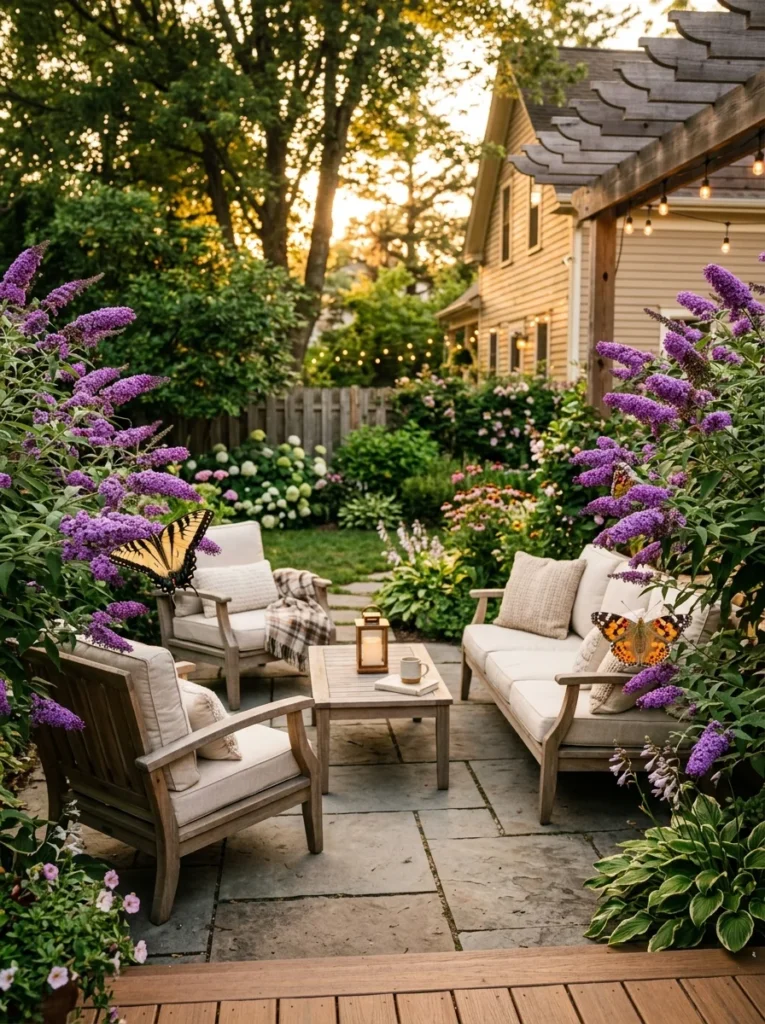
Imagine sitting outside on a summer evening with butterfly bush blooming on either side of you, butterflies drifting past, and the faintest honey-like fragrance in the air. That’s not a daydream — that’s just good butterfly bush planting near a patio. Use dwarf varieties in containers or standard varieties in ground beds flanking a seating area. The long bloom period (July through October) means you enjoy it all season long.
8 Use It in Foundation Planting Near Your House
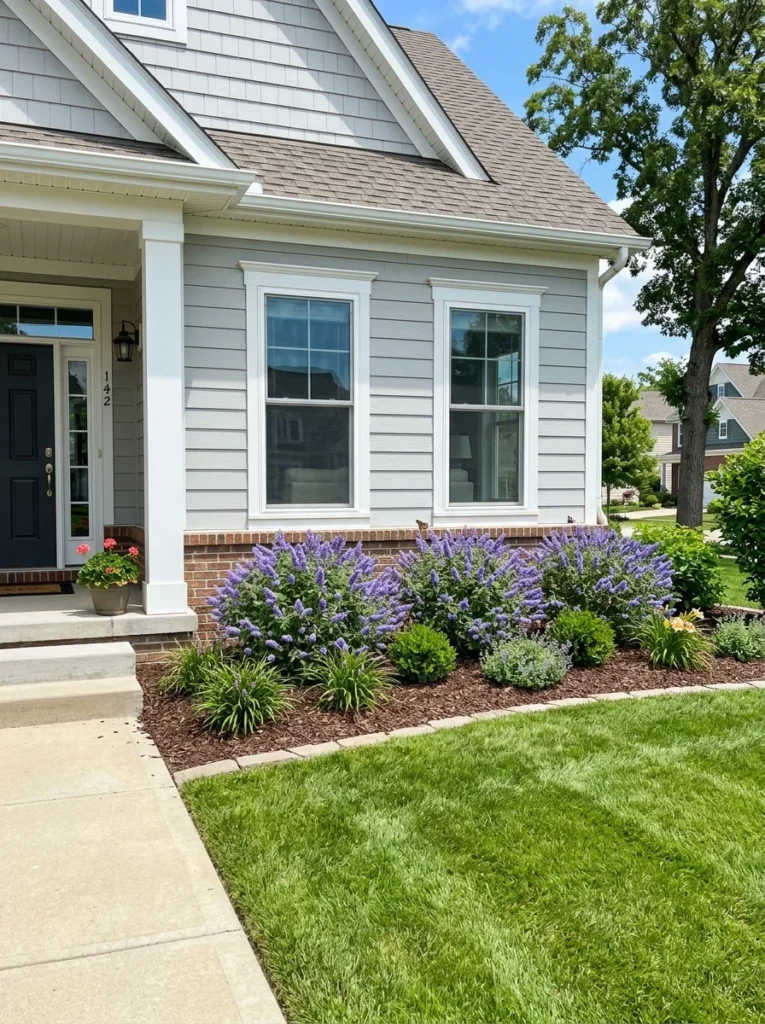
Standard varieties can get tall, so stick to compact types for foundation planting. The dwarf ‘Lo & Behold’ series or ‘Pugster’ line (both around 2–3 feet) work perfectly. They add flowering color near the house without blocking windows or growing into the siding. Full sun against a south- or west-facing wall? Even better — the reflected heat makes them go absolutely wild.
9 Build a Rain Garden or Dry Creek Bed Border
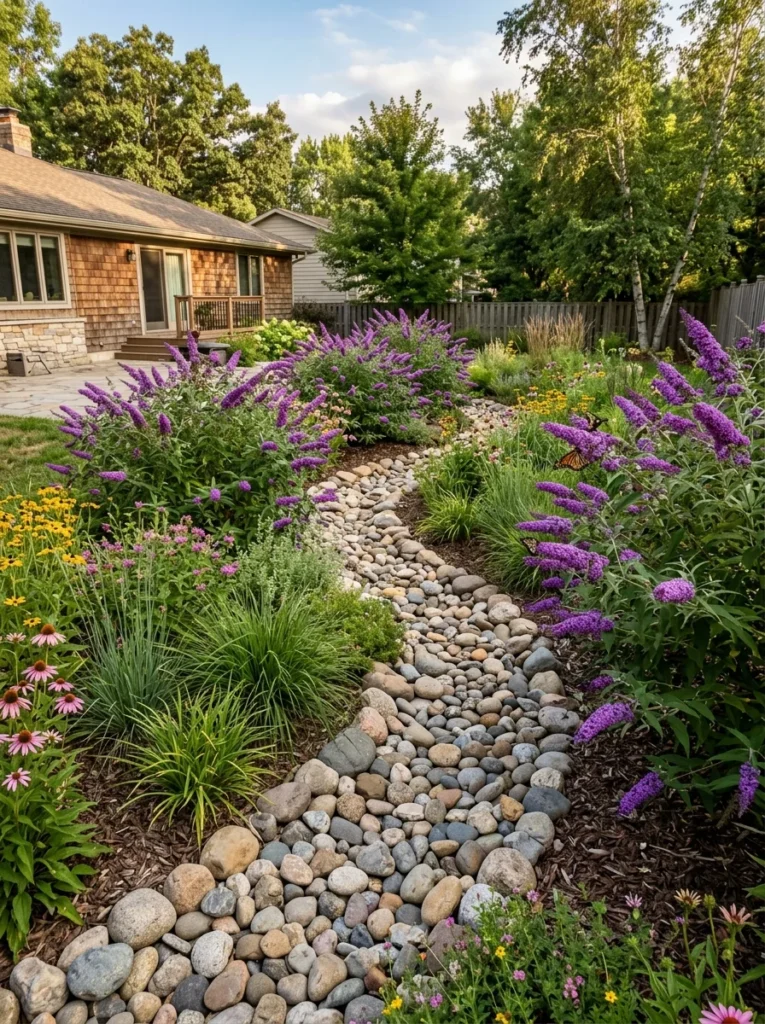
Butterfly bushes are surprisingly flexible about moisture once established. Use them as the upper border of a rain garden or rain-collection swale, where the soil tends to be well-drained. Their deep roots help stabilize slopes, and their height makes them a natural visual anchor in this kind of drought tolerant landscape design.
10 Try a White and Purple Color-Themed Border
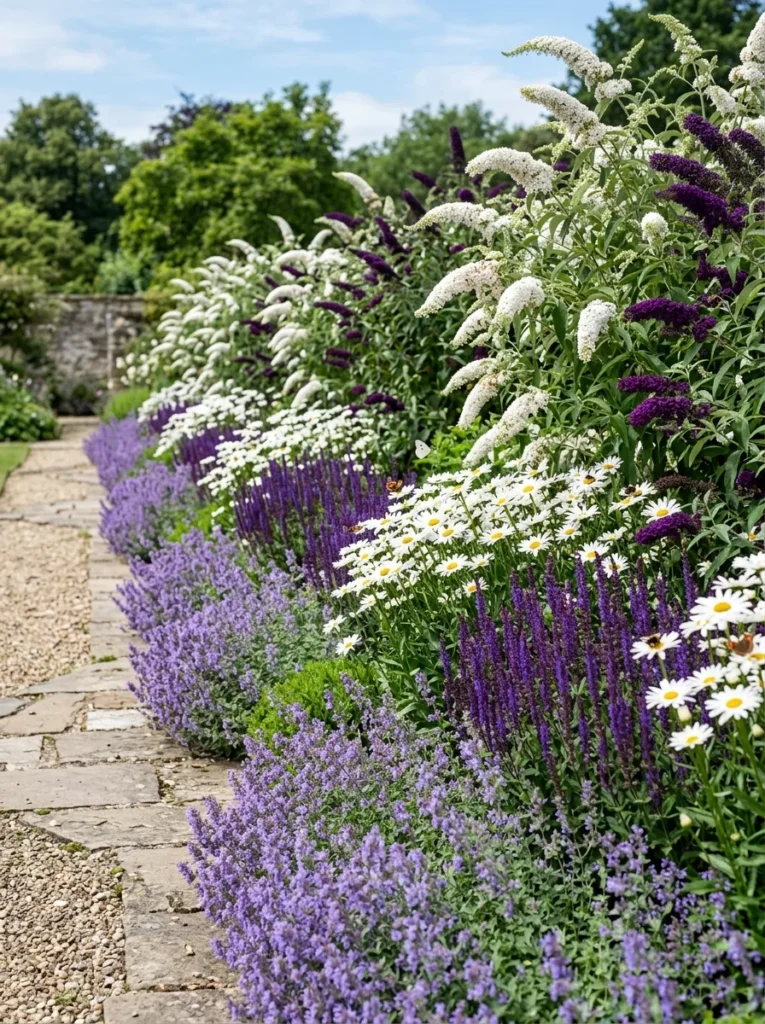
One of the most sophisticated butterfly bush garden designs I’ve ever seen was a white and purple border — ‘White Profusion’ buddleia planted between ‘Black Knight’ and ‘Empire Blue’, with white Shasta daisies and purple salvia filling the gaps. It looked like something out of a magazine and cost next to nothing to put together.
11 Grow Dwarf Varieties in Containers
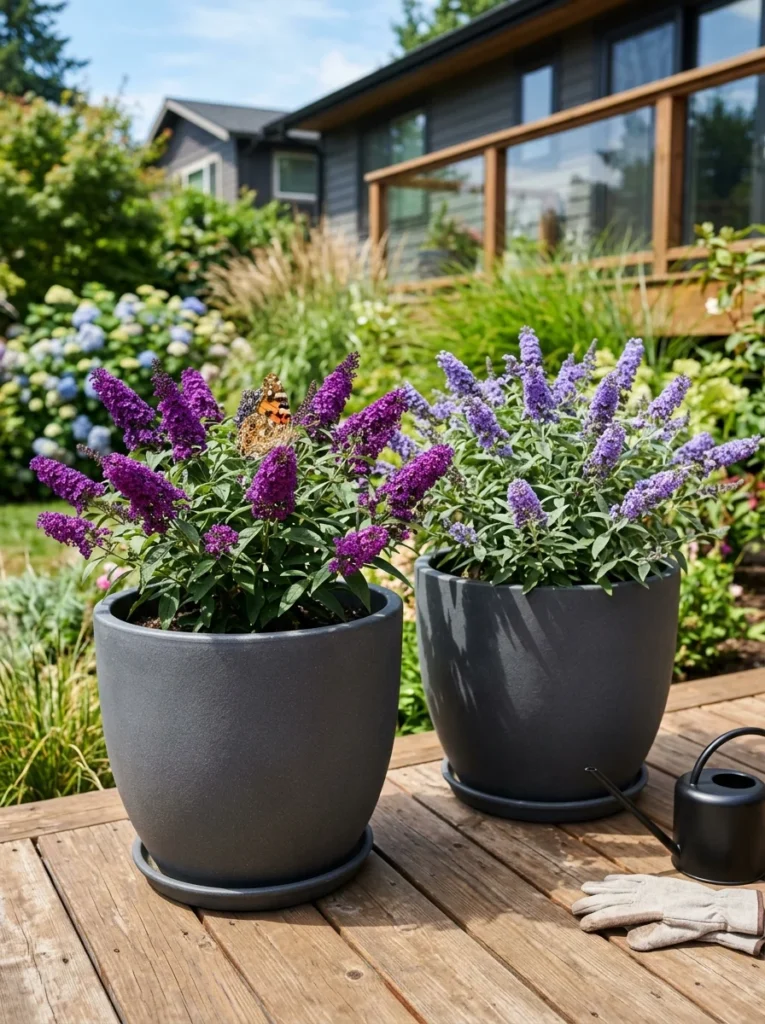
No in-ground space? No problem. Dwarf butterfly bush varieties like ‘Blue Chip’ and ‘Buzz™’ are genuinely container-friendly. Use a 15–20 gallon pot, fill it with well-draining potting mix, and place it in full sun. Water regularly (containers dry faster than the ground), and deadhead spent blooms to keep it flowering. This works great on decks, patios, and balconies.
12 Layer It With Native Plants for Ecological Impact
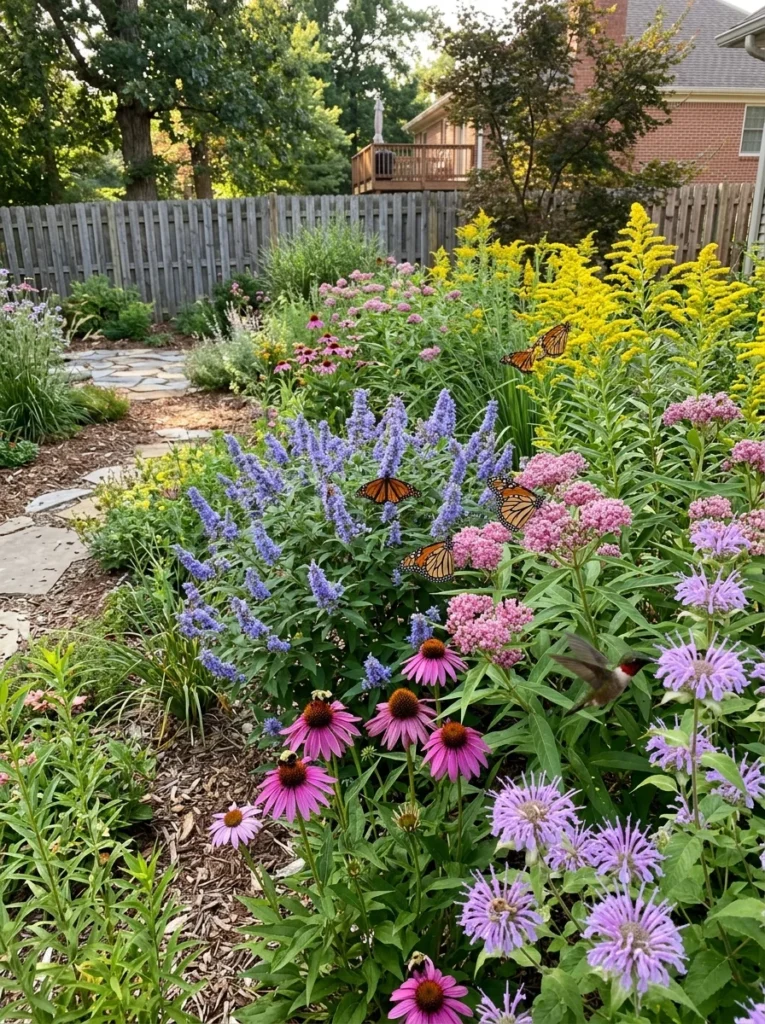
There’s an ongoing debate in the US gardening world about butterfly bushes — they’re technically non-native, and in some western states, standard varieties are considered invasive. If you care about ecological planting (and honestly, you should — native plants are a big deal for biodiversity), here’s how to balance it: use sterile, non-seeding varieties like ‘Lo & Behold’ or ‘Pugster’, and pair them heavily with native plants. For more ideas on unusual, high-impact plants to add to the mix, the Florida Ghost Philodendron: The Complete Care Guide for This Stunning Rare Plant is worth a read for container plant inspiration.
13 Plant Along a Sunny Fence Line
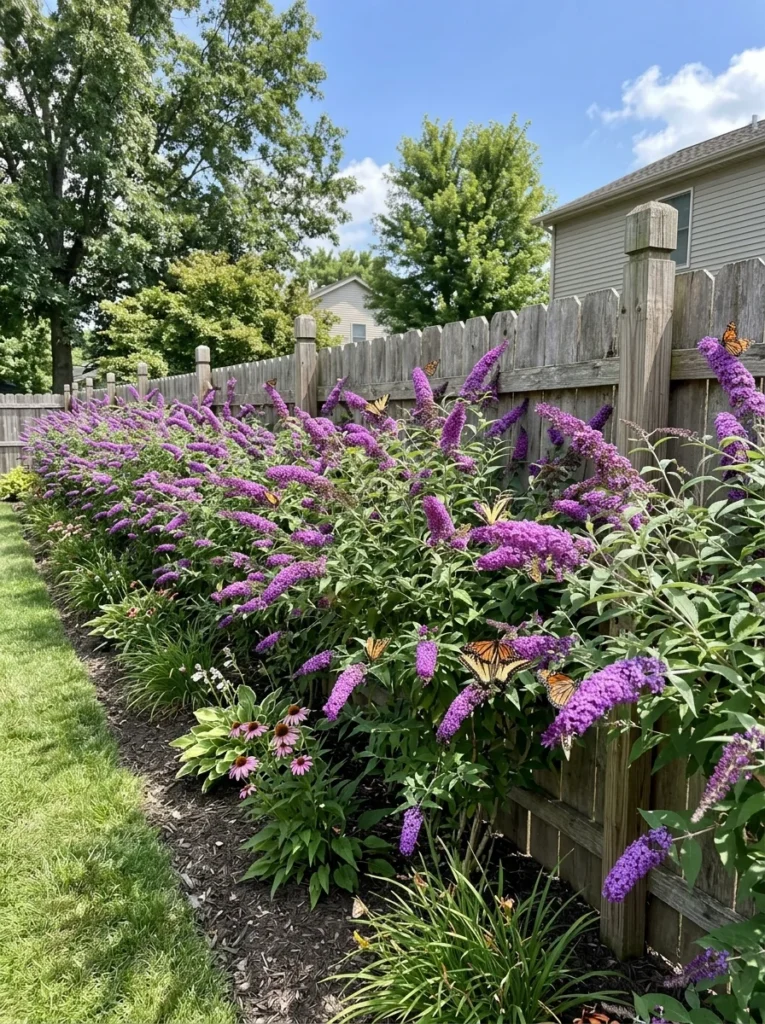
A wooden or chain-link fence suddenly becomes a lot more interesting with a row of butterfly bushes planted in front of it. Space standard varieties about 5 feet apart. By mid-summer, you’ll have a wall of color that completely transforms the look of the fence — and the whole backyard perimeter. It’s one of the easiest border shrub ideas for a large or awkwardly shaped yard.
14 Combine With Ornamental Grasses for Fall Interest
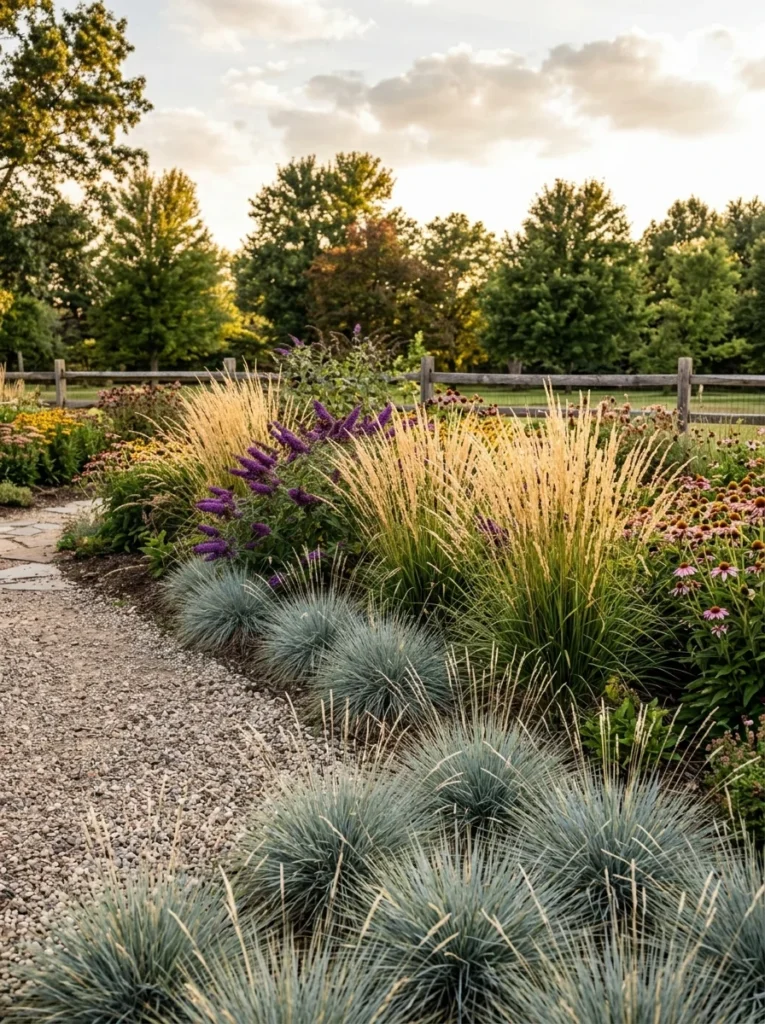
Here’s a design pairing I love: butterfly bush alongside ornamental grasses like Karl Foerster or Blue Oat Grass. The grasses provide movement, texture, and season-long structure; the butterfly bush provides summer-to-fall color and wildlife appeal. Together, this mixed border planting looks good from June through November — which is genuinely hard to achieve in most US climates.
15 Keep It Blooming with Smart Pruning
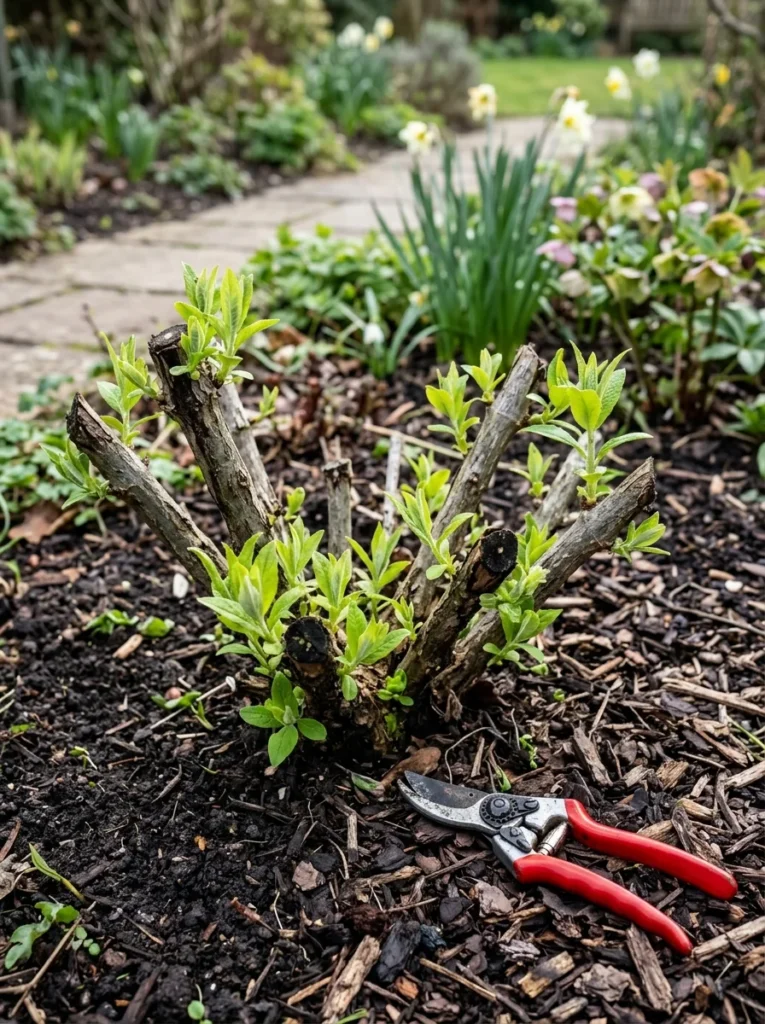
This last one is less about placement and more about maximizing what you’ve got. Butterfly bush blooms on new wood, which means hard pruning in early spring (cut it back to about 12 inches) encourages explosive growth and flowering. During the season, deadhead spent flower spikes regularly — this alone can extend blooming well into October. It sounds brutal, but I promise: the harder you cut it, the better it comes back.
Butterfly Bush Care: The Basics You Actually Need to Know
| Factor | What Butterfly Bush Needs |
|---|---|
| Sunlight | Full sun (6–8+ hours daily) |
| Soil | Well-drained; tolerates poor soil; avoid clay or soggy spots |
| Water | Regular watering when young; drought tolerant once established |
| Pruning | Hard prune to 12″ in early spring; deadhead during season |
| Spacing | Standard: 5–6 ft apart; Dwarf: 3–4 ft apart |
| Fertilizer | Light feeding; too much nitrogen = foliage over flowers |
| Hardiness Zone | USDA Zones 5–9 |
Frequently Asked Questions
Is butterfly bush low maintenance?
Very much so. Once established, it practically takes care of itself. The main tasks are annual hard pruning in spring and deadheading during the growing season. It’s forgiving about soil and drought, which is more than you can say for most flowering shrubs.
Are dwarf butterfly bushes better for small yards?
Yes, for most small-yard situations the dwarf types are ideal. They stay under 3 feet, are sterile (non-invasive), and work beautifully in containers, walkway borders, and foundation plantings where a full-size shrub would overwhelm the space.
Is butterfly bush good for pollinator gardens?
Absolutely — with a small caveat. It’s a nectar plant, not a host plant, so it feeds adult butterflies but doesn’t provide egg-laying habitat. For a truly effective pollinator garden, pair it with native host plants like milkweed (for monarchs) and native willows or cherries (for various species).
What soil is best for butterfly bush?
Well-drained soil is non-negotiable. Butterfly bushes hate wet feet. They’ll thrive in average, even somewhat poor soil as long as it drains well. If you’ve got heavy clay, amend it or plant in a raised bed.
How far apart should butterfly bushes be planted?
Standard varieties: 5–6 feet apart. Dwarf varieties: 3–4 feet. If you’re creating a hedge, you can go tighter — around 3 feet for standards — but expect them to interlock quickly.
Ready to Transform Your Yard?
Pick one idea from this list — just one — and give it a try this season. You’ll be amazed how quickly a single butterfly bush can change the whole feel of a garden space. And once you start attracting butterflies, you’ll want more. Trust me, it’s a very pleasant spiral to fall into.
Drop a comment below: which design idea are you trying first?
- RHS: Buddleja Plant Guide — authoritative horticultural reference
- National Wildlife Federation: Garden for Wildlife — pollinator garden authority
- University Extension Services — link to your local state’s extension for zone-specific advice




4 thoughts on “15 Butterfly Bush Landscaping Ideas That’ll Make Your Yard the Talk of the Neighborhood”