

Let’s be honest: nobody wants a garden that peaks for two glorious weeks in June and then sulks for the rest of the year. You want color that shows up in May and is still hanging around when you’re raking leaves in October. That’s the whole appeal of perennial flowers that bloom from spring to fall — plants that do the heavy lifting so you don’t have to replant your beds three times a season.
Here’s the honest truth before we dive in: no single perennial blooms nonstop, every single day, from the last frost to the first one. Climate, cultivar, and how much deadheading you’re willing to do all play a role. But there’s a workaround, and it’s a good one — combine genuinely long-blooming perennials with a few reliable rebloomers, stagger their peak windows, and you get a bed that reads as continuous color even though individual plants are quietly taking turns backstage.
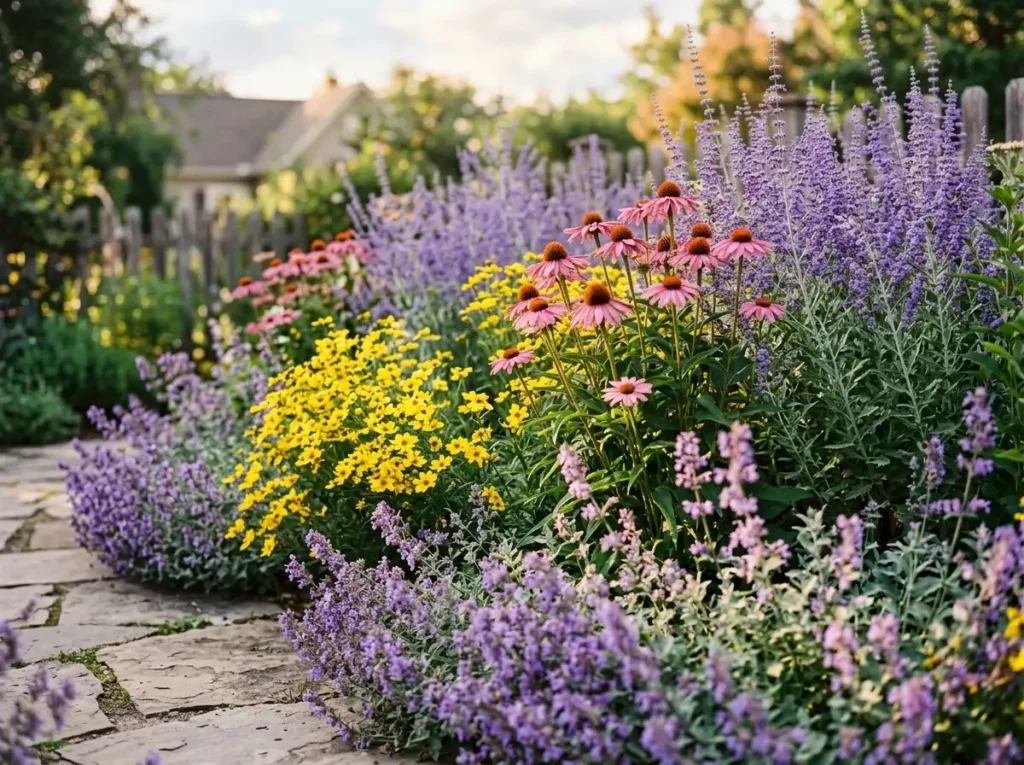
Below are 10 of the best long-blooming perennials for exactly that job, plus how to combine them, when to deadhead, and answers to the questions gardeners ask most.
Table of Contents
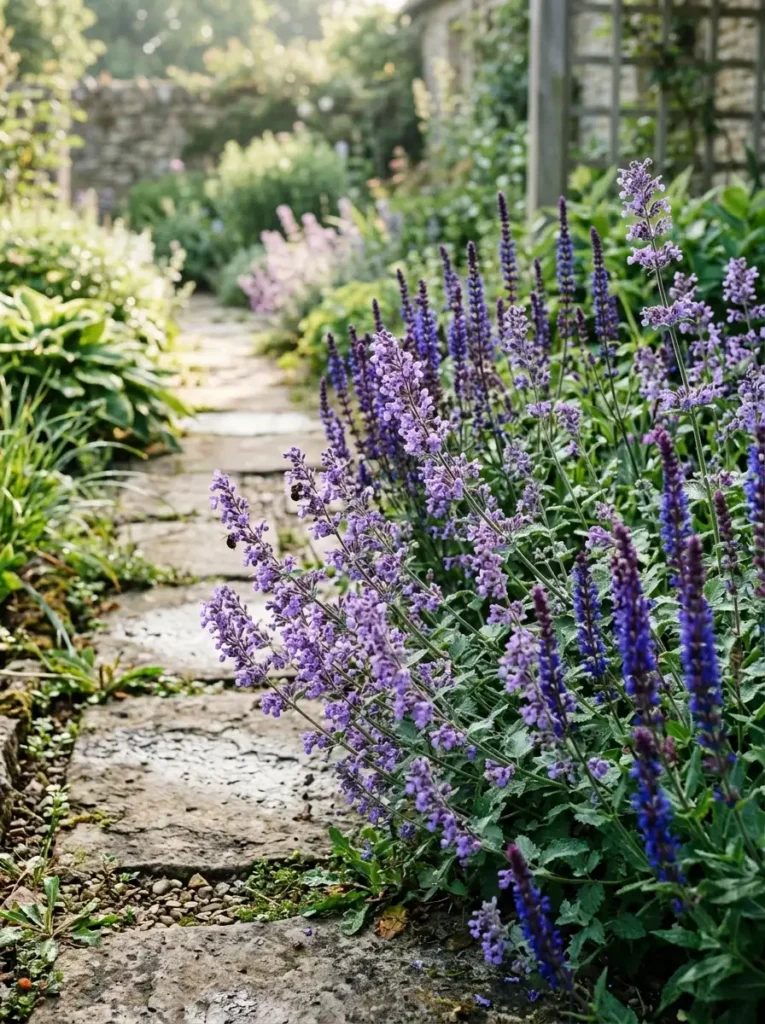
1. Catmint (Nepeta)
Catmint is the perennial equivalent of that one friend who’s always up for anything. It starts blooming in late spring with soft lavender-blue spikes and, if you shear it back by about a third once the first flush fades, it rewards you with a second (sometimes third) round through summer into fall.
- Bloom time: Late spring through fall
- Sun: Full sun
- Why it works: Deer-resistant, drought-tolerant, and pollinators love it
If you’re building a full sun perennial garden plan for a bed that bakes in the afternoon, catmint is a natural anchor plant — it’s featured heavily in our guide, The Ultimate Full Sun Perennial Garden Plan: Soak Up the Vibes (and the Sun).
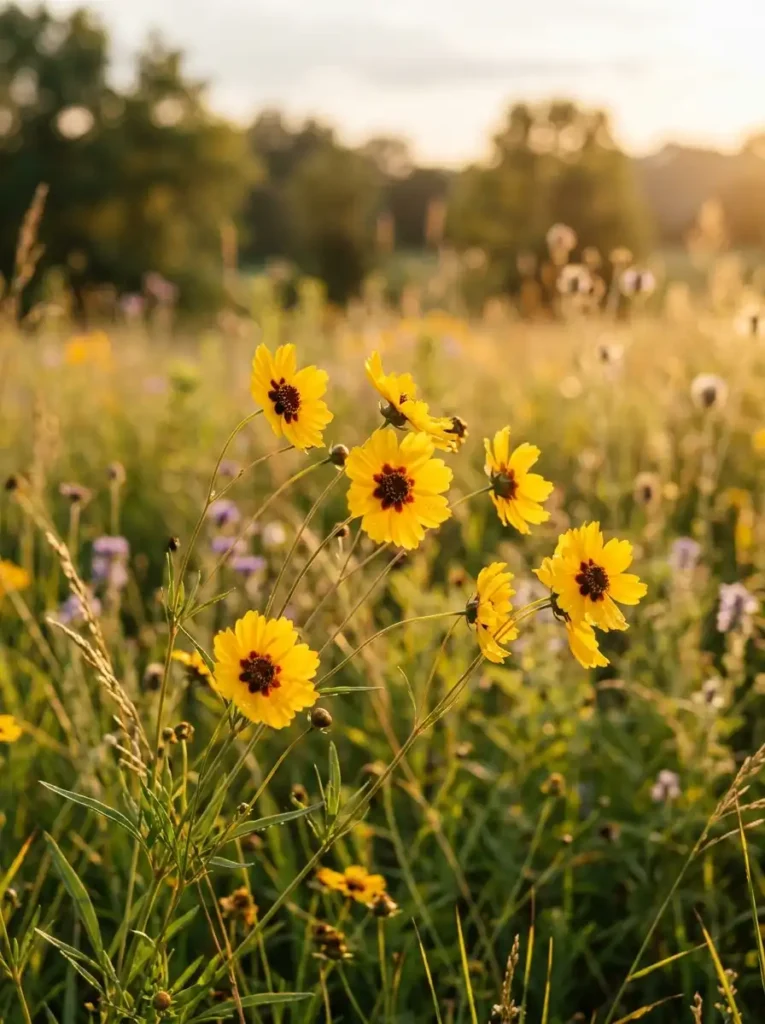
2. Coreopsis (Tickseed)
Coreopsis is basically sunshine with roots. These daisy-like blooms in gold, red, and bicolor patterns show up in early summer and, with light deadheading, keep flowering clear into fall. It’s one of those low-maintenance long-blooming perennials that seems to thrive on a little neglect.
- Bloom time: Early summer through fall
- Sun: Full sun
- Why it works: Tolerates poor soil, heat, and humidity without complaint
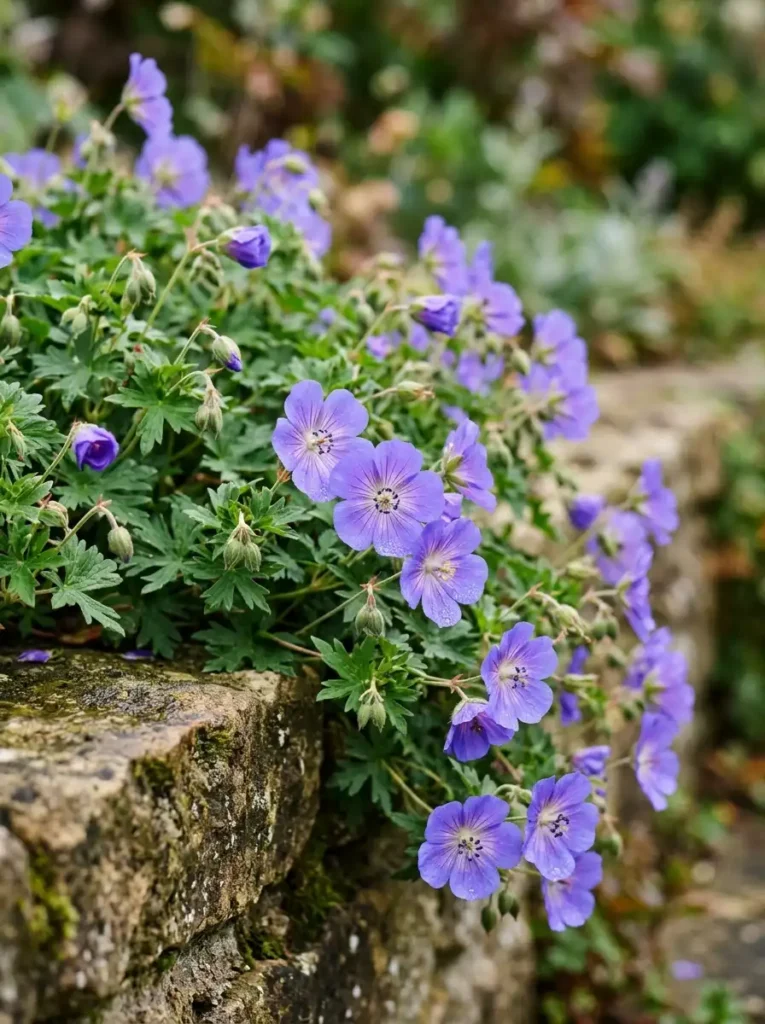
3. Hardy Geranium ‘Rozanne’
If you only add one plant from this list, let it be this one. ‘Rozanne’ is widely considered one of the longest-blooming perennials available — violet-blue blooms from late spring literally through the first frost, with almost no deadheading required. Garden writers have called it a plant-of-the-decade for good reason.
- Bloom time: Late spring to first frost
- Sun: Full sun to part shade
- Why it works: Self-cleaning flowers, sprawling habit that fills gaps
4. Salvia (Salvia nemorosa)
Salvia brings vertical drama to a bed that might otherwise read a little flat. Its upright purple-blue spikes bloom in late spring, and cutting the spent spikes back to the basal foliage triggers a strong rebloom through summer and into early fall.
- Bloom time: Late spring, reblooms through fall with deadheading
- Sun: Full sun
- Why it works: Excellent pollinator plant, pairs beautifully with coreopsis and coneflower
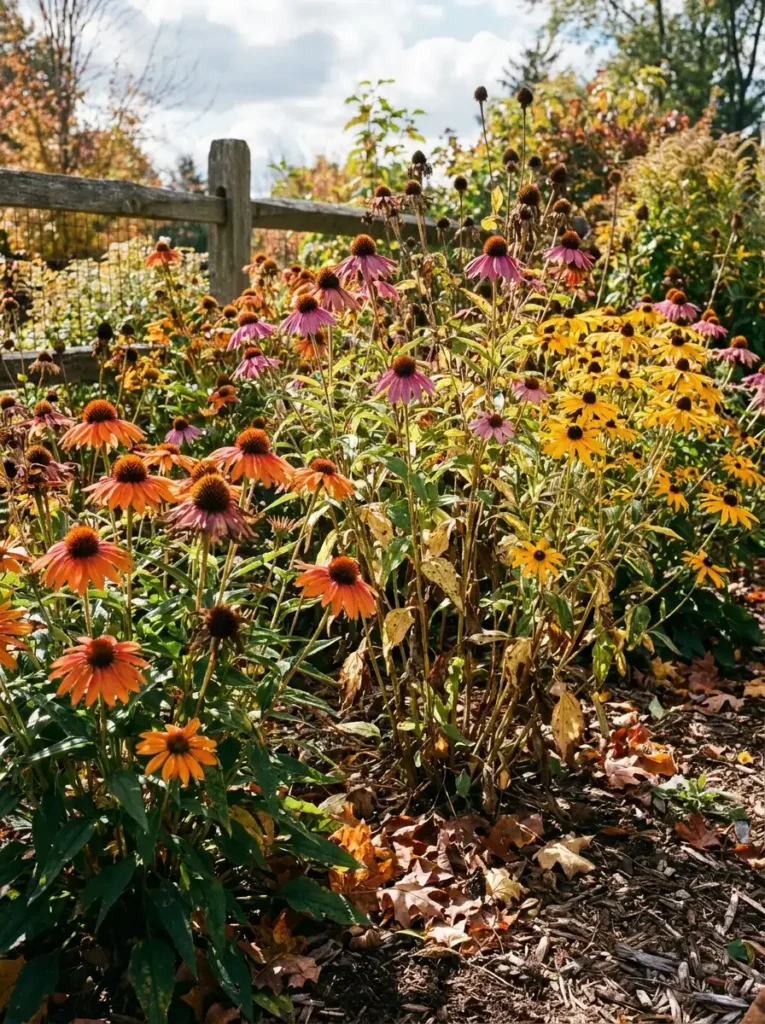
5. Coneflower (Echinacea ‘Cheyenne Spirit’)
Coneflowers are the backbone of a classic perennial garden with continuous blooms. ‘Cheyenne Spirit’ is a mixed-color cultivar — think orange, red, purple, and cream on the same plant palette — that blooms from midsummer well into fall and shrugs off drought like it’s nothing.
- Bloom time: Midsummer through fall
- Sun: Full sun
- Why it works: Drought-tolerant, attracts butterflies, seed heads feed birds in winter
6. Reblooming Daylily ‘Stella de Oro’
‘Stella de Oro’ earned its reputation honestly. This compact, golden-yellow daylily is one of the few reblooming daylily varieties that genuinely flowers in flushes from late spring through fall rather than putting on one big show and calling it a season.
- Bloom time: Late spring through fall (repeat flushes)
- Sun: Full sun
- Why it works: Compact size works in borders and containers alike
7. Black-Eyed Susan (Rudbeckia ‘Goldsturm’)
Come August, when a lot of spring bloomers are winding down, black-eyed Susan is just getting started. Its golden-yellow, dark-centered blooms carry the garden through late summer and into fall, which makes it a perfect partner for earlier-blooming plants like catmint and geranium.
- Bloom time: Midsummer through fall
- Sun: Full sun
- Why it works: Reliable, low-maintenance, and a magnet for bees and butterflies
8. Yarrow (Achillea)
Yarrow’s flat-topped flower clusters are a workhorse in a drought-tolerant long-blooming perennial lineup. It handles poor soil, dry spells, and neglect while blooming from early summer through fall — deadheading extends the show even further.
- Bloom time: Early summer through fall
- Sun: Full sun
- Why it works: Extremely drought-tolerant, good cut flower
9. Gaura
Gaura brings movement to the garden — its airy, butterfly-shaped blooms flutter on wiry stems from late spring right through fall. It’s an underused option if you want a long-blooming perennial for beginners that doesn’t demand much beyond decent drainage.
- Bloom time: Late spring through fall
- Sun: Full sun
- Why it works: Heat and drought-tolerant, adds soft texture between bolder plants
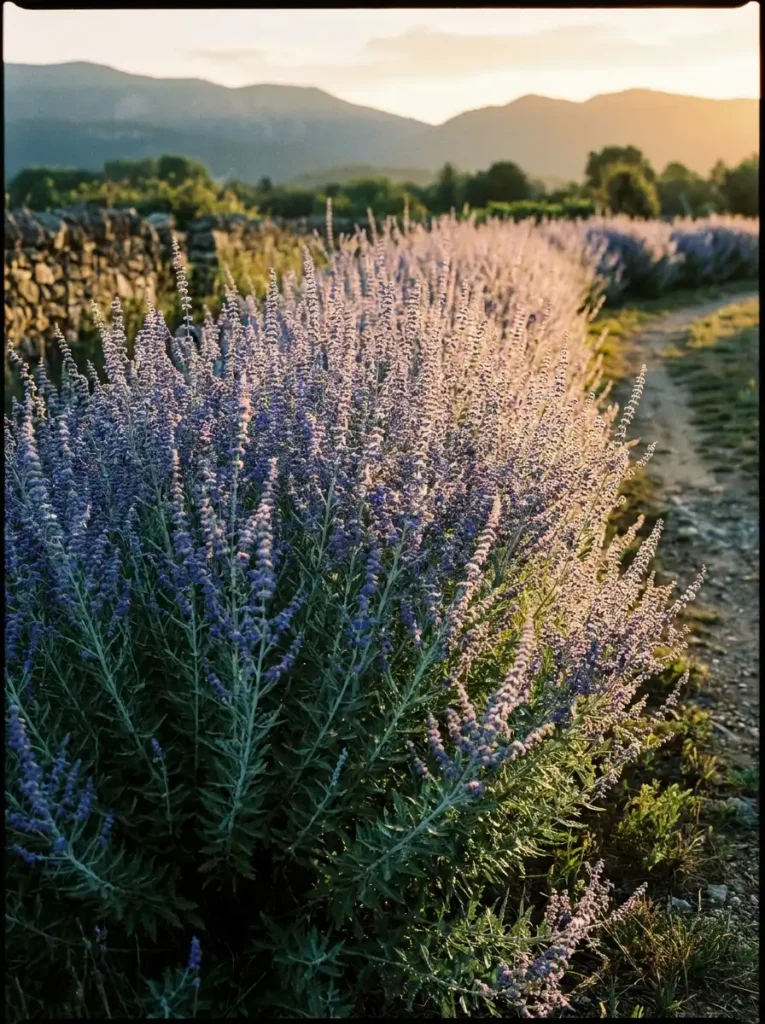
10. Russian Sage (Perovskia atriplicifolia)
Russian sage closes out the list the way it closes out the season — with a haze of fragrant, blue-purple flower spikes from summer into fall. Its silvery foliage adds structure even before the blooms show up.
- Bloom time: Summer through fall
- Sun: Full sun
- Why it works: Extremely drought-tolerant, deer-resistant, ages beautifully
Bloom Time Comparison Table
| Perennial | Bloom Window | Sun Needs | Deadhead for Rebloom? |
|---|---|---|---|
| Catmint | Late spring–fall | Full sun | Yes |
| Coreopsis | Early summer–fall | Full sun | Yes |
| Hardy Geranium ‘Rozanne’ | Late spring–first frost | Full sun/part shade | Not required |
| Salvia nemorosa | Late spring–fall | Full sun | Yes |
| Coneflower ‘Cheyenne Spirit’ | Midsummer–fall | Full sun | Optional |
| Daylily ‘Stella de Oro’ | Late spring–fall | Full sun | Optional |
| Black-Eyed Susan ‘Goldsturm’ | Midsummer–fall | Full sun | Optional |
| Yarrow | Early summer–fall | Full sun | Yes |
| Gaura | Late spring–fall | Full sun | Optional |
| Russian Sage | Summer–fall | Full sun | Not required |
How to Build a Garden That Stays in Bloom All Season
The trick to a perennial bloom calendar that never has a dead zone isn’t finding one miracle plant — it’s layering bloom windows so something is always picking up the slack:
- Late spring: Catmint, hardy geranium, and salvia open the show
- Summer: Coreopsis, daylily, and yarrow carry the middle of the season
- Late summer into fall: Coneflower, black-eyed Susan, and Russian sage close things out
A quick note on safety if you’ve got kids or pets underfoot: every plant on this list is generally considered safe for a family garden, but if you’re curious about what to avoid entirely, it’s worth a look at 10 Poisonous Garden Plants Every Homeowner Should Know before you finalize your layout. And if pet-and-kid-safe curb appeal is the whole point of your project, our companion piece, 10 Best Non-Toxic Flowers for Front Yard Curb Appeal (Pet & Kid Safe), pairs well with this list.
For soil prep and general growing conditions, the Missouri Botanical Garden Plant Finder is a solid, credible reference for zone and light requirements on most of these species, and the USDA Plant Hardiness Zone Map is worth bookmarking before you buy anything.
Frequently Asked Questions
Can perennial flowers really bloom continuously from spring to fall? Not one single plant, no — but a well-planned bed absolutely can. Combining true long-bloomers like ‘Rozanne’ geranium with staggered plants like catmint, coreopsis, and coneflower creates that continuous-color effect even though individual plants are cycling in and out.
Which perennials have the longest blooming season? Hardy geranium ‘Rozanne’ is one of the standouts, often flowering from late spring straight through the first frost. Catmint and gaura are close runners-up.
Do long-blooming perennials need deadheading? Some do, some don’t. Catmint, coreopsis, salvia, and yarrow all rebloom harder with regular deadheading. ‘Rozanne’ geranium and Russian sage keep going with little to no help from you.
Which continuous-blooming perennials attract bees and butterflies? Coneflower, black-eyed Susan, salvia, and yarrow are all reliable pollinator magnets, and they happen to bloom during the exact stretch when bees and butterflies are most active.
Are long-blooming perennials drought tolerant? Many of the best ones are. Russian sage, yarrow, coreopsis, and coneflower all handle dry spells well once established, which makes them ideal for low-maintenance beds.
Final Thoughts
A garden that blooms from spring to fall isn’t about finding a magic plant — it’s about building a rotation. Start with a couple of true long-bloomers, layer in a few reliable rebloomers, and let the bloom calendar do the rest. Give it a season, and you’ll have a bed that just keeps showing up.
Which of these are you adding to your garden first? Drop a comment and let me know — I’m always curious what combinations people land on.




1 thought on “10 Perennial Flowers That Bloom From Spring to Fall (Almost) Nonstop”