

Here’s the thing nobody tells you when you move into a house with a postage-stamp backyard: your kids do not care how small it is. To a five-year-old, six hundred square feet of grass is basically Yellowstone. What matters isn’t the acreage — it’s how you use it.
I’ve seen tiny, awkward-shaped yards get transformed into some of the most-used outdoor spaces on the block, simply because someone thought vertically instead of horizontally, and picked equipment that earns its footprint. That’s really the whole game with a small backyard play area: every square foot has to pull its weight.
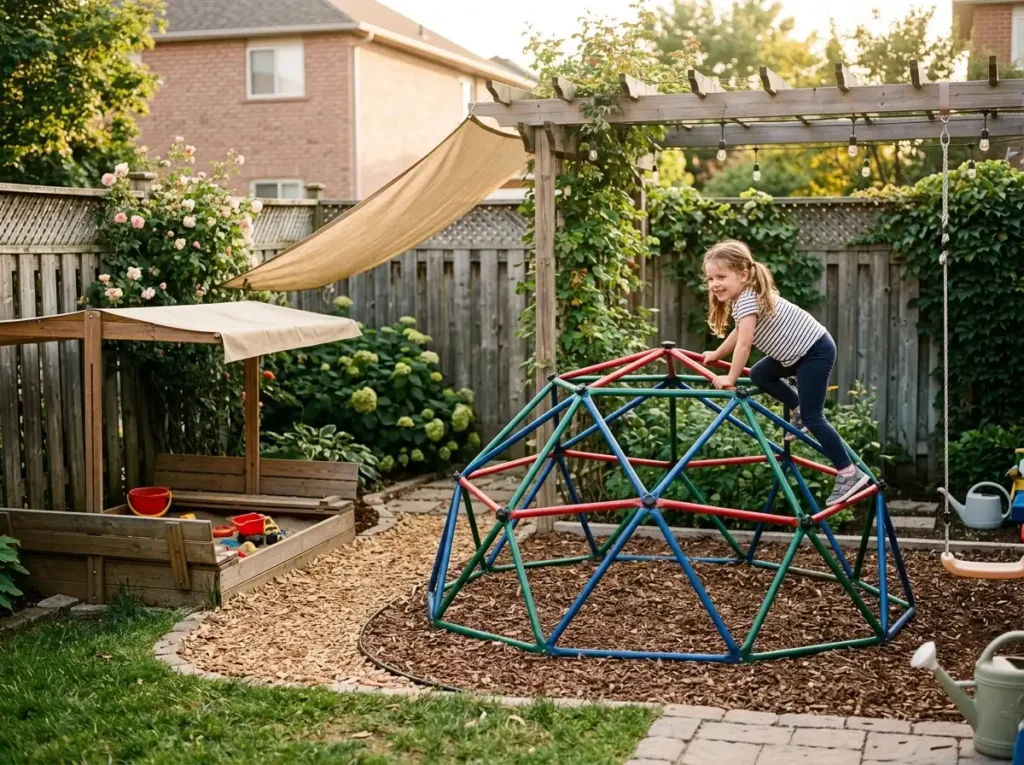
So if you’ve been standing in your yard thinking “there’s no way anything fits here,” stick around. These 10 ideas are built specifically for backyard play area for small yards situations — no acreage required.
Table of Contents
How Much Space Is Needed for a Backyard Playground?
Good news first: you need way less than you think. Most compact climbing structures and toddler playsets only require a footprint of 6×6 to 10×10 feet, plus a little buffer space (2–3 feet) for fall zones. A full-size swing set needs more room, sure — but plenty of the ideas below need barely more space than a parking spot.
What are the best backyard play area ideas for small yards? The short answer: prioritize equipment that does double duty, build up instead of out, and resist the urge to fill every inch — a play area that feels cramped gets used less, not more.
1. Choose a Compact Climbing Dome Over a Full Swing Set
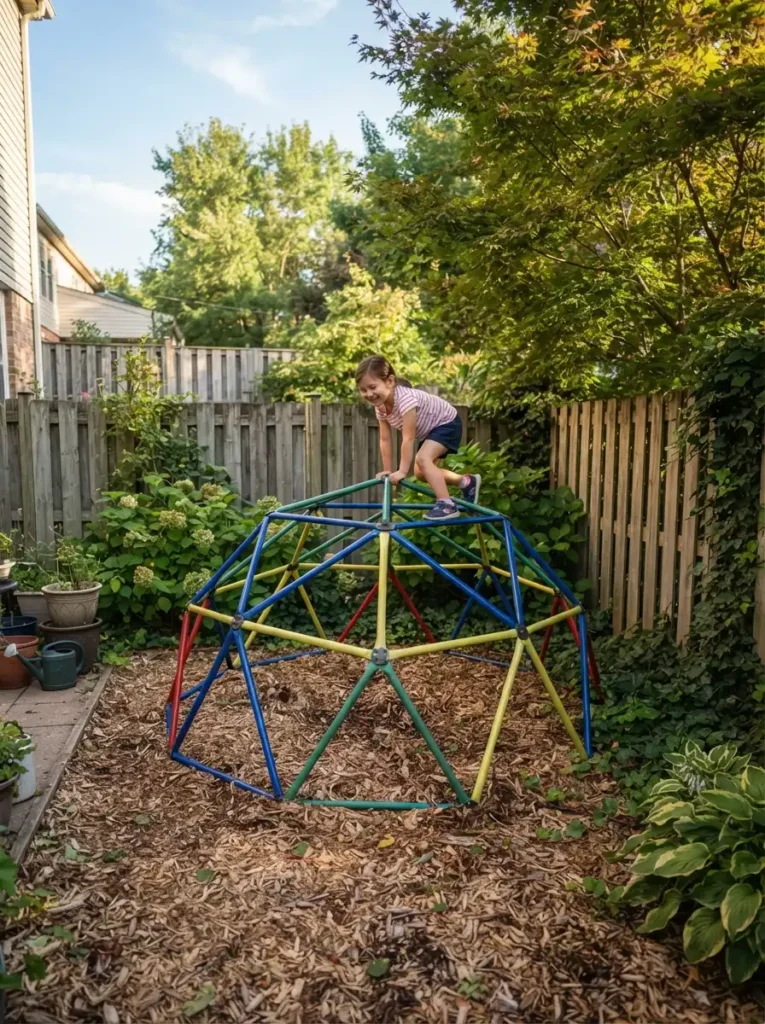
If you only have room for one big-ticket item, a climbing dome is hard to beat. It’s got a small circular footprint, works for a wide age range, and gives kids the kind of active, physical play that a flat yard just can’t offer. Unlike a sprawling swing set, a dome doesn’t need extra clearance on multiple sides — just a safety perimeter all the way around it.
2. Go Vertical With a Backyard Climbing Wall
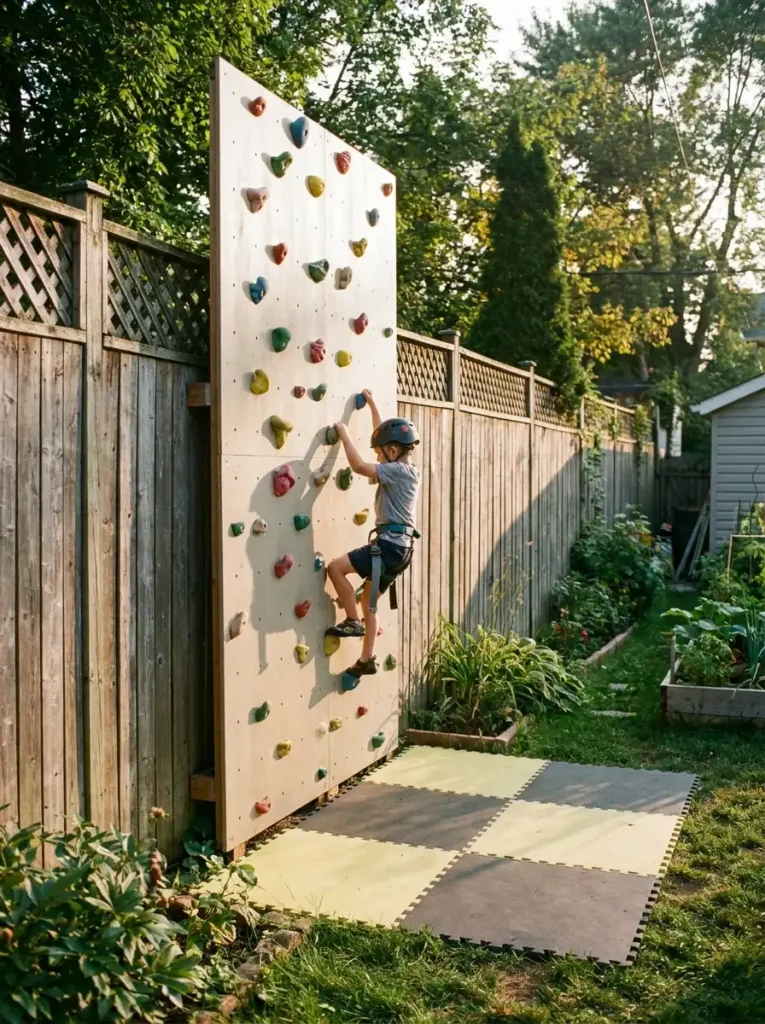
A backyard climbing wall mounted to a fence or a dedicated support structure takes up almost no ground space at all — it grows up, not out. This is one of the smartest small-yard moves out there, since the play happens on a surface you’d otherwise waste. Just make sure it’s properly anchored, rated for outdoor use, and sitting over appropriate fall surfacing.
3. Skip the Full Swing Set for a Single Bucket or Belt Swing
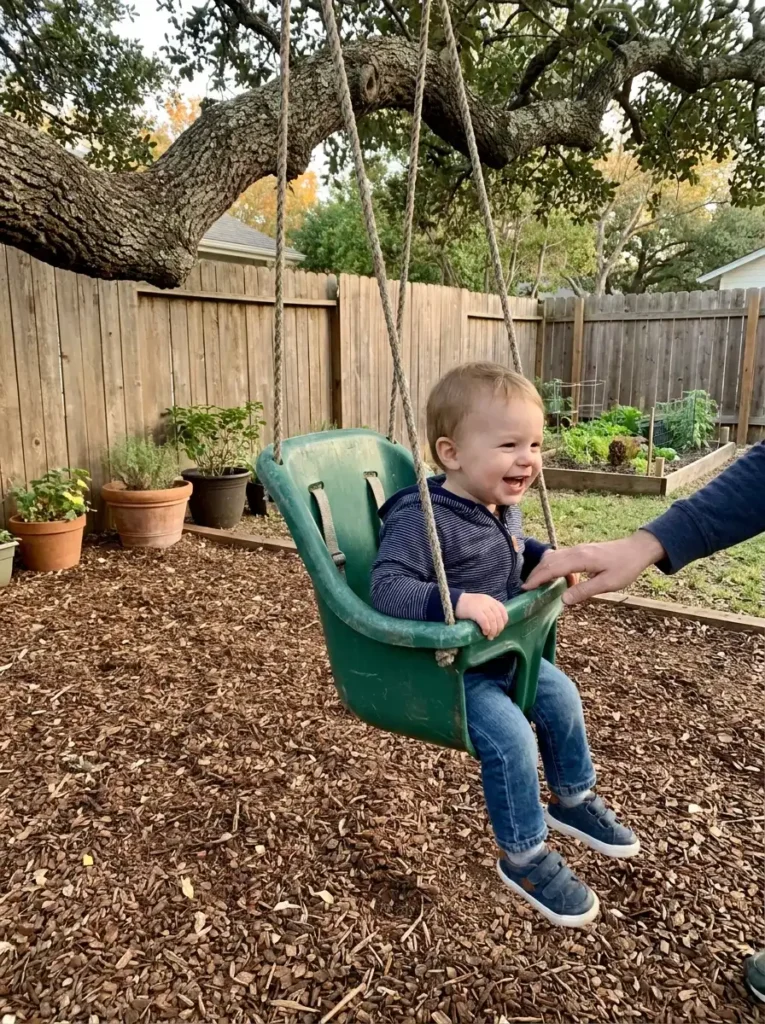
You don’t need a whole rig to get the swinging experience. A single standard belt swing or bucket swing hung from a sturdy tree branch or a compact A-frame does the job in a fraction of the space a full playset demands.
What are good backyard alternatives to a traditional swing set? Single-post swing frames, tree-hung swings, or hammock-style seats all deliver the swinging sensation without eating up half your yard.
4. Use a Sandbox With a Cover to Save Space and Keep It Tidy
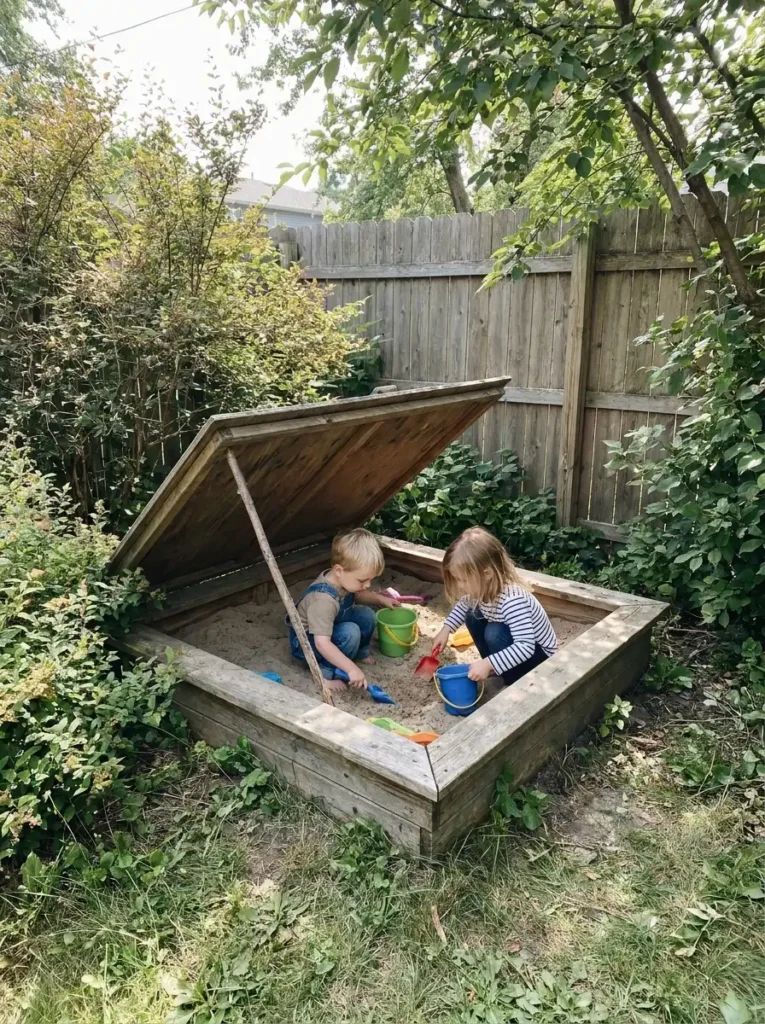
A sandbox with cover is compact, contained, and doubles as extra seating when closed. It’s one of the most efficient small-yard additions because it does its job (sensory + imaginative play) without sprawling across your lawn. Fill it with washed play sand and you’re set.
5. Add a Mud Kitchen Against a Fence Line
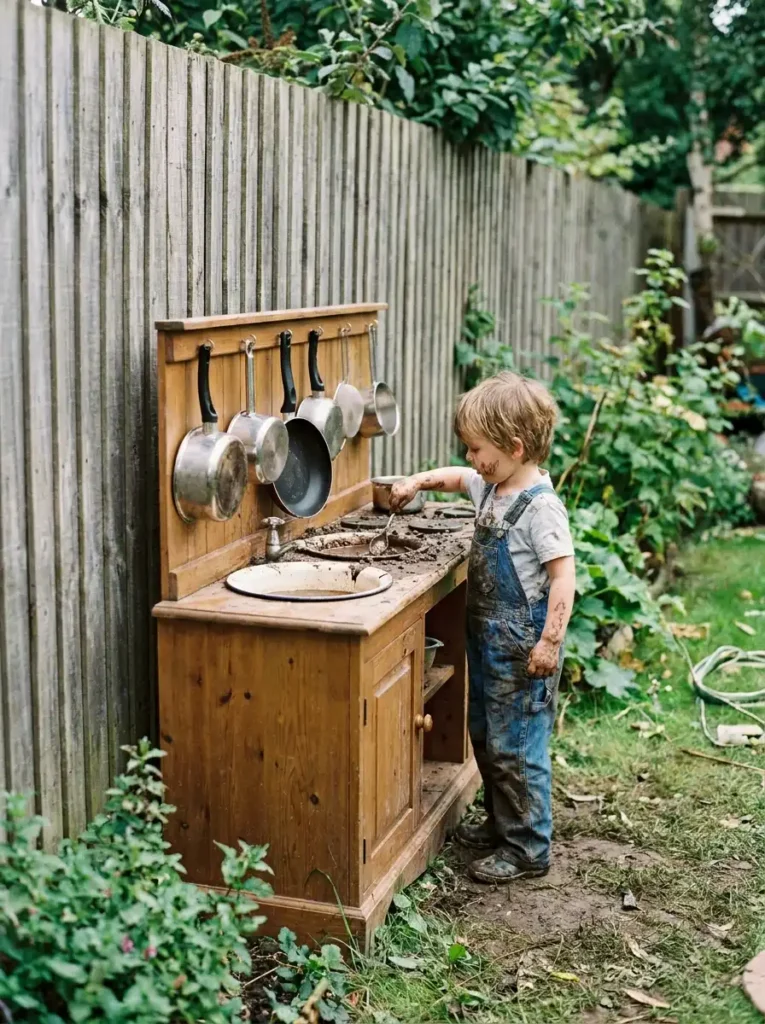
A backyard mud kitchen built from a repurposed cabinet or a slim vertical unit can live flush against a fence, using dead space that would otherwise sit empty. Can a sandbox, mud kitchen, or water table be included? Absolutely — in a small yard, positioning them along the perimeter rather than the center keeps the middle of the yard open for active play.
6. Try a Slackline Instead of Monkey Bars
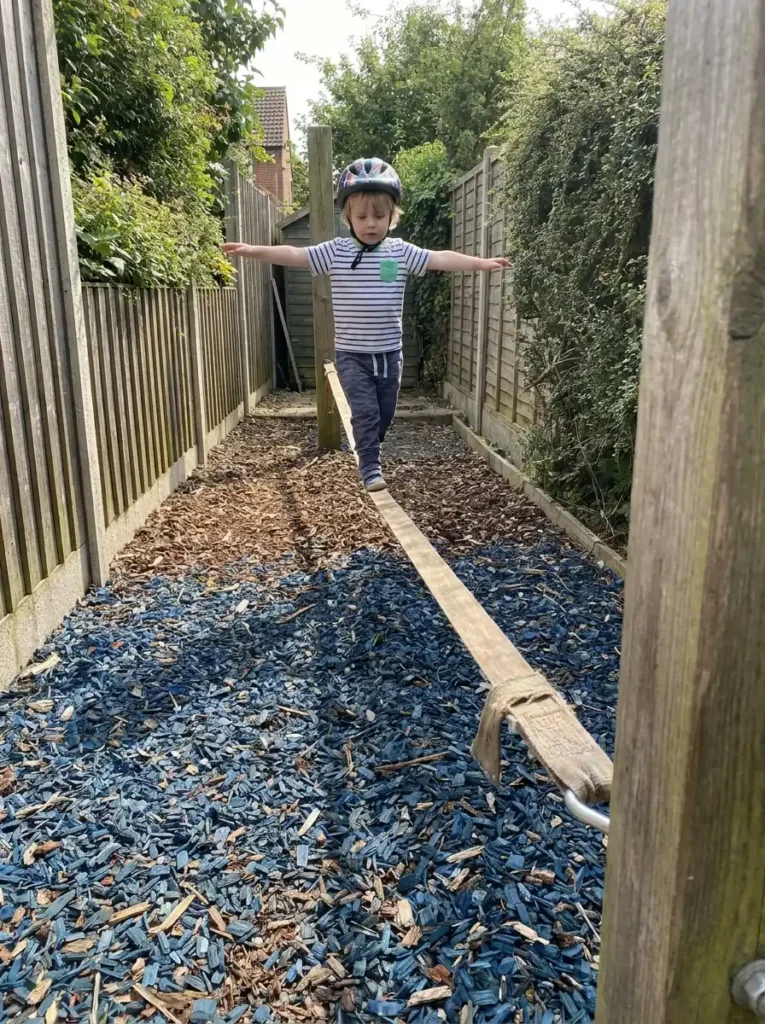
Slacklines for children need just two anchor points and a narrow strip of ground between them — no bulky frame required. It’s a fantastic balance-building alternative when you don’t have the footprint for full monkey bars.
7. Mount a Chalkboard on the Fence
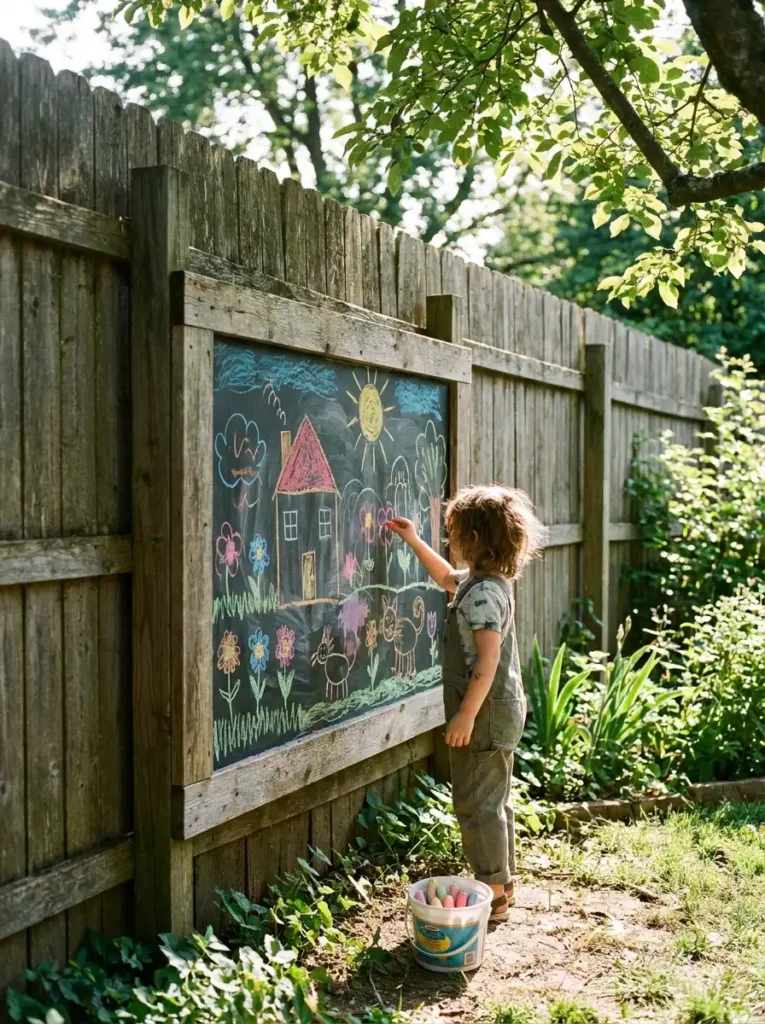
An outdoor chalkboard is one of the highest-value, lowest-footprint additions you can make. It hangs flat against an existing fence or wall, costs next to nothing, and gets used constantly. This is the definition of small-space efficiency.
8. Choose Rubber Mulch or Interlocking Mats Instead of a Full Turf Overhaul
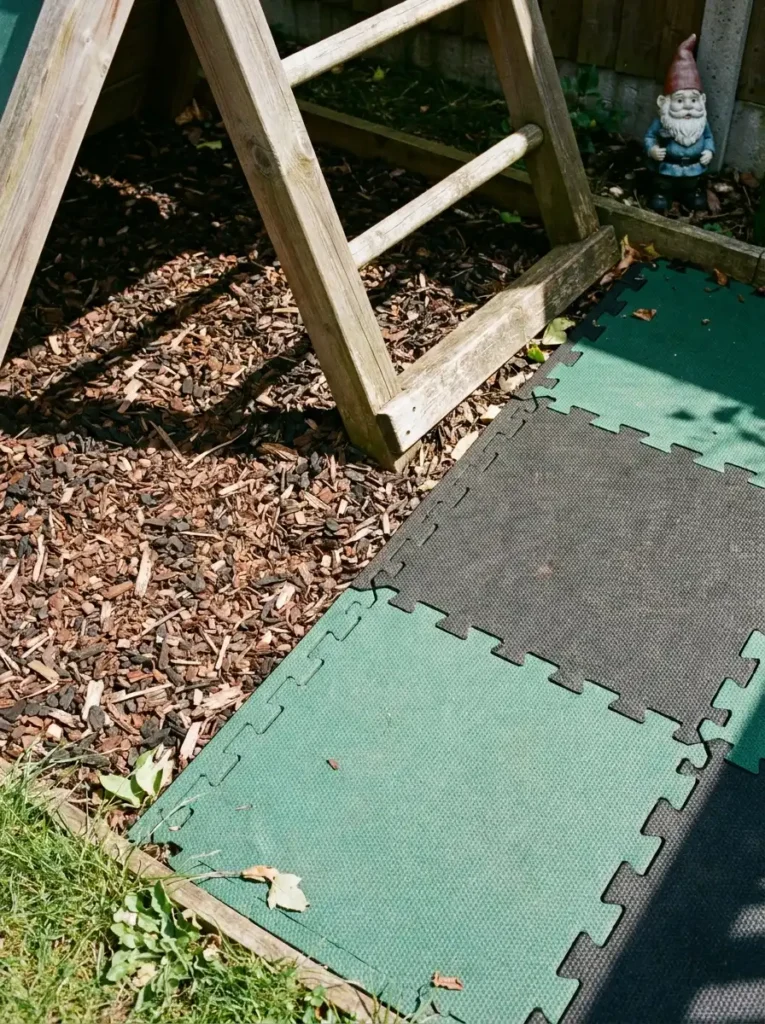
In a small yard, playground rubber mulch or playground safety mats placed strategically under specific equipment is often smarter (and cheaper) than resurfacing the entire yard. Do I need mulch, rubber tiles, turf, or artificial grass under play equipment? Only where there’s a genuine fall risk — you don’t need to cover the whole space.
| Small-Yard Equipment | Approx. Footprint | Best For |
|---|---|---|
| Climbing dome | 8×8 ft | Ages 3–10, active play |
| Backyard climbing wall | 4×8 ft (vertical) | Ages 5–12 |
| Single bucket/belt swing | 4×6 ft | Ages 1–10 |
| Sandbox with cover | 4×4 ft | Ages 1–8 |
| Mud kitchen | 2×3 ft | Ages 2–8 |
| Slackline | Narrow strip, 15–20 ft long | Ages 5–12 |
| Outdoor chalkboard | Wall-mounted | Ages 2–10 |
9. Use a Toddler Playset With a Low, Compact Frame
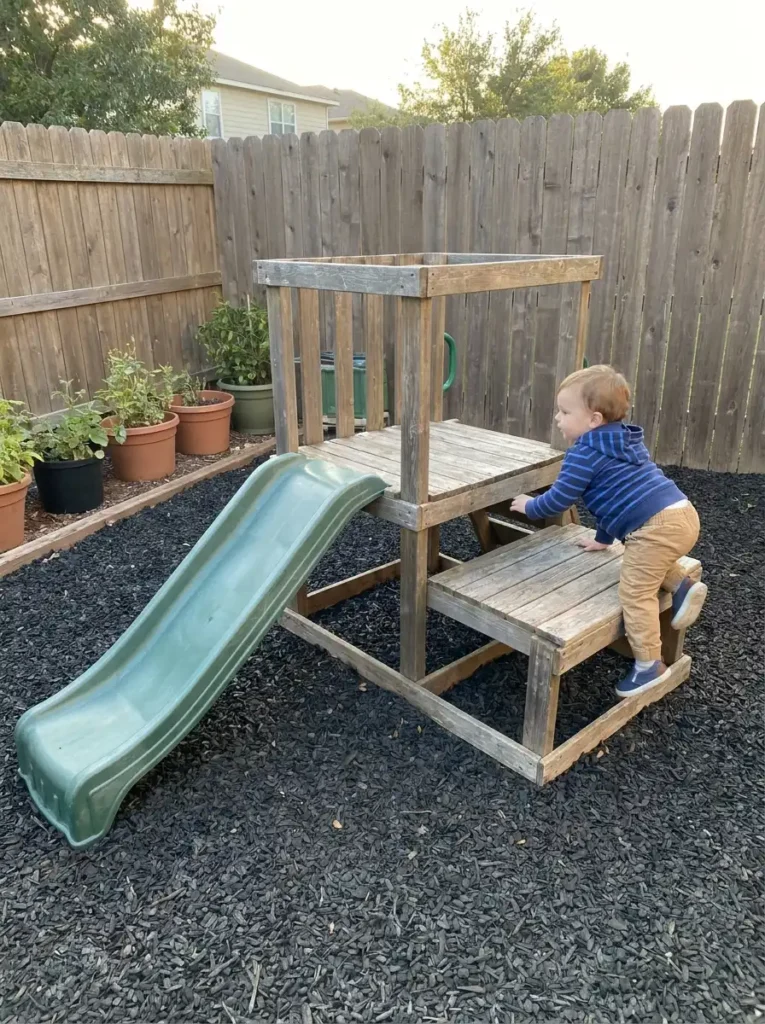
A toddler playset designed with a small footprint gives younger kids a mini version of the full backyard-playground experience — short slide, low platform, sometimes a steering wheel or play panel — all in a space that would barely fit a standard picnic table.
What equipment is best for toddlers? Look for low-height platforms, enclosed seating like a baby swing hanger, and soft surfacing underneath everything.
10. Layer in Shade Without Losing Ground Space
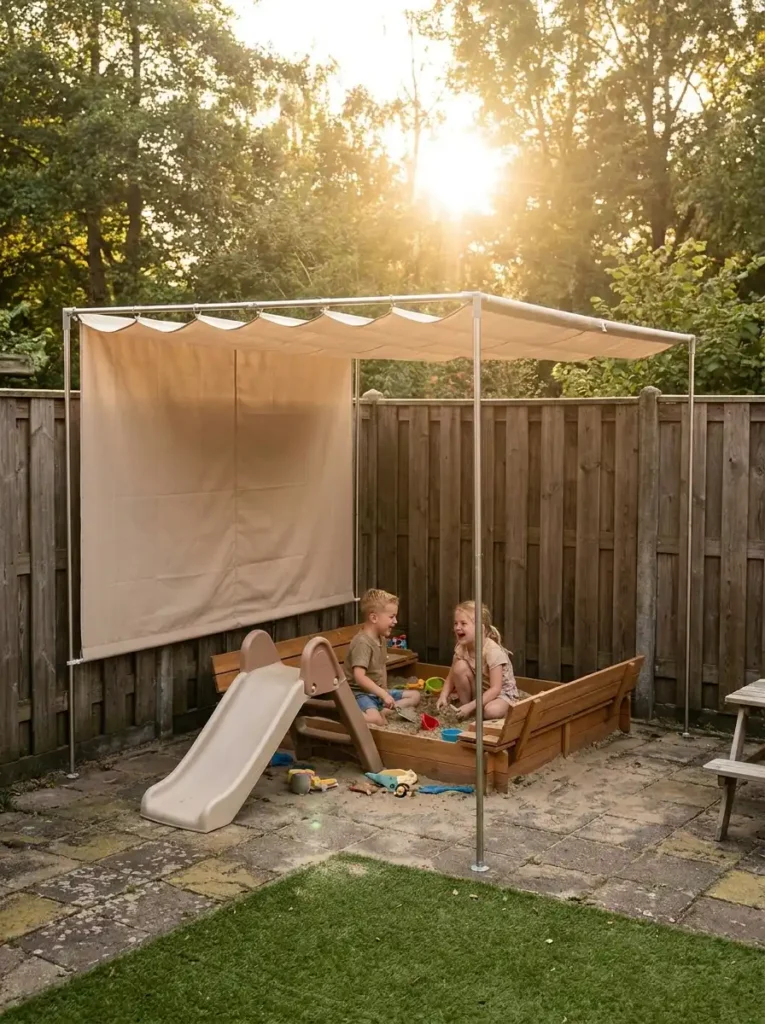
Small yards can feel even smaller once you add a bulky shade structure — so choose wisely. An outdoor play tent or canopy with a narrow base, or a retractable awning off the house, gives you shade without stealing play space. How can I add shade to a backyard play area? Vertical shade solutions (wall-mounted awnings, narrow-base umbrellas) beat freestanding pergolas in tight yards every time.
Small Yard, Big Imagination: Don’t Forget the Details
A tight footprint doesn’t mean you have to skip the finishing touches. A textured stepping-stone path, a few low plantings along the fence line, or a small rock feature can make a compact play area feel intentional instead of cramped. If you’re leaning into a whimsical vibe, our guide on 15 Rock Garden Ideas for Kids That Make Your Backyard the Coolest Spot on the Block pairs beautifully with a small-space layout, and for something more storybook, check out 20 Enchanting Fairy Garden Ideas That’ll Make Your Yard Look Like a Storybook — both work well tucked into leftover corners. If you want a moodier, more magical feel, 20 Witchy Garden Ideas That’ll Transform Your Yard Into a Magical Sanctuary is worth a look too.
According to the U.S. Consumer Product Safety Commission’s playground safety guidance, proper spacing and impact-absorbing surfacing matter more than overall yard size — reassuring news if square footage is your main hurdle.
Conclusion
A small yard isn’t a limitation — it’s a design constraint, and honestly, some of the most creative backyard play areas come out of exactly that kind of constraint. Pick one or two anchor pieces that do double duty, go vertical where you can, and don’t be afraid to leave some open grass for the kind of unstructured play that doesn’t need equipment at all.
Have a small backyard you’ve turned into a play space? Tell us what worked (or what flopped) in the comments — we’d love to feature real small-yard setups in a future post.









1 thought on “10 Small Backyard Play Area Ideas for Tight Spaces”