
I still remember the first morning I found a frog sitting on the flat stone by my pond like he paid rent there. That’s the thing nobody tells you about learning how to build a wildlife pond: you’re not just digging a hole and filling it with water. You’re building real estate, and word travels fast in the animal kingdom.
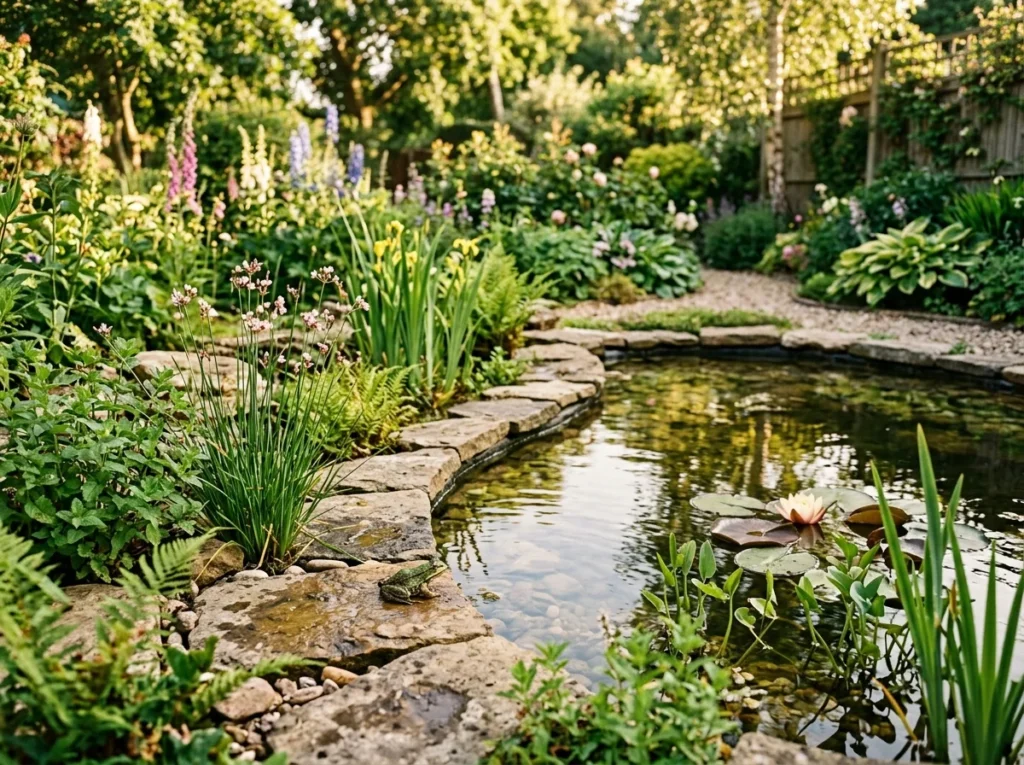
A backyard wildlife pond is one of the single best things you can add to a garden if you want more birds, more frogs, more dragonflies, and honestly, more reasons to go outside and just sit. It doesn’t need to be big, it doesn’t need to be fancy, and it definitely doesn’t need fish. Below is a full, no-nonsense walkthrough — 15 steps — covering everything from picking the right spot to keeping the water clear without a single chemical.
Step-by-Step: How to Build a Wildlife Pond
1. Pick the right location (sun, not shade, mostly)
Answering the big FAQ first: should a wildlife pond be in sun or shade? Aim for a spot that gets partial sun — around 4 to 6 hours a day is the sweet spot. Full shade under a big tree means falling leaves clog your water and plants struggle. Full blazing sun all day can push algae into overdrive. Somewhere in between, ideally away from overhanging branches, is where your garden wildlife pond will thrive.
2. Choose your pond size and shape
You don’t need acreage. A small wildlife pond — even one built from a repurposed washing-up bowl sunk into the ground — can support frogs, newts, and thirsty birds. If you’ve got more room, an irregular, kidney-bean shape looks more natural than a perfect circle and gives you more edge space for planting.
3. Decide: liner, preformed shell, or both
Do wildlife ponds need a liner? Not always. A preformed wildlife pond shell is the fastest, most beginner-friendly option — just dig, drop it in, and level it. A flexible pond liner gives you more control over shape and depth, which matters more for wildlife pond design in odd-shaped corners of the yard.
4. Mark it out and start digging
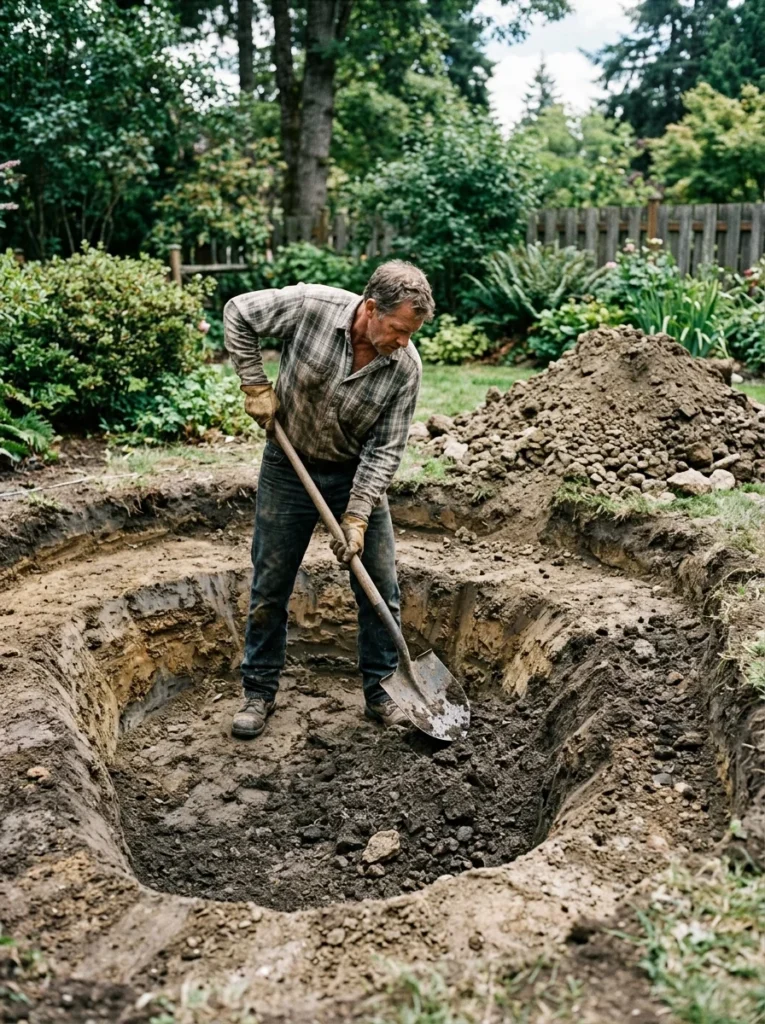
Use a rope or a garden hose to trace your outline before you touch a shovel. This is the easiest way to fix a wonky shape before it’s permanent. Then get digging with a good garden shovel — a round-point shovel makes quick work of the deeper center.
5. Build in shallow shelves and sloped edges
This is the step that actually makes a pond wildlife-friendly instead of just decorative. How do I create shallow edges for animals to enter and exit? Dig at least one gently sloped “beach” area, plus a shelf around 4–6 inches deep for marginal plants. Hedgehogs, birds, and even your neighbor’s cat will thank you for a way in and out that isn’t a vertical drop.
6. Get the depth right
How deep should a wildlife pond be? A mix of depths works best: shallow shelves around 4–9 inches, and a deeper zone of at least 18–24 inches in the center. That deeper section keeps water from freezing solid in winter and gives wildlife somewhere cool to retreat to in summer.
7. Check it’s level before you line it
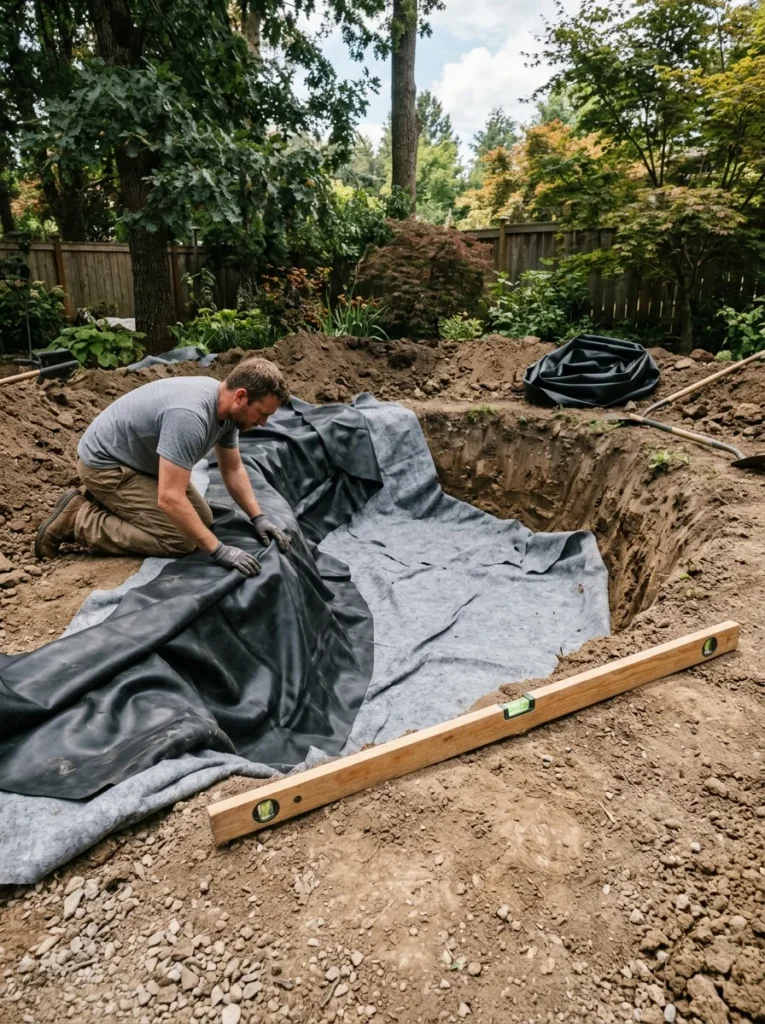
Skip this step and you’ll regret it the moment water goes in and pools unevenly on one side. Lay a spirit level across the top edges in multiple directions. Small dips in the soil now mean a crooked waterline forever.
8. Add underlayment, then your liner
Pond underlayment protects your liner from sharp stones and stubborn roots — don’t skip it, it’s cheap insurance. Lay your liner loosely (never stretched tight) so it can settle into the shape as water fills it.
9. Fill with rainwater, not tap water, if you can
Should I use rainwater or tap water to fill the pond? Rainwater is gentler on wildlife and doesn’t carry the chlorine and minerals tap water does. A rain barrel connected to your gutter is an easy way to build up a supply before pond day. If you must use tap water, let it sit for a few days before adding plants or wildlife moves in.
10. Cover the liner edges with natural materials
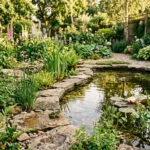
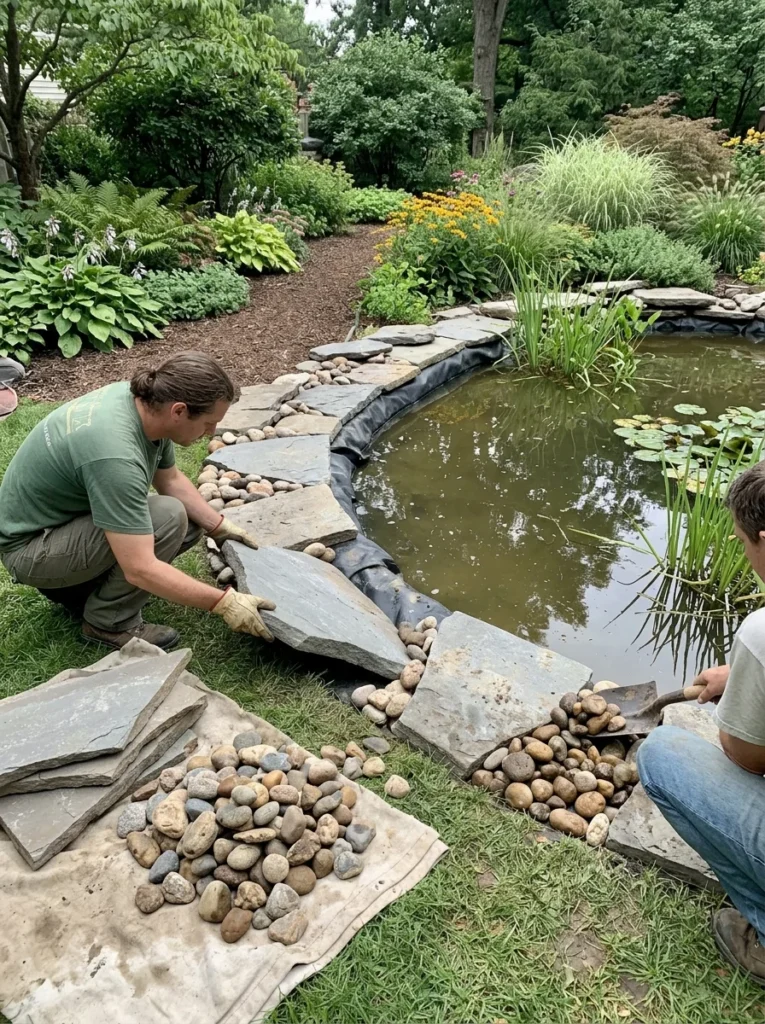
Nothing screams “plastic hole in the ground” like an exposed liner edge. Tuck it under large flat stones, river rocks, or landscape edging stones so it disappears into the landscape and gives wildlife solid footing at the waterline.
11. Plant it up with natives
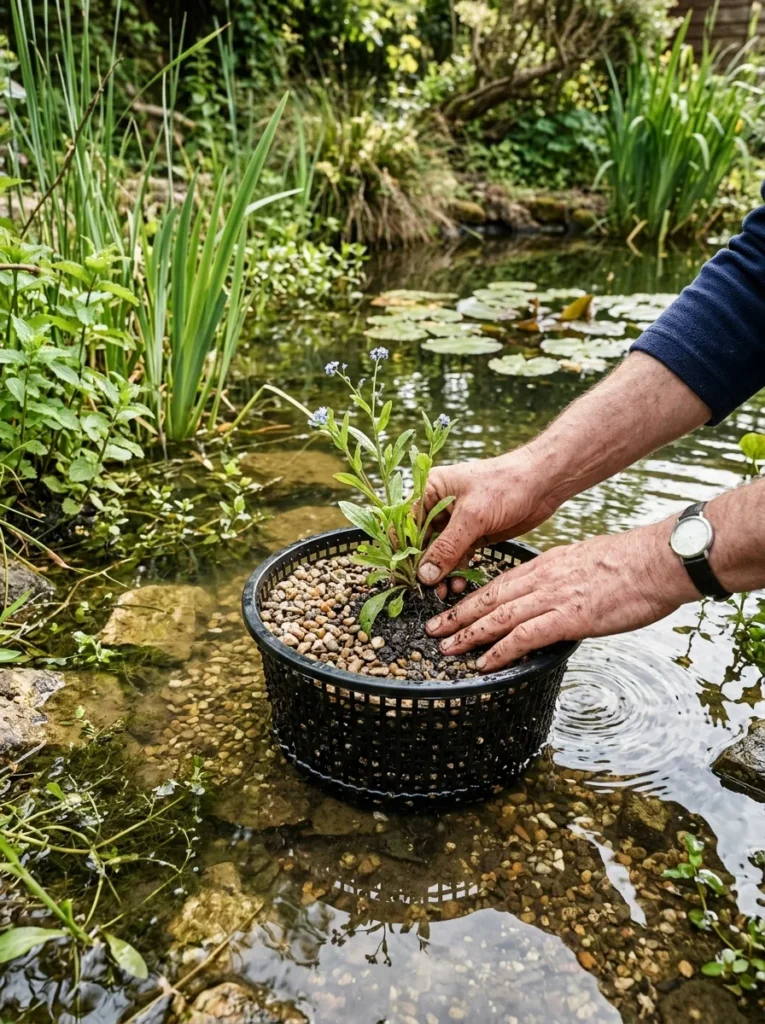
What plants should I put in a wildlife pond? Stick to a native pond plant mix where you can. A water lily gives shade and cover, oxygenating plants keep the water healthy, and marginal plants along the shallow shelves give frogs and dragonfly larvae something to cling to. Use planting baskets with aquatic compost and a layer of pea gravel on top so soil doesn’t cloud the water.
| Plant type | Example | Purpose |
|---|---|---|
| Floating/shade | Water lily | Cools water, reduces algae, offers cover |
| Oxygenator | Hornwort, native pondweed | Keeps water clear and oxygenated |
| Marginal | Marsh marigold, native sedges | Shelter for frogs, insects, and birds |
| Bog edge | Native rushes | Softens the transition from land to water |
12. Skip the fish
Is a fishless pond better for wildlife? Almost always, yes. A fishless wildlife pond lets frog and newt tadpoles, dragonfly larvae, and other invertebrates actually survive to adulthood instead of becoming fish food. If your goal is biodiversity over decoration, leave the goldfish out of it.
13. Decide on a pump or aerator
Should I add a pump or aerator to a wildlife pond? For a wildlife pond for frogs and toads, you usually don’t need one — still water actually suits amphibians better than moving water. A small solar aerator can help in very hot climates or very small ponds, but it’s optional, not essential.
14. Think about safety
What safety features should I add for children and pets? If young kids or pets are around, keep depths shallow near play areas, add a decorative grille just under the surface, or fence the pond off entirely. Sloped edges also double as an escape route for any pet that falls in.
15. Maintain it through the seasons
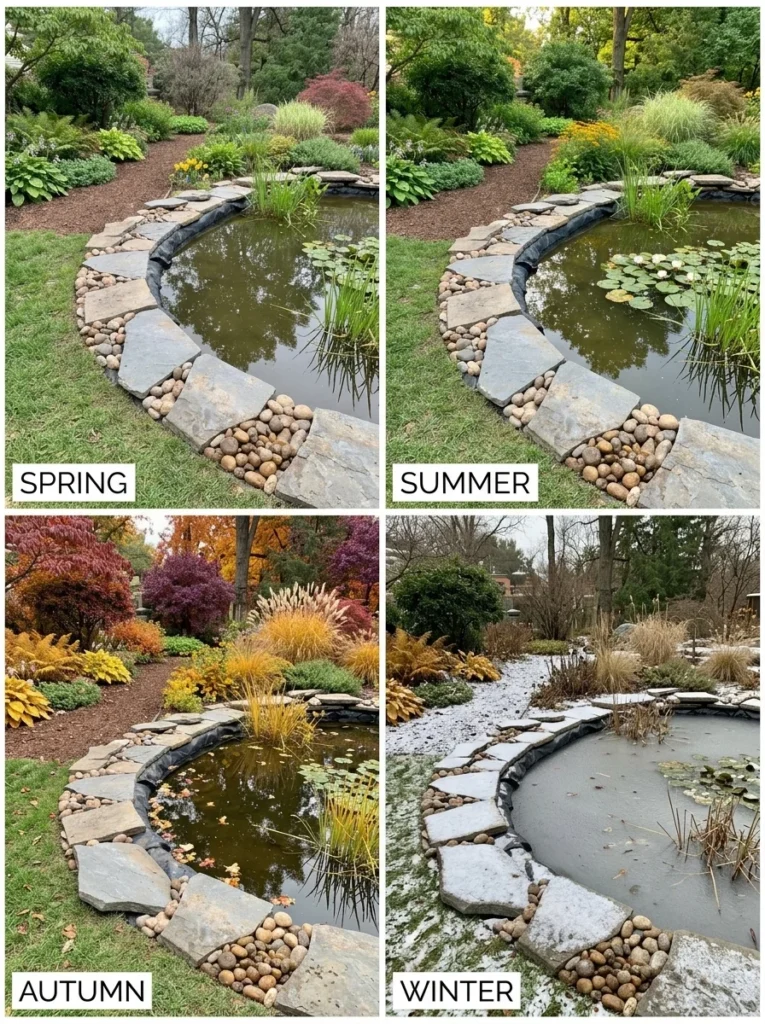
How do I maintain a wildlife pond through the seasons? In spring, thin out excess growth. In summer, top up water levels (rainwater again, if possible) and skim debris. In autumn, net out fallen leaves before they sink and rot. In winter, float a ball or use a small aerator to keep an air hole open in ice — never smash the ice, the shockwaves can harm anything sheltering below.
Extra Questions People Ask
How do I stop algae in a wildlife pond? Shade from plants like water lilies, oxygenating plants, and avoiding overfeeding wildlife are your best natural defenses. Skip chemical treatments — they can harm the very animals you’re trying to attract.
Can I build a wildlife pond in a small garden? Absolutely. A small wildlife pond in a container or a tight corner still offers drinking water, breeding habitat, and a cooling spot for local wildlife. Size matters less than depth variety and plant cover.
Can I use a pre-formed plastic pond for wildlife? Yes — a preformed shell just needs the same shallow shelves, natural edging, and native planting as a lined pond to be just as wildlife-friendly.
How long does it take for wildlife to appear in a new pond? Insects and pond skaters often show up within days. Frogs and toads can take a full season, sometimes longer, especially if there isn’t a breeding population close by. Patience pays off here.
For more on the exact critters you’re likely to attract, our guides on 15 Ways to Attract Frogs and Toads to Your Backyard Pond and 15 DIY Garden Toad House Ideas go deeper on habitat add-ons you can build alongside your pond.
Bringing It All Together
Building a natural wildlife pond isn’t a weekend flex project — it’s more like planting a tree. You do the digging and the leveling and the planting now, and the payoff shows up gradually, one visitor at a time. Start with the site, get your depths and edges right, plant it with natives, and let it be still and fishless. The rest, genuinely, takes care of itself.
If you’re already building out other wildlife-friendly features, check out 15 DIY Bird Bath Ideas That’ll Turn Your Yard Into a Bird Sanctuary and 15 Butterfly Bush Landscaping Ideas to round out your backyard habitat.
For further reading on native planting choices, the National Wildlife Federation’s habitat guidance and The Wildlife Trusts’ pond advice are solid, credible starting points.
Got a pond story of your own, or a question I didn’t cover? Drop it in the comments — I read every one, and your shallow-shelf trick might be exactly what someone else needs to hear today.