

Yes, You Can Grow Hollyhocks in Pots — and They’ll Look Incredible
I’ll be honest — the first time someone told me hollyhocks could grow in containers, I laughed. These are the same stately, six-foot drama queens you see towering over old cottage fences, right? Surely they’d hate a pot.
Turns out, I was wrong. Dead wrong.
Growing hollyhocks in pots is not only possible — it’s actually a pretty brilliant move if you’re working with a balcony, a narrow patio, or just want to control where those gorgeous blooms show up each summer. The trick? You have to do things right. The wrong pot, the wrong soil, the wrong amount of water — and yeah, your hollyhock will sulk. But give it what it needs, and it will absolutely reward you.
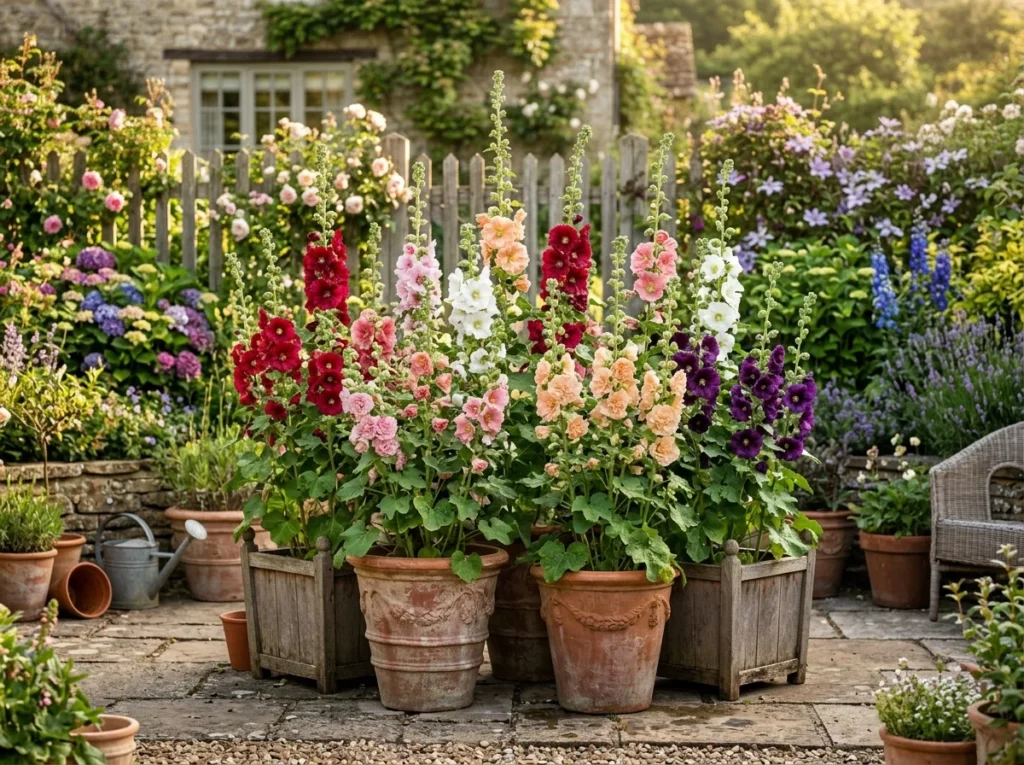
Let’s walk through everything you need to know about growing hollyhocks in containers, from picking the right pot to keeping them standing tall all season.
💡 Other Posts You May Like: For everything about hollyhock care beyond containers, check out How to Grow Hollyhocks: The Complete Care Guide for Stunning Cottage Garden Towers.
Table of Contents
1. Can Hollyhocks Actually Grow Well in Pots?
Short answer: yes — with the right setup.
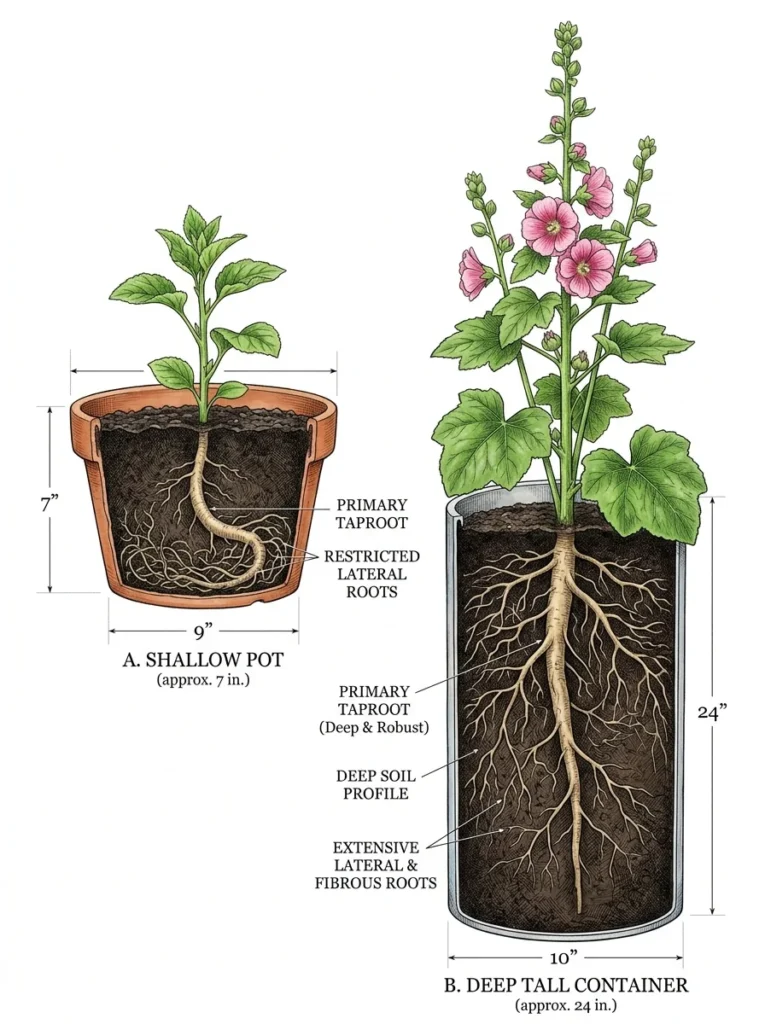
Hollyhocks (Alcea rosea) are naturally deep-rooted plants. In the ground, their taproots can go surprisingly far down. In a container, you’re basically asking them to do all of that in a much more confined space. That means the pot has to work with the plant, not against it.
The biggest concerns with potted hollyhocks are:
- Roots running out of room
- Soil drying out too fast
- Plants getting top-heavy and flopping over
- Less disease resistance than garden-grown plants
None of these are dealbreakers. They just mean you’re going to be a slightly more attentive plant parent than usual. Worth it.
2. What Size Pot Do Hollyhocks Need?
Here’s where most people mess up. They grab a pretty 10-inch pot and wonder why their hollyhock looks miserable by July.
Hollyhocks need deep pots — at minimum 18 inches deep, ideally 24 inches or more. The depth matters more than the width here, because of that taproot. A wider pot (12–16 inches) helps with stability, especially once the plant gets tall.
🪴 Amazon Affiliate Pick: A deep container planter with drainage holes is the #1 thing I’d recommend buying before you even buy seeds. This is the single most important investment for container hollyhocks.
If you want to grow several hollyhocks together — which looks gorgeous — a large rectangular planter gives everyone enough root room and creates a stunning visual display.
3. What Is the Best Soil for Hollyhocks in Pots?
Hollyhocks want rich, fertile, well-drained soil. In the ground, they handle clay and poor soil surprisingly well. In a pot? You need to give them something better.
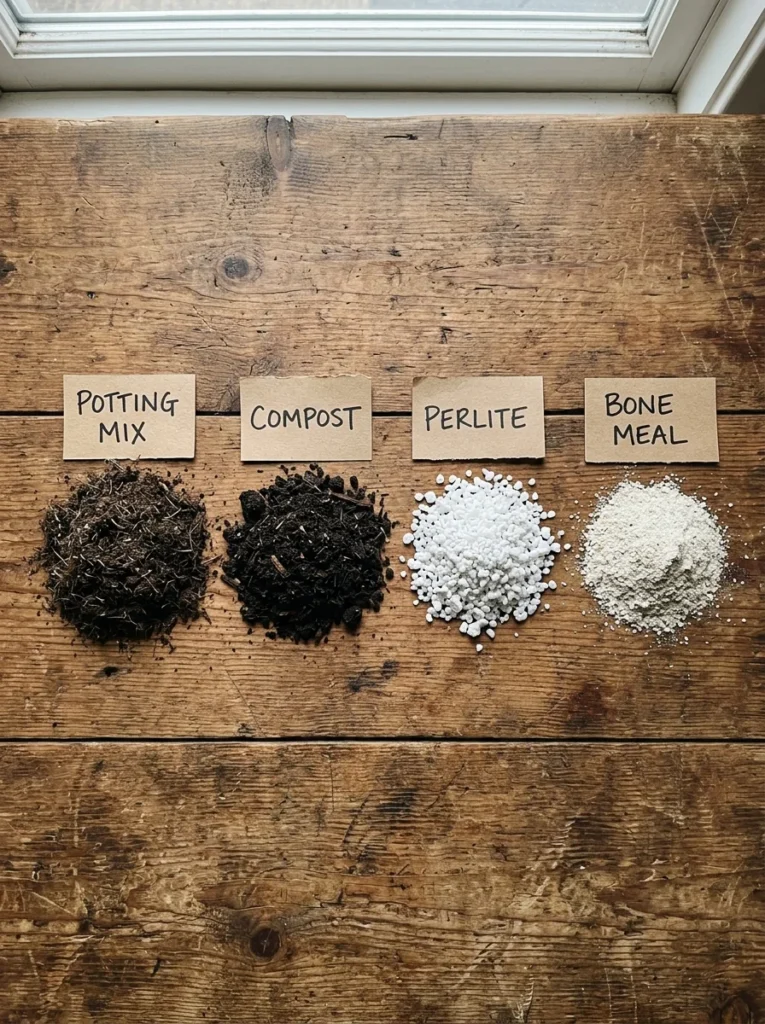
My go-to container mix for hollyhocks:
- 2 parts quality potting mix — skip the cheap stuff; it compacts too fast
- 1 part compost — for fertility and that organic richness they love
- ½ part perlite — critical for drainage so roots don’t rot
- A handful of bone meal — mixed in at planting for strong root development
Some gardeners also add a bit of vermiculite to help the soil retain just enough moisture without getting waterlogged. It’s a nice touch, especially if you tend to forget to water.
Avoid regular garden soil in pots — it compacts, drains poorly, and basically suffocates container plants over time.
4. How Much Sun Do Potted Hollyhocks Need?
Full sun. Non-negotiable. Hollyhocks need at least 6–8 hours of direct sunlight per day. Put them somewhere sunny and they’ll reward you with those tall, flower-covered spikes. Put them in shade, and you’ll get leggy, weak stems and almost no blooms.
This is actually one of the perks of growing hollyhocks in containers — you can move them to wherever the sun is best. Just remember that containers in full sun dry out faster, so you’ll be watering more. More on that in a second.
5. How Often Should You Water Hollyhocks in Containers?
Consistency is everything here. Potted hollyhocks need regular watering — typically every 1–2 days in summer heat, especially in full sun.
The rule I follow: stick your finger 1–2 inches into the soil. If it’s dry, water. If it’s still moist, wait.
A moisture meter is genuinely useful here. It takes all the guesswork out and helps you avoid both underwatering AND overwatering (the two main ways container plants die).
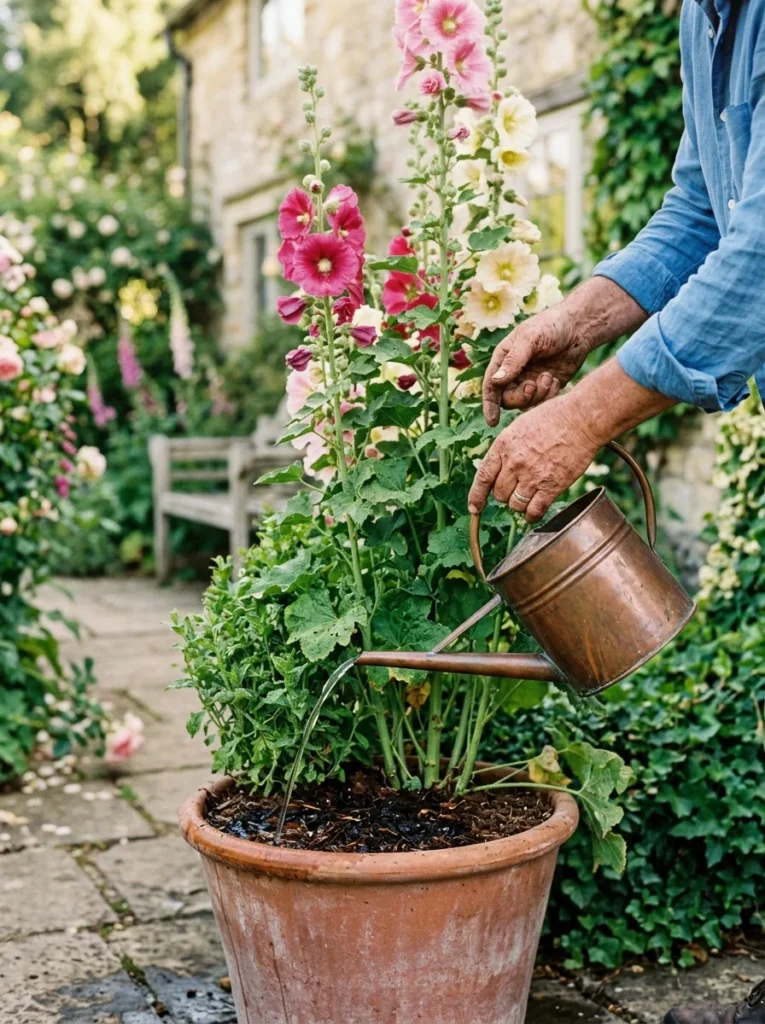
When you water, do it deeply — until it drains out the bottom. This encourages deep root growth. A watering can with a long spout makes it easy to water at the base without getting the leaves wet, which helps prevent disease.
6. Do Hollyhocks Need Support in Pots?
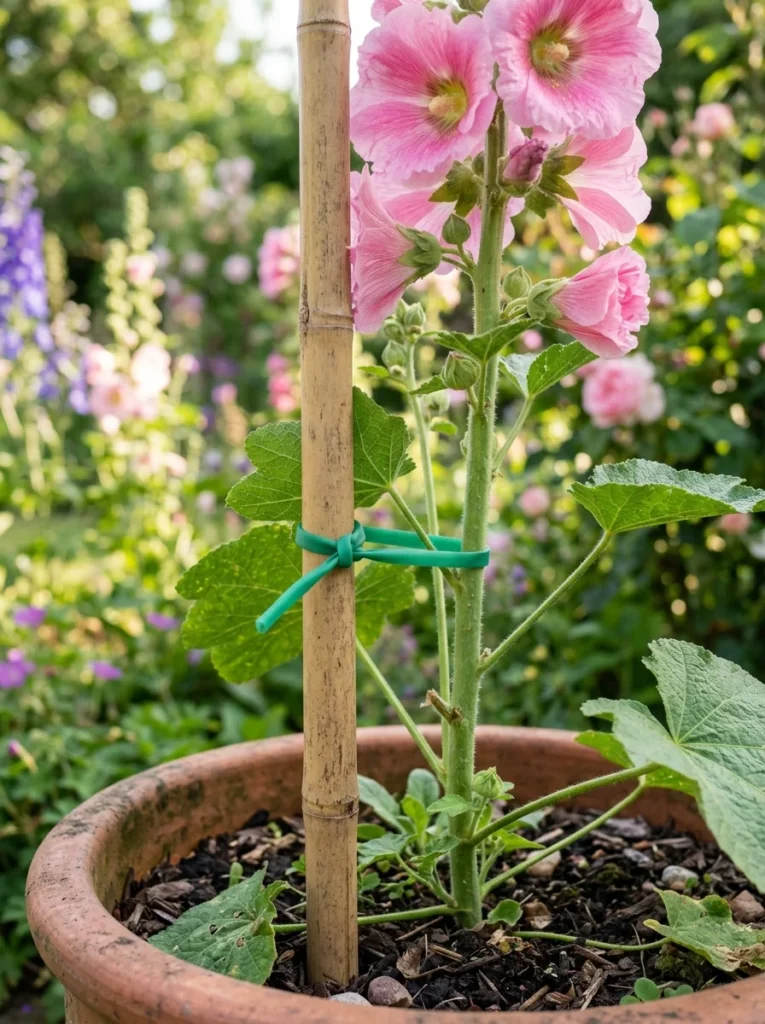
Absolutely yes. Tall hollyhocks can reach 4–6 feet, and in a container, they don’t have the ground anchoring their roots the same way. Wind is the enemy.
Here are the support options that actually work:
| Support Type | Best For | Notes |
|---|---|---|
| Bamboo stakes | Single stems | Lightweight, cheap, easy to use |
| Plant ties | Attaching stems to stakes | Gentle on stems |
| Support ring/cage | Bushy multi-stem plants | Less visible, more elegant |
I usually start staking when the plant hits about 18 inches. Don’t wait until it’s already flopping — at that point, you’re fighting the plant instead of guiding it.
If you’re on a windy balcony or exposed patio, staking is even more important. Consider positioning the pot near a wall or railing for extra shelter.
7. Can You Grow Hollyhocks from Seed in Pots?
Yes, and honestly it’s kind of satisfying to do so. Here’s the basic process:
- Start seeds indoors 6–8 weeks before your last frost date
- Sow hollyhock seeds about ¼ inch deep in small starter cells
- Keep the soil moist and warm (65–70°F)
- Germination takes 10–14 days
- Once seedlings are 3–4 inches tall with a few true leaves, transplant to your final container
One thing to know: hollyhocks are biennials, meaning they often bloom in their second year. If you want blooms faster, look for annual varieties or grab hollyhock seedlings from a nursery instead of starting from seed.
8. Should You Pinch or Prune Potted Hollyhocks?
For container hollyhocks, I generally say don’t pinch unless you have a specific reason to. Pinching encourages bushier growth but can reduce the tall single-spike look that makes hollyhocks so dramatic.
Where pruning does help:
- Removing dead or yellow lower leaves to improve airflow
- Cutting back after the first bloom flush to encourage a second round
- Snipping off any rust-infected leaves immediately (more on that below)
Use good pruning shears rather than ripping leaves off — clean cuts heal better and reduce disease risk.
9. How Do You Deadhead Hollyhocks in Containers?
Deadheading — removing spent blooms — keeps the plant looking tidy and can extend the blooming season. It also prevents the hollyhock from putting all its energy into seed production instead of more flowers.
How to do it:
- Wait until the flower has fully faded and begins to shrivel
- Snip the spent bloom just below the flower with your pruning shears
- Leave some seed pods at the end of the season if you want to collect seeds for next year
On a biennial hollyhock, letting it go to seed at the end of the season is actually how it “self-sows” — though in a pot, those seeds aren’t going anywhere unless you help them.
10. How Do You Feed Hollyhocks in Pots?
Container plants need more fertilizer than in-ground plants, full stop. The nutrients in potting mix get washed out every time you water.
My feeding routine for hollyhock container care:
- At planting: mix in bone meal and slow-release fertilizer for a season-long foundation
- During growing season: apply a balanced liquid fertilizer every 2–3 weeks
- When buds form: switch to a lower-nitrogen feed to encourage more blooms over leaves
Don’t over-fertilize with nitrogen or you’ll get lots of lush green leaves and not much in the way of flowers. Classic mistake.
11. Why Are My Potted Hollyhocks Getting Rust?
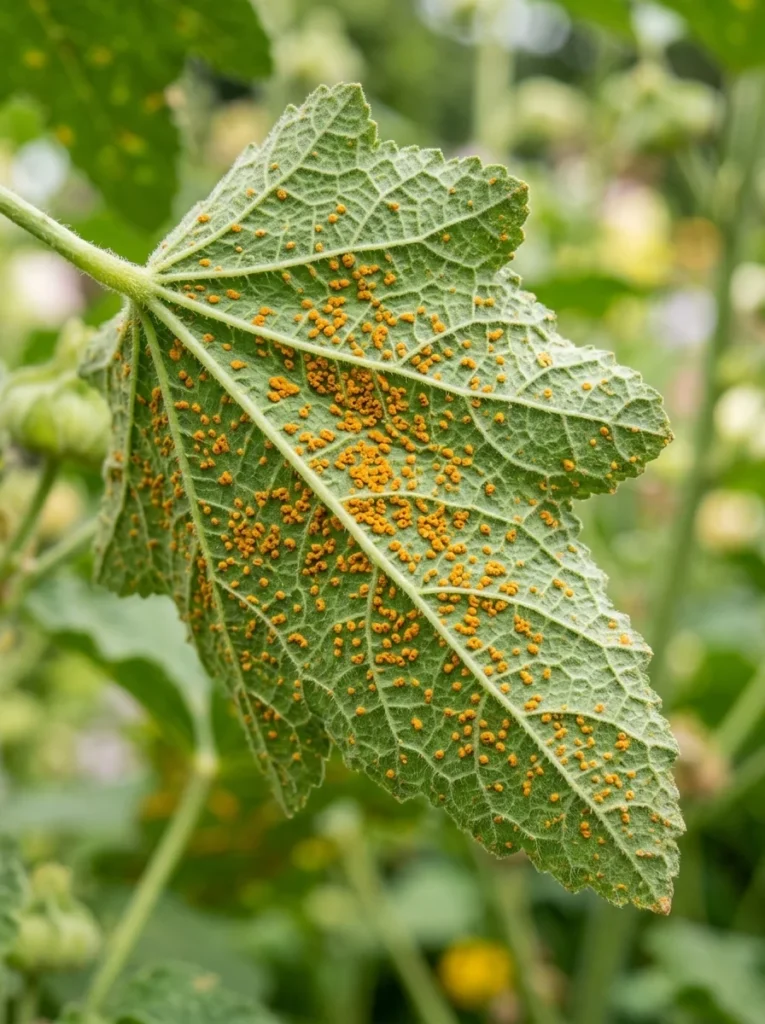
Ah, hollyhock rust. The bane of container gardeners everywhere. This fungal disease shows up as orange, powdery spots on the undersides of leaves — and once you see it, you know it.
Potted hollyhocks can actually be more susceptible to rust because of limited airflow and water splashing back up from the soil.
Prevention:
- Water at the base, never overhead
- Don’t crowd plants
- Remove and dispose of infected leaves immediately
- Spray with copper fungicide at the first sign of infection
- Neem oil can help as a preventative early in the season
Rust won’t kill your plant outright, but it’ll make it look terrible. Staying ahead of it is much easier than dealing with a full outbreak.
12. Are Dwarf Hollyhock Varieties Better for Pots?
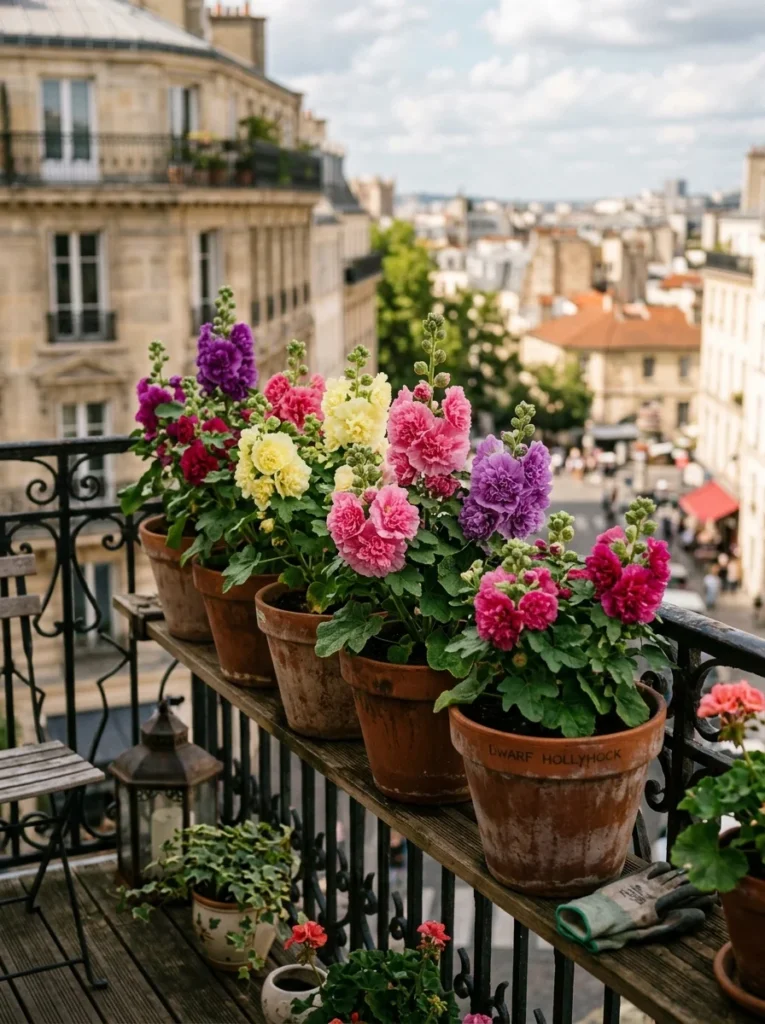
If you’re working with a smaller patio or aren’t confident in your staking game, dwarf hollyhock varieties are genuinely great for containers. Look for:
- ‘Queeny Purple’ — stays around 2 feet, blooms first year from seed
- ‘Majorette Mix’ — double blooms, compact form, about 2–3 feet
- ‘Happy Lights Mix’ — shorter, earlier blooming, great color range
These varieties skip a lot of the staking drama while still giving you that classic hollyhock look.
13. Can Hollyhocks Overwinter in Pots?
This depends on your climate and whether your hollyhock is an annual, biennial, or perennial variety. In general:
- Annual varieties: Done at first frost. Compost them and start fresh next year.
- Biennial/perennial varieties: Can overwinter with some protection.
For overwintering potted hollyhocks:
- Move pots to a sheltered, unheated garage or shed
- Cut stems back to a few inches above the soil
- Keep the soil barely moist (not bone dry, not wet)
- Bring back out in spring once frost risk has passed
An outdoor plant caddy makes moving those heavy pots around at the start and end of season so much easier. Genuinely one of those things you don’t realize you need until you’re dragging a 40-lb pot across the patio at 6am.
14. Do Hollyhocks Do Better in Deep or Wide Containers?
Deep wins every time. Wide containers look nice but don’t address the taproot issue. A tall, narrow pot is actually better for a single hollyhock than a wide, shallow one.
If you’re planting multiple hollyhocks together, go for a container that’s both deep and wide — something like a large rectangular planter at least 18 inches deep.
Conclusion: Potted Hollyhocks Are Absolutely Worth the Effort
Here’s the thing about growing hollyhocks in pots — it takes a bit more attention than just sticking them in the ground. But the payoff? A full patio covered in towering, cottage-garden blooms? Completely worth it.
Start with a deep container, get the soil right, water consistently, and don’t skip the staking. Do those four things and your container hollyhocks will absolutely show up for you.
💡 Also worth reading: If you’re into making plants work hard in small spaces, check out 10 Pothos Climbing Ideas That Turn a Trailing Vine Into an Indoor Showstopper or my honest take on How to Take Care of My Aloe Vera Plant (The Honest, No-Fuss Guide).
What about you — are you growing hollyhocks in containers this season? Drop your questions (or your wins!) in the comments below. I read every single one.
FAQs: Growing Hollyhocks in Pots
Can hollyhocks grow well in pots?
Yes! With a deep container, well-draining fertile soil, full sun, and regular watering, hollyhocks can thrive in pots.
What size pot do hollyhocks need?
At least 18 inches deep — 24 inches is better. Width of 12–16 inches helps with stability.
What is the best soil for hollyhocks in pots?
A mix of quality potting mix, compost, and perlite works best. Add bone meal at planting.
How much sun do potted hollyhocks need?
6–8 hours of direct sun daily, minimum.
How often should I water hollyhocks in containers?
Every 1–2 days in summer heat. Check the top inch or two of soil — water when dry.
Do hollyhocks need support in pots?
Yes. Stake them at around 18 inches tall using bamboo stakes or a support ring.
Can I grow hollyhocks from seed in pots?
Absolutely. Start indoors 6–8 weeks before last frost and transplant once they have true leaves.
Should I pinch or prune potted hollyhocks?
Light pruning yes — remove dead leaves and spent blooms. Heavy pinching isn’t usually necessary.
Why are my potted hollyhocks getting rust?
Hollyhock rust is a fungal issue. Water at the base, improve airflow, remove infected leaves, and treat with copper fungicide.
Can hollyhocks overwinter in pots?
Perennial and biennial varieties can overwinter in a sheltered, unheated space. Annual types should be composted after frost.





1 thought on “Growing Hollyhocks in Pots: The No-Fail Guide for Container Gardeners”