

“A garden without hollyhocks is like a cottage without a porch — technically functional, but missing the whole point.”
If you want to know how to grow hollyhocks, you’ve landed in exactly the right spot — because I’m about to walk you through everything from the first seed to the final bloom.
I’ll be honest with you. The first time I spotted hollyhocks towering over a picket fence in a New England garden, I pulled over my car. Like, actually stopped. Because there’s something almost theatrical about a 6-foot stalk loaded with dinner-plate blooms in pink, burgundy, white, and near-black — swaying like it owns the place.
Learning how to grow hollyhocks isn’t complicated, but there are a few things you really want to get right — timing, soil, airflow, staking — and this guide covers all of it: planting hollyhock seeds, watering, rust prevention, deadheading, and seed saving. We’re going full cottage-garden mode.
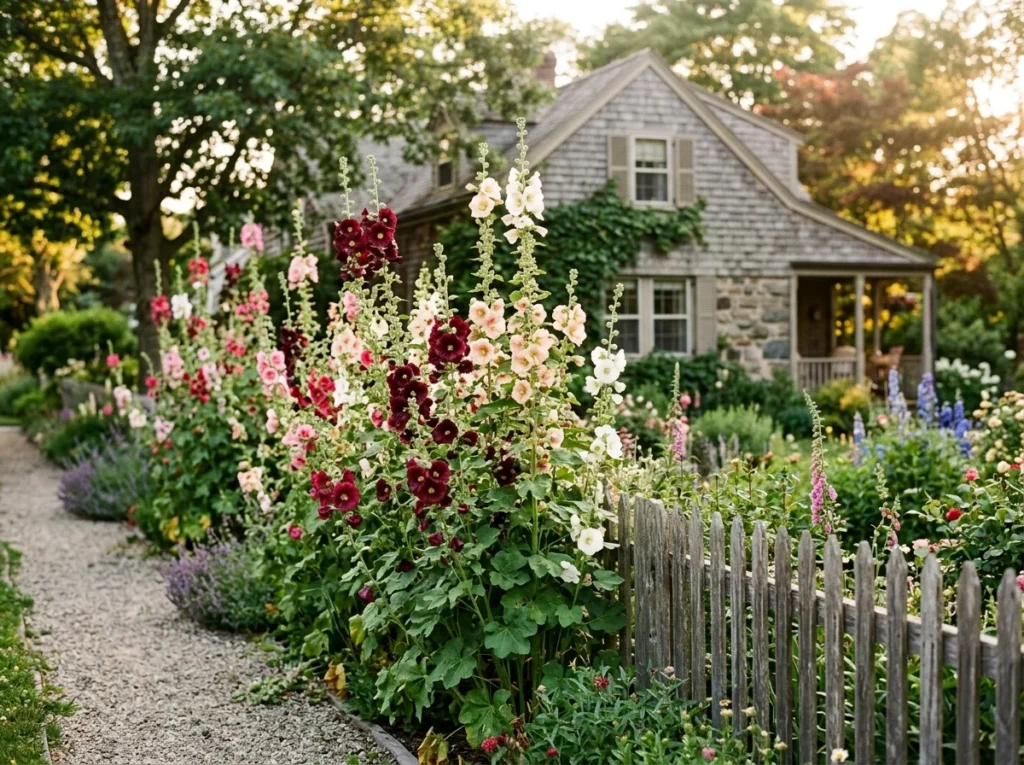
Table of Contents
How to Grow Hollyhocks — And Why You Absolutely Should
Hollyhocks (Alcea rosea) are the tall, old-fashioned flowering plants you’ve probably seen in photos of English country gardens or American farmhouses. They’re beloved for one simple reason: they’re absolutely dramatic.
A few fast facts:
- Height: 5–8 feet tall (some varieties even taller)
- Bloom time: Mid-summer through early fall
- Colors: White, pink, red, lavender, yellow, burgundy, nearly black
- Native origin: China and Southwest Asia, naturalized across the US and Europe
Now here’s the thing that confuses most beginners — are hollyhocks perennials or biennials? Good question, and the answer is: both, depending on the variety and your conditions.
Most common hollyhocks are biennials, meaning they spend Year 1 growing leaves and roots, then bloom in Year 2, set seed, and die. But many modern varieties are bred as short-lived perennials, returning for a few years. Either way, they self-sow so enthusiastically that once you plant them, they tend to just… keep showing up. Which is honestly the best kind of garden guest.
When to Plant Hollyhocks
Timing is everything with hollyhocks, so let’s break it down by seed vs. transplant.
Starting from Seed
The best time to plant hollyhock seeds depends on your goal:
| Planting Time | When | Result |
|---|---|---|
| Fall (direct sow) | September–October | Blooms the following summer |
| Early spring (indoor start) | 6–8 weeks before last frost | Blooms same year (sometimes) |
| Late spring (direct sow) | After last frost | Foliage year 1, blooms year 2 |
Pro tip: Fall planting in USDA zones 4–9 is the classic approach and often produces the strongest plants. Cold stratification over winter triggers better germination. If you’re in a colder zone (3 or below), start indoors in late winter.
🛒 Amazon Affiliate Pick: Hollyhock Seeds (mixed colors) — a great starting point if you want a rainbow of blooms without committing to a single variety. Look for seed mixes that include singles, doubles, and heirloom types.
Where to Plant Hollyhocks: Sunlight Requirements
Do hollyhocks need full sun or partial shade? Straight answer: full sun is best.
Hollyhocks thrive in at least 6 hours of direct sun per day, and 8 hours is even better. In hotter southern climates (zones 8–9), a little afternoon shade can prevent stress and extend bloom time. But if you’re planting in the Midwest, Northeast, or Pacific Northwest — give them all the sun you can.
Avoid deep shade. Shaded hollyhocks grow weak, bloom poorly, and become magnets for the one problem everyone hates: rust fungus (more on that in a minute).
Hollyhock Soil Requirements: What They Actually Need
Hollyhocks aren’t fussy about soil type, but they are firm about drainage. Soggy roots = miserable hollyhocks.
Ideal hollyhock soil:
- Well-draining (sandy loam or loam works great)
- Slightly alkaline to neutral pH (6.0–8.0)
- Rich in organic matter
If your soil is clay-heavy, amend it with compost before planting. If it’s extremely sandy, mix in compost to improve moisture retention.
🛒 Affiliate Pick: Garden Compost — work a few inches into your planting bed to give hollyhocks the nutrient boost they love from the start.
For containers: Yes, you can grow hollyhocks in pots, but choose a large container (at least 12–16 inches deep and wide) and use a quality potting mix with excellent drainage. Tall varieties will need staking and may not perform as dramatically as in-ground plants.
🛒 Affiliate Pick: Raised Garden Bed — if your native soil is problematic, a raised bed gives you full control over drainage and fertility.
How to Grow Hollyhocks from Seed: Step-by-Step Planting Guide
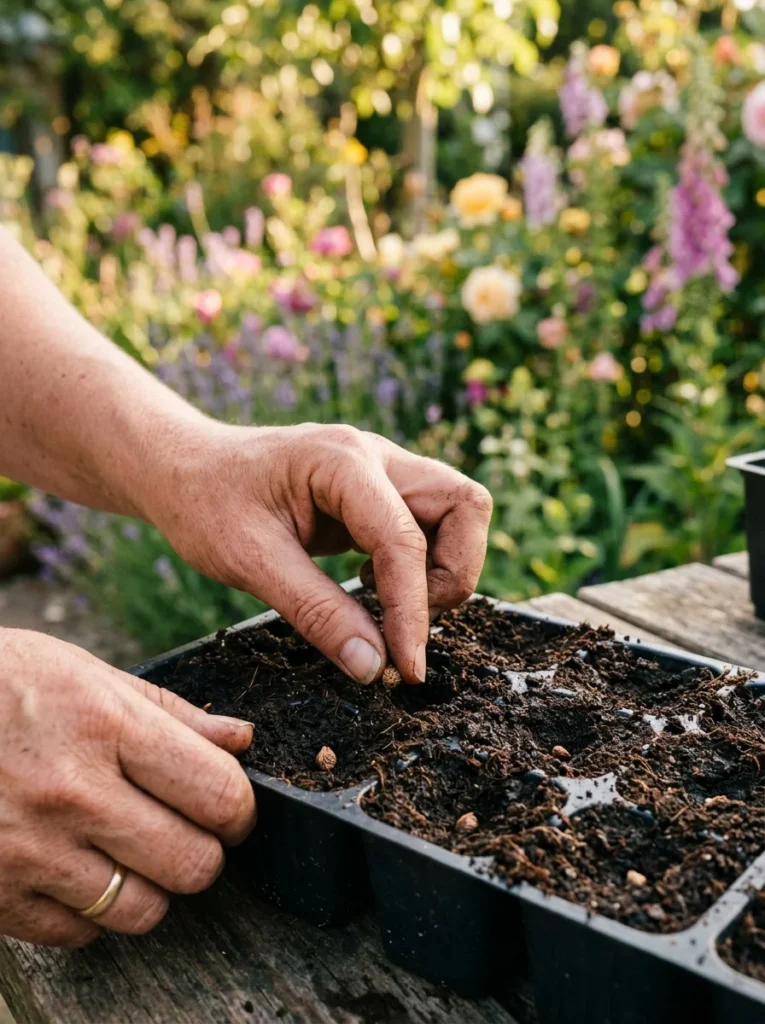
Here’s your simple hollyhock planting guide, whether you’re starting indoors or direct sowing.
Planting Indoors
- Fill a seed starting tray with a sterile seed starting mix
- Press seeds lightly into the surface — hollyhocks need light to germinate, so don’t bury them deep (¼ inch max)
- Water gently and cover with plastic wrap or a humidity dome
- Keep at 60–70°F — germination takes 10–14 days
- Once seedlings have 2 true leaves, transplant into individual 4″ pots
- Harden off outdoors for 1 week before transplanting outside
🛒 Affiliate Picks:
- Seed Starting Mix — lighter than regular potting soil, ideal for delicate seedlings
- Grow Tray with Drainage — keeps seedlings organized while preventing overwatering
Direct Sowing Outdoors
- Loosen soil to 12 inches deep
- Scatter seeds and press lightly — thin to 18–24 inches apart once seedlings are established
- Water well and keep consistently moist until germination
How far apart should you space hollyhock plants? Space them 18–24 inches apart minimum. Good airflow between plants is your best defense against rust.
Hollyhock Watering Needs
How often should you water hollyhocks? Once established, hollyhocks are fairly drought-tolerant — but they perform best with regular, consistent moisture.
General watering guide:
- Newly planted/seedlings: Water every 2–3 days
- Established plants: 1 inch of water per week (rain + supplemental)
- Dry spells: Water deeply once or twice a week at the base
The golden rule: Always water at the base, not overhead. Wet leaves are a welcome mat for rust fungus. A long-spouted watering can or drip system is your best friend here.
🛒 Affiliate Picks:
- Watering Can with Long Spout — keeps water exactly where you want it
- Drip Irrigation Kit — set it and forget it while dramatically reducing leaf wetness
Hollyhock Fertilizer: Feeding for Maximum Blooms
How do you get more blooms on your hollyhocks? Feed them right.
- Early spring: Apply a balanced fertilizer (5-5-5) or compost to encourage strong vegetative growth
- Before blooming: Switch to a low-nitrogen, phosphorus-rich fertilizer (like bone meal) to promote flower development
- Avoid over-fertilizing with nitrogen — you’ll get tall, leafy plants with fewer blooms
🛒 Affiliate Picks:
Staking Tall Hollyhocks (Because They Will Flop)
Let’s be real — a 7-foot hollyhock stalk in a summer thunderstorm is basically a sail. Staking is non-negotiable for most varieties.
How to stake hollyhocks:
- Drive a bamboo stake into the ground near the base (but not through roots) when plants reach 2–3 feet
- Loosely tie the stalk to the stake with plant twine or velcro plant ties — leave room for the stalk to grow
- Add ties every 12–18 inches as the plant grows taller
- For a clump of hollyhocks, a large tomato cage works beautifully as a central support frame
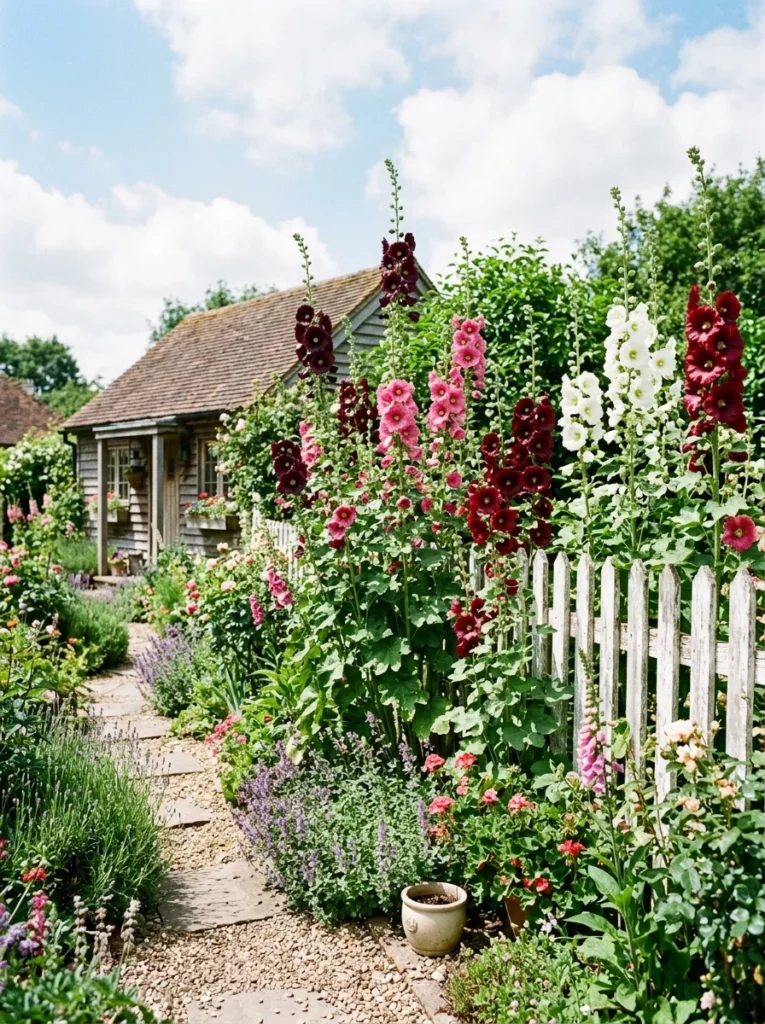
How do you keep hollyhocks from flopping in wind? Plant them along a fence, wall, or building — they love the shelter and look stunning against vertical structures. This is where the cottage-garden aesthetic really sings.
Hollyhock Rust: Prevention & Treatment
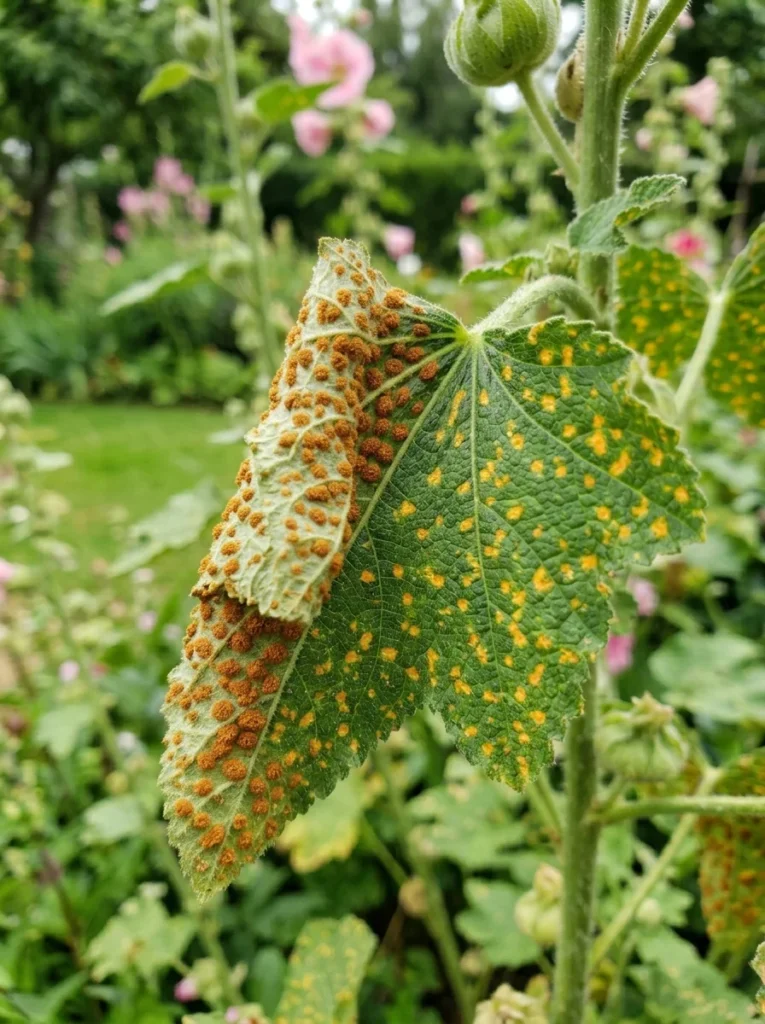
Okay, the elephant in the garden. Hollyhock rust (Phragmidium violaceum) is a fungal disease that causes orange, powdery pustules on the undersides of leaves and yellow spots on top. It’s the #1 problem hollyhock growers face.
Prevention:
- Space plants 18–24 inches apart for airflow
- Water at the base (see above)
- Remove and dispose of infected leaves immediately — don’t compost them
- Apply a layer of mulch to prevent soil splash onto lower leaves
- Choose rust-resistant varieties when possible
Treatment:
- Copper fungicide — effective and widely used for hollyhock rust
- Neem oil spray — an organic option that works on early-stage infections
- Remove heavily infected plants at the end of the season; clear all debris
The honest truth: most hollyhocks will get some rust by late summer, especially in humid climates. Don’t panic. As long as you catch it early and manage it, your plants will still bloom beautifully.
Deadheading Hollyhocks: Should You Do It?
Should you deadhead hollyhocks? Yes — but strategically.
Removing spent blooms (deadheading) encourages the plant to keep producing flowers rather than diverting energy into seed production. Use clean pruning shears to snip just below the faded flower.
However — and this is important — leave a few blooms on the stalk to go to seed if you want your hollyhocks to self-sow. That’s how you get that effortless “they just appeared” cottage garden effect next year.
🛒 Affiliate Pick: Pruning Shears — sharp, clean cuts reduce disease risk and make deadheading much easier
How to Save Hollyhock Seeds
Saving hollyhock seeds is simple and deeply satisfying. Here’s how:
- Let seed pods dry fully on the plant — they’ll turn brown and papery
- Snip the pods and place them in a paper bag; shake to release seeds
- Let seeds air dry for another week
- Store in labeled seed envelopes in a cool, dry place
- Use within 1–2 years for best germination rates
🛒 Affiliate Pick: Seed Envelopes — keep your saved seeds organized and labeled by color and year
Do Hollyhocks Come Back Every Year?
Here’s the nuanced answer: it depends on the variety, but in practice — yes, they tend to return.
- Biennial varieties bloom Year 2, set seed, and die — but their seeds drop and sprout, creating a new generation that blooms the following year. So you get continuous hollyhocks in your garden without replanting.
- Perennial varieties (like Alcea rugosa, the Russian hollyhock) return from the root for several years.
- In USDA zones 3–8, hollyhocks reliably self-sow year after year once established.
If you’re building a low-maintenance cottage garden — this self-sowing habit is exactly what you want. Think of them like good houseguests who keep inviting themselves back but always look stunning when they arrive.
Best Companion Plants for Hollyhocks
What to plant with hollyhocks? They’re sociable plants that play well with others.
Great hollyhock companion plants:
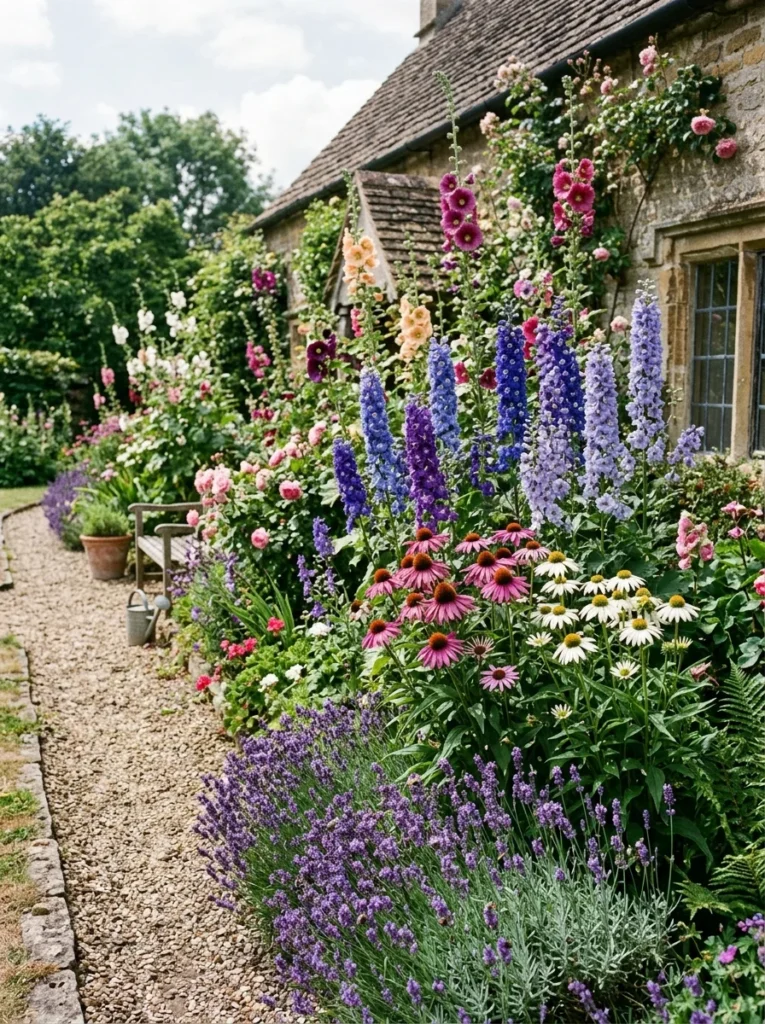
- Delphiniums — another tall cottage garden stalwart; similar growing conditions
- Foxglove — staggered bloom times for a longer season of vertical color
- Echinacea (coneflower) — mid-height companion that blooms around the same time
- Salvia — lower-growing, fills in the base beautifully
- Climbing roses — share a fence and create pure English garden magic
- Lavender — deters some pests and thrives in the same sunny, well-drained conditions
If you love the idea of building an indoor plant collection too, check out our guides on 10 Pothos Climbing Ideas That Turn a Trailing Vine Into an Indoor Showstopper and 15 Best Indoor Plants for Beginners (That Are Actually Hard to Kill) for beautiful greenery ideas beyond the garden.
Best Hollyhock Varieties to Grow
Not all hollyhocks are created equal. Here are some top picks:
| Variety | Type | Height | Notable For |
|---|---|---|---|
| Alcea rosea ‘Chater’s Double’ | Biennial | 6–8 ft | Fully double, ruffled blooms |
| ‘Nigra’ (Black Hollyhock) | Biennial | 5–6 ft | Deep maroon-black flowers |
| Alcea rugosa | Perennial | 4–6 ft | More rust-resistant than standard |
| ‘Queeny Purple’ | Annual/Short perennial | 2–3 ft | Great for containers |
| ‘The Watchman’ | Biennial | 5–7 ft | Rich dark blooms, heirloom type |
For more plant growing know-how, our Spider Plant Care: The Only Guide You’ll Ever Need is a great read if you’re building your green thumb across different plants.
Quick Hollyhock Care Summary
Here’s everything at a glance:
| Care Factor | Recommendation |
|---|---|
| Sunlight | Full sun (6–8 hours) |
| Soil | Well-draining, fertile, pH 6.0–8.0 |
| Watering | 1″/week; base watering only |
| Fertilizer | Balanced in spring; bone meal before bloom |
| Spacing | 18–24 inches apart |
| Staking | Yes — bamboo stakes or tomato cages |
| Deadheading | Yes — but leave some for self-sowing |
| Rust prevention | Airflow + mulch + copper fungicide |
| Containers | Yes — use large pots with great drainage |
Conclusion: Your Cottage Garden Moment Awaits
Growing hollyhocks is one of those genuinely rewarding garden projects that pays off in a way that feels bigger than the effort you put in. A few seeds or transplants, some good soil prep, a sturdy stake, and a watchful eye for rust — and by midsummer, you’ve got a living statement piece that stops strangers in their tracks. (Trust me. I’ve been that stranger.)
Whether you’re planting your first hollyhock seed this fall or troubleshooting a rust problem on your established plants, you’ve now got everything you need to make it work.
Your next step? Pick your variety, prep that sunny spot, and let those towers grow. And if you found this guide helpful, drop a comment below — I’d love to see photos of your hollyhock garden this summer. 🌸
Frequently Asked Questions
When is the best time to plant hollyhock seeds?
Fall (September–October) for biennial bloomers, or 6–8 weeks before last frost indoors for earlier blooms.
Do hollyhocks need full sun or partial shade?
Full sun — at least 6 hours daily. Partial shade is tolerated in hot climates only.
What kind of soil is best for hollyhocks?
Well-draining, fertile loam with a pH of 6.0–8.0. Amend clay soils with compost.
How often should I water hollyhocks?
About 1 inch per week; water at the base to reduce rust risk.
Do hollyhocks come back every year?
Most self-sow prolifically, so they return year after year even if individual plants are biennials.
Are hollyhocks perennials or biennials?
Most are biennials; some modern varieties are short-lived perennials. All self-sow readily.
How do I prevent and treat hollyhock rust?
Space plants well, water at the base, mulch soil, and use copper fungicide or neem oil at first sign of infection.
How do I stake tall hollyhocks?
Use bamboo stakes and soft ties; or plant against a fence or wall for natural support.
Should I deadhead hollyhocks?
Yes — but leave some spent blooms to self-sow for next year’s garden.
How do I save hollyhock seeds?
Let pods dry on the plant, collect and dry further, then store in labeled seed envelopes.
How far apart should I space hollyhock plants?
18–24 inches minimum to allow good airflow and reduce disease risk.
Can I grow hollyhocks in containers?
Yes, in large, deep pots (12–16 inches minimum) with excellent drainage.
How do I get more blooms on my hollyhocks?
Feed phosphorus-rich fertilizer before bloom time, deadhead regularly, and ensure full sun.
What are good companion plants for hollyhocks?
Delphiniums, foxglove, echinacea, salvia, lavender, and climbing roses.
How do I keep hollyhocks from flopping over in wind?
Stake early with bamboo stakes and ties; or plant beside a fence or building for natural support.






2 thoughts on “How to Grow Hollyhocks: The Complete Care Guide for Stunning Cottage Garden Towers”