

If you’re wondering how to attract frogs and toads to your backyard pond, the short answer is: build it right, and they’ll come. Ever sat outside on a warm evening and heard that first “ribbit” drift across the yard? It’s one of those small sounds that makes a garden feel alive. If you’ve been dreaming of turning your backyard into the kind of place where frogs hang out and toads tuck themselves under the hostas, you’re in the right spot.
Here’s the truth nobody tells you upfront: attracting frogs to your pond isn’t about luck. It’s about building the right habitat and then getting out of the way. Frogs and toads are picky roommates. They want shallow water, no fish trying to eat them, plenty of hiding spots, and a yard that isn’t drenched in chemicals. Give them that, and they’ll show up. Skip it, and you’ll just have a very quiet, very expensive water feature.
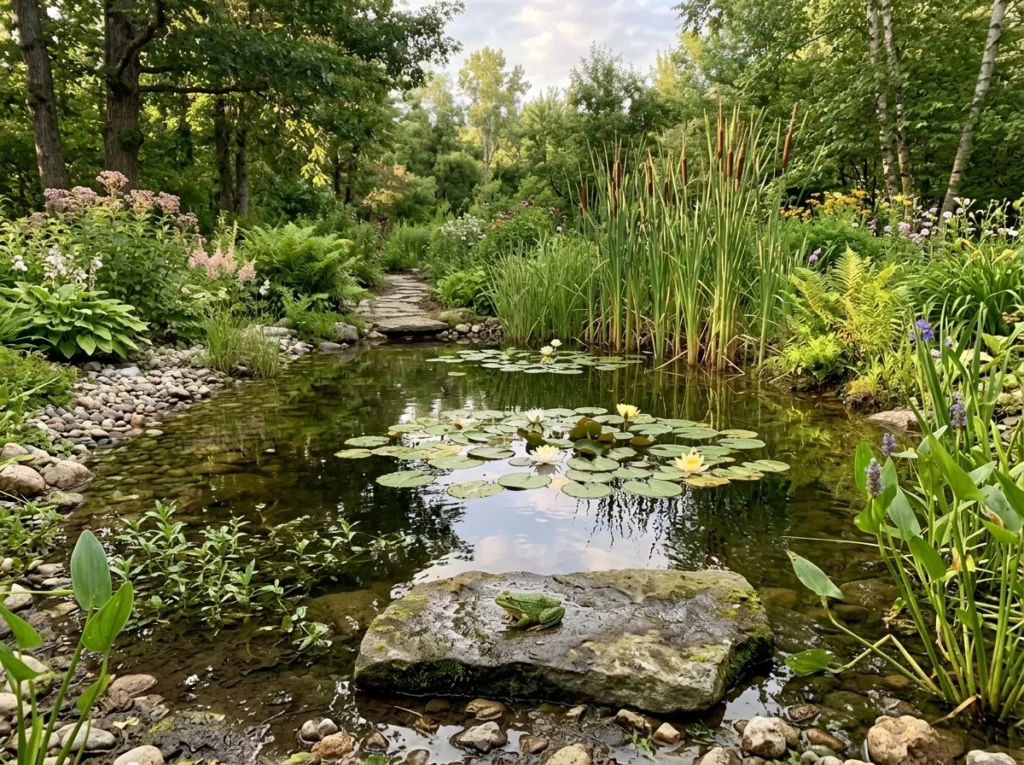
I’ve put together this list of 15 proven strategies to help you build a genuine frog-friendly pond and toad-friendly pond combo — whether you’re starting from scratch or fixing up a pond that’s been sitting empty. Let’s dig in.
Table of Contents
1. Start With a Shallow, Sloping Design
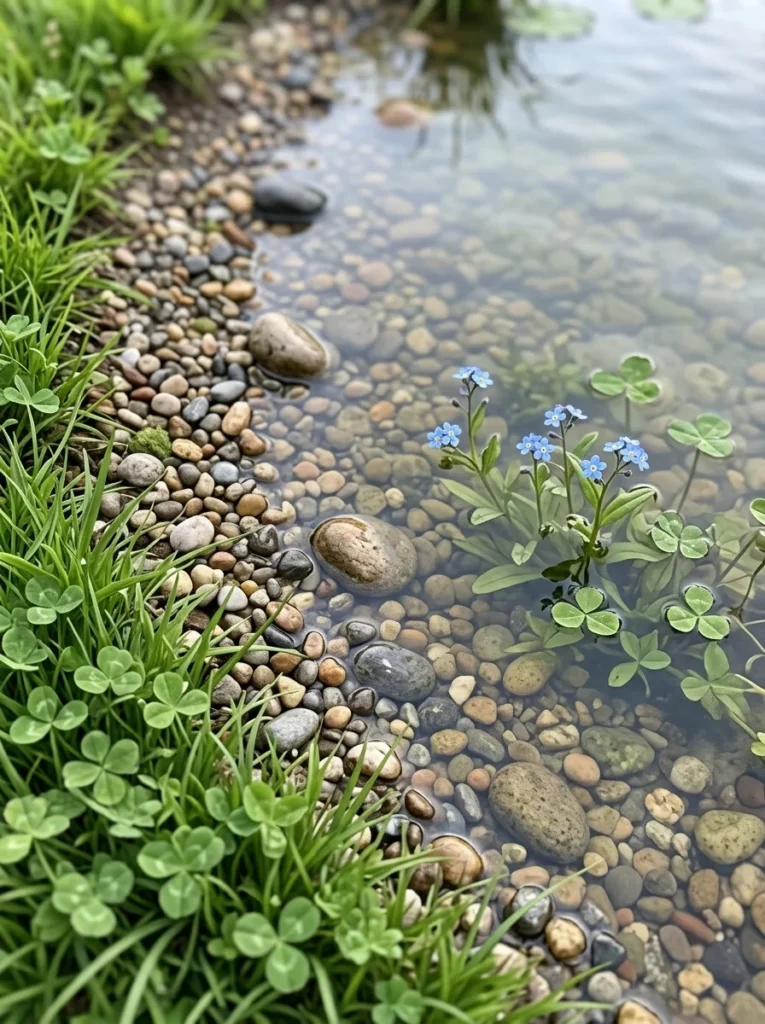
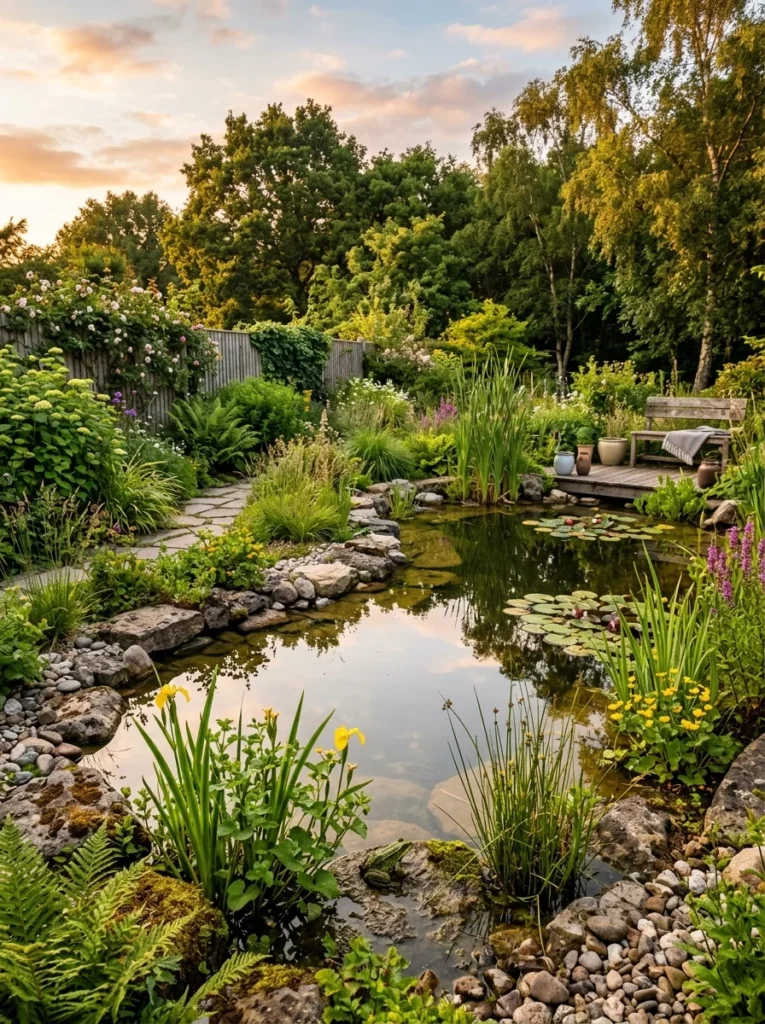
If there’s one rule that matters more than any other for a backyard wildlife pond, it’s this: shallow pond edges are non-negotiable. Frogs and toads can’t climb straight walls, and if the sides drop off too fast, tadpoles and adults alike get stuck or drown.
Aim for a gentle slope with at least one section under 12 inches deep. This creates safe pond habitat for frogs to hop in and out freely, and it gives tadpoles a warm, sun-soaked shallow zone to develop in.
2. Skip the Fish
I know, I know — koi are gorgeous. But if your goal is a genuine fishless pond for amphibians, fish and frogs don’t mix well. Fish eat frog eggs and tadpoles like they’re an all-you-can-eat buffet. A natural pond for frogs works best when it’s just water, plants, and the occasional dragonfly.
3. Plant Native Vegetation Generously
Native pond plants aren’t just decoration — they’re the backbone of a real frog habitat garden. Native species support the local insects that frogs eat, and they provide cover that non-native ornamentals often can’t match.
4. Add Water Lilies for Shade and Resting Spots
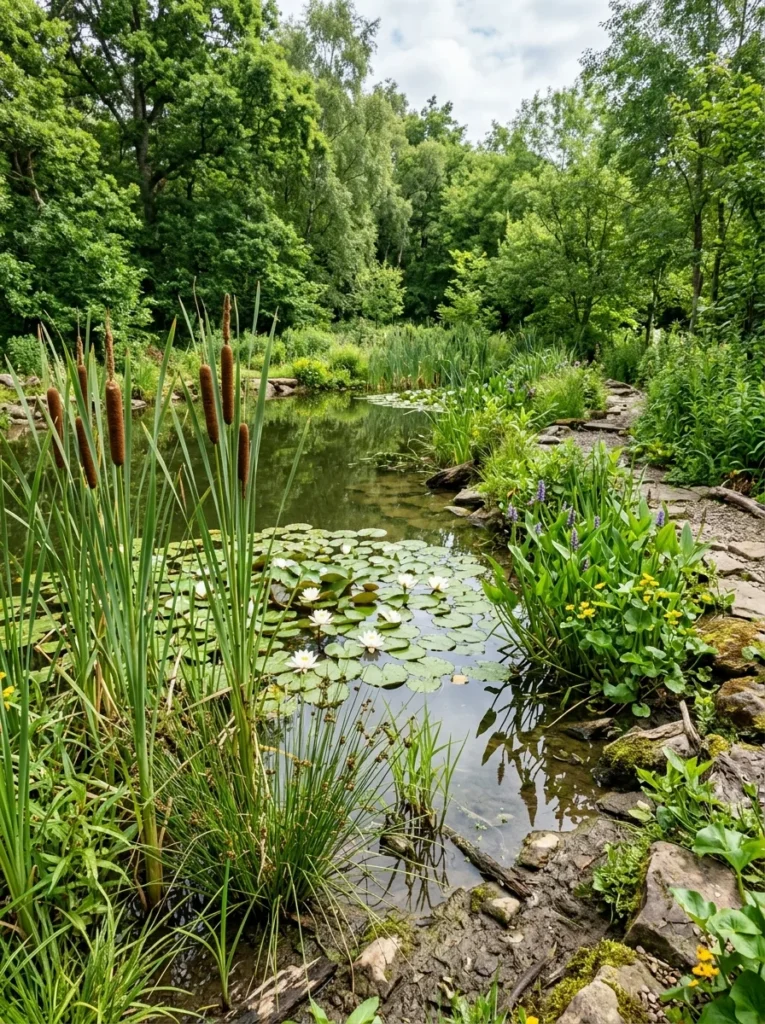
Water lilies do double duty. Their broad leaves give frogs a place to sit and sun themselves, and they provide shade that keeps pond water cooler in summer. It’s a small addition that makes a big difference in pond plants for frogs planning.
5. Bring in Cattails, Sedges, and Rushes
These three plants show up again and again in any solid list of pond plants for toads and frogs, and for good reason. They create dense, natural-looking cover along the edges — exactly the kind of toad pond ideas that mimic a real wetland.
| Plant | Best For | Placement |
|---|---|---|
| Cattails | Natural cover, nesting sites | Pond margins |
| Sedges | Habitat structure | Shallow edges |
| Rushes | Wildlife cover | Pond margins |
| Water lilies | Shade, resting spots | Open water |
6. Give Them Rocks and Logs to Hide Under
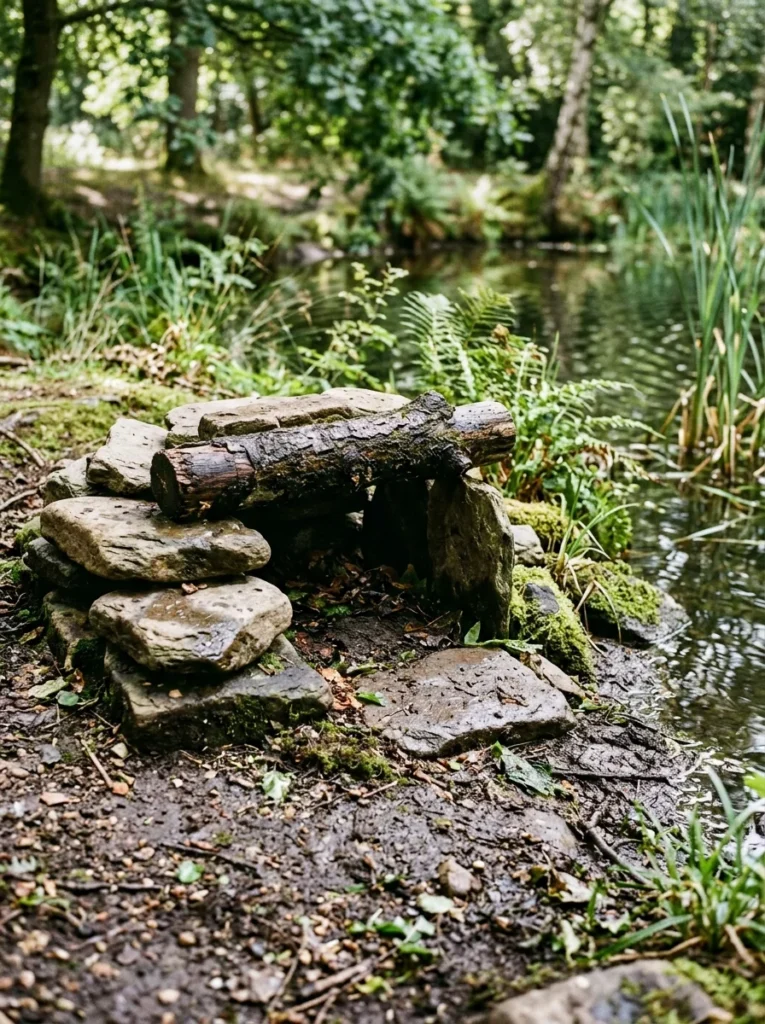
Frogs and toads are homebodies. They want a damp, dark spot to retreat to during the heat of the day. A simple log shelter kit or a scattering of large flat stones near the water gives them exactly that — plus a place to warm up in the morning sun.
7. Use River Rocks and Rock Borders to Soften the Edges
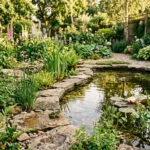
Beyond shelter, rocks solve a practical problem: they hide the pond liner and create the gentle, uneven terrain amphibians expect in the wild. River rocks and rock border stones work well together to build a natural transition from lawn to water.
8. Add Leaf Mulch and Compost Nearby
A little mess goes a long way. Leaf mulch around the pond edge holds moisture and shelters insects, which in turn feeds your amphibian visitors. Mixing in compost also improves the soil for the native plants doing all this habitat-building work.
9. Choose a Shaded, Sheltered Spot
Where you place the pond matters as much as how you build it. A pond in full, blazing sun all day heats up fast and stresses amphibians. Partial shade — maybe near a shrub line or under a small tree — keeps things comfortable and supports a better amphibian friendly pond overall.
10. Go Pesticide-Free
This one’s simple but often overlooked. Frogs and toads breathe partly through their skin, which makes them incredibly sensitive to chemicals. If you’re serious about a genuine toad habitat garden, ditch synthetic pesticides and herbicides. A no-pesticide organic pest control approach protects the very insects frogs need to eat, too.
11. Test Your Water Occasionally
You don’t need to obsess over this, but a basic water testing kit helps you catch problems — like unbalanced pH — before they affect tadpoles. Healthy water means a healthier population of visitors sticking around season after season.
12. Be Patient — Let Nature Find You
Here’s something I wish more guides said plainly: do not relocate wild frogs, toads, or tadpoles into your pond. It’s illegal in many states, it can spread disease between populations, and it rarely works the way people hope. Build the habitat, and let amphibians find it on their own — they’re better at this than we are.
13. Know When to Expect Visitors
Frogs and toads typically start showing up in spring as temperatures warm, often triggered by the first heavy spring rains. If your pond is new, don’t panic if nothing happens in the first few weeks — sometimes it takes a full season for the local population to discover a fresh water source.
14. Keep Predators in Check — Gently
You don’t want to eliminate all predators (that’s not realistic or even good for the ecosystem), but you can reduce pressure. Dense plant cover near the water’s edge gives frogs quick escape routes from birds and neighborhood cats, which is another reason pond shelter for frogs matters so much.
15. Maintain the Habitat, Don’t Just Build It
A pond built once and ignored slowly drifts away from amphibian-friendly. Keep circulating the water with a pond pump, keep it clear with a pond filter, and top off plantings with an aquatic planting basket setup as things grow and shift. Ongoing care is what turns a starter pond into a long-term wildlife pond.
Frequently Asked Questions
How do I attract frogs and toads to my backyard pond? Build a shallow, fishless pond with native plants, rock or log shelter, and a pesticide-free yard. Amphibians are drawn to habitats that feel safe, damp, and full of natural cover.
What kind of pond is best for frogs and toads? A small, fishless pond with sloped, shallow edges and dense native planting works best. It doesn’t need to be large — even a modest backyard pond for frogs can attract visitors if the habitat is right.
Should a frog pond be shallow or deep? Both, ideally. A mix of shallow edges (under 12 inches) for easy access and slightly deeper sections for temperature stability gives frogs and tadpoles the most flexibility.
Do frogs and toads need a fishless pond? Generally, yes. Fish eat eggs and tadpoles, so a fishless pond dramatically improves survival rates for any amphibians that move in.
What pond plants attract frogs and toads? Water lilies, cattails, sedges, and rushes are consistently effective. They provide shade, cover, and the kind of natural structure frogs associate with a safe habitat.
Final Thoughts: How to Attract Frogs and Toads to Your Backyard Pond for Good
Building a frog pond ideas-worthy backyard doesn’t require a huge budget or a landscaping degree. It comes down to a handful of consistent choices: shallow edges, no fish, native plants, plenty of hiding spots, and a chemical-free yard. Do that, and you’re not just building a pond — you’re building a small, thriving ecosystem.
If you’re already deep into backyard wildlife projects, you might also enjoy 15 DIY Bird Bath Ideas That’ll Turn Your Yard Into a Bird Sanctuary for another easy way to bring more life into your yard, or 15 DIY Garden Toad House Ideas if you want to give your new amphibian friends an even cozier place to shelter. And if you’re planning out the rest of your pollinator-friendly landscaping, 15 Butterfly Bush Landscaping Ideas That’ll Make Your Yard the Talk of the Neighborhood pairs nicely with a wildlife pond setup.
For additional science-backed guidance on native landscaping for wildlife, the National Wildlife Federation’s guide to gardening for wildlife is a solid resource, and the U.S. EPA’s page on pesticide impacts on amphibians is worth a look if you want to go deeper on the pesticide-free approach.
Now it’s your turn — got a frog pond story, or a pond that’s still waiting for its first visitor? Drop a comment below and let’s compare notes.

1 thought on “15 Ways to Attract Frogs and Toads to Your Backyard Pond (That Actually Work)”