
Let me tell you something — if plants had a “most reliable friend” award, the spider plant (Chlorophytum comosum) would win it every single year. It’s the plant that survives your forgetfulness, forgives your erratic watering schedule, and still somehow produces a cascade of adorable little “babies” just to show off. Whether you’re a complete newbie or a seasoned plant parent with a jungle apartment, spider plants have a way of making everyone look good.
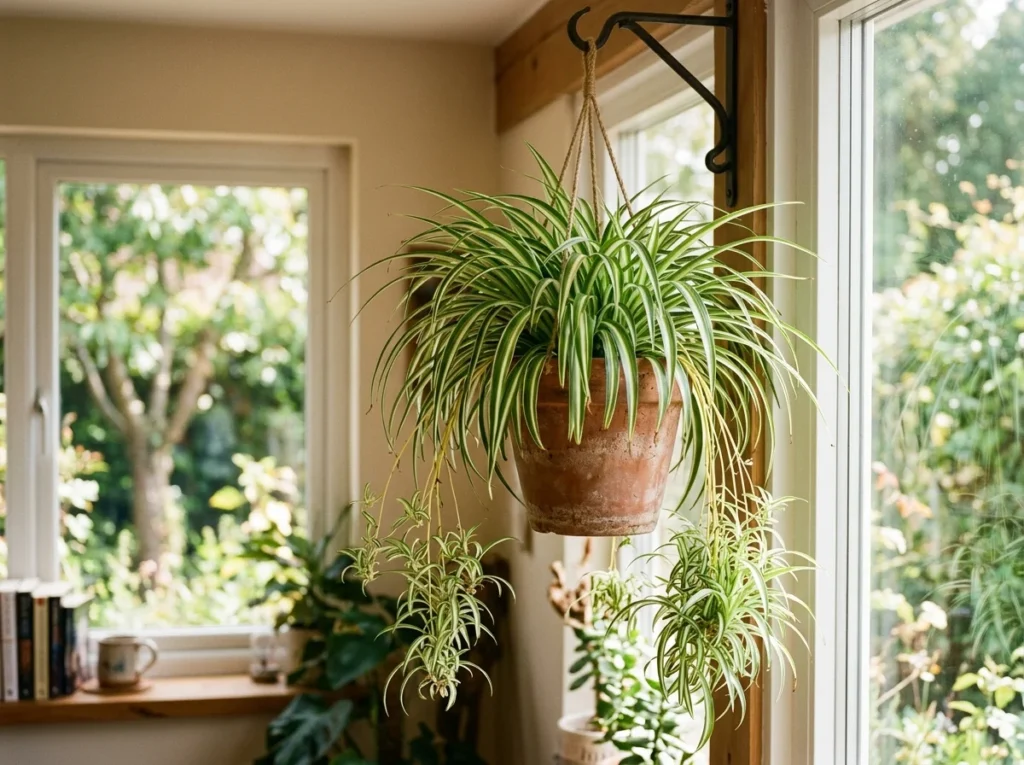
But here’s the thing: “easy” doesn’t mean “unkillable.” Even the most forgiving plants have preferences. And understanding those preferences is the difference between a spider plant that merely survives and one that absolutely thrives — lush, green, trailing over the edges of a hanging basket like it owns the place.
So let’s get into it. Everything you need to know about spider plant care, from light and watering to propagation and troubleshooting, in one place.
Table of Contents
1. What Is a Spider Plant, Anyway?
Before we dive into the how-to’s, let’s appreciate what we’re working with. Spider plants are native to tropical and southern Africa, and they get their quirky name from the long, arching plantlets they produce — which dangle from the mother plant like little spiders on webs. Poetic, right?
They come in a few popular spider plant varieties:
- Chlorophytum comosum ‘Vittatum’ — green leaves with a white/cream center stripe (the classic)
- Chlorophytum comosum ‘Variegatum’ — white edges with a green center
- Chlorophytum comosum ‘Bonnie’ — a curly, compact variety that’s genuinely delightful
All three are tough, adaptable, and gorgeous in their own way.
2. Spider Plant Light Requirements: What’s the Sweet Spot?
Here’s a question I get asked constantly: can spider plants grow in low light? The honest answer is — yes, but they won’t love it.
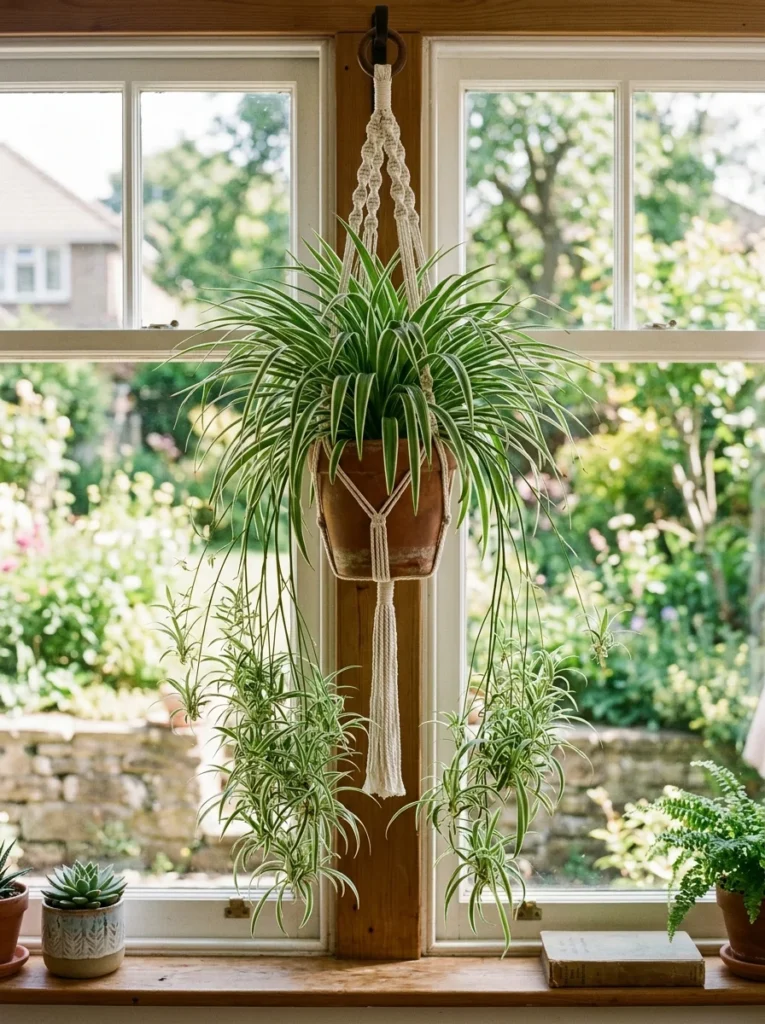
Spider plants prefer bright, indirect light. Think a spot near a window where the sun doesn’t blast directly onto the leaves. East-facing windows are fantastic; north-facing works if you manage expectations.
In low light, growth slows, variegation fades, and the plant gets leggy. It won’t die, but it’ll look sad. In direct sun, the leaves scorch and get those ugly crispy patches.
The sweet spot? Bright, filtered light for 6–8 hours a day. A sheer curtain in front of a south or west window does the trick perfectly.
3. Spider Plant Watering: How Often Is Enough?
Ah, watering. The most common plant-killing mistake isn’t underwatering — it’s overwatering. Spider plants are moderately drought-tolerant, which makes them great for anyone who occasionally forgets they have plants.
General rule of thumb:
- Water once every 1–2 weeks in spring and summer
- Cut back to once every 2–3 weeks in fall and winter
The best method? Stick your finger about an inch into the soil. If it’s dry, water thoroughly until it drains from the bottom. If it’s still damp, wait a few more days.
One important thing: spider plants are sensitive to fluoride in tap water, which is actually one of the reasons their tips turn brown. If you notice this, switch to filtered water or let tap water sit out overnight before using it.
| Season | Watering Frequency | Soil Condition to Water |
|---|---|---|
| Spring/Summer | Every 7–14 days | Top 1 inch dry |
| Fall/Winter | Every 14–21 days | Top 2 inches dry |
4. Best Soil for Spider Plants
Spider plants aren’t fussy about soil, but they do appreciate good drainage. The worst thing you can do is leave them sitting in soggy, compacted soil — that’s a fast track to spider plant root rot, which is much harder to come back from than a missed watering.
Best soil mix for spider plants:
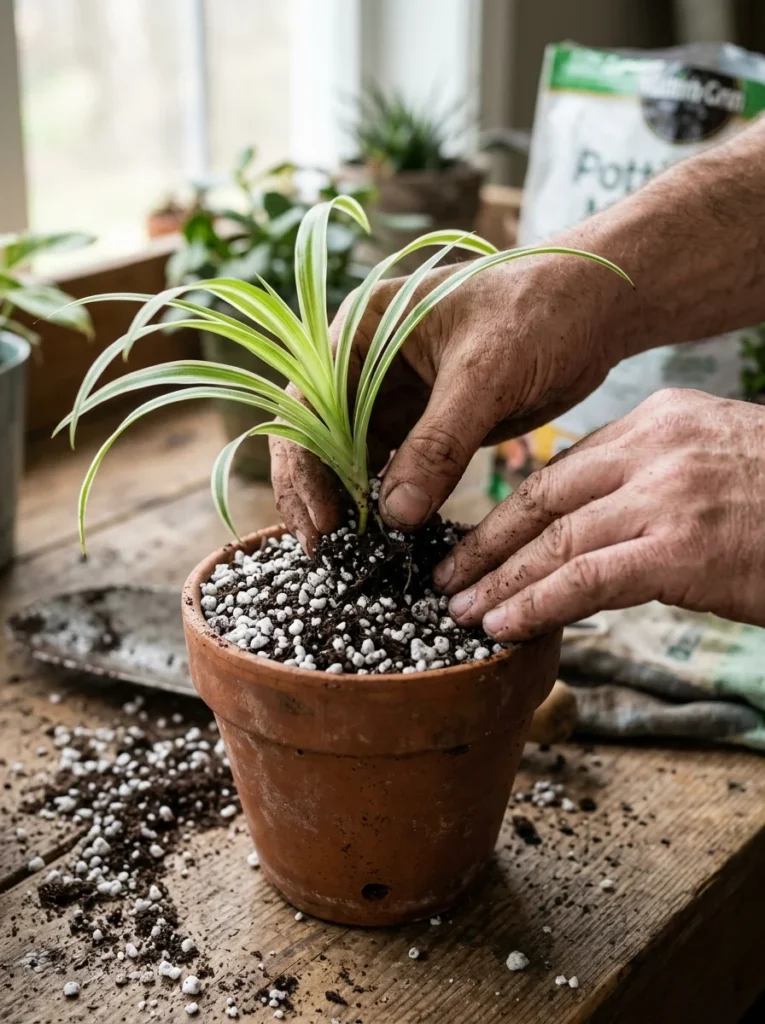
- A well-draining potting mix (standard houseplant mix works)
- Add perlite or coarse sand (about 20–30%) to improve drainage
- Slightly acidic to neutral pH (6.0–7.0)
Avoid heavy, clay-rich garden soil entirely. It retains too much moisture and compacts over time.
5. Do Spider Plants Need Fertilizer?
Short answer: yes, but not a lot.
During the active growing season (spring and summer), feed your spider plant with a balanced liquid fertilizer — something like a 10-10-10 or 20-20-20 — diluted to half strength, once a month. That’s genuinely all it needs.
Over-fertilizing is actually a thing. Too much fertilizer causes salt build-up in the soil, which contributes to — you guessed it — brown leaf tips.
In fall and winter? Put the fertilizer away. The plant is resting and doesn’t need extra nutrients.
6. Spider Plant Brown Tips: Why It’s Happening and How to Fix It
This is probably the most Googled spider plant problem in existence. You’re not alone. Brown tips on spider plants are incredibly common, and usually not serious. The usual suspects:
- Fluoride/mineral build-up from tap water
- Over-fertilizing
- Low humidity (they like some moisture in the air)
- Underwatering (less common but possible)
- Root-bound plant that needs repotting
The fix? Switch to filtered water, ease up on fertilizer, and if your home is dry, run a humidifier nearby or mist the leaves occasionally. You can also trim the brown tips with clean scissors at a slight angle — they won’t grow back green, but the plant continues thriving.
7. Spider Plant Yellow Leaves: What’s Going On?
Yellow leaves tell a different story. Common causes:
- Overwatering / root rot — the #1 culprit
- Too little light
- Natural aging (older lower leaves yellow and drop, totally normal)
- Nutrient deficiency, especially nitrogen
If it’s just a few lower leaves yellowing, that’s normal — prune them off. If it’s widespread, check your watering habits first. Let the soil dry more between waterings and make sure the pot has drainage holes.
For a companion read on other tropical plant challenges and care, check out Beautiful Tropical Plants: A Guide to Growing Paradise.
8. Spider Plant Propagation: How to Grow More Plants for Free
One of the most joyful things about spider plants is how eagerly they reproduce. Those little plantlets — the spider plant babies — dangling off the long stolons? Each one is a new plant waiting to happen.
Two easy ways to propagate spider plant babies:
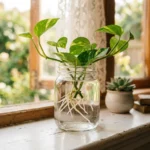
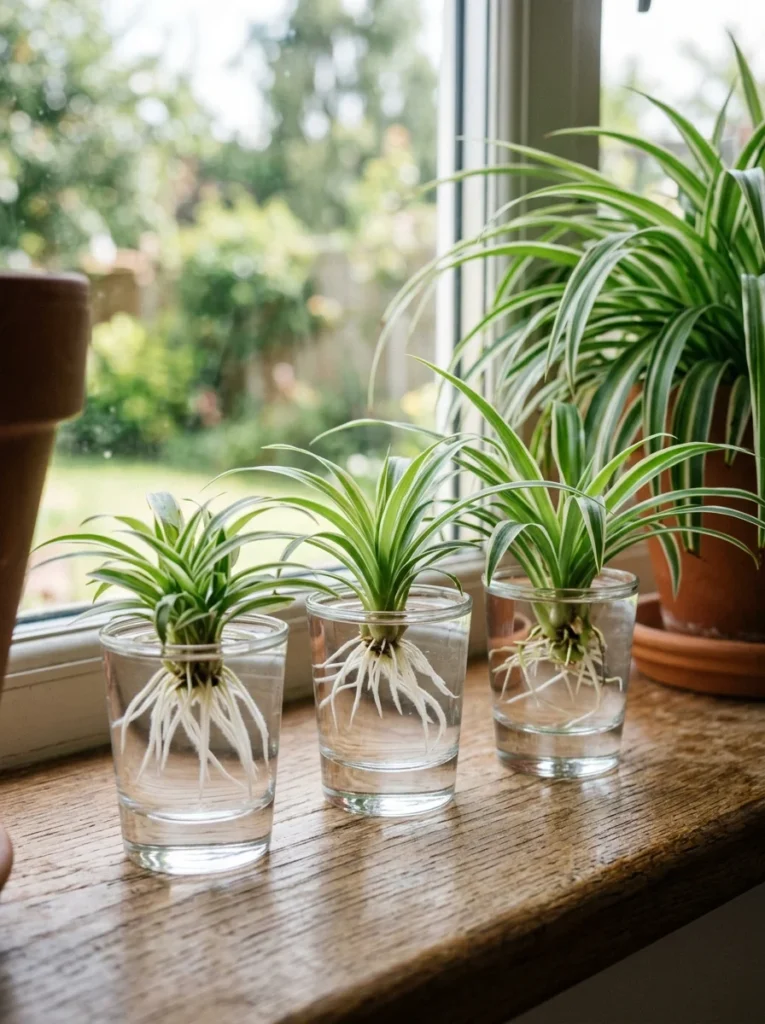
Method 1: Water Propagation
- Snip a healthy plantlet (with tiny roots already forming = even better)
- Place it in a glass of water, keeping the leaves above the waterline
- Set it in bright, indirect light
- Change the water every few days
- Once roots are 1–2 inches long (usually 1–2 weeks), pot it up in soil
Method 2: Soil Propagation
- While the baby is still attached to the mother, pin it down onto a small pot of moist soil
- Once it roots (2–4 weeks), snip the stolon connecting it to the parent
- Done — new plant, no drama
Should you cut off spider plant babies? Only when you want to propagate them or if the plant looks overcrowded. Leaving them on is totally fine and makes the plant look spectacular in a hanging basket.
If you enjoy growing plants from cuttings or runners, you’ll also love Complete Guide to Growing Wandering Jew Plant — another incredibly easy propagator.
9. When Should I Repot a Spider Plant?
Spider plants are famously unbothered about being a little root-bound — in fact, being slightly snug encourages more baby production. But eventually, when roots start escaping through the drainage holes or the plant seems to dry out within a day of watering, it’s time.
Signs it needs repotting:
- Roots circling the bottom or poking through drainage holes
- Soil dries out within 24–48 hours
- Plant looks top-heavy or unstable
- Stunted growth despite good care
When to repot: Spring is ideal, just as the growing season kicks off. Go up only one pot size at a time — too large a container holds too much moisture and invites root rot.
10. Spider Plant Indoors vs. Outdoors
Spider plants thrive indoors year-round in most of the US, but they absolutely love being outside during warmer months.
Spider plant outdoor care tips:
- Move them outside once nighttime temps stay above 50°F
- Keep them in partial shade — no direct afternoon sun
- Water more frequently outdoors, as pots dry out faster
- Bring them back in before the first frost — they’re not cold-hardy
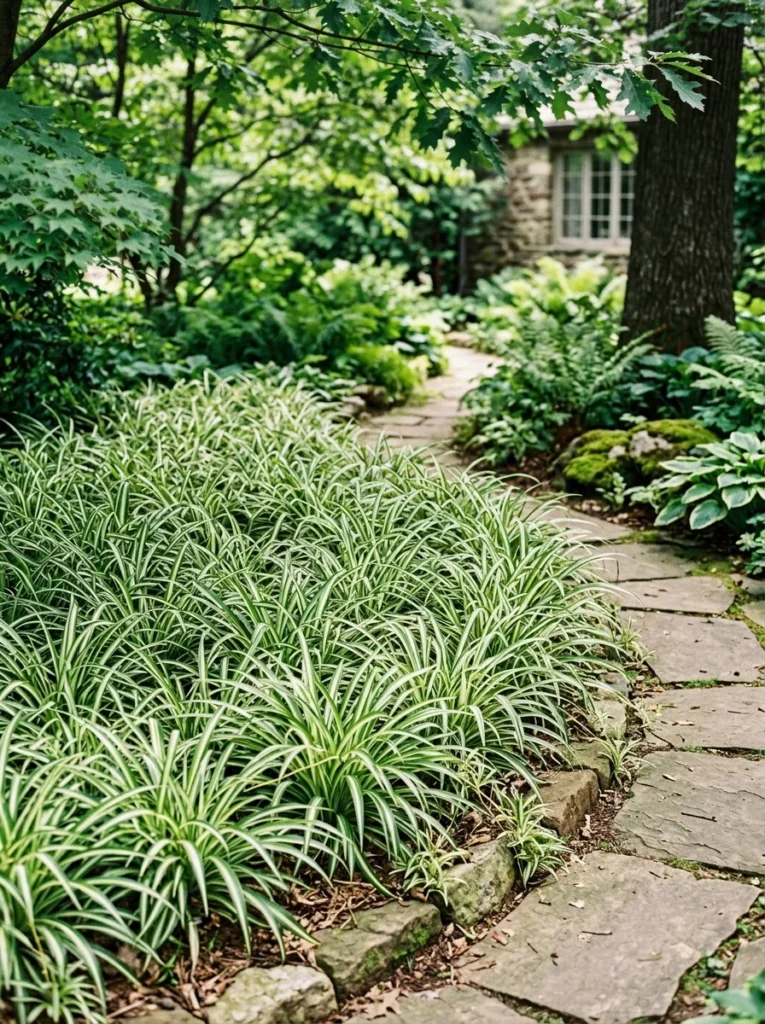
In USDA zones 9–11, they can even live outside year-round as ground cover. For everyone else? They’re happiest as indoor plants with an optional summer vacation on the patio.
Want to explore more summer-friendly plants for your outdoor space? Don’t miss 20 Best Summer Flowers That’ll Make Your Garden Absolutely Glow.
11. Is Spider Plant Toxic to Cats or Dogs?
Great news for pet owners: spider plants are non-toxic to cats and dogs according to the ASPCA. They’re one of the safest houseplants you can own if you have fur babies running around.
That said, cats in particular seem drawn to spider plants (some speculate it has a mild hallucinogenic effect similar to catnip — which is kind of hilarious). Ingesting too much can cause mild stomach upset, vomiting, or diarrhea simply due to the plant matter itself — not toxicity.
So: not toxic, but maybe hang it out of reach anyway, both for your cat’s stomach and for the plant’s dignity.
| Cats | Dogs | |
|---|---|---|
| Toxic? | No | No |
| Safe to have around? | Yes (with caution) | Yes |
| Potential side effects | Mild GI upset if eaten in large amounts | Mild GI upset if eaten in large amounts |
12. Why Is My Spider Plant Dying? A Quick Troubleshooting Checklist
If your spider plant is really struggling, run through this checklist:
- ☐ Is the soil staying wet for days? → Overwatering or poor drainage
- ☐ Are leaves yellowing all over? → Root rot, overwatering, or low light
- ☐ Are tips brown and crispy? → Fluoride in water, low humidity, or salt build-up
- ☐ Are leaves curling? → Underwatering or too much direct sun
- ☐ Is growth very slow with pale leaves? → Needs more light or fertilizer
- ☐ Is it not producing babies? → Root-bound (might need repotting) or needs more light
Usually, the fix is simple. These plants really, genuinely want to survive.
Final Thoughts: You’ve Got This
Spider plants are one of those rare houseplants that reward care and forgive neglect — which makes them practically perfect. Get the light right, don’t overwater, use well-draining soil, and give those babies their own pots when you’re ready. That’s it. That’s the whole secret.
Whether you’re a new plant parent looking for a confidence boost or a seasoned collector adding another easy-care beauty to your collection, spider plants deliver every time.
Got a spider plant question I didn’t cover? Drop it in the comments — I’d love to hear how your plant is doing.
Frequently Asked Questions
How do you care for a spider plant?
Keep it in bright, indirect light, water when the top inch of soil is dry, use well-draining potting mix, and fertilize monthly in spring and summer with diluted liquid fertilizer.
How often should you water a spider plant?
Every 1–2 weeks in spring/summer, and every 2–3 weeks in fall/winter. Always check the soil first — it should be dry an inch deep before watering.
Why are the tips of my spider plant brown?
Most commonly fluoride or mineral build-up from tap water, over-fertilizing, or low humidity. Switch to filtered water and reduce fertilizer frequency.
Can spider plants grow in low light?
Yes, but they’ll grow slower and lose variegation. They much prefer bright, indirect light for best results.
Is spider plant toxic to cats or dogs?
No — spider plants are non-toxic to both cats and dogs per the ASPCA. Large amounts may cause mild stomach upset, but they’re considered pet-safe.
How do you propagate spider plant babies?
Snip a plantlet and root it in water or directly in moist soil. In water, wait for 1–2 inch roots before potting up.