
The kind of flowers that stop neighbors mid-walk — and keep blooming long after July’s out.
So here’s the thing about summer. It arrives fast, blazes hard, and your garden either handles it or it doesn’t. I’ve seen beautiful spring setups wilt by mid-June because no one planned for the heat. And I’ve seen scrappy little containers packed with zinnias and lantana absolutely thrive through a brutal August.
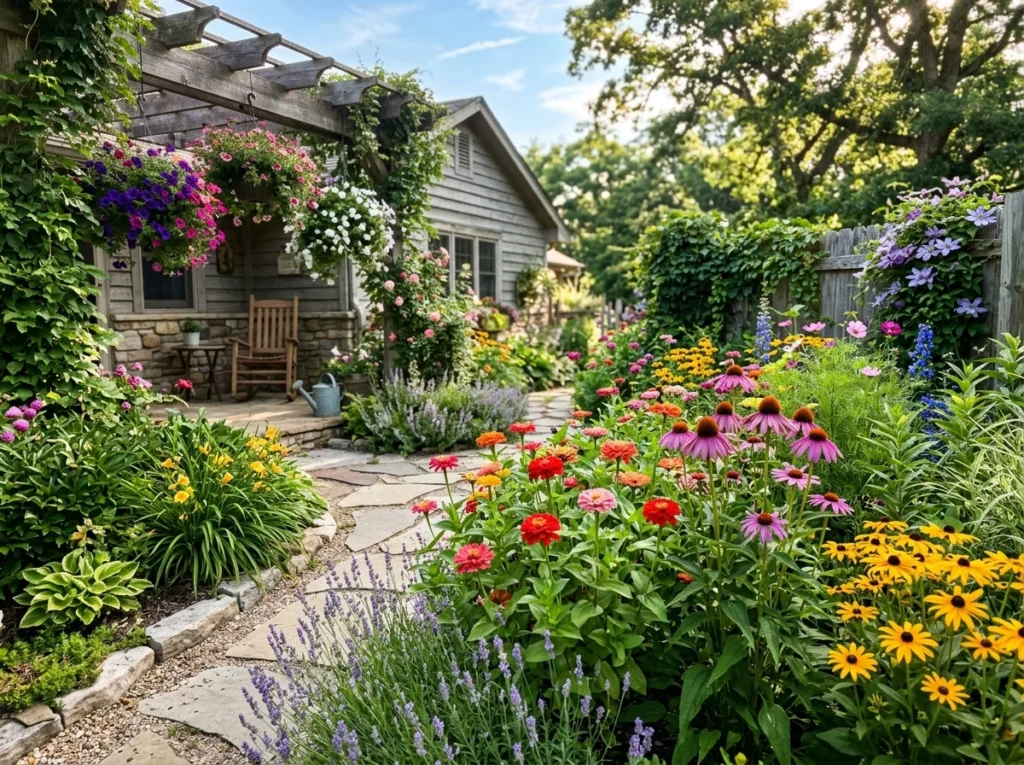
The difference? Knowing which flowers are actually built for summer — the heat, the long days, the occasional week of no rain. This isn’t about planting whatever’s prettiest at the nursery. It’s about choosing flowers that earn their spot in the bed.
Whether you’re filling a backyard garden, a few pots on the porch, or a full flower bed border, this list covers the best summer flowers you can grow in the US — organized by what you actually need to know.
📌 If you’re setting up your porch containers for the season, check out these [15 Full Sun Planter Ideas That’ll Make Your Porch Pop All Summer Long] — great companion inspiration for a lot of the flowers on this list.
Table of Contents
The 20 Best Summer Flowers to Grow Right Now
1. Zinnia (Zinnia elegans)
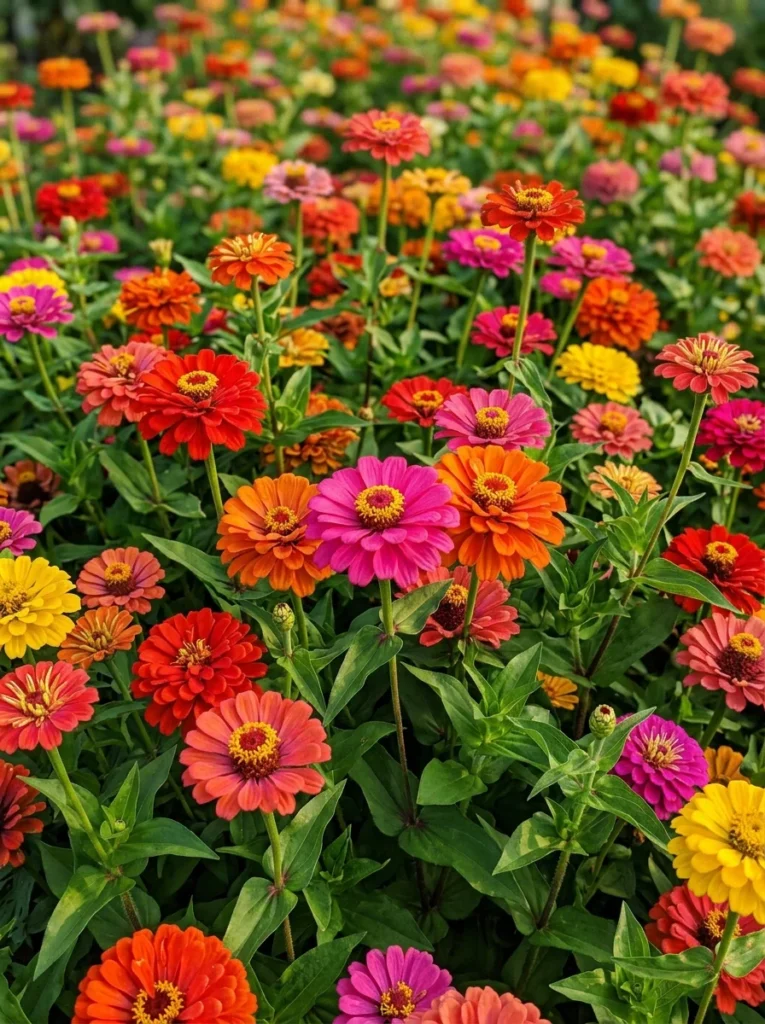
If summer had an official flower, zinnias would run unopposed. They’re fast-growing annuals that explode with color from June all the way to frost. Heat doesn’t slow them down — it actually helps. Plant them in full sun, give them average soil, and they’ll ask for very little in return.
- Sun: Full sun
- Water: Moderate — drought tolerant once established
- Best for: Cut bouquets, butterfly gardens, beds, and containers
- Bonus: One of the best flowers for attracting butterflies and bees
Cut them often. The more you cut, the more they bloom. It’s one of those rare gardening rules that feels like cheating.
2. Coneflower / Echinacea (Echinacea purpurea)
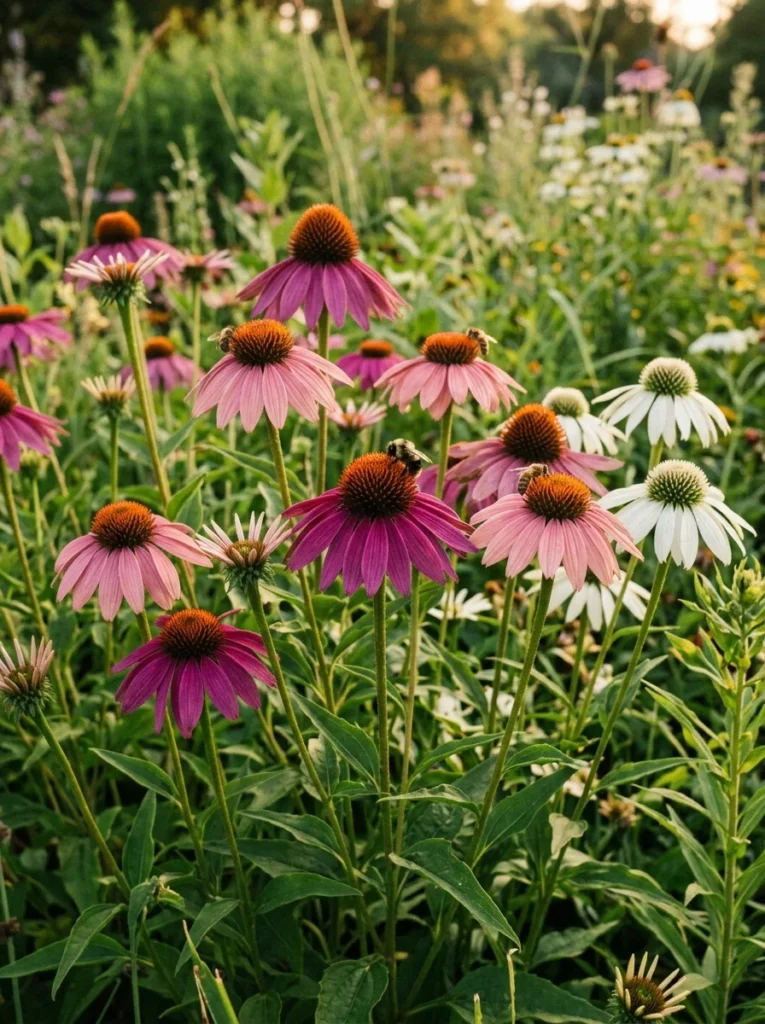
Coneflowers are the quiet overachievers of the summer garden. They’re perennials — meaning they come back every year — and they genuinely don’t care about the heat. Native to North America, they’re adapted to the kind of dry, blazing summers the Midwest and South throw at gardeners.
They bloom from early summer into fall, attract bees and butterflies like crazy, and look great in both formal beds and wild cottage gardens.
- Sun: Full sun to part shade
- Water: Low — extremely drought tolerant
- Best for: Perennial beds, pollinator gardens, summer bouquets
- USDA Zones: 3–9
3. Black-Eyed Susan (Rudbeckia hirta)
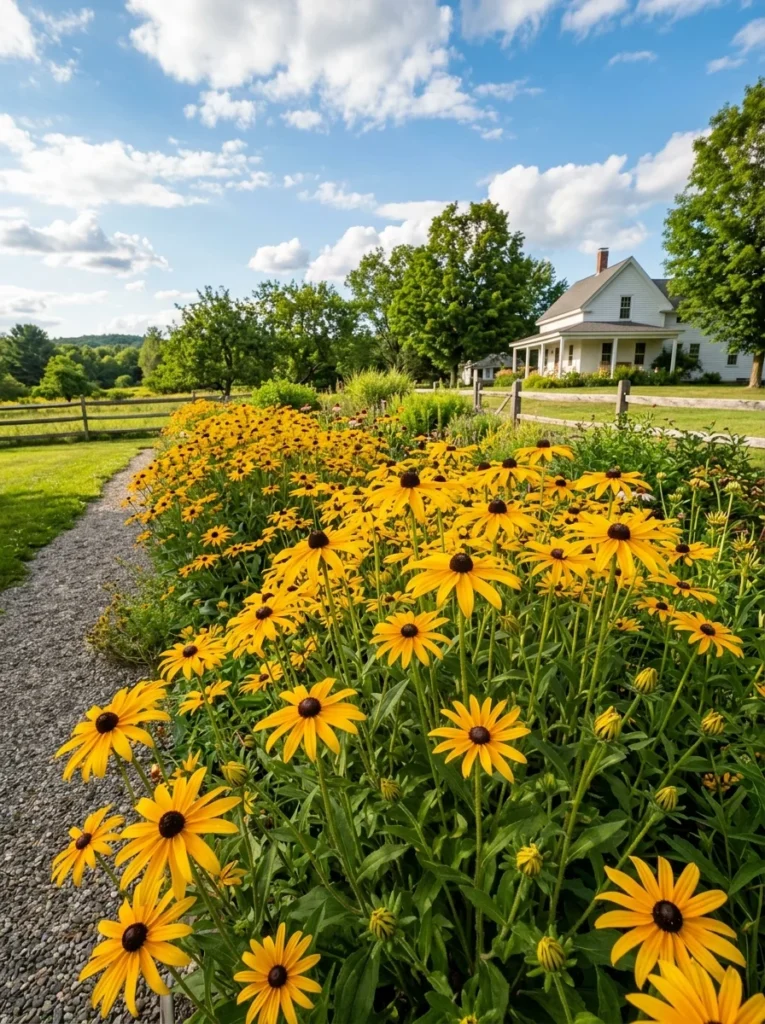
If coneflowers are the overachievers, black-eyed Susans are their equally reliable best friend. That iconic golden-yellow with the dark center is pure summer. They’re native wildflowers, so they’re perfectly calibrated for American summers — heat, humidity, occasional drought.
They grow as annuals, biennials, or short-lived perennials depending on the variety. Either way, they self-seed freely, so once you plant them, they tend to stick around.
- Sun: Full sun
- Water: Low to moderate
- Best for: Naturalistic gardens, pollinator beds, cottage-style borders
4. Marigold (Tagetes)
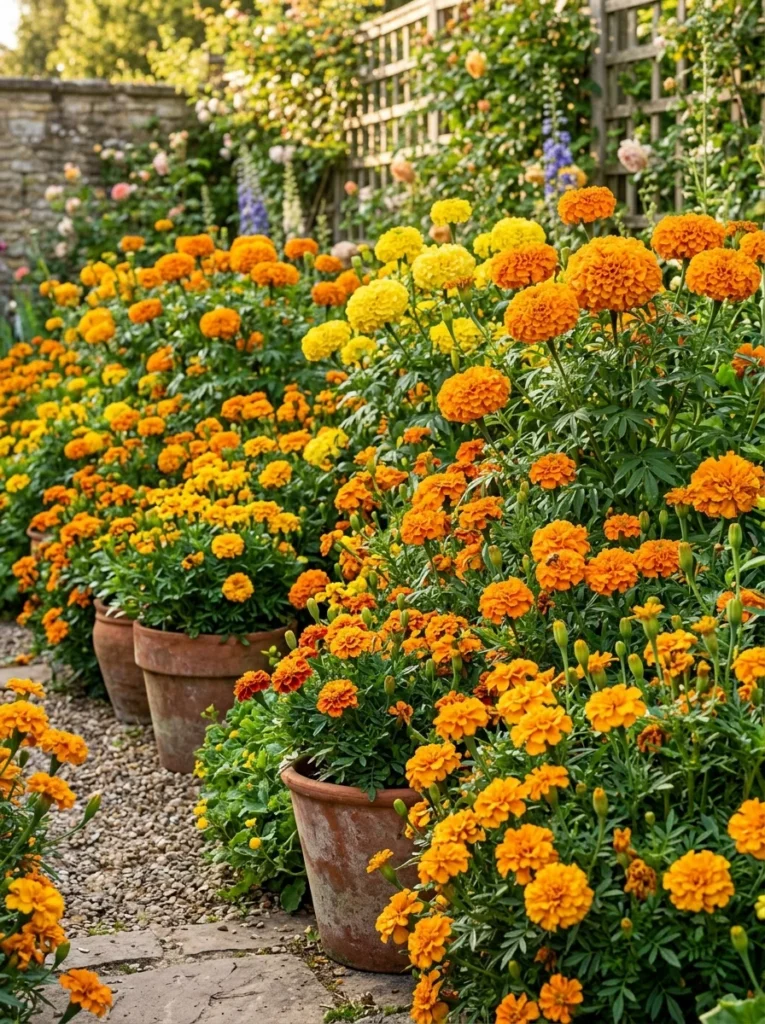
Marigolds get dismissed as “basic” sometimes — probably because they’re everywhere. But there’s a reason every serious gardener has them in rotation. They bloom all summer, repel pests, attract pollinators, and tolerate heat with zero drama.
French marigolds stay compact and work beautifully in containers. African marigolds go taller and bolder. Both are easy annual summer flowers that beginners and experienced growers swear by.
- Sun: Full sun
- Water: Low — water when dry, don’t overdo it
- Best for: Containers, borders, companion planting
5. Lantana (Lantana camara)
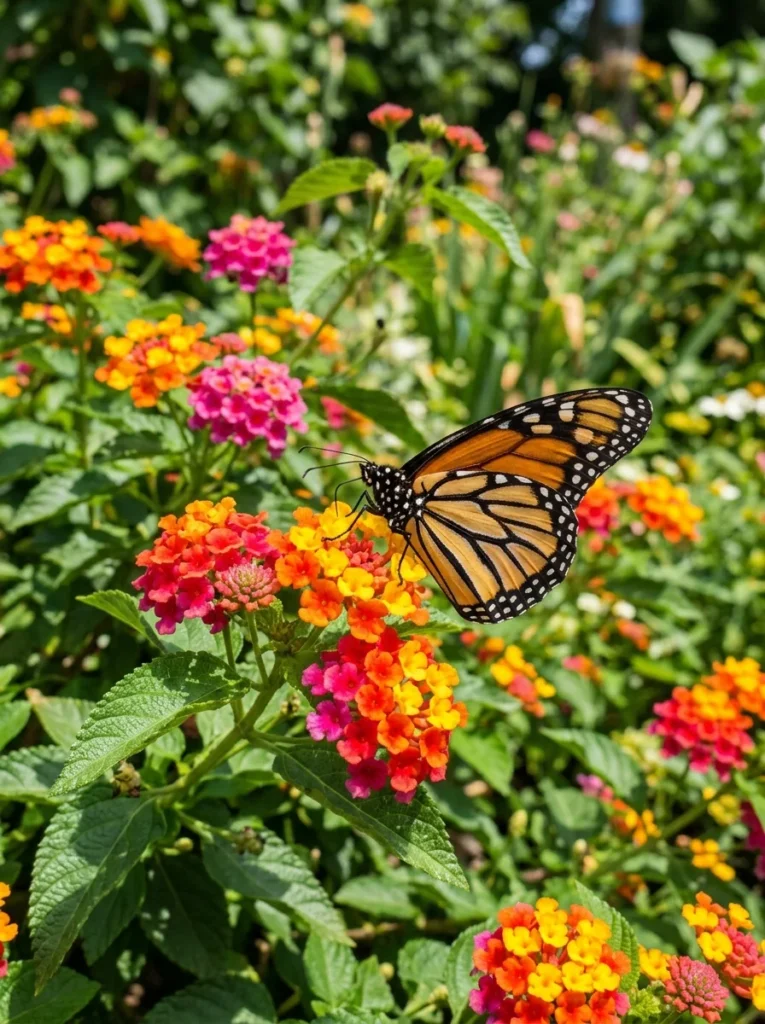
If you live somewhere genuinely hot — Texas, Florida, the Southwest — lantana is your answer. It’s not just heat tolerant, it thrives in conditions that would wilt most other flowers. The clusters of tiny multi-colored blooms attract butterflies and hummingbirds, and it keeps going all season long.
Treat it as a tender perennial in the South, annual in the North.
- Sun: Full sun
- Water: Very low — drought is fine
- Best for: Hot climates, butterfly and pollinator gardens, pots
🦋 For a full deep-dive on pollinator-friendly planting, the guide [17 Best Flowers for Butterfly Gardens That’ll Turn Your Yard Into a Wing-Filled Wonder] has everything you need.
6. Daylily (Hemerocallis)
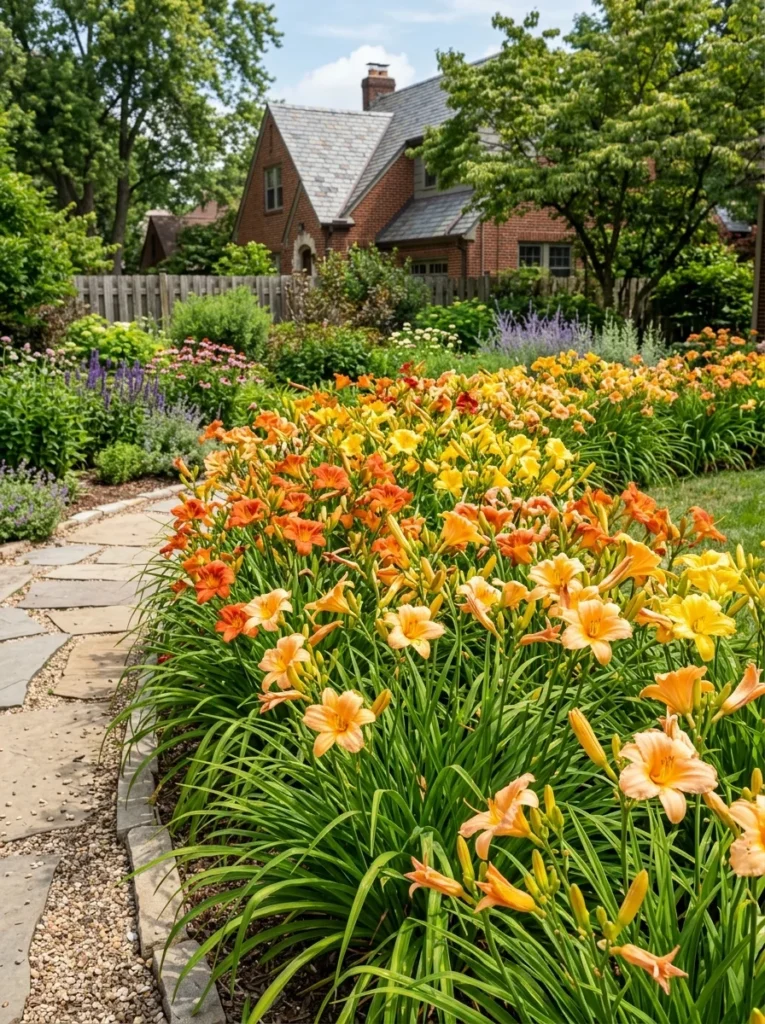
Daylilies are the definition of low-maintenance summer flowers. Plant them once, basically forget them, and they’ll reward you with weeks of blooms every summer. Each flower lasts only a day (hence the name), but a mature clump produces so many buds you’ll never notice.
They come in hundreds of colors, tolerate poor soil, and spread slowly over time to fill a bed beautifully.
- Sun: Full sun to part shade
- Water: Low once established
- Best for: Borders, slopes, mass plantings
- USDA Zones: 3–9
7. Petunia (Petunia × hybrida)
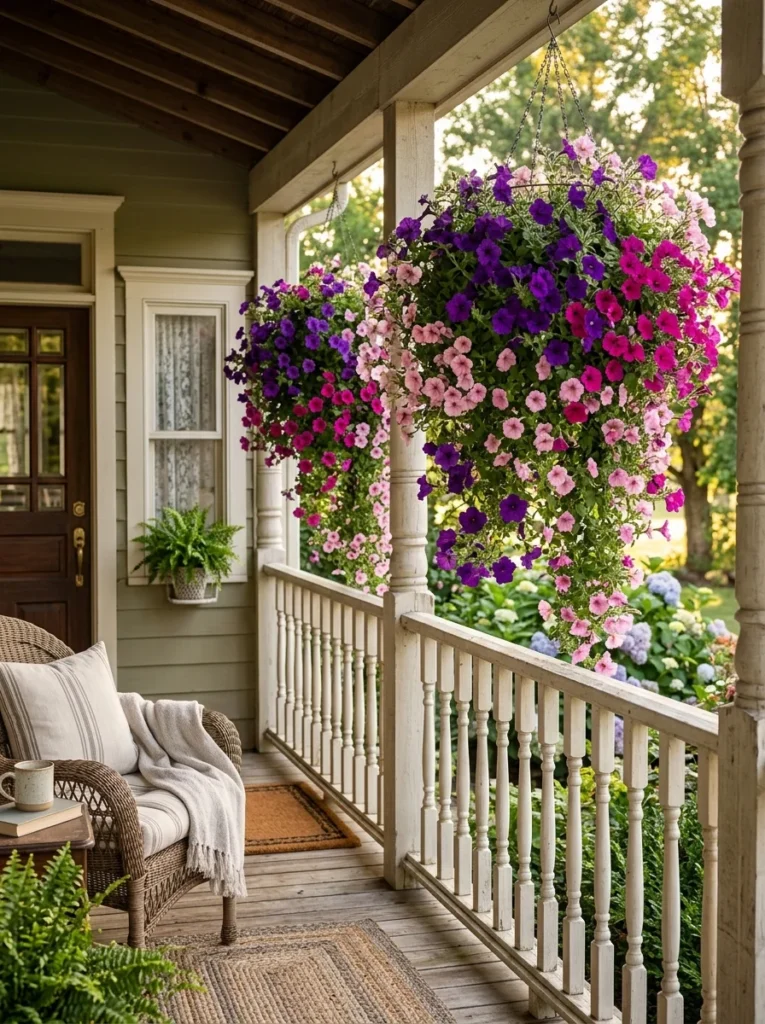
Petunias are the reigning champions of summer containers and hanging baskets. Wave petunias especially — they cascade, they fill, they bloom nonstop from May to frost if you deadhead them (or don’t, depending on the variety).
They do need regular water and occasional fertilizing to keep going, but the payoff is extraordinary. Few flowers look as lush in a hanging basket.
- Sun: Full sun
- Water: Moderate — consistent moisture
- Best for: Hanging baskets, window boxes, container gardens
8. Salvia (Salvia splendens / S. guaranitica)
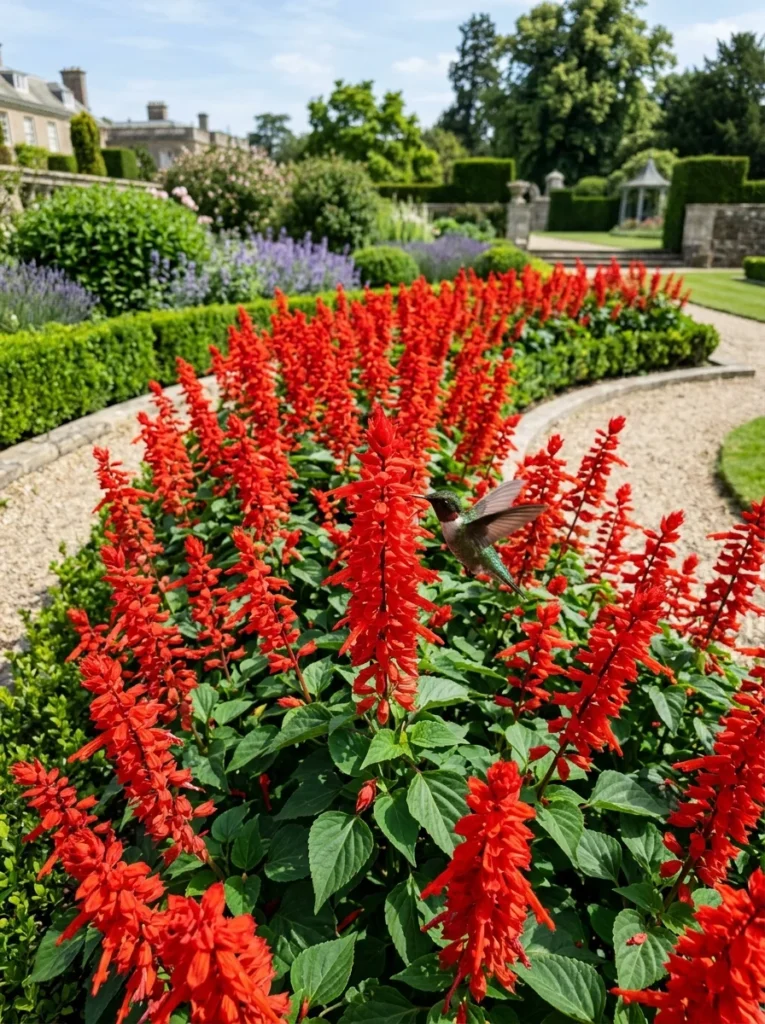
Salvia is having a well-deserved moment. Red salvia has been a garden classic forever, but the newer varieties — black-and-blue salvia, ‘Mystic Spires’, and the Mexican sage types — have turned heads. They bloom for months, handle heat and humidity, and hummingbirds lose their minds for them.
Annual salvias are easy bedding plants; perennial types return reliably in Zones 7+.
- Sun: Full sun
- Water: Moderate to low
- Best for: Beds, borders, hummingbird gardens
9. Portulaca / Moss Rose (Portulaca grandiflora)
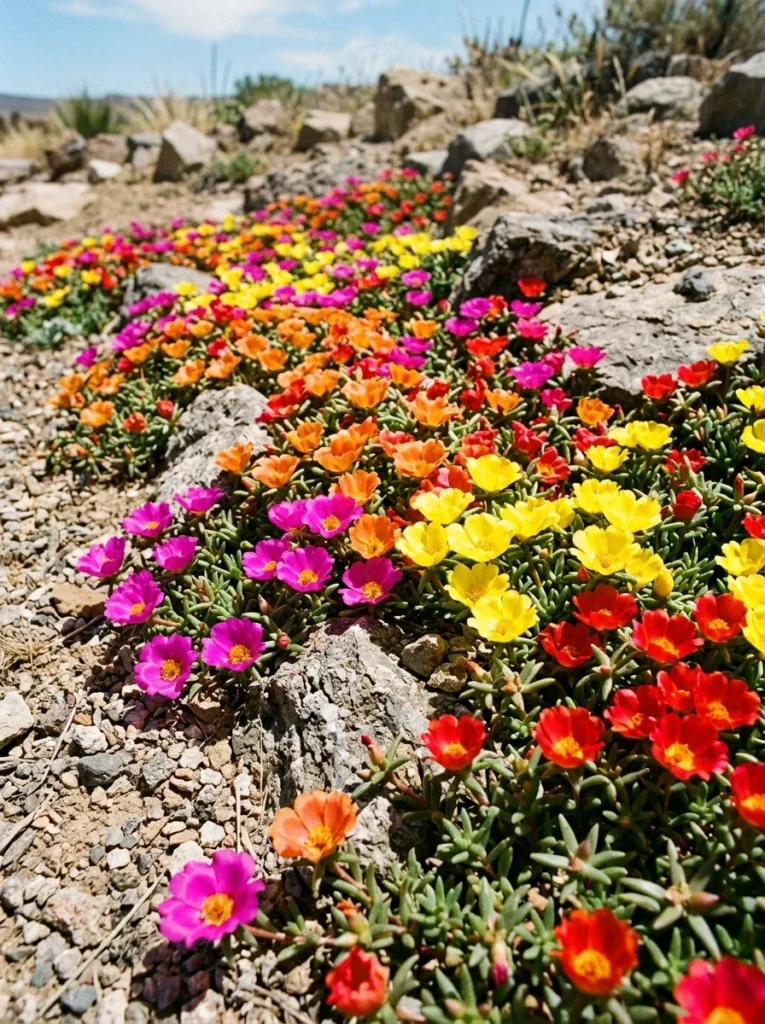
Hot, dry, poor soil? Portulaca was born for it. This succulent-like annual thrives in conditions that most flowers reject. The flowers — which come in electric shades of pink, orange, red, and yellow — close at night and in clouds, then open back up in full sun. It’s a little theatrical, honestly.
Perfect for rock gardens, dry slopes, cracks in paving, or any spot that bakes all day.
- Sun: Full sun (needs it)
- Water: Very low — prefers dry
- Best for: Rock gardens, hot dry spots, ground cover
10. Calibrachoa / Million Bells (Calibrachoa)
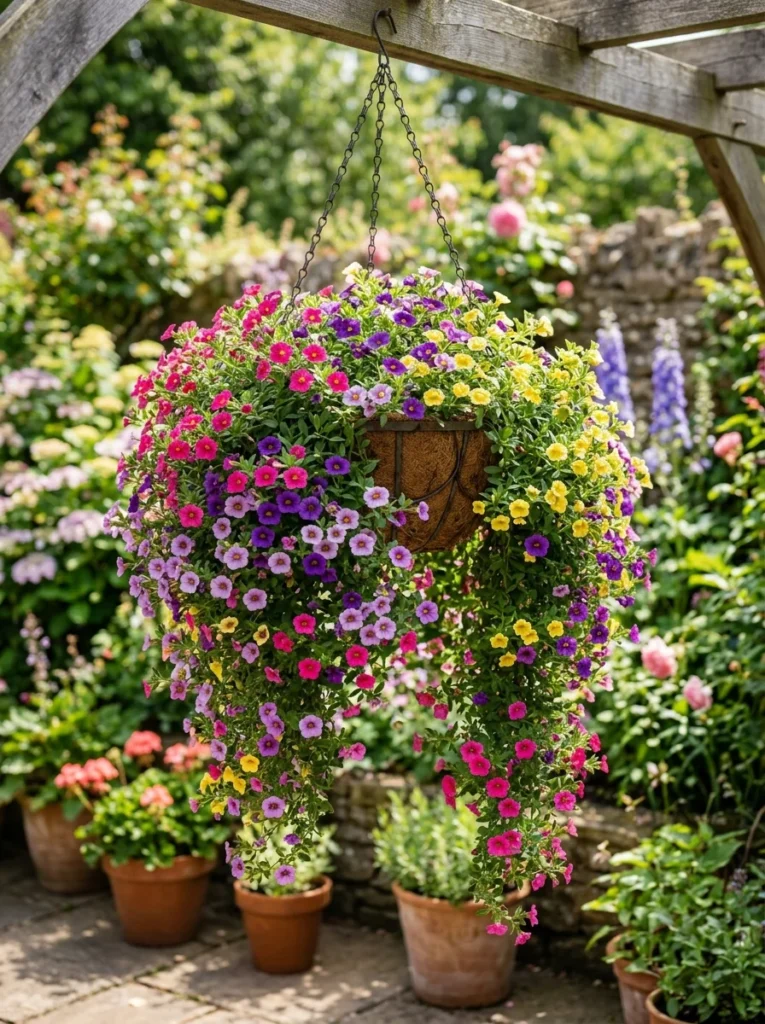
These are basically petunias’ more compact, lower-maintenance cousin. Calibrachoa doesn’t need deadheading — it self-cleans — and the tiny bell-shaped flowers come in just about every color you can imagine. They trail beautifully in containers, window boxes, and hanging baskets all summer long.
- Sun: Full sun
- Water: Moderate — don’t let them dry out completely
- Best for: Containers, hanging baskets, mixed planters
11. Cosmos (Cosmos bipinnatus)
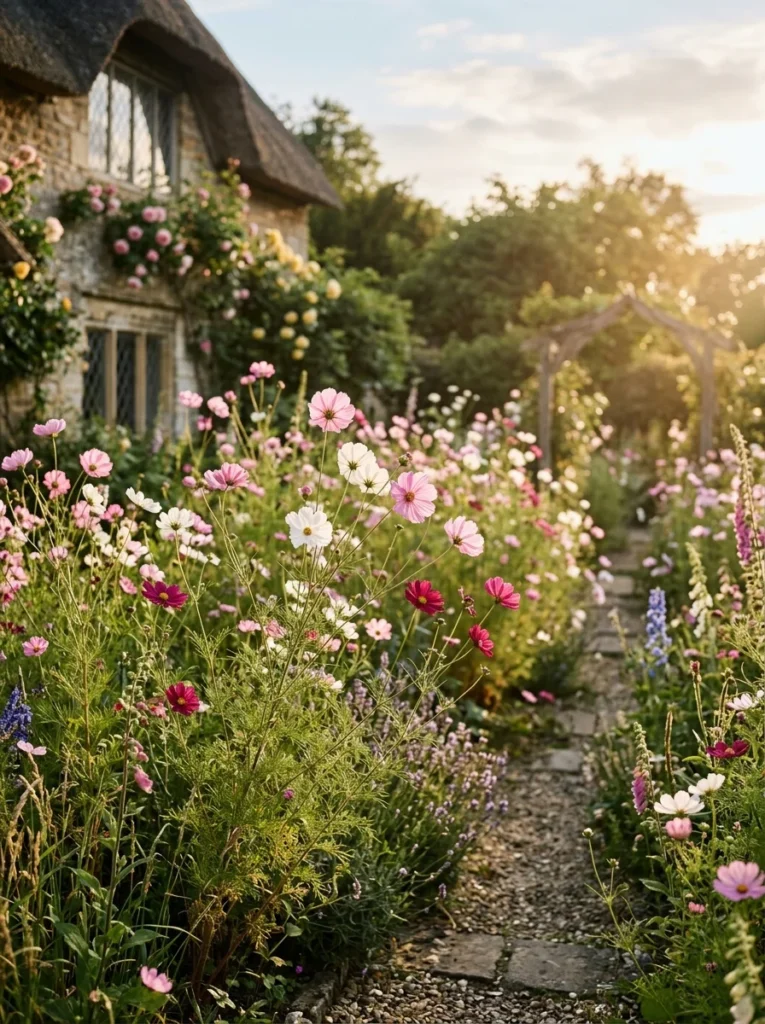
Cosmos are the free spirits of the summer garden. Tall, airy, feathery foliage with wide open daisy-like flowers in pink, white, and deep magenta. They’re ridiculously easy — direct sow, thin, and step back. They don’t like to be fussed over.
Cosmos are among the best cut flowers for summer bouquets. They look wild and beautiful in a vase, and cutting them encourages even more blooms.
- Sun: Full sun
- Water: Low — too much is actually bad
- Best for: Cutting gardens, cottage beds, filling bare spots fast
12. Impatiens (Impatiens walleriana)
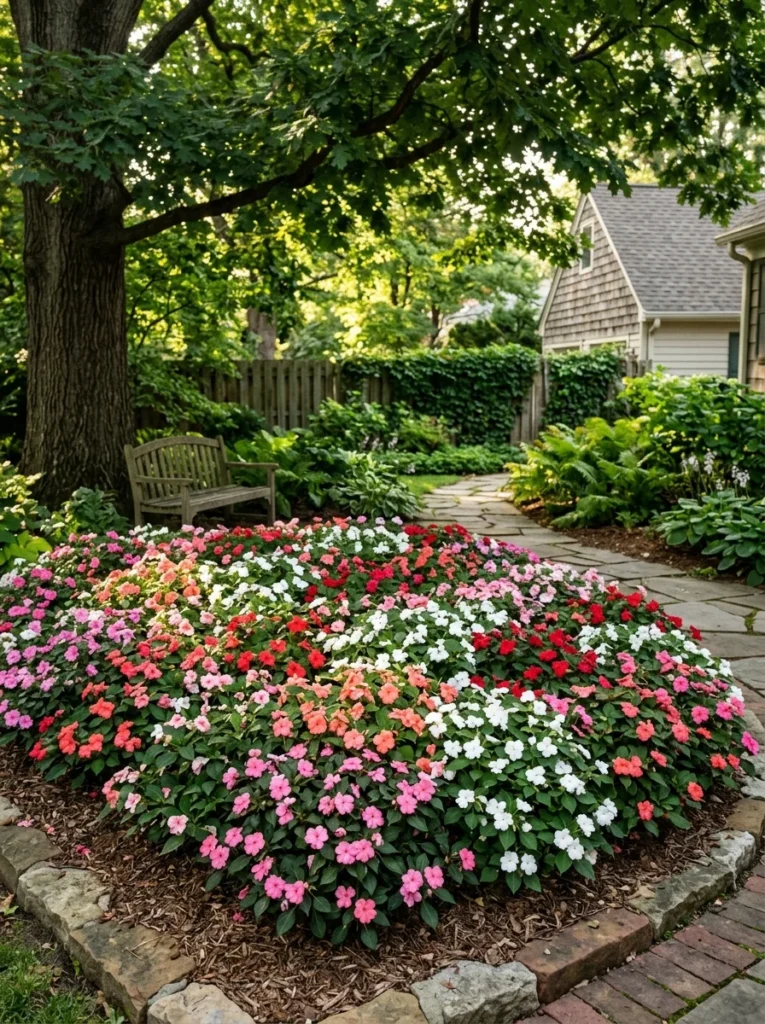
Here’s your answer for shade. Most summer flowers want sun — impatiens genuinely prefer the shade. They’re the go-to summer bedding plant for spots under trees, on north-facing porches, or any area that doesn’t get direct sun.
New Guinea impatiens handle a bit more sun and have bolder, more dramatic foliage.
- Sun: Part to full shade
- Water: Moderate — keep moist
- Best for: Shade gardens, shaded containers, north-facing spots
13. Begonia (Begonia × semperflorens)
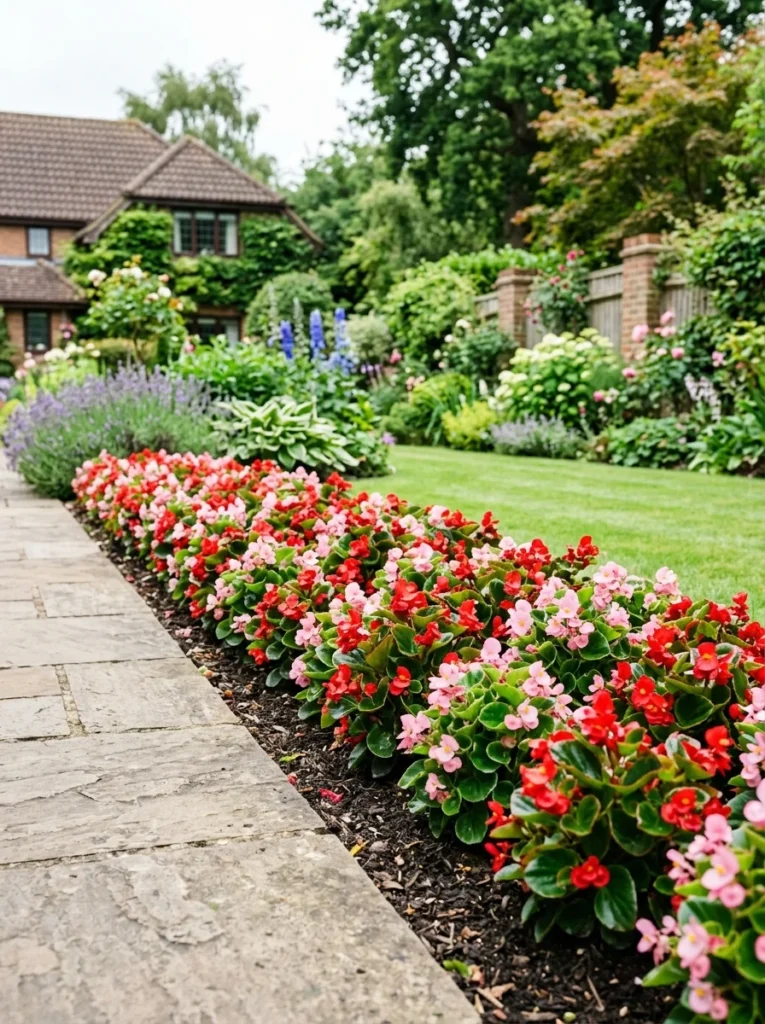
Wax begonias are another shade-tolerant summer staple. Compact, tidy, and available in red, pink, or white with either green or bronze foliage. They work in beds and containers and are genuinely among the most low-maintenance annual summer flowers you can find.
Tuberous begonias are showier — spectacular for containers in partial shade.
- Sun: Part shade to filtered sun
- Water: Moderate
- Best for: Shaded beds, containers, window boxes
14. Verbena (Verbena × hybrida)
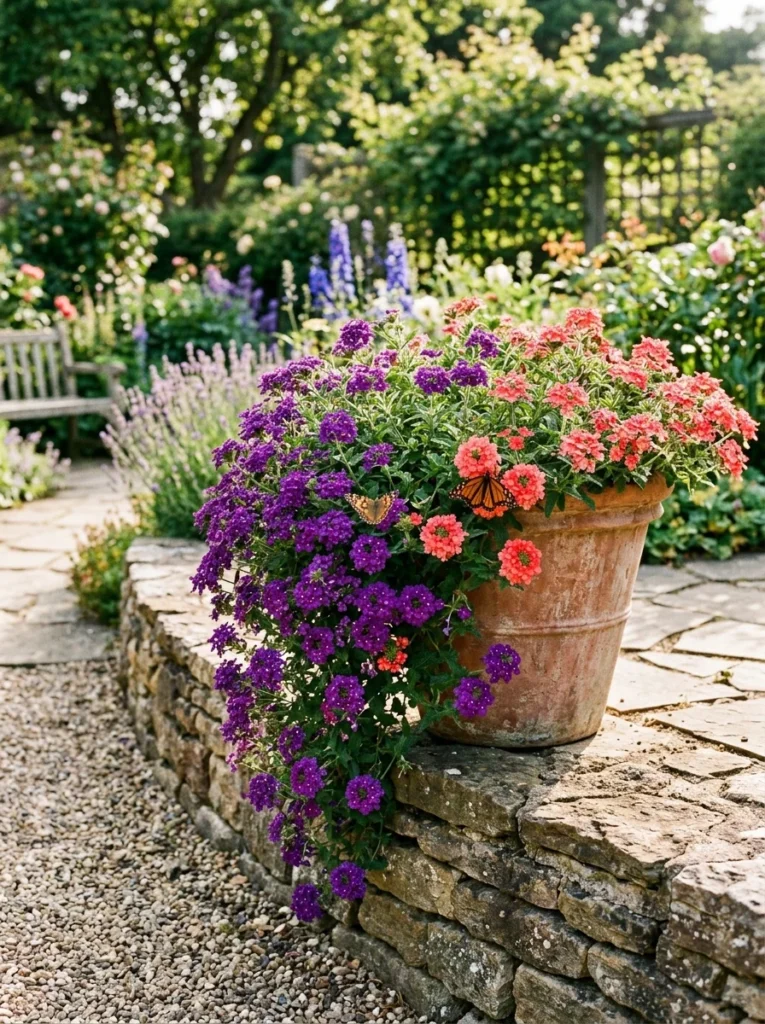
Verbena is one of those workhorses that earns its spot every single year. Heat tolerant, drought tolerant, continuous bloomer — it ticks every box. The trailing types spill beautifully from pots and hanging baskets; upright types fill beds and borders.
The clusters of small flowers attract butterflies reliably, and the plant smells faintly sweet on warm evenings.
- Sun: Full sun
- Water: Low to moderate
- Best for: Containers, borders, butterfly gardens
15. Agapanthus / Lily of the Nile (Agapanthus africanus)
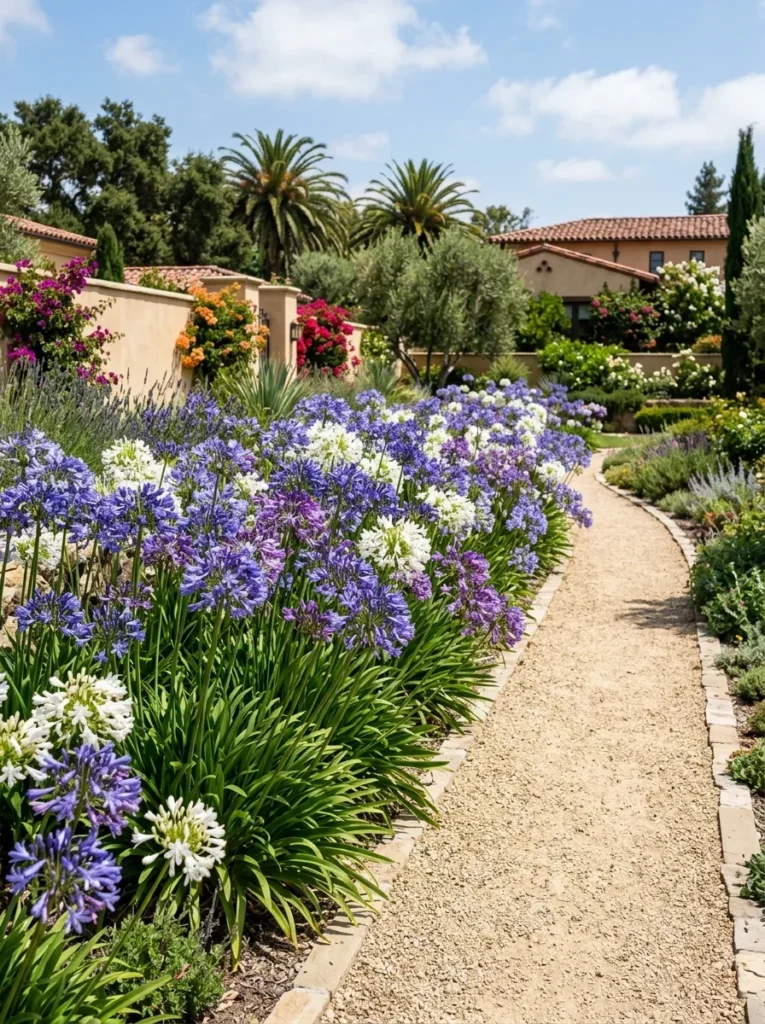
If you want something architectural and a little unexpected, agapanthus delivers. Those globe-shaped clusters of blue or white flowers on long stalks are striking in garden beds or large containers. They’re heat and drought tolerant once established, and they bloom reliably in midsummer.
- Sun: Full sun to light shade
- Water: Low once established
- Best for: Statement plantings, large containers, Southern and West Coast gardens
- Zones: 7–11
16. Phlox (Phlox paniculata)
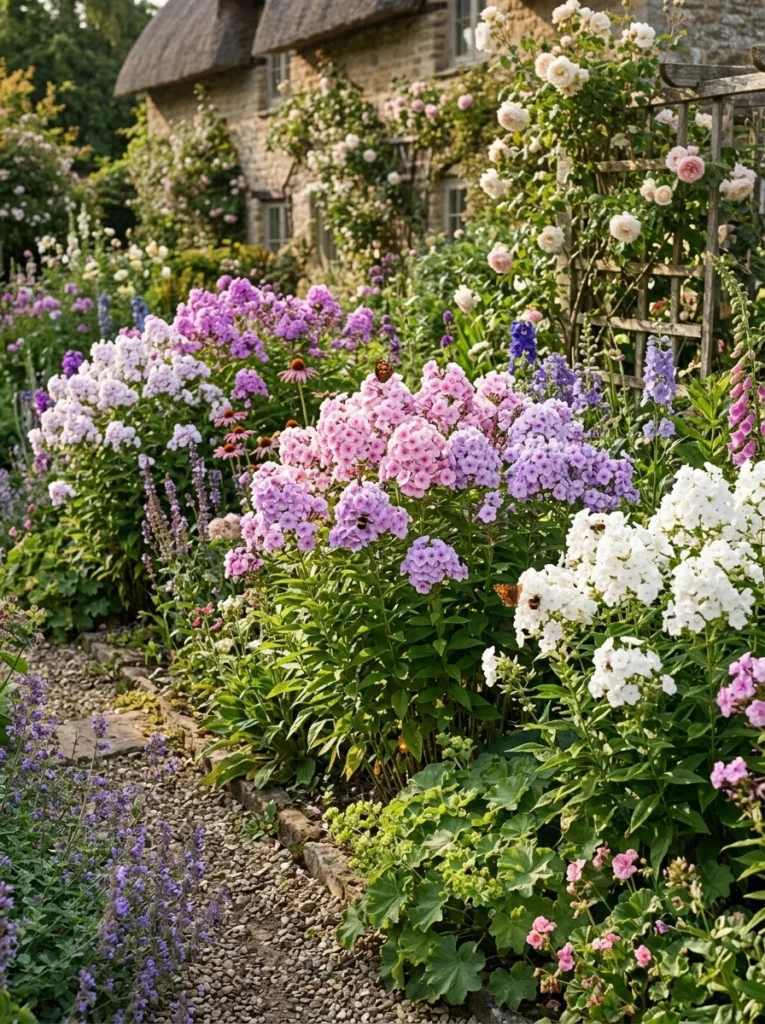
Garden phlox is one of the best fragrant summer flowers you can grow. That sweet, slightly spicy scent on a warm evening is genuinely one of summer gardening’s best rewards. Tall varieties (2–4 feet) bloom in midsummer in shades of white, pink, lavender, and red.
Plant in full sun with good air circulation to prevent powdery mildew — it’s the one catch with phlox.
- Sun: Full sun
- Water: Moderate — consistent moisture
- Best for: Fragrant borders, cut flowers, cottage gardens
- Zones: 4–8
17. Lavender (Lavandula angustifolia)
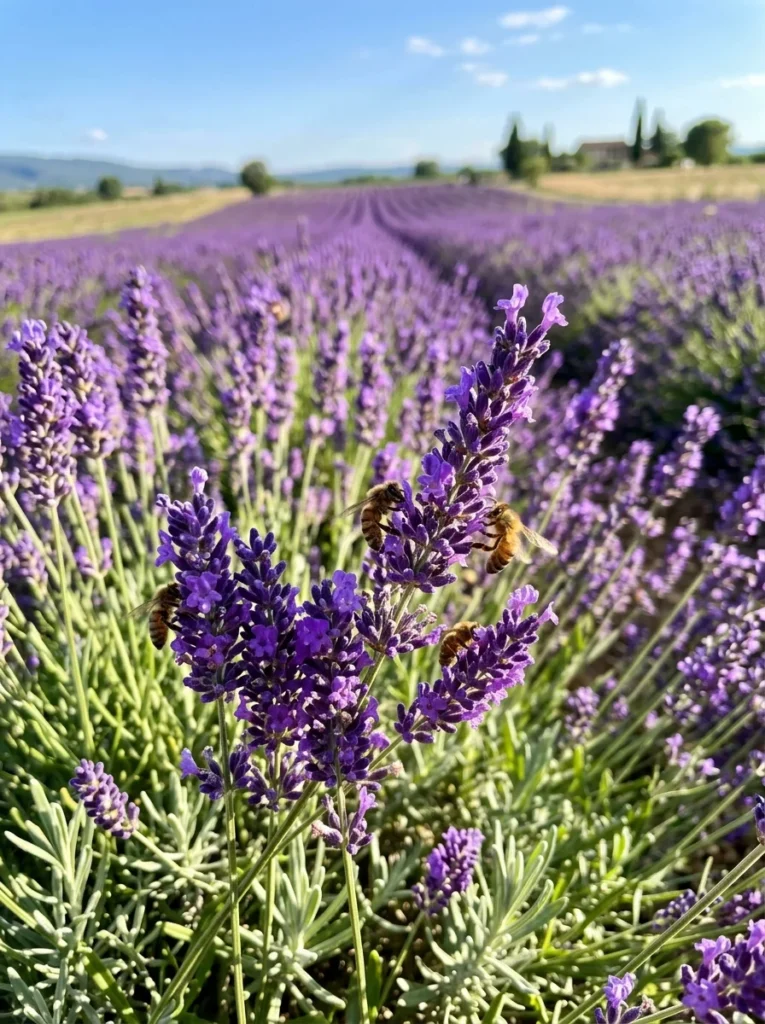
Lavender doesn’t just look spectacular — it smells spectacular. It’s a perennial herb and ornamental flower in one, and in the right conditions (well-drained soil, full sun, not too much humidity), it’ll reward you for years.
Cut the blooms for drying, let them stand for pollinators, or just let the whole plant perfume your garden. Few flowers earn their space more completely.
- Sun: Full sun
- Water: Very low — drought tolerant, hates wet roots
- Best for: Fragrant borders, herb gardens, cut/dried flowers
- Zones: 5–8
18. Gaillardia / Blanket Flower (Gaillardia × grandiflora)
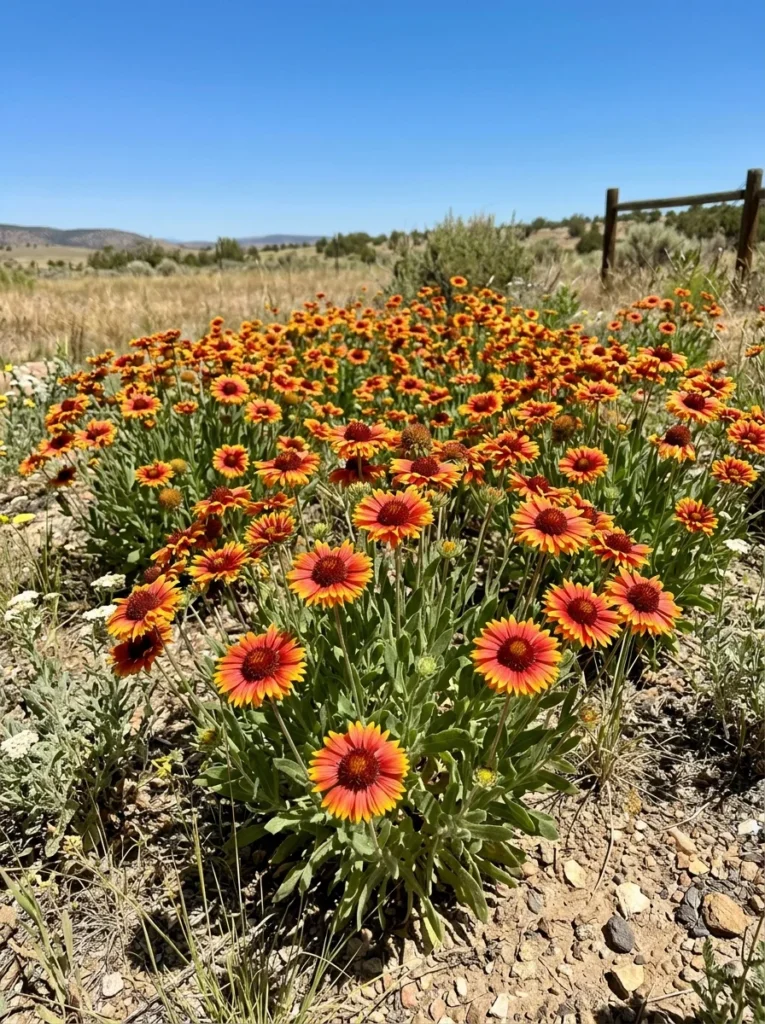
Gaillardia is wildly underrated. Those warm red-and-yellow daisy-type flowers bloom almost all summer long, handle extreme heat and drought, and come back as perennials in most of the US. They’re native to North America, so they’re naturally calibrated for American climate extremes.
- Sun: Full sun
- Water: Very low — drought tolerant
- Best for: Hot dry gardens, wildflower beds, perennial borders
19. Lisianthus (Eustoma grandiflorum)
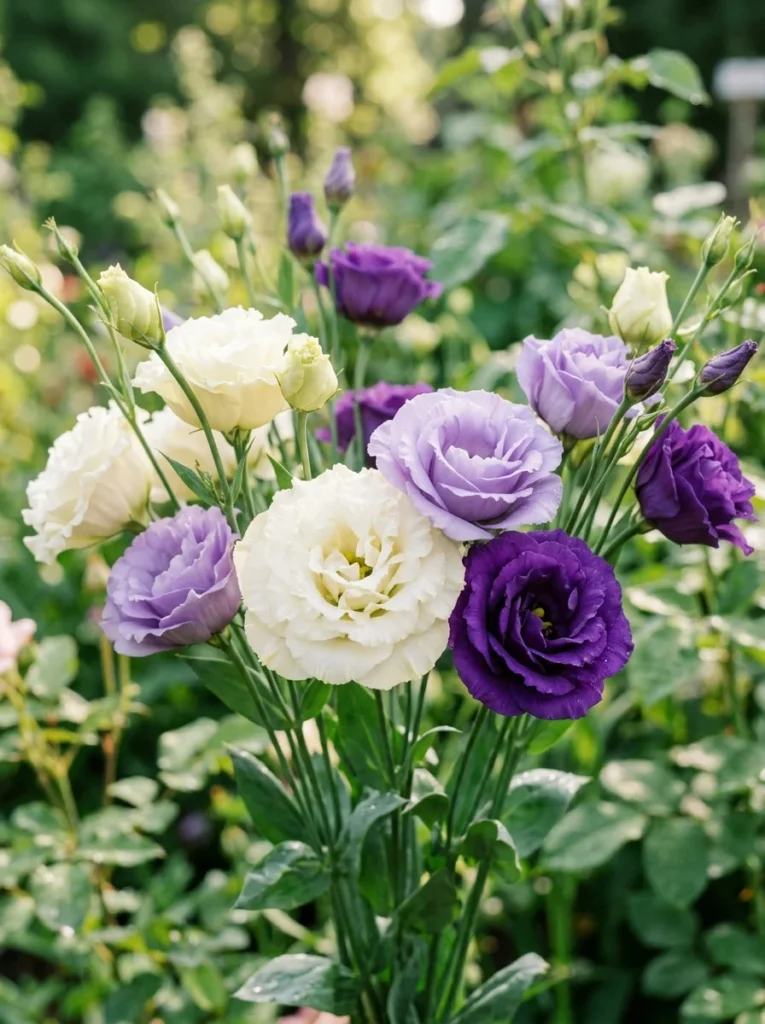
If you want the most impressive cut flowers for summer bouquets, lisianthus is your move. These look like roses — layered, ruffled, luxurious — but they’re actually much more heat tolerant. They’re a bit more challenging to grow from seed (start early, or buy transplants), but worth every bit of effort.
- Sun: Full sun
- Water: Moderate — well-drained
- Best for: Cutting gardens, summer flower arrangements, high-end bouquets
20. Catmint (Nepeta × faassenii)
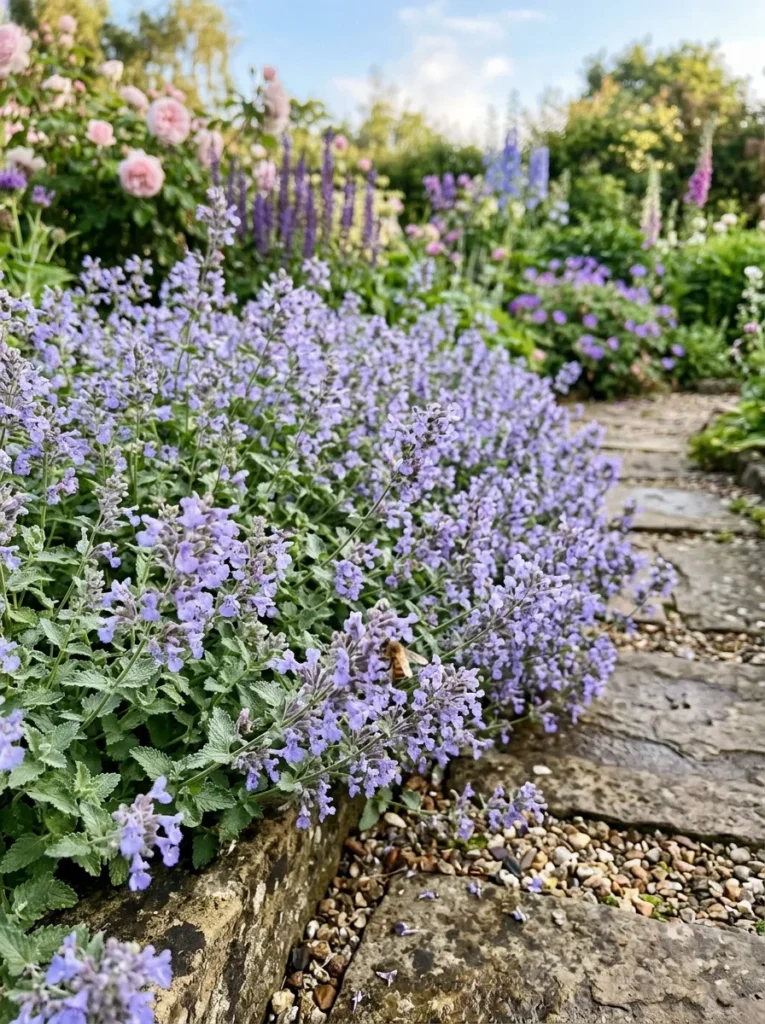
Catmint is the low-maintenance summer flower that experienced gardeners quietly put everywhere. It blooms purple-blue in early summer, you shear it back hard, and it blooms again. Repeat until frost. It smells wonderful, handles drought and heat, spreads gently, and pollinators love it.
- Sun: Full sun to part shade
- Water: Low — drought tolerant
- Best for: Border edging, perennial beds, pollinator gardens
- Zones: 3–8
Quick Reference: Summer Flowers at a Glance
| Flower | Sun | Water | Annual/Perennial | Best For |
|---|---|---|---|---|
| Zinnia | Full | Moderate | Annual | Cuts, butterflies |
| Coneflower | Full–Part | Low | Perennial | Pollinator beds |
| Black-Eyed Susan | Full | Low | Annual/Perennial | Wildflower beds |
| Marigold | Full | Low | Annual | Containers, pest control |
| Lantana | Full | Very Low | Tender Perennial | Hot climates |
| Daylily | Full–Part | Low | Perennial | Borders, mass plant |
| Petunia | Full | Moderate | Annual | Hanging baskets |
| Salvia | Full | Moderate | Annual/Perennial | Hummingbird gardens |
| Portulaca | Full | Very Low | Annual | Dry/rocky areas |
| Calibrachoa | Full | Moderate | Annual | Containers |
| Cosmos | Full | Low | Annual | Cutting gardens |
| Impatiens | Part–Full Shade | Moderate | Annual | Shade gardens |
| Begonia | Part shade | Moderate | Annual | Shaded containers |
| Verbena | Full | Low–Moderate | Annual | Containers, borders |
| Agapanthus | Full–Light | Low | Perennial | Statement beds |
| Phlox | Full | Moderate | Perennial | Fragrant borders |
| Lavender | Full | Very Low | Perennial | Fragrant/herb borders |
| Gaillardia | Full | Very Low | Perennial | Dry/wildflower beds |
| Lisianthus | Full | Moderate | Annual | Cutting garden |
| Catmint | Full–Part | Low | Perennial | Edging, pollinator beds |
Frequently Asked Questions About Summer Flowers
What are the best summer flowers to grow?
Zinnias, coneflowers, black-eyed Susans, marigolds, and lantana are consistently among the top performers across the US. They offer long bloom times, heat tolerance, and relatively low maintenance.
Which flowers bloom all summer long?
Zinnias, calibrachoa, verbena, petunias, and marigolds all bloom from late spring through frost with minimal deadheading. Coneflowers and gaillardia also have notably long bloom windows.
What are the easiest summer flowers for beginners?
Marigolds, zinnias, and black-eyed Susans are the classic beginner choices. All three can be direct-sown, require little fussing, and produce results quickly.
Which summer flowers do best in full sun?
Most summer flowers love full sun. Portulaca, lantana, gaillardia, and marigolds especially thrive in hot, sunny spots that would stress less adapted plants.
What summer flowers are heat tolerant?
Lantana, portulaca, gaillardia, catmint, zinnia, and lavender all handle intense heat well. These are your go-to flowers for summer in the South, Southwest, or anywhere temperatures regularly break 95°F.
What flowers are good for summer containers?
Petunias, calibrachoa, verbena, marigolds, and lantana are all excellent for pots. Mix upright and trailing types for the most visually interesting containers.
Which summer flowers attract butterflies and bees?
Coneflowers, black-eyed Susans, verbena, lantana, and catmint are top-tier pollinator plants. Zinnias are also excellent butterfly magnets.
What are the best low-maintenance summer flowers?
Daylilies, gaillardia, catmint, black-eyed Susans, and coneflowers are all near-zero-maintenance once established. Plant them, water occasionally, and otherwise let them do their thing.
Which summer flowers are best for shade?
Impatiens and begonias are the classic shade choices. New Guinea impatiens and tuberous begonias handle slightly brighter conditions than their standard counterparts.
How often should summer flowers be watered?
Most established summer flowers need water every 3–5 days depending on heat and rainfall. Container plants may need daily watering in extreme heat. Drought-tolerant types like portulaca and lavender can go much longer between waterings.
What are fragrant summer flowers?
Phlox, lavender, and catmint are the top fragrant options. Petunias also carry a light, sweet scent — especially in the evening.
Can I plant summer flowers in hanging baskets?
Absolutely. Petunias, calibrachoa, verbena, and trailing begonias are particularly well-suited to hanging baskets. The key is consistent watering — baskets dry out much faster than ground plantings.
What are the best cut flowers for summer bouquets?
Zinnias, cosmos, phlox, lisianthus, and black-eyed Susans are all excellent cut flowers that hold up well in arrangements.
One Last Thing Before You Start Planting
The best summer garden isn’t about having the most flowers — it’s about having the right ones for your space, your sun exposure, and honestly, your watering habits. If you’re forgetful with the hose, lean into drought-tolerant flowers like portulaca, lantana, and gaillardia. If you’ve got a shady corner you don’t know what to do with, impatiens will fill it beautifully.
Pick a few from this list, get them in the ground before the heat peaks, and then go add some water features — because nothing sets off a summer flower garden quite like the sound of moving water. (Seriously — these [15 DIY Water Fountain Ideas That’ll Transform Your Backyard Into a Zen Paradise] are worth a look if you’re doing a full backyard refresh.)
Summer’s short. Plant something worth looking at.