

This post contains Amazon affiliate links. I may earn a small commission if you purchase through my links, at no additional cost to you.
There’s something irresistibly compelling about a garden that feels like it was grown under a full moon. The kind of space where lavender sways in the evening breeze, black roses climb a mossy trellis, and a crystal-adorned lantern flickers near a stone altar. If that image makes your heart skip a beat — welcome, you’re in the right place.
Witchy gardens are having a serious moment. And honestly? It makes total sense. More and more people are craving outdoor spaces that feel intentional — places that hold energy, tell a story, and connect you to something ancient and earthy. Whether you’re a practicing herbalist, a cottagecore dreamer, or just someone who loves a moody aesthetic, a witchy garden is your canvas.
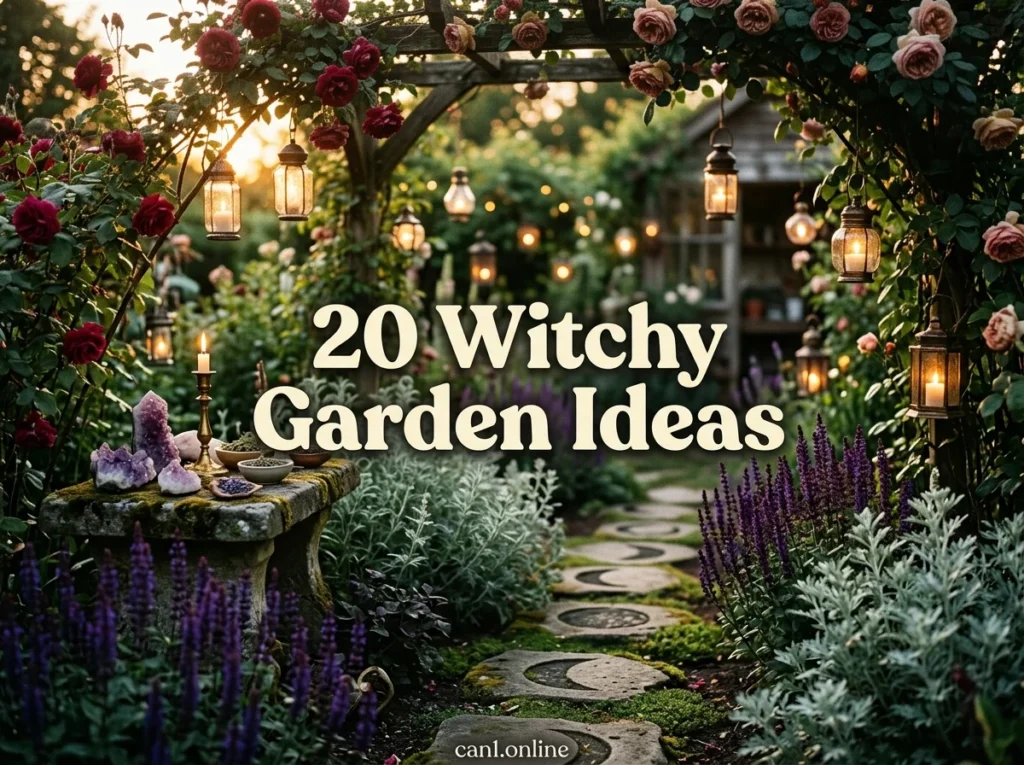
I’m going to walk you through 20 witchy garden ideas — from beginner-friendly herb setups to full gothic garden vibes — so you can start building your own enchanted corner of the world.
Table of Contents
What Makes a Garden “Witchy”?
Before we dive in, let’s clear something up: a witchy garden isn’t about cauldrons and broomsticks (unless that’s your vibe — no judgment). It’s about intention, symbolism, and atmosphere. Think layered textures, meaningful plants, moody colors, and handmade decor that feels like it was conjured rather than bought.
The hallmarks of a true witch garden include:
- Herbs with folklore significance — lavender, mugwort, sage, rosemary
- A dark, layered color palette — deep purples, blacks, silvers, and greens
- Natural materials — stone, wood, clay, moss
- Ritualistic decor — moon phases, crystals, spell jars, garden altars
- A sense of enclosure — hedges, arches, or climbing plants that create a “hidden world” feeling
Now, let’s get into the ideas.
1. Start with a Witchy Herb Garden
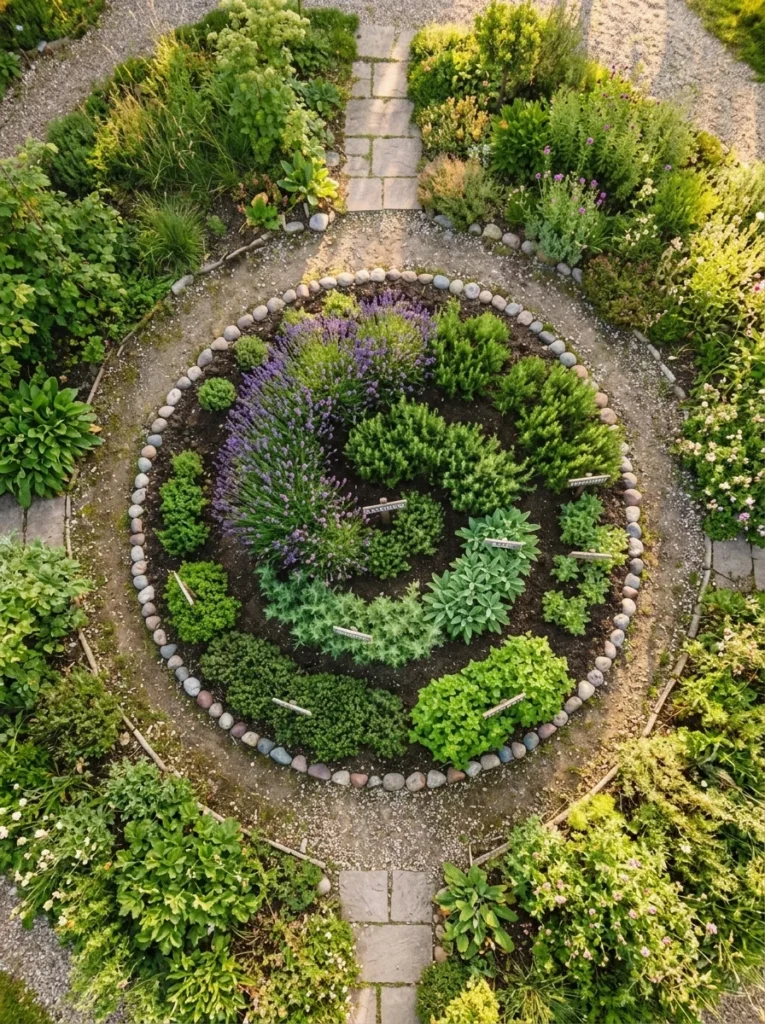
If there’s one non-negotiable in a witch garden, it’s herbs. These aren’t just functional — they’re the soul of the space.
Plant a dedicated herb bed with:
- Lavender — for calm, love, and that dreamy purple haze
- Rosemary — protection, memory, and a hearty evergreen backbone
- Sage — cleansing, wisdom, and incredibly easy to grow
- Mugwort — the quintessential witchy herb, linked to dreams and divination
- Thyme — courage, purification, and compact enough for any space
- Rue — one of the oldest “witch herbs” with deep protective folklore
- Lemon balm — soft, citrusy, and perfect for calming teas
Arrange them in a spiral or circular pattern for that extra magical geometry. You’ll feel like an apothecary every time you step outside.
2. Build a Garden Altar or Shrine
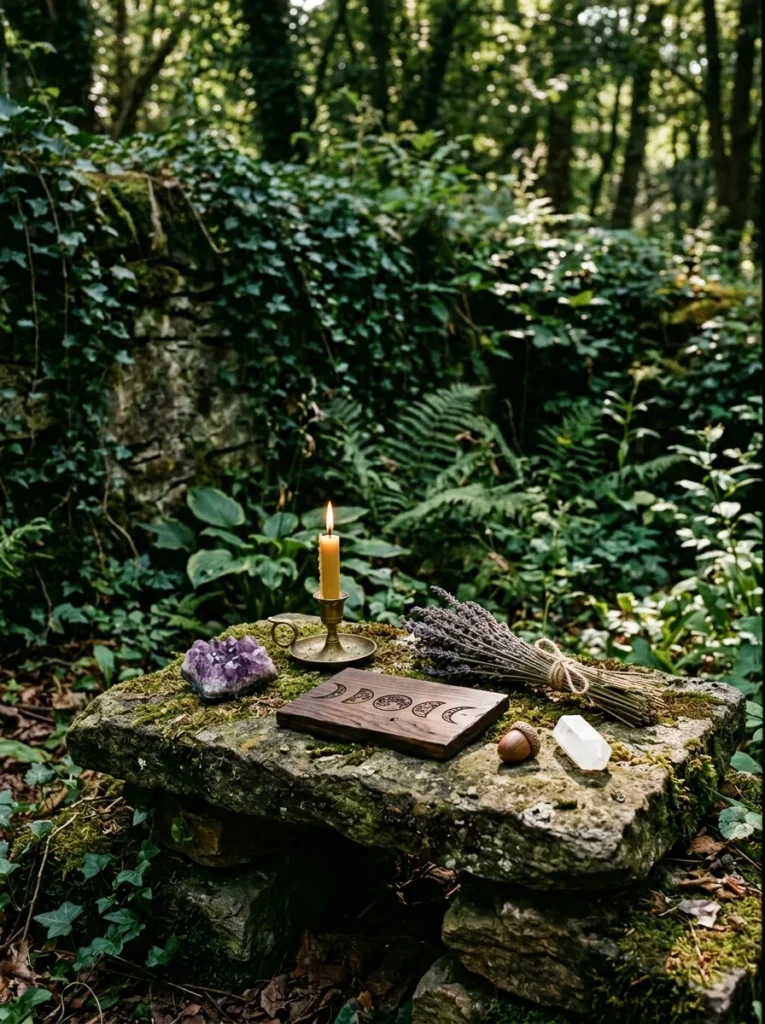
This is the heart of a witchy garden. A garden altar can be as simple as a flat stone surface or as elaborate as a multi-tiered wooden shelf tucked under an arch.
What to place on it:
- Crystals (amethyst, obsidian, clear quartz)
- A small candle or lantern
- Dried herbs or flowers
- A moon-phase plaque
- Found objects from nature — acorns, feathers, shells
Keep it weatherproof by choosing stone or sealed wood. And don’t overthink it — the best altars evolve naturally over time.
3. Embrace Dark and Gothic Foliage
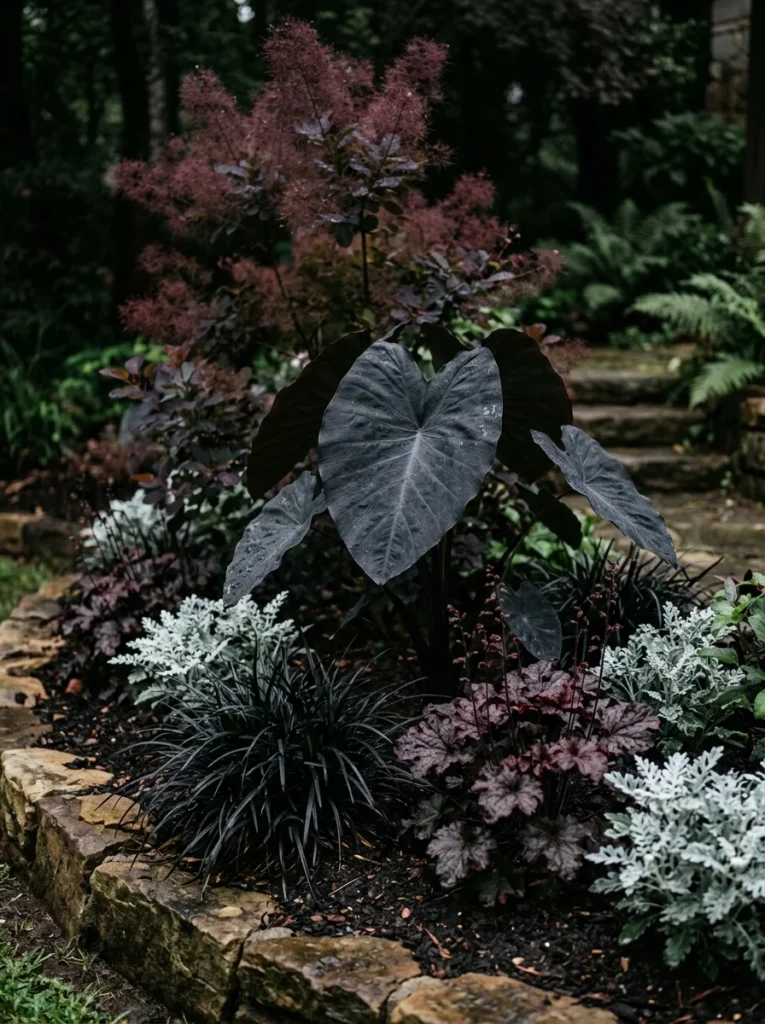
The dark garden aesthetic is one of the most visually striking elements of a witchy space. Swap out bright green hostas for moody, brooding alternatives:
- Black elephant ears (Colocasia ‘Black Magic’)
- Purple smoke bush (Cotinus coggygria)
- Black mondo grass — a ground cover that looks like shadow
- Dark heucheras — deep burgundy or near-black coral bells
- Black bat flower (Tacca chantrieri) — if you want something truly theatrical
- Deadnettle — silver and green low-growing cover
Layer these with silver-leafed plants like artemisia to create that moonlit contrast. It’s dramatic without trying too hard.
4. Create a Moon Garden
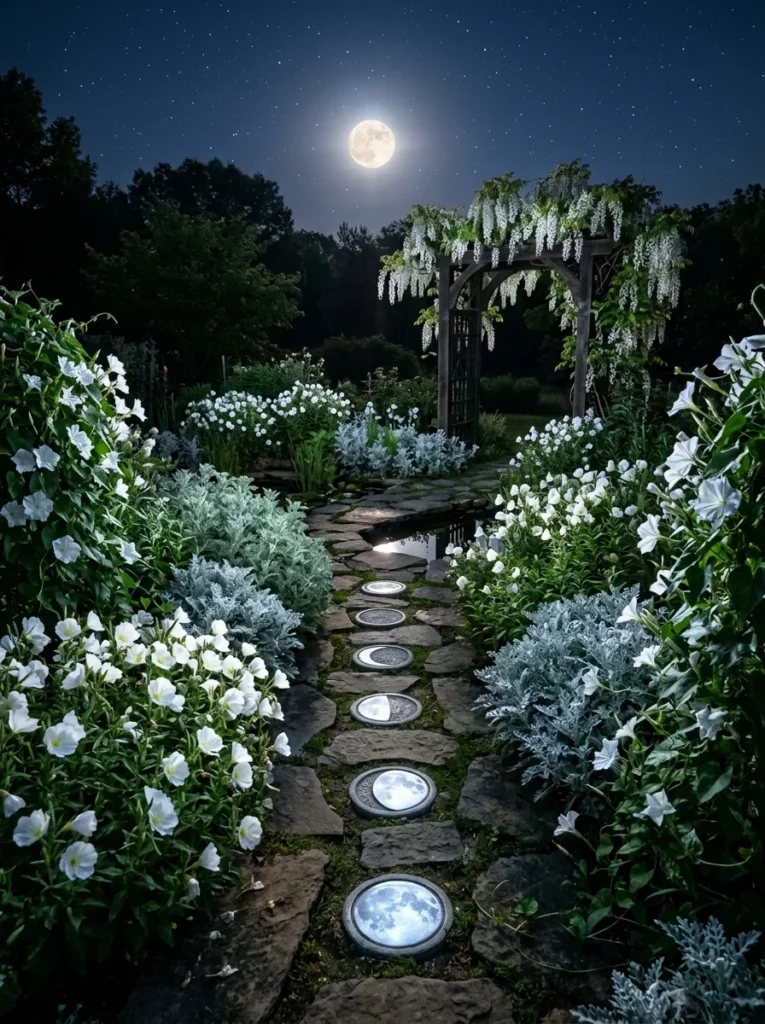
A moon garden is designed to be experienced at night — and it happens to be one of the most naturally witchy garden ideas out there.
The concept: plant mostly white, silver, and pale flowers that glow under moonlight, combined with night-blooming varieties.
Best moon garden plants:
- White evening primrose
- Moonflower vine
- White yarrow
- Silver dusty miller
- Night-blooming jasmine
- White wisteria
Add moon-phase stepping stones along a winding path, hang a crescent moon wind chime, and suddenly your backyard is giving midnight ritual energy.
5. Line Your Paths with Moon-Phase Stepping Stones
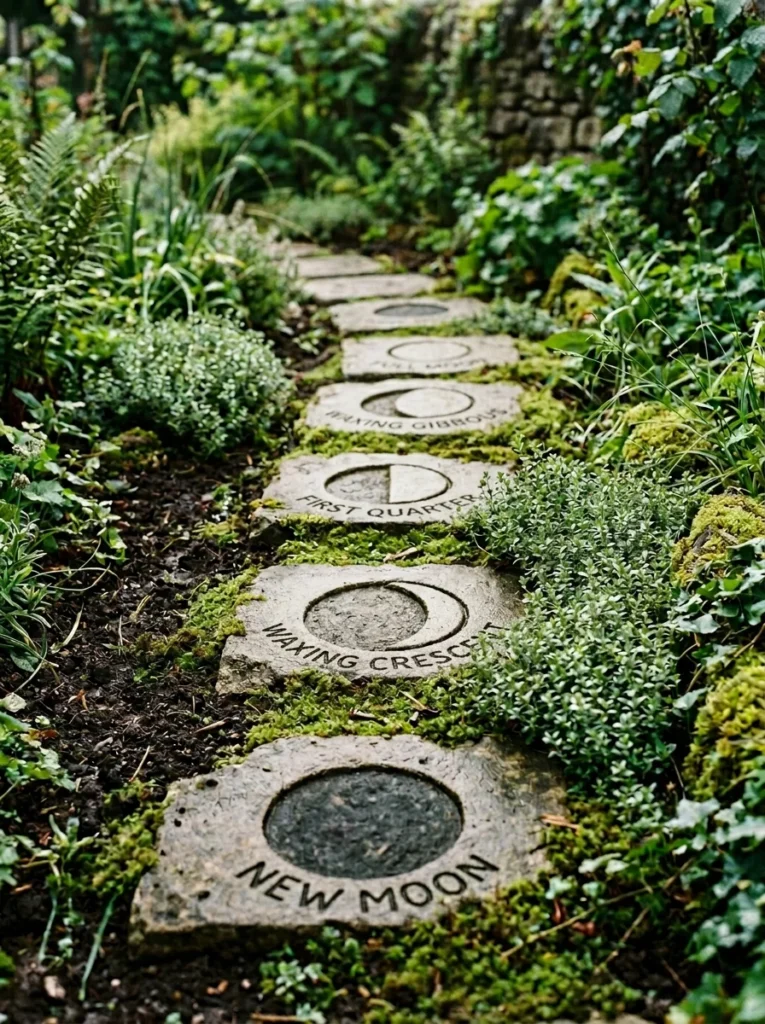
Speaking of paths — moon-phase stepping stones are one of the easiest and most visually impactful witchy garden decor ideas you can add.
You can buy pre-made ones on Etsy (support small makers!), or DIY them with concrete molds and a carving tool. Place them in a winding path through your herb garden, leading to your altar nook or a favorite sitting spot.
6. Hang Witchy Lanterns and Candle Holders
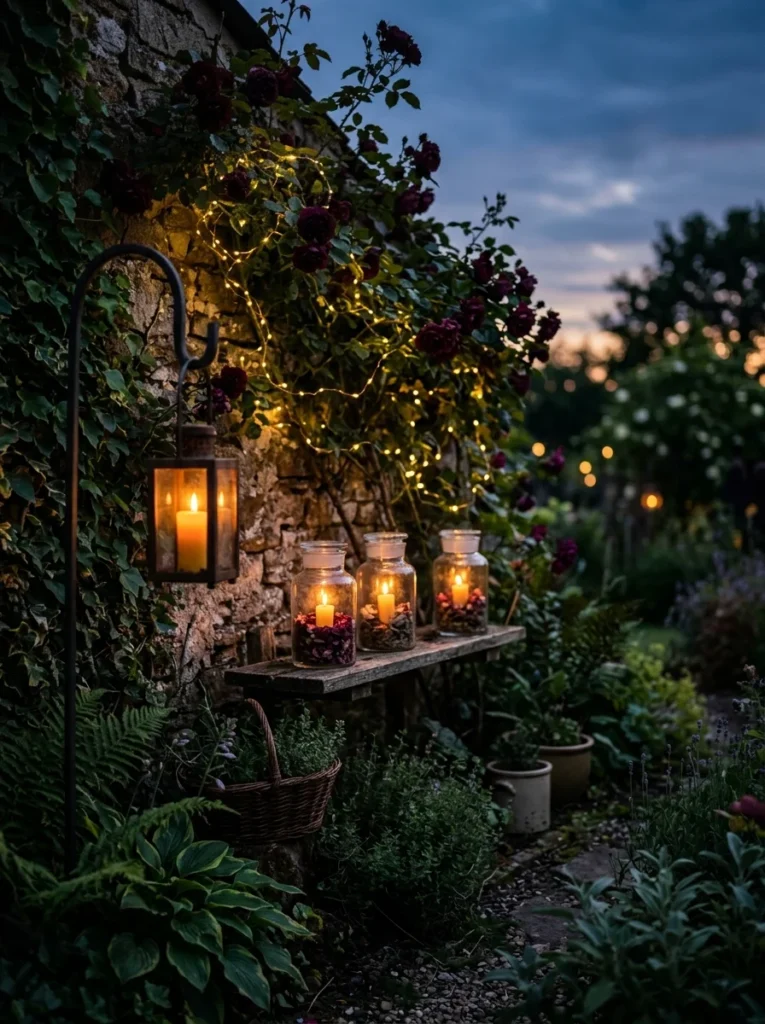
Lighting transforms a garden from “nice” to otherworldly. Old-school wrought iron lanterns, brass candle holders, and hanging glass orbs create exactly the kind of warm, flickering atmosphere a witchy garden needs.
A few ideas:
- Hang iron lanterns from shepherd’s hooks along a garden path
- Place glass jar candle holders filled with dried flowers and herbs
- Use solar fairy lights woven through climbing plants for that enchanted look
- Try cauldron-shaped candle holders for a more overtly magical touch
Pro tip: LED pillar candles that flicker like real flames are much more practical outdoors and still look incredibly atmospheric.
7. Add Spell Jar Planters
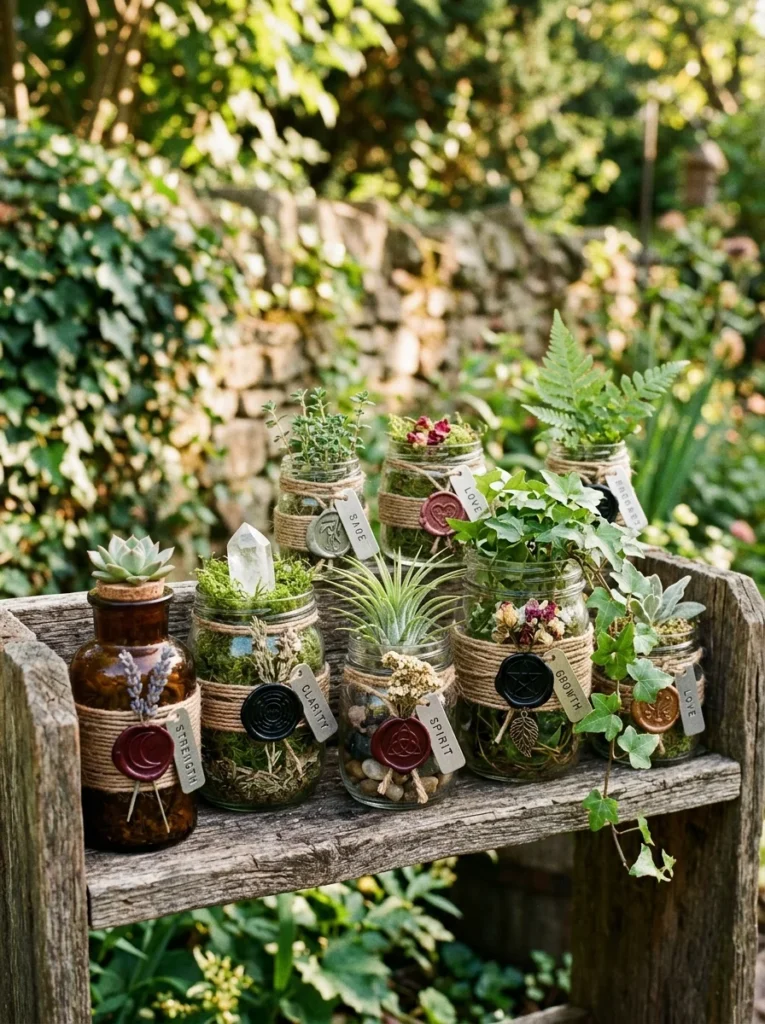
This is one of my favorite DIY witchy garden ideas — and it’s perfect for small spaces. Spell jar planters are exactly what they sound like: glass jars or apothecary bottles repurposed as tiny planters.
Fill them with:
- Succulents or air plants (easiest)
- Small herbs like thyme or basil
- Moss and crystals for a purely decorative look
Add charms, twine, wax seals, or dried flower garnishes to the outside. Line them along a windowsill, garden wall, or fence for a whimsical apothecary feel.
8. Plant Protective Herbs at Your Garden Entrance
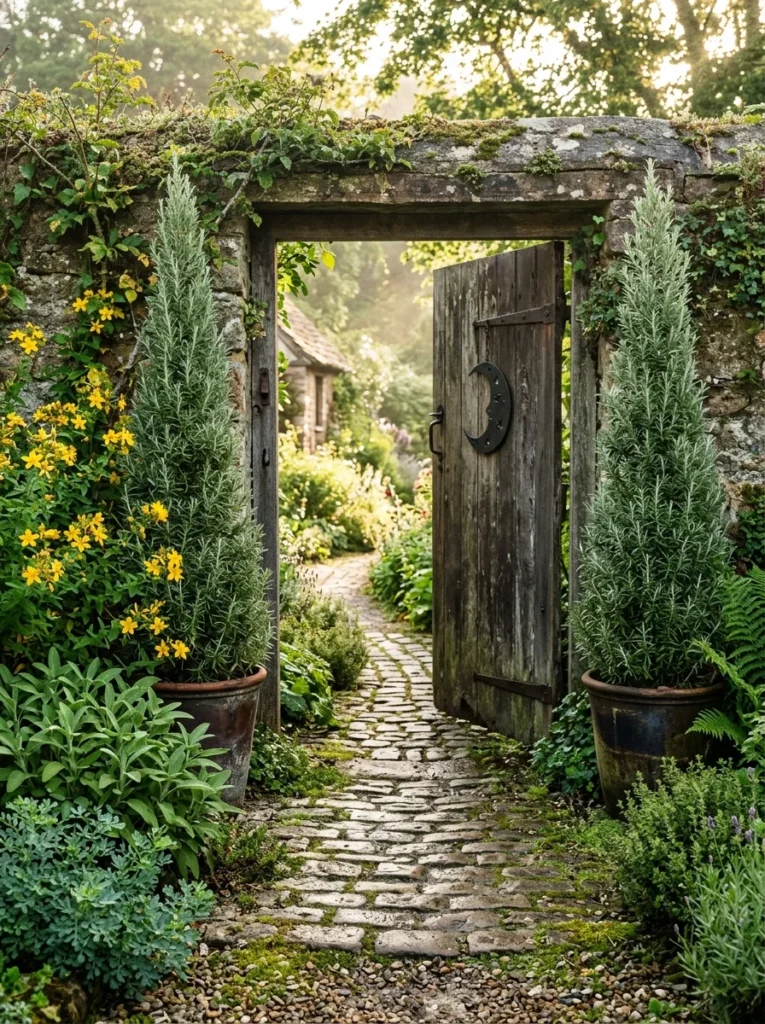
In traditional witchcraft, certain plants are placed at doorways and garden entrances for protection. This is a beautiful way to make your garden feel intentional and meaningful.
Best protective plants for entrances:
- Rosemary — traditionally planted by doorways for protection
- Garlic (if you’re feeling bold) — ancient protective plant
- St. John’s Wort — light and protective energy
- Hawthorn — classic hedge plant with protective folklore
A rosemary topiary flanking a garden gate? That’s main character energy.
9. Go Vertical with a Mystical Climbing Wall
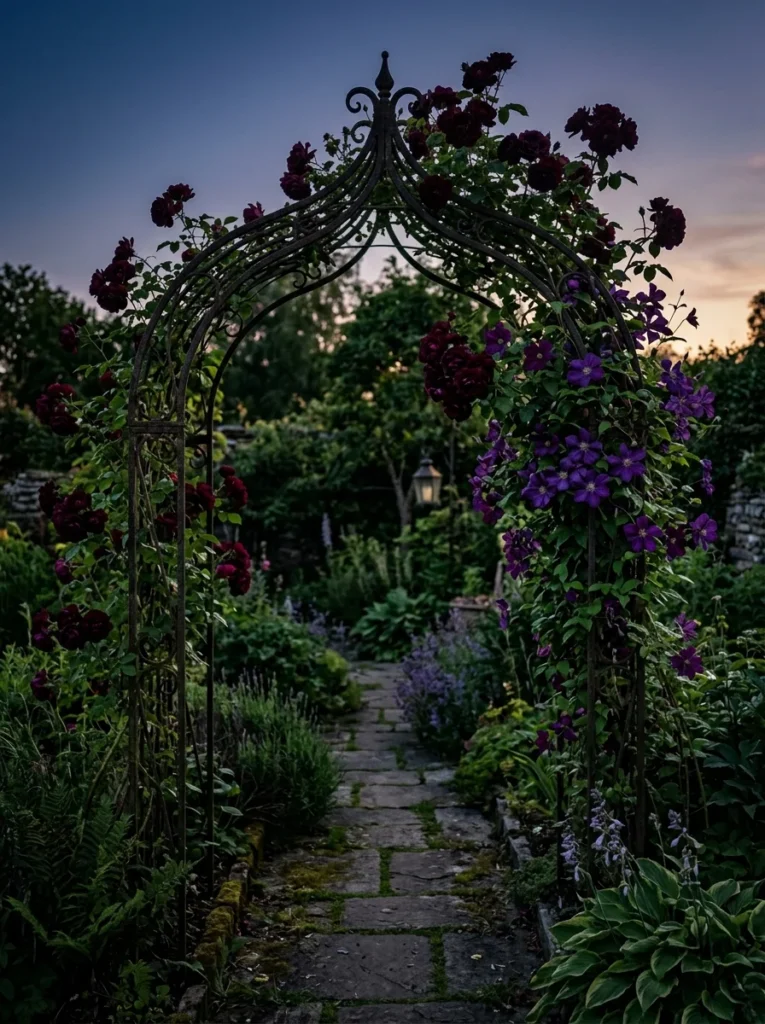
Climbing plants do something magical to a garden: they turn a flat space into a world. A stone or brick wall draped in climbing plants immediately gives that ancient, overgrown aesthetic.
Try:
- Climbing roses in deep red or near-black (‘Black Baccara’, ‘Munstead Wood’)
- Clematis in rich purple (‘Jackmanii’ or ‘Etoile Violette’)
- Ivy for that gothic manor look
- Wisteria if you want swooning abundance
10. Create a Crystal Garden Accent Area
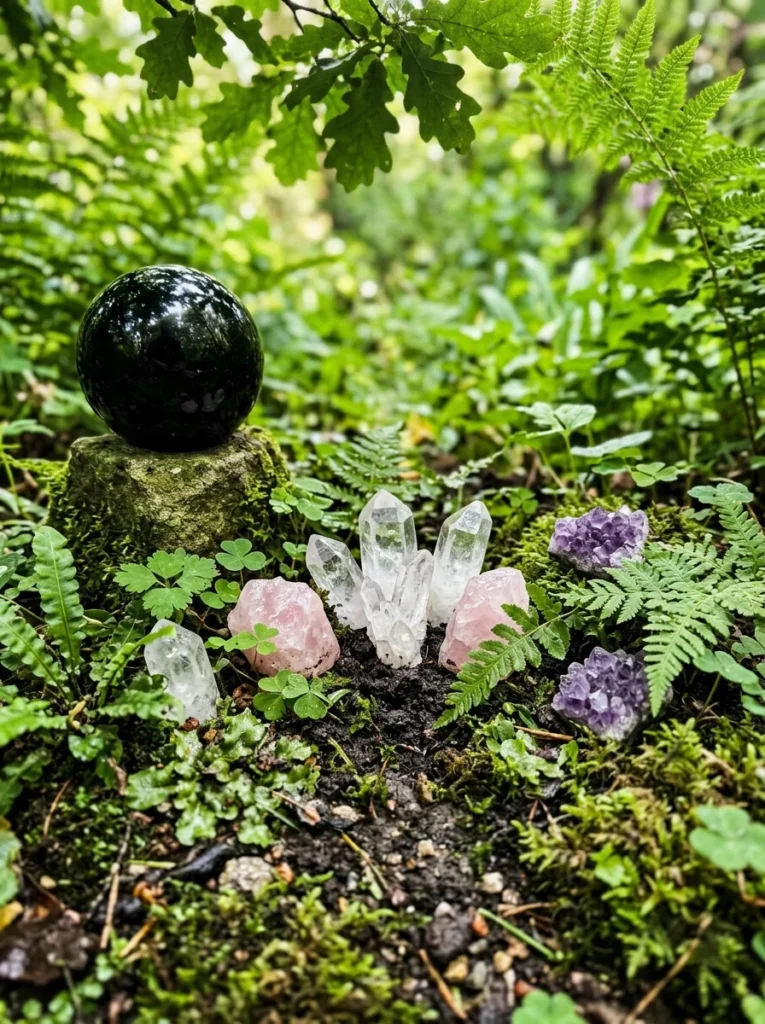
Crystals and gardens are a natural pairing — literally. Pushing crystals into soil around your plants or nestling them among river rocks creates an earthy, mystical accent that costs very little but looks stunning.
Best crystals for outdoor garden use (weather-resistant options):
- Quartz points — clear or rose
- Obsidian — glossy and dramatic
- Green aventurine — fits right in among foliage
- Amethyst clusters — for a more decorative display, keep under a covered area
Pair with patio and garden crystal accents from specialty shops or Etsy for ready-made options.
11. Build a Secluded Altar Nook
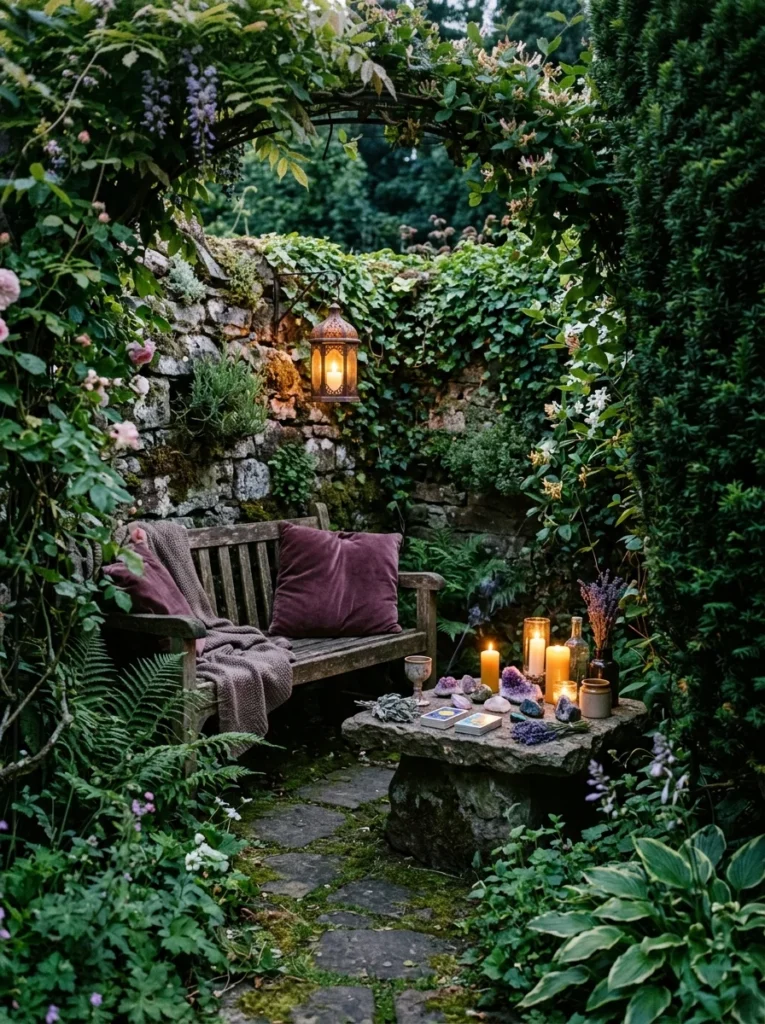
If you love the idea of a more immersive witchy space, dedicate a corner of your garden to a hidden altar nook — a small seating area surrounded by tall plants, a trellis, or a wooden privacy screen.
Furnish it with:
- A small weathered bench or stone seat
- Hanging lanterns
- Your altar surface
- Potted herbs and trailing plants
- A wind chime or bell
This is your outdoor ritual space, your reading nook, your place to just be. And honestly, even the most skeptical gardener can get behind the idea of a private, plant-enclosed corner to decompress.
12. Use a Dark, Moody Color Palette
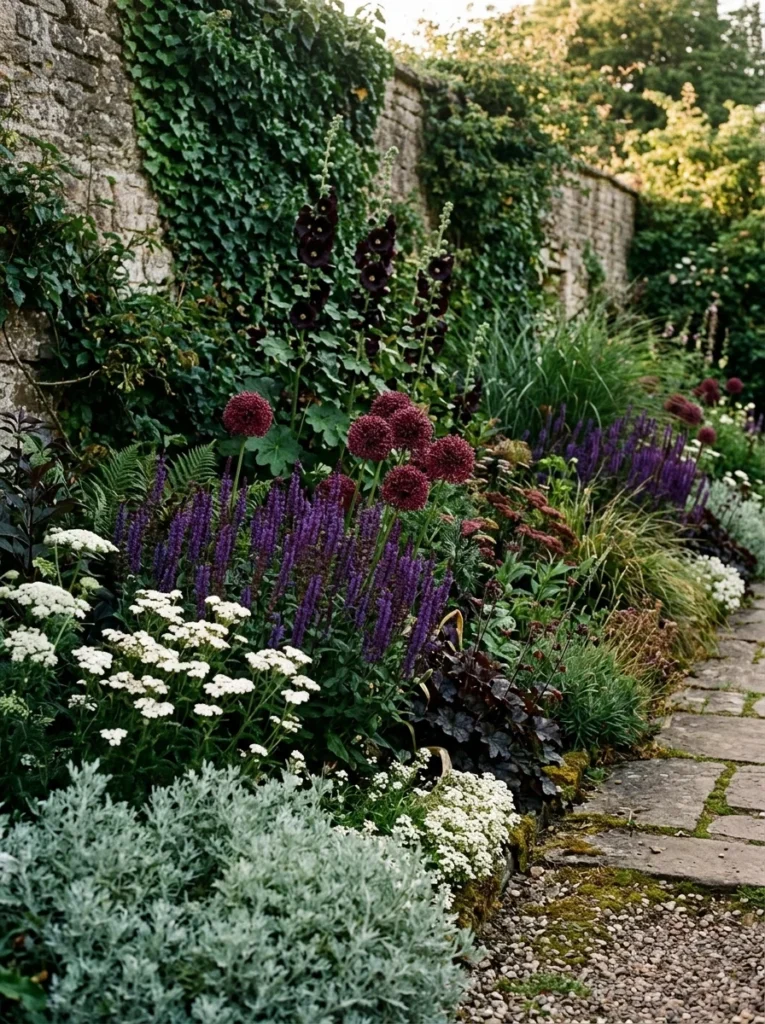
The dark cottage garden aesthetic is about controlled drama. You don’t need everything to be black and gothic — you need depth.
Work with:
- Deep purples (salvia, allium, lavender)
- Burgundy and near-black (heuchera, dark dahlia, black hollyhock)
- Silver and gray (dusty miller, artemisia, silver sage)
- Forest green (ferns, hostas, dark ivy)
Accent with white or pale yellow for contrast. The result feels moody without being gloomy — like perpetual golden hour at a manor house.
13. Add Weathered Stone and Found Objects
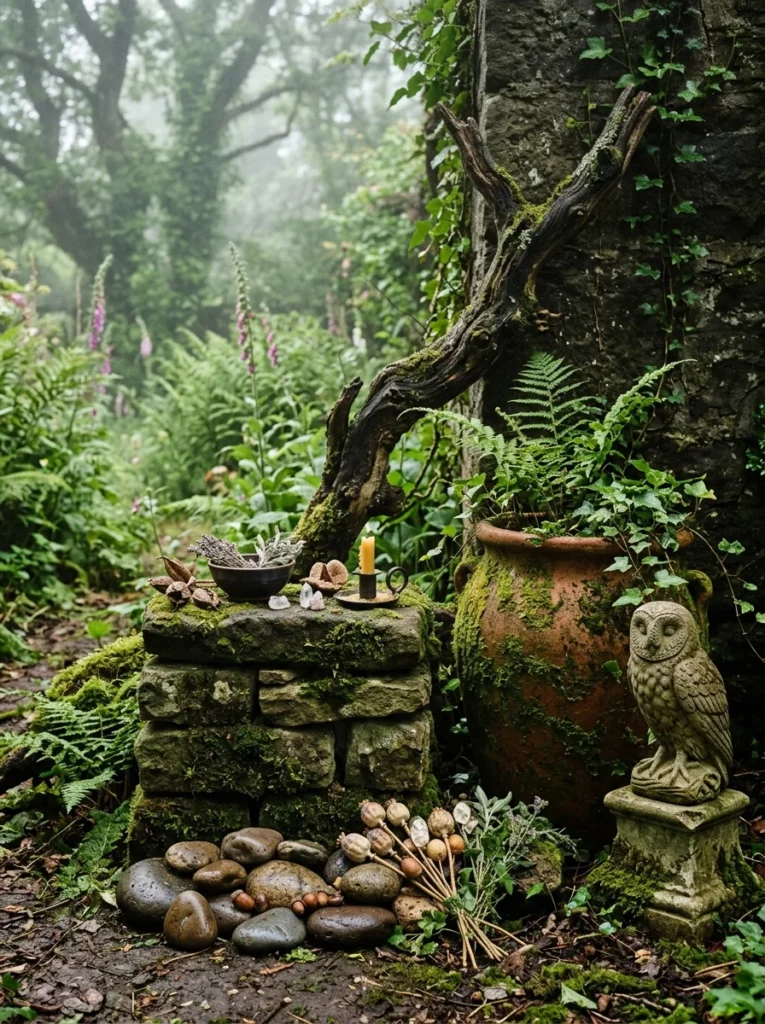
A witchy garden should feel old. And the fastest way to achieve that? Weathered stone, moss-covered objects, and things that look like they washed in from the forest.
Ideas:
- Stack stone slabs to create a natural altar or birdbath base
- Let moss grow on terracotta pots (spritz with yogurt + water to encourage it!)
- Collect interesting branches, seed pods, and rocks from nature walks
- Place a stone statue — a hare, an owl, a goddess figure — as a focal point
If you want to add water features, this pairs beautifully with ideas from 15 DIY Bird Bath Ideas That’ll Turn Your Yard Into a Bird Sanctuary — a mossy stone birdbath fits perfectly in a witchy garden.
14. Plant Chamomile for a Soft, Dreamy Feel
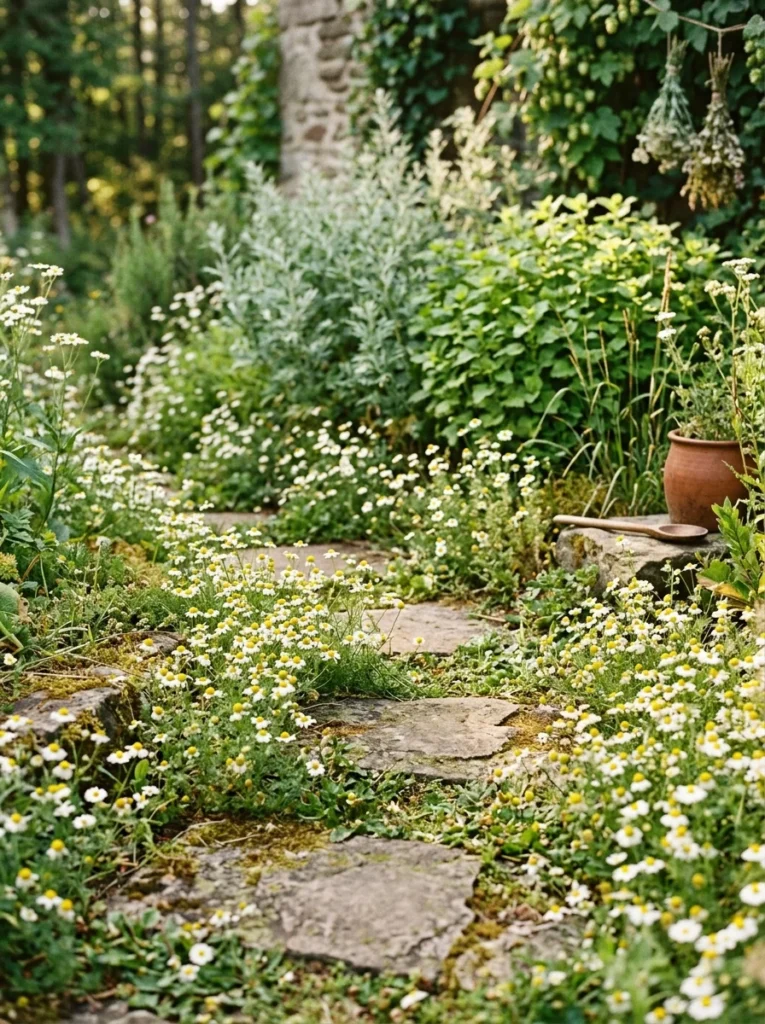
Not every element of a witchy garden needs to be dark and dramatic. Chamomile is a beautiful, gentle plant that adds a soft, wildflower quality — like something you’d find growing in an enchanted meadow.
It spreads easily, smells incredible, and blooms with cheerful daisy-like flowers. Harvest it for tea, tuck it between stepping stones, or let it naturalize in a corner. It brings a sense of ease to a space that might otherwise tip into heavy territory.
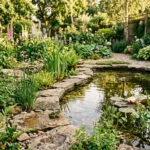
15. Incorporate Water for Reflection Magic
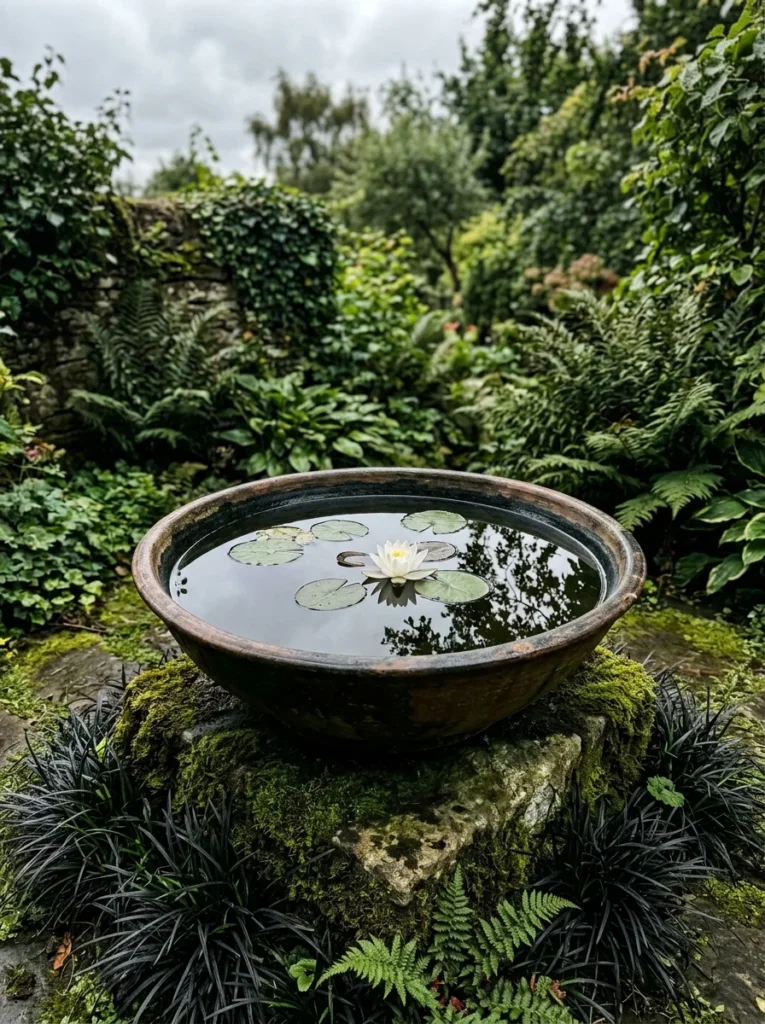
Water in a garden creates movement, sound, and reflective surfaces — all deeply atmospheric. Even a simple dark-bottomed ceramic bowl filled with water and floating flowers becomes a scrying bowl in the right light.
Larger ideas:
- A small pond with lily pads and a stone edge
- A wall fountain with a moon face or goddess design
- A birdbath as a water mirror
This also pairs well with ideas from 15 DIY Bird Bath Ideas That’ll Turn Your Yard Into a Bird Sanctuary for practical, beautiful water features.
16. Use Symbols and Runic Decor
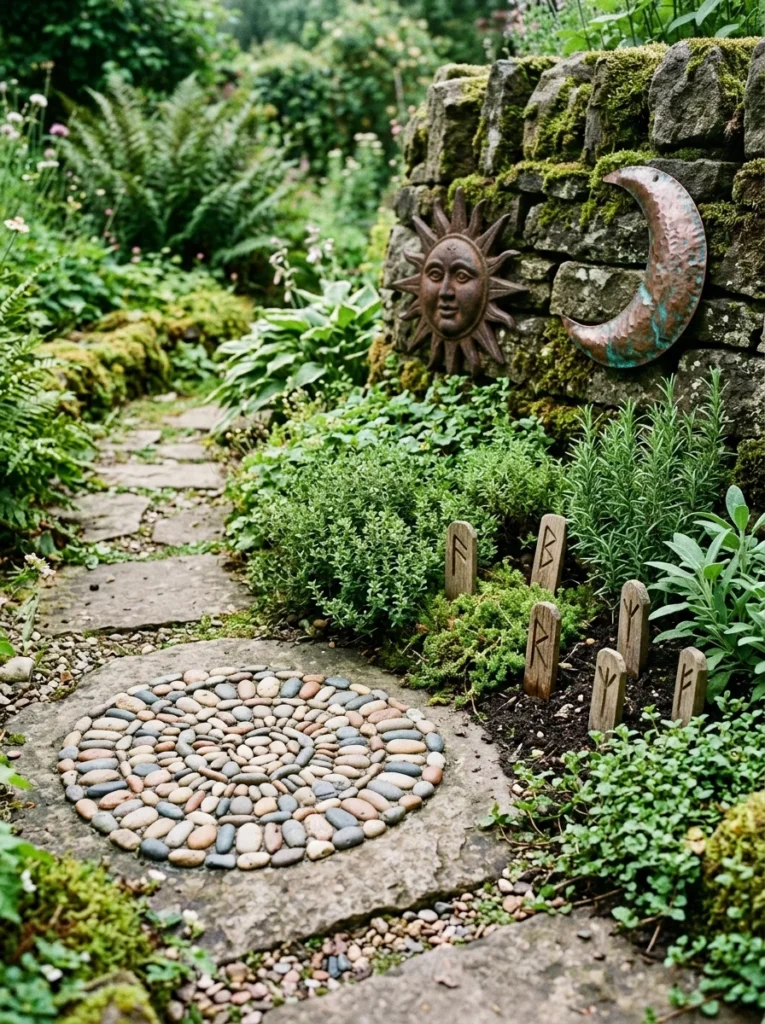
Symbols are central to the witchy garden aesthetic. These don’t need to be overtly occult — natural symbols like spirals, crescents, stars, and pentagrams have been garden motifs for centuries.
Try:
- A spiraling stone mosaic set into a garden path
- Rune-carved wooden stakes next to your herb beds
- A crescent moon carved into a fence panel
- Metal sun and moon wall art
These touches make a garden feel authored — like someone poured intention into every corner.
17. Create a Fairy Ring of Mushroom Accents
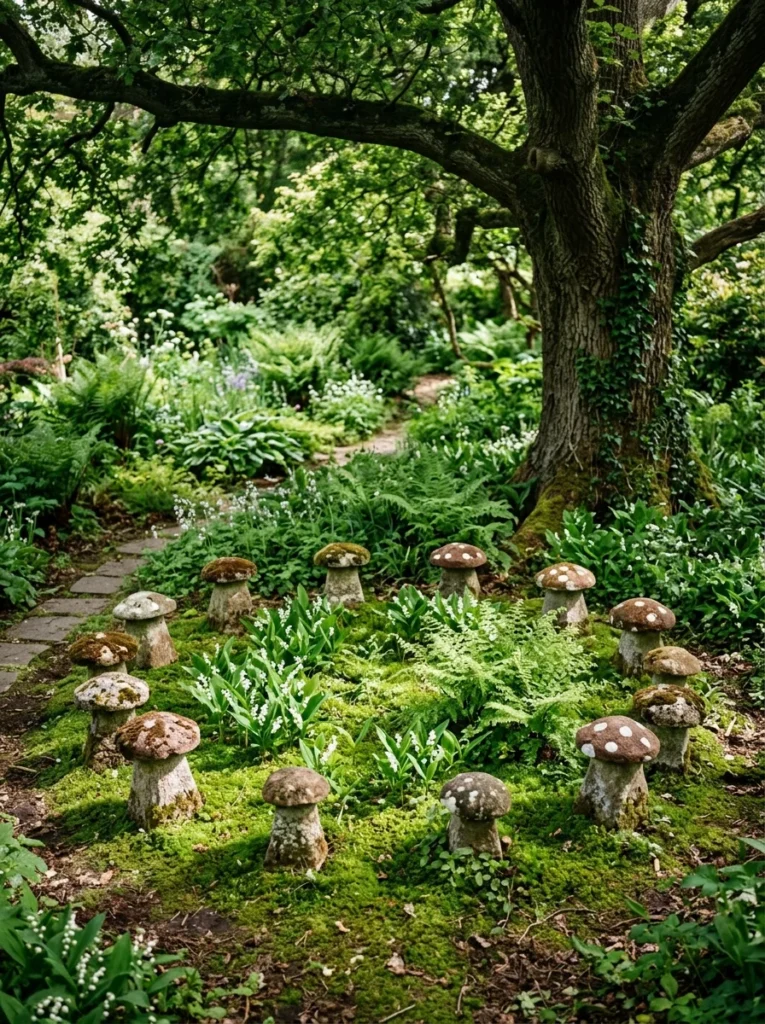
A fairy ring — real mushrooms aside — can be created with mushroom-shaped garden stools, stone sculptures, or even hand-painted terracotta. Place them in a circle in a shaded spot under a tree.
For a more permanent version, plant shade-loving ground covers like mosses, ferns, and lily of the valley inside the ring. It’ll look like something out of a storybook.
18. Add a Fire Feature for Elemental Energy
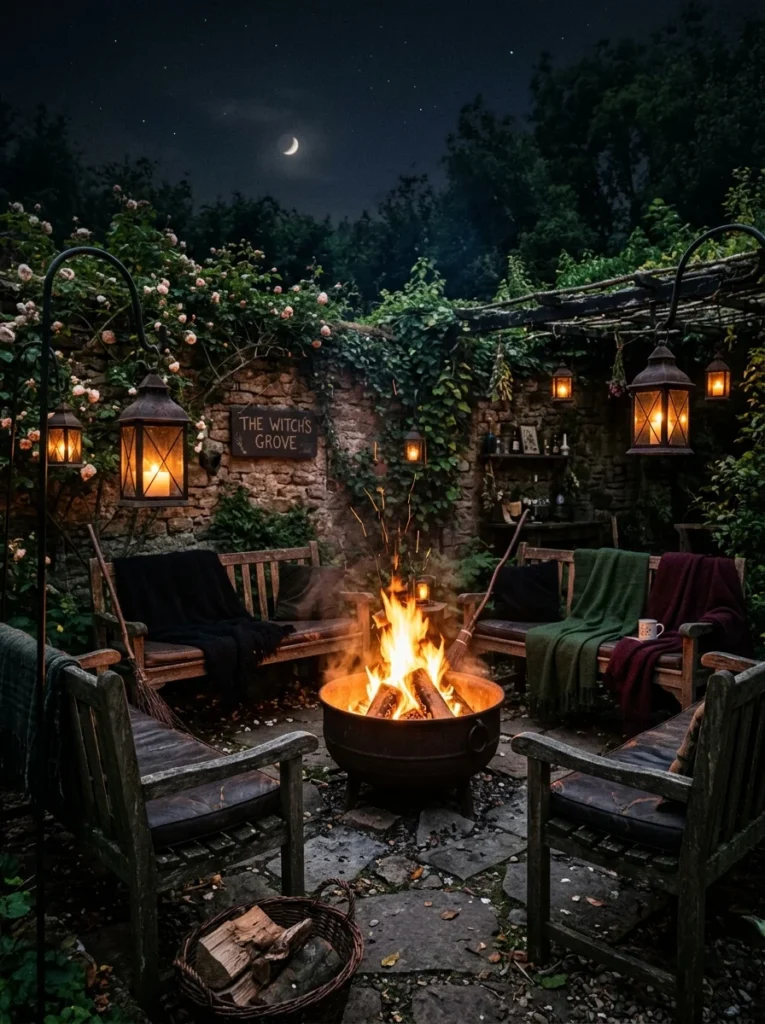
Fire is one of the four classic elements in many magical traditions — and a garden fire feature serves both symbolic and practical purposes. A fire pit surrounded by stone benches, draped in climbing plants, with lanterns hung overhead? That’s an outdoor gathering space AND a ritual space.
Check out 15 Backyard Fire Pit Seating Arrangements That Actually Work for practical layout ideas that you can adapt to a witchy aesthetic — swap out the suburban patio furniture for weathered wood benches and iron lanterns.
19. Build a Witchy Garden in a Small Space
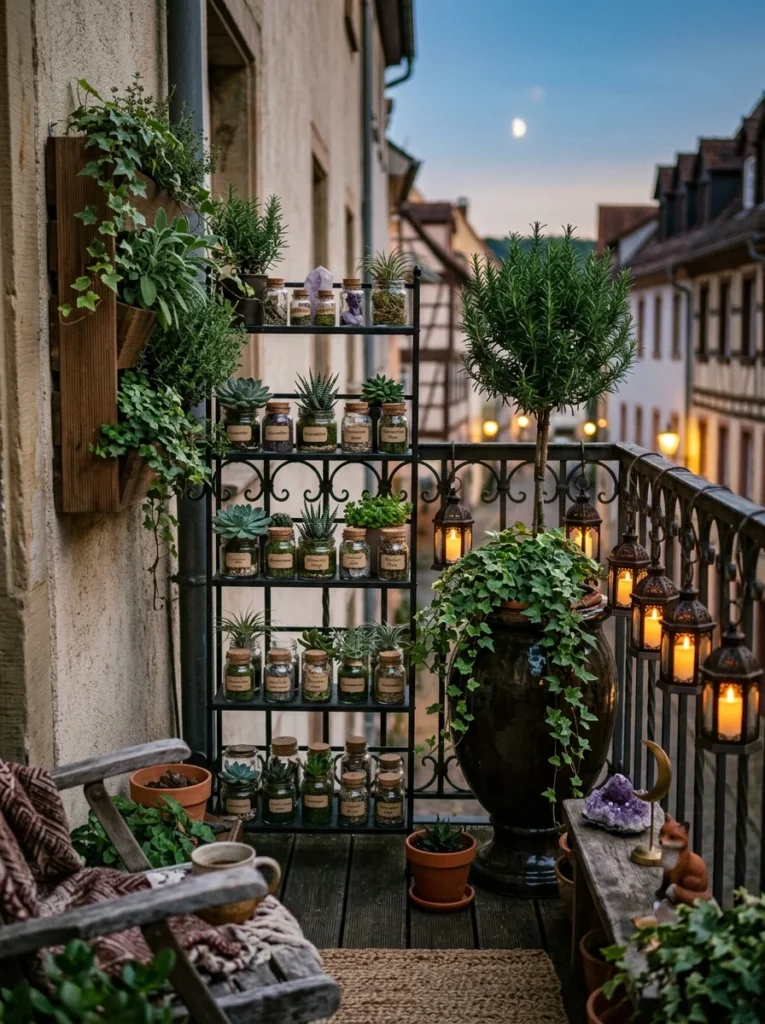
Can you create a witchy garden in a small space? Absolutely. A balcony, patio, or even a windowsill can hold an entire magical world in miniature.
Focus on:
- Vertical planters for herbs and trailing plants
- Spell jar planters on shelves
- A single statement pot — a dark glazed urn with rosemary, sage, and trailing ivy
- Hanging lanterns and fairy lights
- A small crystal arrangement on a side table
Compared to, say, an above-ground pool or large landscaping project (like the ideas in 15 Nice Above Ground Pool Ideas That’ll Make Your Backyard Look Like a Resort), a witchy garden requires almost zero construction. It’s pure intention and styling.
20. Make It Personal — Add Your Signature
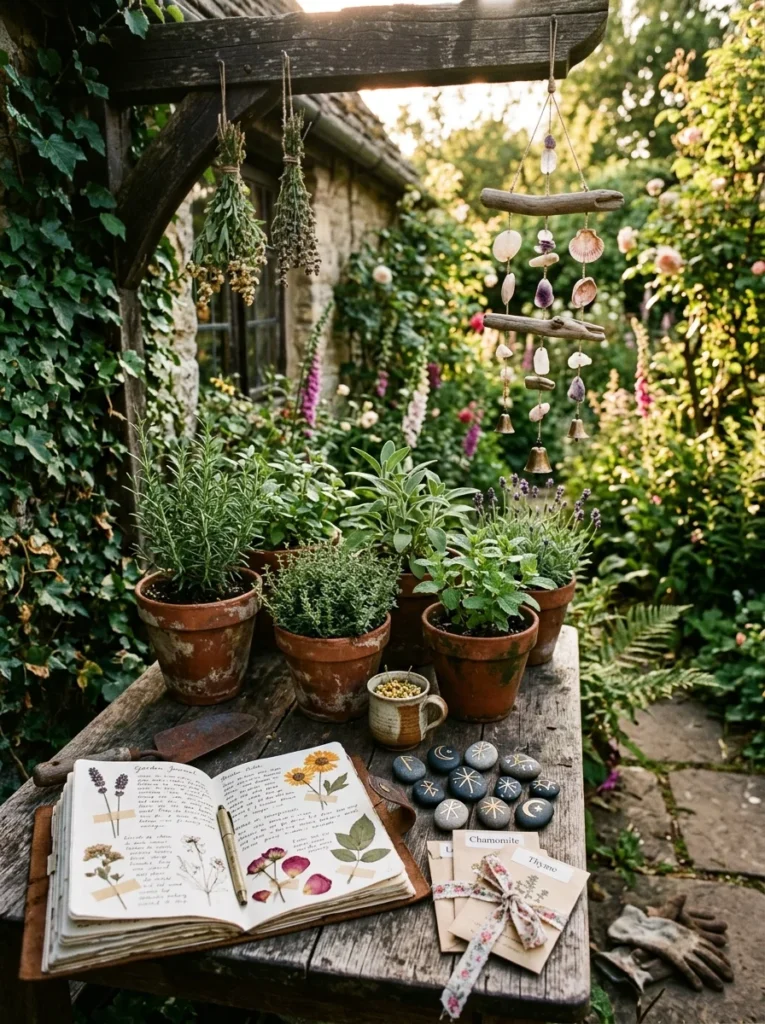
The most powerful witchy garden idea I can give you is this: make it yours. A truly enchanting garden holds traces of the person who tends it.
Add things that mean something specifically to you:
- A plant from your grandmother’s garden
- Stones collected from a meaningful trip
- A handmade wind chime
- Seeds saved and replanted each year
That’s where the magic really lives — not in the aesthetics, but in the meaning.
FAQs About Witchy Gardens
What is the difference between a witchy garden and a fairy garden?
A fairy garden tends to be lighter, more whimsical, and focused on tiny decorative elements and pastel colors. A witchy garden is more atmospheric, herb-forward, symbolically intentional, and often darker in palette.
How do I make a witchy garden on a budget?
Start with seeds instead of plants (herbs especially are very cheap from seed). DIY your decor using jars, found stones, and natural materials. Shop Etsy for handmade decor, or forage for branches, moss, and pinecones to use as free styling elements.
Which plants are associated with protection, love, or healing?
Protection: rosemary, rue, sage, garlic. Love: rose, lavender, chamomile, lemon balm. Healing: calendula, echinacea, lemon balm, thyme.
How do I make a dark or gothic garden aesthetic?
Use dark foliage plants (black mondo grass, heuchera, purple smoke bush), deep-toned flowers (black hollyhock, dark dahlias), climbing roses, weathered stone, and iron or bronze accents. Keep the structure somewhat enclosed or overgrown-feeling.
Final Thoughts
A witchy garden isn’t just about aesthetics — though the aesthetics are very good. It’s about creating a space that holds energy, invites you to slow down, and connects you to the natural world in a more intentional way. Whether you’re building a full dark cottage garden or just tucking a spell jar planter on your apartment balcony, the same principle applies: plant with purpose.
Start with one herb. Add one piece of meaningful decor. Let it grow from there — literally and figuratively.
What’s the first witchy garden element you’re going to add? Drop it in the comments — I’d love to know what you’re conjuring.







3 thoughts on “20 Witchy Garden Ideas That’ll Transform Your Yard Into a Magical Sanctuary”