
Let me ask you something: do you look at that shady corner of your yard and think, “Well, nothing’s ever going to grow there”?
Yeah. I’ve been there. That perpetually dim patch under the oak tree. The narrow strip along the north fence. The moody little corridor between the garage and the house that somehow feels like it belongs in a gothic novel.
Here’s the thing — those shady spots? They’re not a problem. They’re an opportunity. A genuinely exciting one, if you know what to do with them.
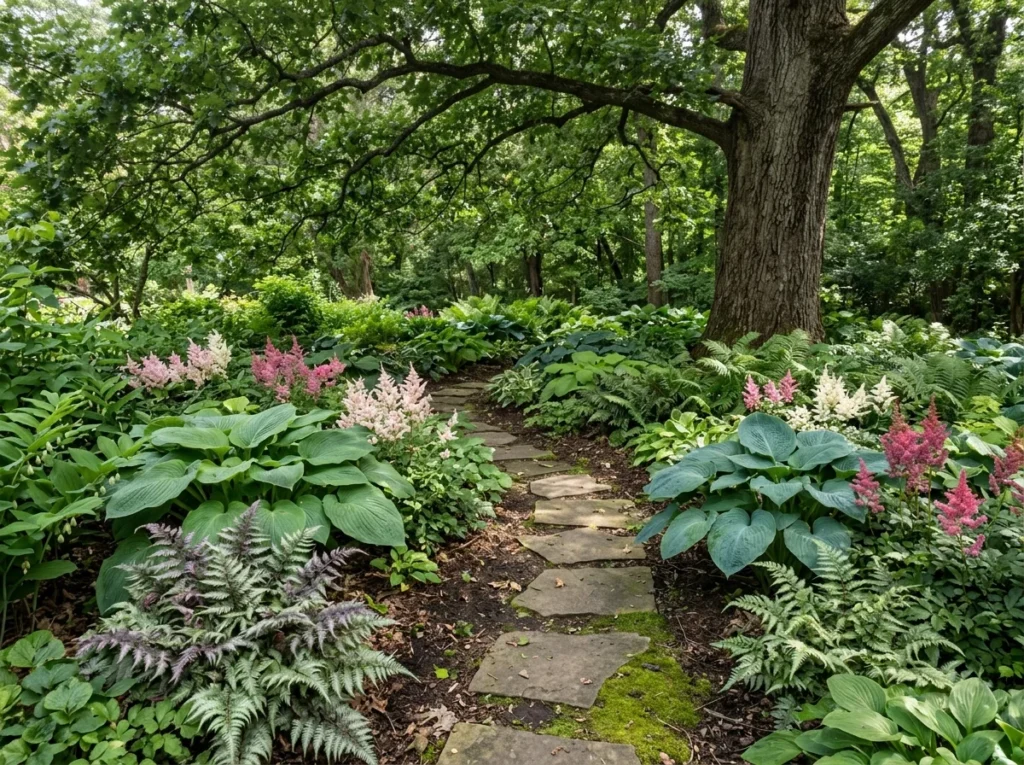
Shade gardening is one of the most underrated corners of home landscaping, and once you understand how it works, you’ll wonder why you ever thought the sun-drenched beds were the interesting ones. Cool, calm, and endlessly layered — a well-designed shade garden is practically alive with texture.
So let’s fix that forgotten patch, once and for all. Here are 20 shade garden ideas that actually work, from simple plant swaps to full-on woodland transformations.
Table of Contents
First Things First: What Kind of Shade Are You Actually Dealing With?
Before you plant a single thing, you need to understand your light situation. Not all shade is created equal — and planting the wrong thing in the wrong kind of shadow is the number one reason shade gardens fail.
Here’s a quick breakdown:
| Shade Type | What It Means | What Thrives Here |
|---|---|---|
| Full Shade | Less than 2 hours of direct sun daily | Hostas, ferns, astilbe, bleeding heart |
| Partial Shade | 2–6 hours of direct sun | Heuchera, foxglove, hydrangeas, impatiens |
| Dappled Shade | Filtered light through a tree canopy | Most shade plants + some sun-lovers |
| Dry Shade | Full or partial shade + dry, root-filled soil | Epimedium, sweet woodruff, hellebores |
Figuring out which category your space falls into takes about two minutes with a cup of coffee and some observation — and it’ll save you a lot of dead plants down the road.
20 Shade Garden Ideas Worth Stealing
1. Layer Like a Forest Floor
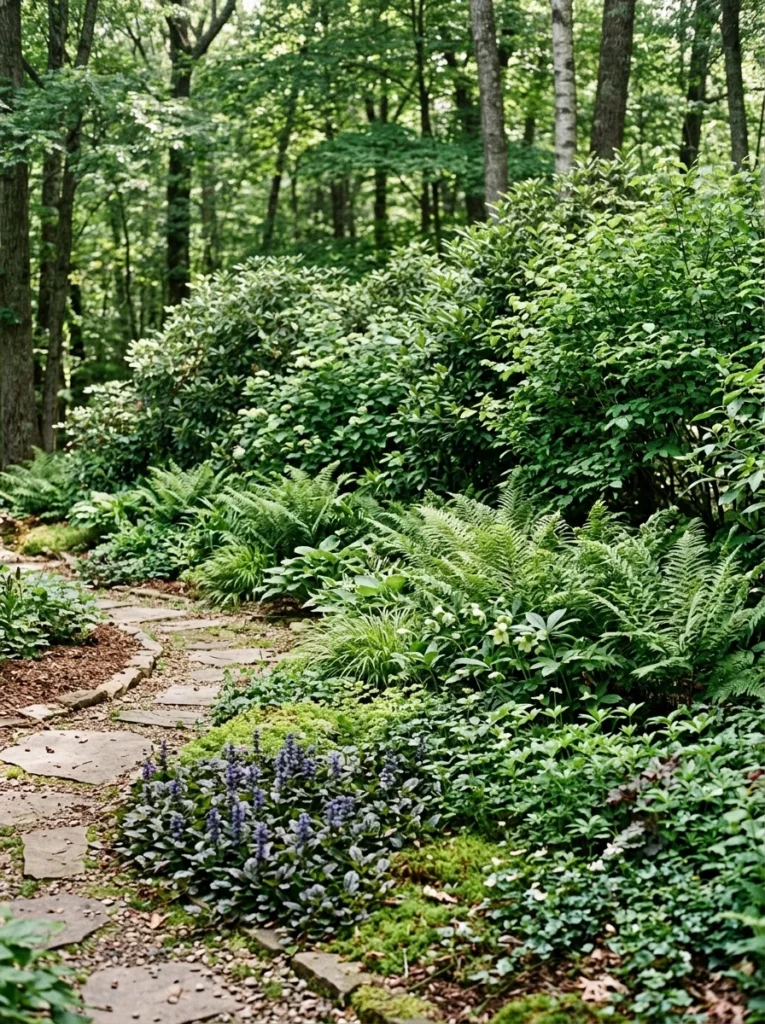
Nature doesn’t do flat. A real forest has a canopy layer, a shrub layer, and a ground layer — and the best shade garden design borrows that exact logic.
Start with a tall shrub or small ornamental tree (like a Japanese maple or serviceberry), add medium-height plants like ferns or astilbe in the middle, and carpet the ground with low creepers like ajuga or sweet woodruff. The result? A garden that feels designed and effortless at the same time.
2. Go All-In on Hostas
If there’s one plant that deserves its own fan club in the shade gardening world, it’s the hosta. Bold, architectural, and available in a wild range of sizes and colors — from tiny blue-green mounds to giant chartreuse monsters — hostas are the backbone of almost every successful shade garden layout.
Mix several varieties for contrast: a deep green ‘Halcyon’ next to a gold-edged ‘Frances Williams’ next to something with white margins. The texture alone is absolutely chef’s kiss.
3. Add a Winding Shade Garden Path
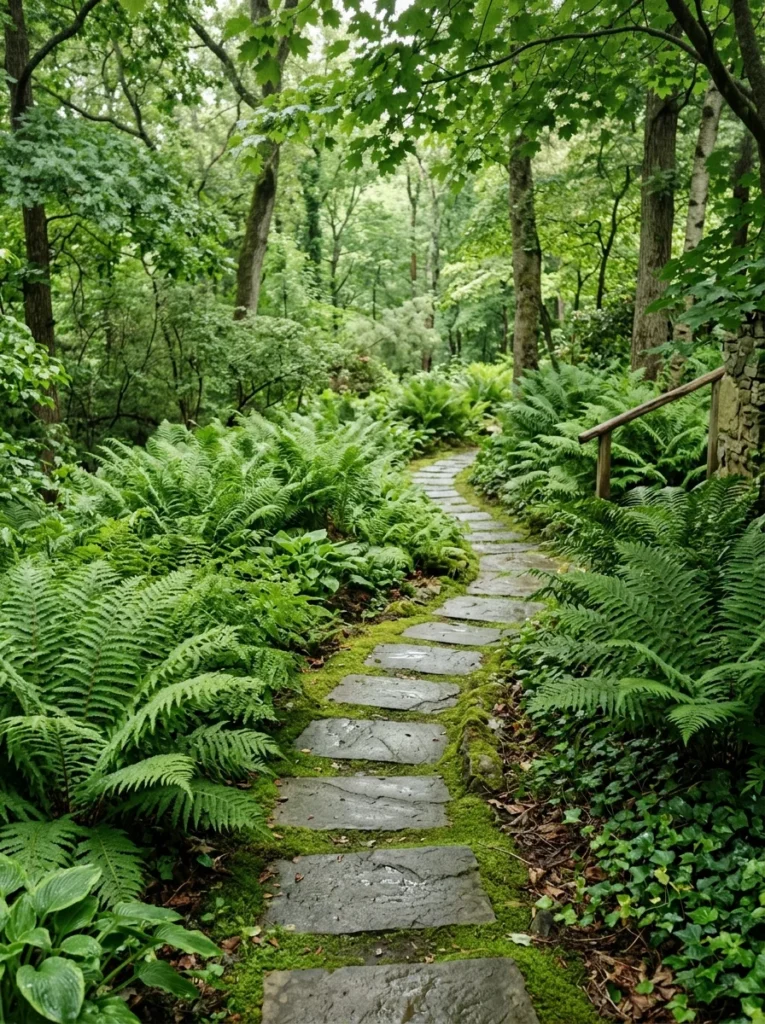
A path does two things in a shade garden: it gives you practical access, and it makes the whole space feel intentional. Flat stepping stones through ferns, gravel edged with hostas, or irregular flagstone flanked by ground cover — any of these work beautifully.
The trick is to curve it slightly, even in a small space. A straight path says “I measured this.” A curved one says “I designed this.” There’s a real difference.
If you’re working with a tight or awkward space, this idea pairs well with the layout concepts in our 15 Small Backyard Garden Ideas That’ll Make Every Inch Count.
4. Plant a Dry Shade Garden That Actually Survives
Dry shade is the toughest gardening challenge there is. You’ve got low light AND soil that’s parched and full of tree roots — basically, plants are working against two odds at once.
But a dry shade garden isn’t impossible. The secret is choosing plants that have actually evolved for these conditions:
- Epimedium (barrenwort) — seriously tough, beautiful spring flowers
- Hellebores — evergreen, elegant, nearly indestructible
- Sweet woodruff — fragrant, spreads nicely as ground cover
- Pachysandra — glossy, low-maintenance, fills in fast
Add plenty of compost when planting and mulch generously. It won’t fix dry shade, but it’ll help your plants get established.
5. Use Ferns for That Lush, Woodland Feel
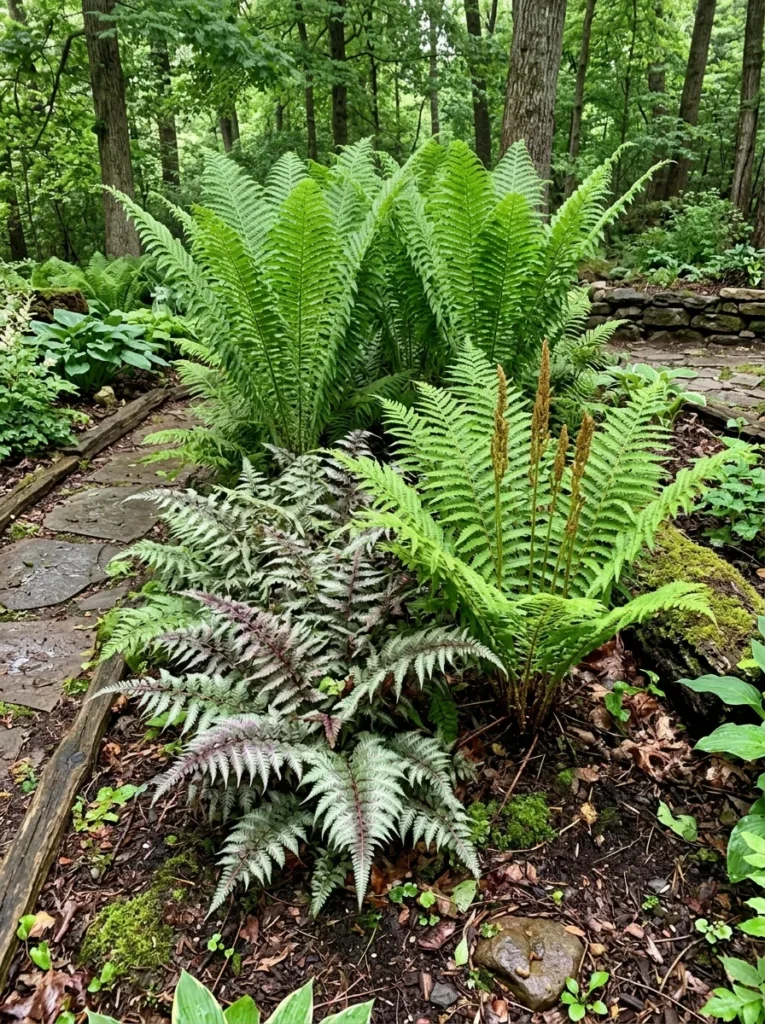
If hostas are the backbone of shade gardening, ferns are the soul. There’s something deeply restful about a planting of mixed ferns swaying gently in filtered light.
Some favorites for a moist shade garden:
- Ostrich fern — tall and dramatic, spreads enthusiastically
- Japanese painted fern — silvery, fine-textured, show-stopping
- Cinnamon fern — native, beautiful rust-colored fertile fronds in summer
Pair them with astilbe or bleeding heart for a classic woodland combination that basically tends itself.
6. Create a Shade Border Along a Fence
A shaded fence line is often treated as a lost cause. Don’t do that. A shade border garden running along a north-facing fence can be one of the most striking parts of your yard.
Use taller plants (like astilbe or shade-loving ornamental grasses) at the back, working down to ground covers at the front. Add a few splashes of color with impatiens or begonias if the area gets a couple hours of light. Finish with a neat edging of brick or stone and you’ve got something genuinely beautiful.
7. Try a Shade Container Garden
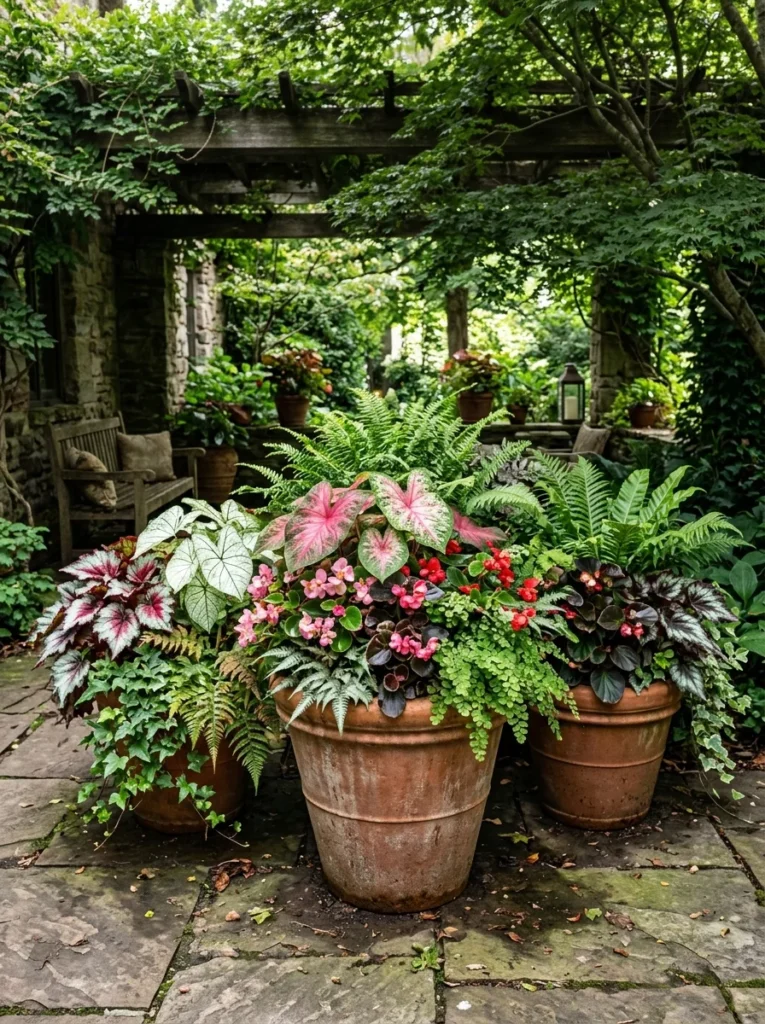
Can’t amend the soil under those trees? Go above it. Shade container gardens are a brilliant workaround for areas where the ground is too root-filled or compacted to plant.
Great shade container combos:
- Caladium + creeping jenny + white impatiens
- Fern + heuchera + trailing sweet potato vine
- Begonia + coleus + bacopa
The color and contrast you can achieve in a large pot is frankly ridiculous. And you can move them around as the season and light changes. Flexibility wins.
8. Add a Water Feature
There’s something about the sound of water in a shaded space that just feels right. A small fountain, a bubble rock, or a simple recirculating urn — any of these adds movement and ambient sound that transforms a static garden into an experience.
A shade garden water feature also attracts birds and beneficial insects, which adds a whole extra layer of life to the space. You don’t need a pond — even a modest tabletop fountain tucked among hostas makes a difference.
9. Go Moody With a Witchy Woodland Corner
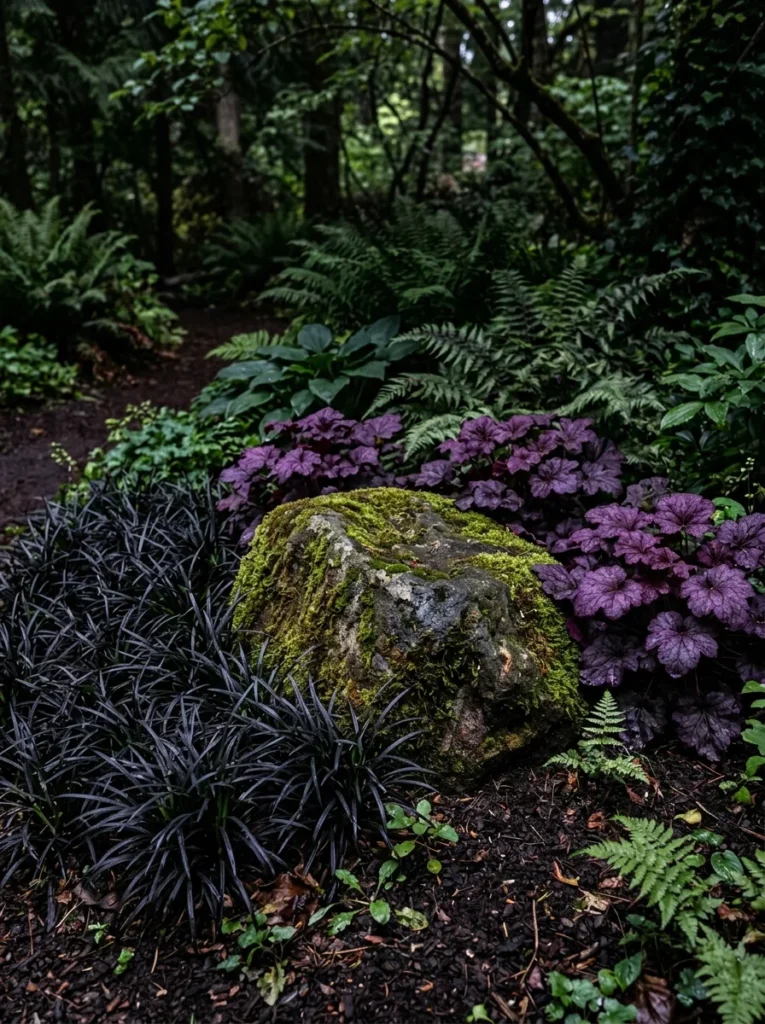
This is one of my favorite shade garden aesthetic angles: lean into the darkness. Deep purple heucheras, black mondo grass, dark-leaved hellebores, mossy rocks, maybe a gnarled piece of driftwood. The result is mysterious, atmospheric, and genuinely cool.
It’s a mood. And it works especially well in a corner or a secluded spot where the drama can build without overwhelming the rest of the garden.
For more wild inspiration in this direction, check out our 20 Witchy Garden Ideas That’ll Transform Your Yard Into a Magical Sanctuary.
10. Plant Ground Cover to Ditch the Bare Soil Problem
Bare soil in shade isn’t just ugly — it’s a weed magnet. The best fix is to cover it with a carpet of low-growing shade garden ground cover that essentially acts as a living mulch.
Top picks:
- Ajuga — spreads fast, pretty blue spring flowers
- Vinca minor — glossy, evergreen, very low maintenance
- Pachysandra — classic, clean, great under trees
- Wild ginger — native option with interesting heart-shaped leaves
Once established, most of these need almost zero attention. They just do their thing. Ideal.
11. Use Flowering Shade Perennials for Seasonal Color
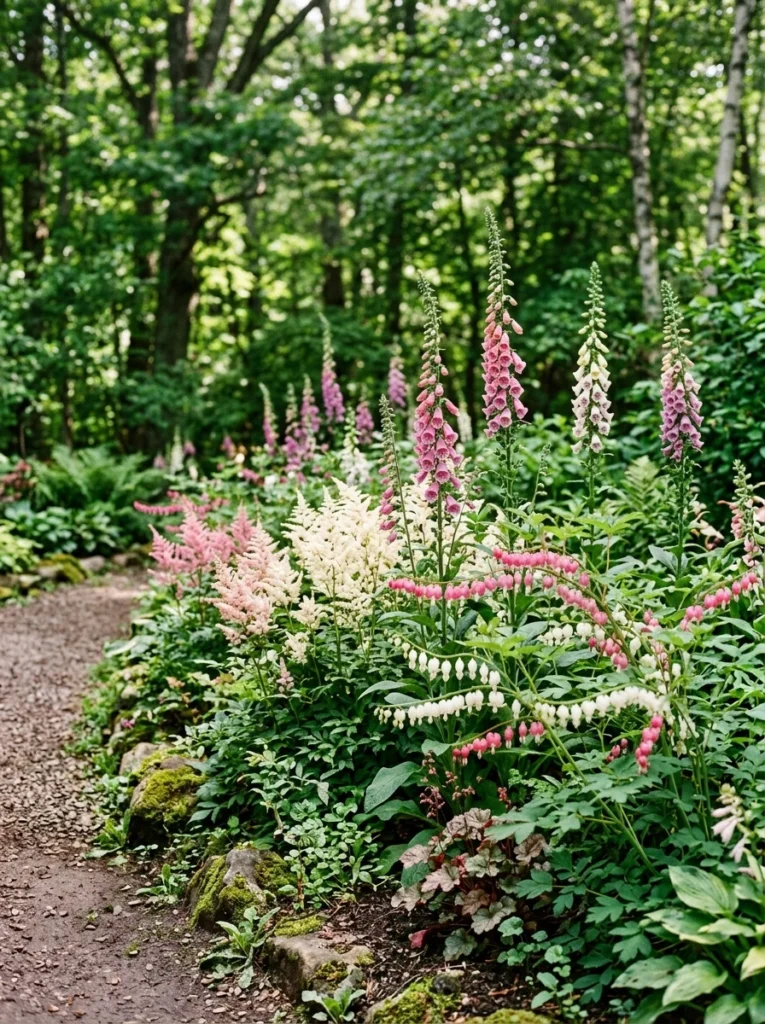
Who said shade gardens can’t bloom? With the right shade garden perennials, you can have flowers from early spring well into fall.
A solid shade bloom succession:
- Spring: Bleeding heart, hellebores, Virginia bluebells
- Early summer: Astilbe, foxglove, sweet William
- Midsummer: Ligularia, hosta flowers, toad lily
- Fall: Japanese anemone, toad lily, late astilbe varieties
Layer these strategically and something is always doing something interesting.
12. Add a Shade Garden Bench or Seating Area
A shaded garden seat is one of those ideas that sounds obvious but somehow never gets done. If you’ve got a reasonably sized shady patch, carve out a little nook with a bench or a couple of chairs. Frame it with tall hostas or a small Japanese maple.
Shade garden seating turns a passive planting into an actual destination in your yard. And honestly, there’s no better spot to have a morning coffee on a hot summer day than a cool, green, shaded corner of your garden.
13. Build a Shade Garden Around a Tree
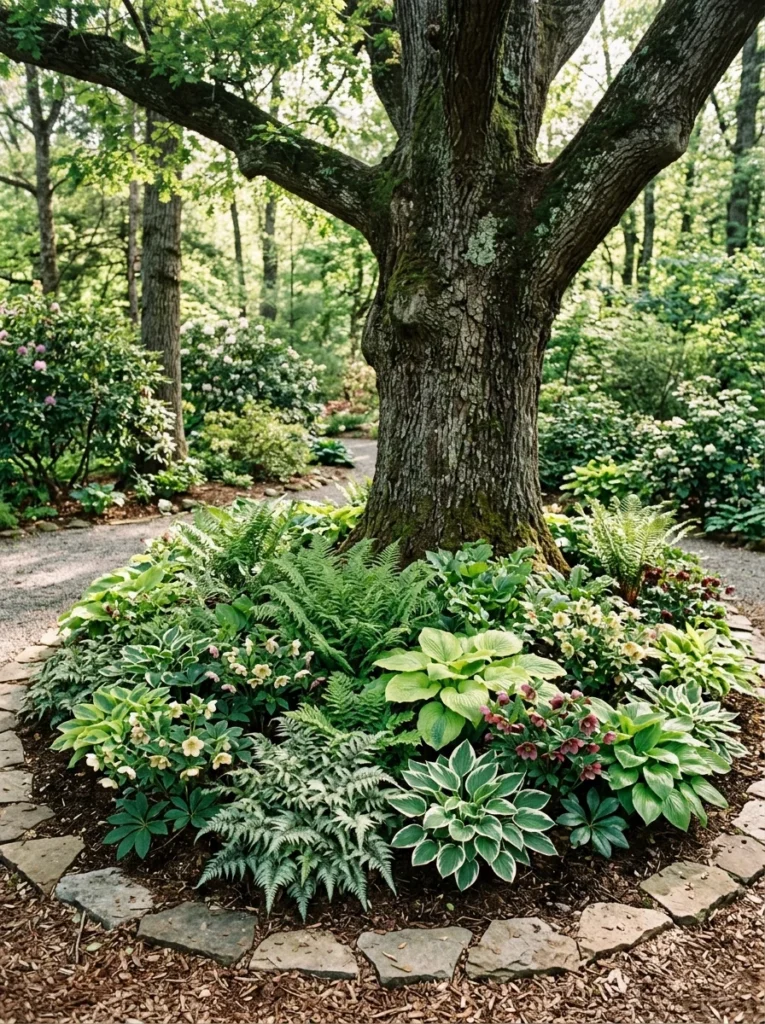
Planting under trees in shade is tricky but totally doable if you work with the tree rather than against it. Don’t dig deep — you’ll cut surface roots. Instead, build up with a thin layer of soil and compost, and plant shallow-rooted species that can compete.
Good choices:
- Epimedium (handles root competition brilliantly)
- Hellebores
- Wild ginger
- Pachysandra
Keep the planting circle a foot or two away from the trunk, and mulch well to retain moisture. Over time, this becomes one of the most naturalistic-looking features in the whole garden.
14. Create a Dappled Shade Garden With Ornamental Trees
Dappled shade — that beautiful, shifting, filtered light that comes through a thin tree canopy — is actually the best shade gardening condition because it gives you the widest plant palette.
Plant a few ornamental trees with open, airy canopies (Japanese maple, serviceberry, birch) to create dappled conditions deliberately. Then underplant with a mix of shade-tolerant perennials, ferns, and ground cover. As the trees grow, the garden evolves. It’s one of those long-game designs that just gets better every year.
15. Design a Shade Garden That Brightens Itself
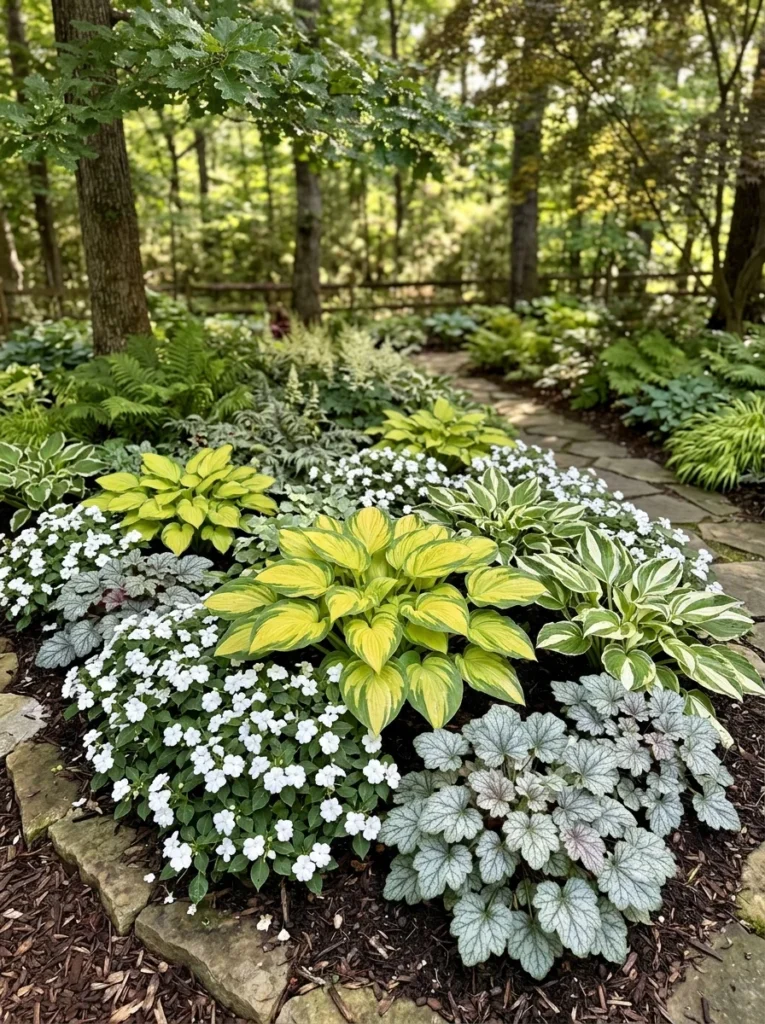
One of the smartest tricks in shady garden ideas is using plant color to compensate for low light. White flowers, yellow-green foliage, and variegated leaves all reflect light back into a shaded space, making it feel lighter and more open.
Go-to brighteners:
- Gold or chartreuse hostas (‘Sum and Substance,’ ‘August Moon’)
- White impatiens or white astilbe
- Variegated Solomon’s seal
- Silver heuchera varieties (‘Silver Scrolls,’ ‘Pewter Veil’)
Combine these with darker foliage for contrast and the whole bed seems to glow.
16. Try a Moss Garden for Effortless Elegance
If your soil is consistently damp and shaded and nothing else wants to grow, consider leaning into moss. A deliberate moss garden — with boulders, a path, maybe a stone lantern — is a genuinely stunning design choice.
Moss requires no fertilizing, very little watering once established, and stays green year-round. It’s essentially zero-maintenance. It’s also one of those shade garden landscaping moves that looks like it took decades but can be established in a season with the right conditions.
17. Add Lighting for Evening Ambience
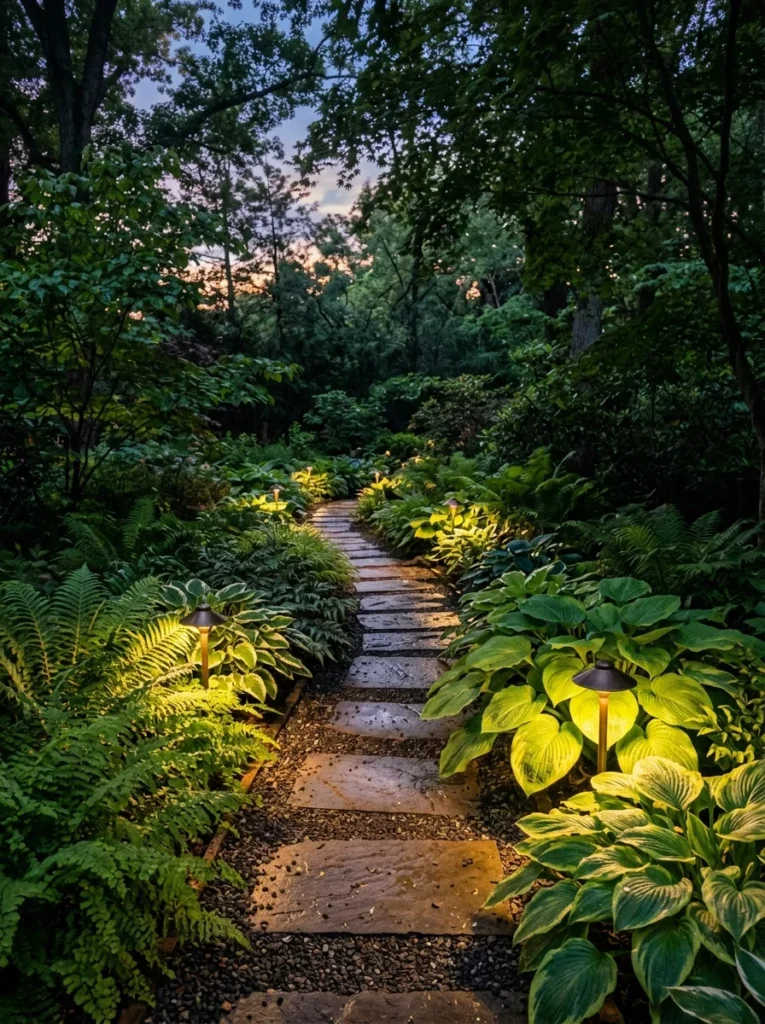
Shade garden lighting is genuinely transformative. Low-voltage LED path lights along a winding route, uplighting on a dramatic fern or Japanese maple, or a simple string of warm lights strung between trees — any of these extend the usability and beauty of the space well into the evening.
The key is warm white over cool white. It makes the foliage look richer and the whole garden feel more inviting after dark.
18. Build a Living Wall or Trellis in Shade
A living wall or trellis fitted with shade-tolerant climbers is a fantastic way to add vertical interest in a low-light space. Climbing hydrangeas, ivy, Virginia creeper, and ferns can all work depending on your light level.
This is especially useful for adding privacy in a shaded seating area, or for covering an ugly fence without relying on full-sun climbers that’ll sulk in the shade.
19. Design a Partial Shade Garden Along a Path
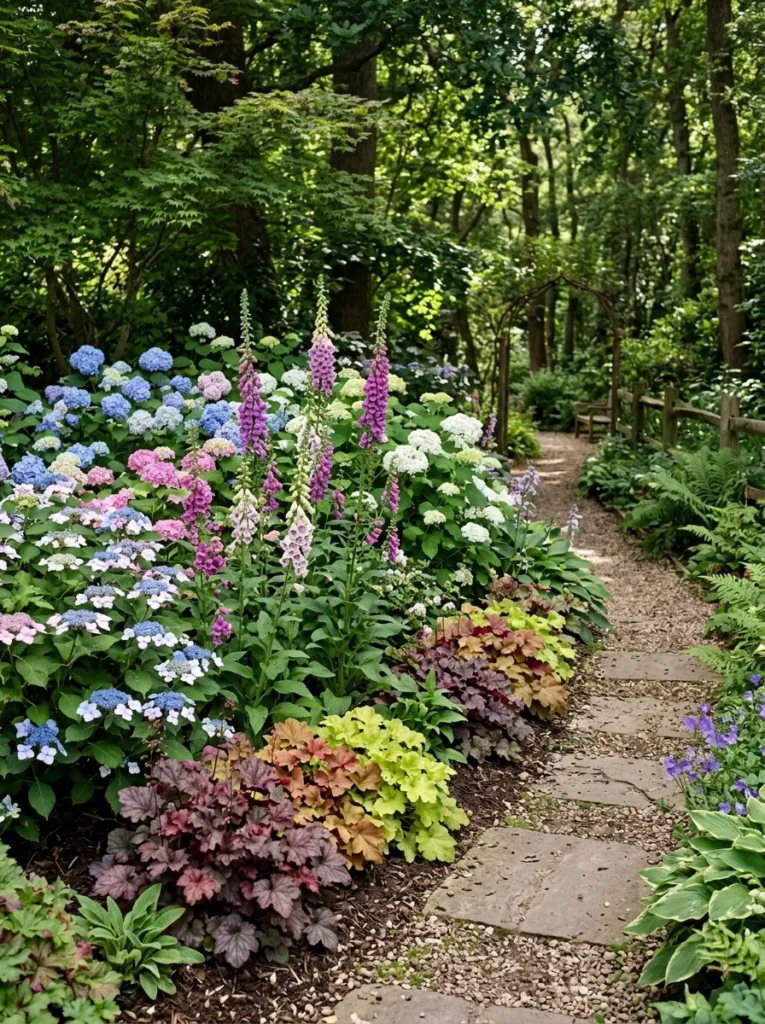
Partial shade garden ideas get exciting quickly because your plant options expand dramatically. Hydrangeas, foxgloves, astilbe, heuchera, impatiens, begonias — most of these thrive in 2–4 hours of direct sun plus dappled shade the rest of the day.
Design a generous border running along a path or driveway edge in part shade and you’ll have one of the most colorful features in your whole garden, with almost none of the high-maintenance watering drama that full-sun beds demand.
20. Create a Corner Shade Nook
Last but genuinely one of the best: turn a shaded corner into a destination. Frame it with tall shrubs or an arching fern, add a seat or bench, lay some stepping stones, and tuck in a small container planting. You’ve just made an outdoor room.
A shade garden corner gives the whole yard a sense of mystery and depth — a place to discover rather than just see. It’s the kind of detail that makes a garden memorable.
For more corner inspiration, check out our 20 Corner Garden Ideas That’ll Turn Every Forgotten Nook Into Your Favorite Spot.
Shade Garden FAQs
What is a shade garden?
A shade garden is any planted area that receives limited direct sunlight — typically under 6 hours per day. They’re designed using plants that have evolved to thrive in low-light conditions, and can range from simple ground cover plantings to elaborate multi-layer woodland gardens.
What plants grow best in a shade garden?
Hostas, ferns, astilbe, hellebores, heuchera, bleeding heart, epimedium, ligularia, and impatiens are all proven performers. Plant choice depends on whether you’re dealing with full shade, partial shade, or dry shade conditions.
How do I design a shade garden?
Start by identifying your shade type (full, partial, or dappled). Then plan in layers: tall shrubs or small trees at the back, medium perennials in the middle, ground cover at the front. Add a path, some hardscape, and a seating area and you’ve got a proper design.
What is the difference between full shade and partial shade?
Full shade means less than 2 hours of direct sun daily. Partial shade means 2–6 hours. The distinction matters enormously for plant selection.
How do I make a dry shade garden work?
Choose plants specifically adapted to dry shade (epimedium, hellebores, sweet woodruff, pachysandra), add compost at planting time, and mulch generously. Accept that this is a tough growing environment and choose accordingly.
What can I plant under trees in shade?
Epimedium, hellebores, wild ginger, and pachysandra all handle root competition well. Plant shallow, build up with compost, and keep the ring a foot away from the trunk.
How do I brighten a shady garden?
Use gold or variegated foliage, white flowers, and silver-leaved plants to reflect light back into the space. Strategic placement of light-colored hardscape also helps.
What hardscape features work well in shade gardens?
Winding stone paths, boulders, wooden benches, water features, and low-voltage lighting all work beautifully in shaded spaces and add year-round structure.
How do I maintain a shade garden?
Shade gardens are generally low-maintenance compared to sunny borders. Key tasks: mulch annually, divide hostas and ferns every few years, remove dead foliage in late winter, and top-dress with compost in spring.
Here’s what I want you to take away from all of this: shade is a design asset, not a limitation. The coolest, most atmospheric, most serene gardens I’ve ever seen have all been shade gardens. There’s a quiet complexity to them — a layered, textural richness — that you simply can’t replicate in a sunny bed.
So stop looking at that dark corner with dread. Grab a bag of compost, pick a few good hostas and ferns, add a winding path and a comfortable seat, and start building something genuinely beautiful.
You’ve got this. And your shady spots? They’ve been waiting.