

I’ll be honest with you: for years, my pothos just hung there. Trailing off a bookshelf, doing its quiet little vine thing, looking fine. Pleasant, even. Then I gave it a moss pole on a whim, mostly because I’d seen one too many “indoor jungle” posts and felt a pang of plant-parent inadequacy — and within a couple months, the leaves doubled in size and the whole plant looked like it had graduated to a new life stage. Turns out pothos isn’t just a trailing plant that tolerates climbing. It’s a climbing plant that we’ve mostly been keeping in trailing mode out of habit.
That’s the whole premise behind pothos climbing ideas: instead of letting your pothos spill downward forever, you give it something to grab onto and let it grow the way it actually wants to. In the wild, pothos (botanically Epipremnum aureum) is an epiphytic vine that scrambles up rainforest trees using small aerial roots, chasing light through the canopy. North Carolina State Extension’s Plant Toolbox notes that pothos climbs by way of these aerial roots, and that with a support to climb and enough light, the plant shifts into producing larger, more mature leaves. So a climbing setup isn’t decoration for decoration’s sake — it’s closer to giving the plant its actual job back.
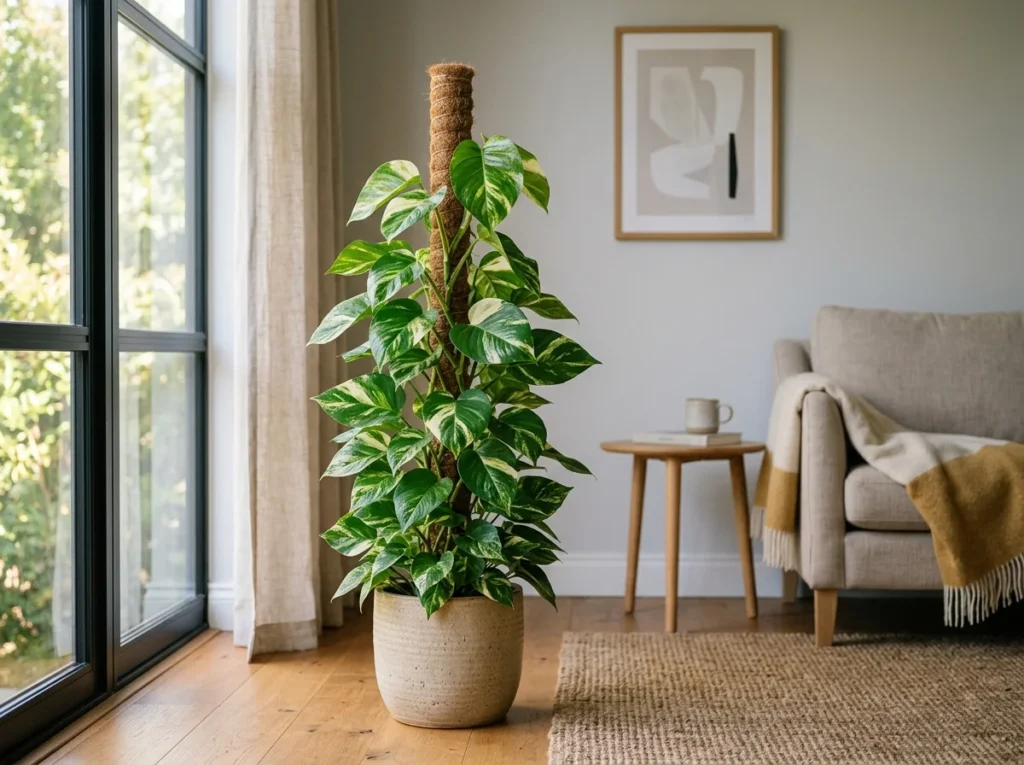
Below are ten pothos climbing ideas, ranging from classic to creative, plus a quick-reference table, an FAQ section answering the questions I get asked most, and a few honest notes on what actually works versus what just looks good on Pinterest.
Table of Contents
📌 Quick Note: This post contains Amazon affiliate links. If you purchase through them, I may earn a small commission at no extra cost to you — it helps keep the lights on here. Thanks!
Quick Comparison: Pothos Climbing Supports at a Glance
| Support type | Best for | Maintenance | Look |
|---|---|---|---|
| Moss pole | Encouraging aerial roots + biggest leaf size | High (regular misting) | Lush, jungly, natural |
| Coir pole | Clean climbing support without the moisture fuss | Low–medium | Tidy, earthy, modern |
| Bamboo stake | Light vines that are just leaning, not gripping hard | Low | Minimal, natural |
| Wall trellis / ladder trellis | Decorative vertical statement pieces | Low | Architectural, boho |
| Wall clips + string | Training pothos along a wall or window frame | Low | Custom, living-wall effect |
1. Start With a Classic Moss Pole
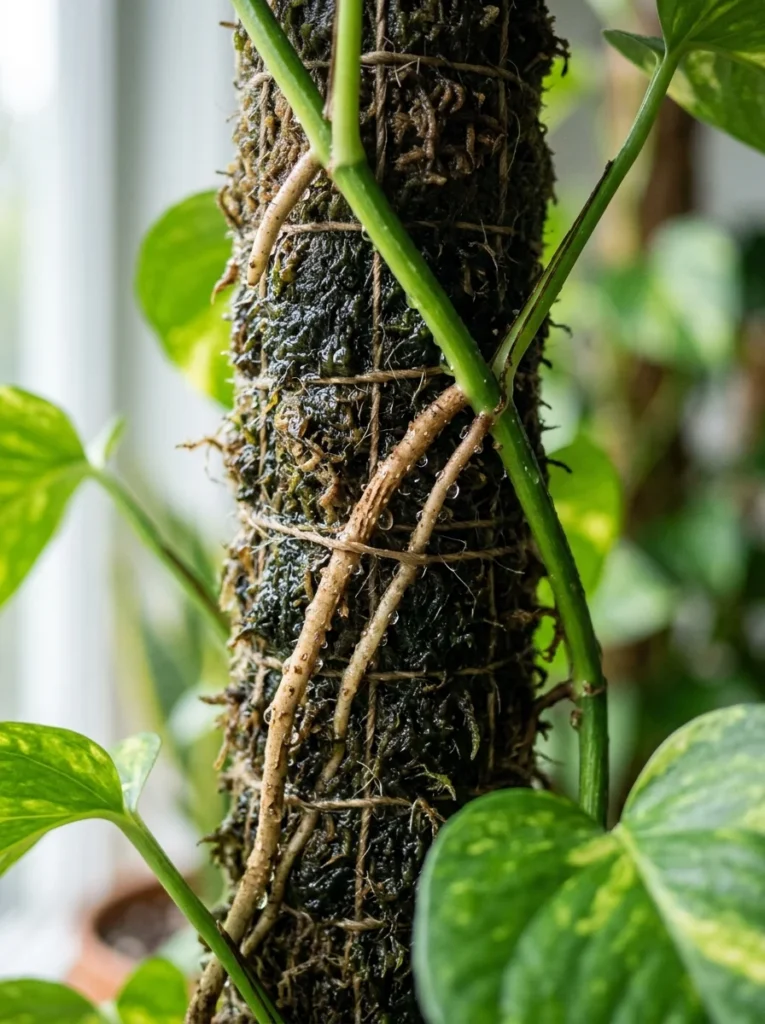
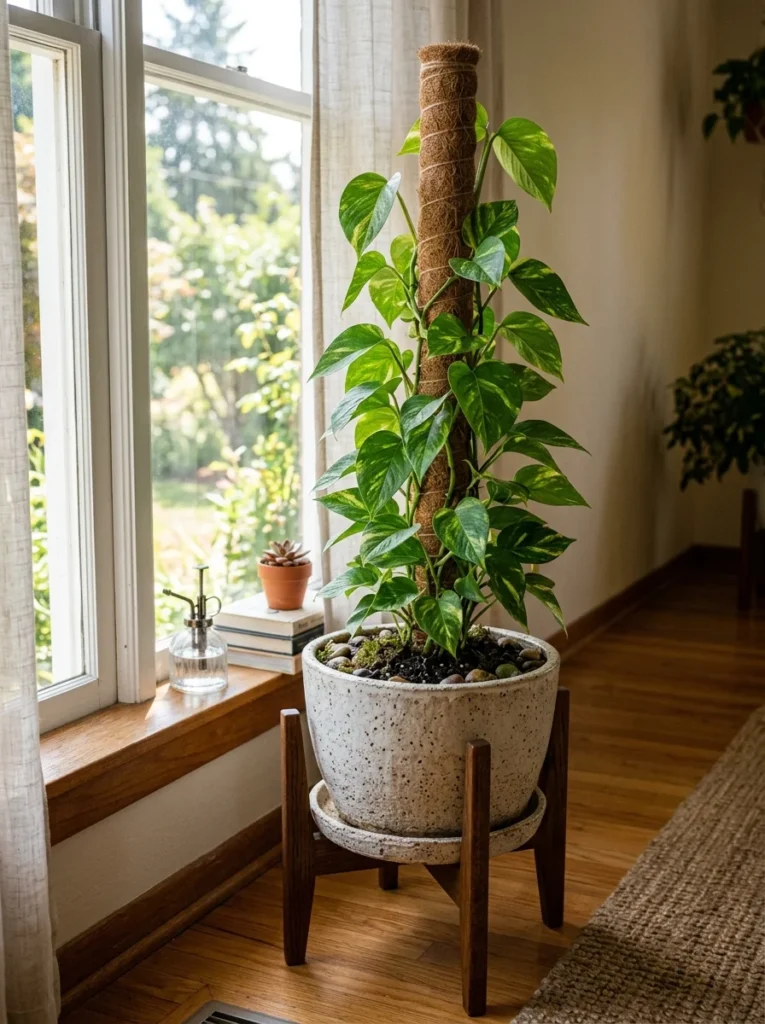
If there’s a gold-standard answer to “what is the best support for a climbing pothos,” it’s the moss pole pothos setup. A moss pole gives the plant’s aerial roots something damp and grippy to dig into, which mimics the bark and humidity it would find on a rainforest tree. Clemson Cooperative Extension’s growing guide recommends keeping humidity in the 50–70% range for pothos and its relatives, which lines up nicely with how a misted moss pole behaves.
Here’s the catch nobody mentions upfront: a moss pole only works if you’re willing to keep it lightly damp (not soaked) on a regular basis. Mist it two or three times a week, separately from your normal watering schedule, so you’re not accidentally drowning the roots in the pot below. If that sounds like more commitment than you signed up for, skip ahead to idea #2.
2. Go With a Coir Pole Instead
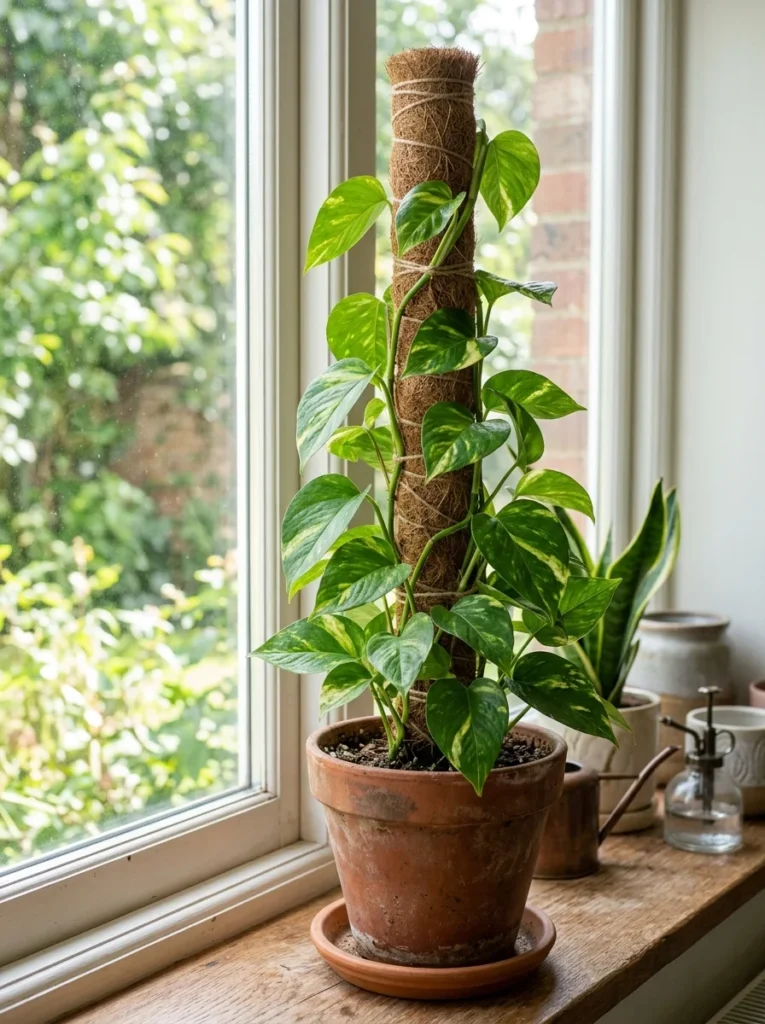
A coir pole pothos setup swaps sphagnum moss for coconut fiber, and it’s quietly become the better choice for a lot of casual plant owners. You don’t need to keep it wet — just treat it like a textured, dry climbing surface and water your soil normally. It’s the difference between a coir pole pothos and a moss pole pothos: less drama, slightly less dramatic leaf growth, but a lot fewer ways to mess it up.
I switched two of my pothos over to coir poles purely because I kept forgetting to mist the moss ones, and within reason, the plants didn’t seem to mind. They climbed just fine; the leaves are merely very large instead of absurdly large. I’ll take it.
3. Use a Bamboo Plant Stake for a Lighter Touch
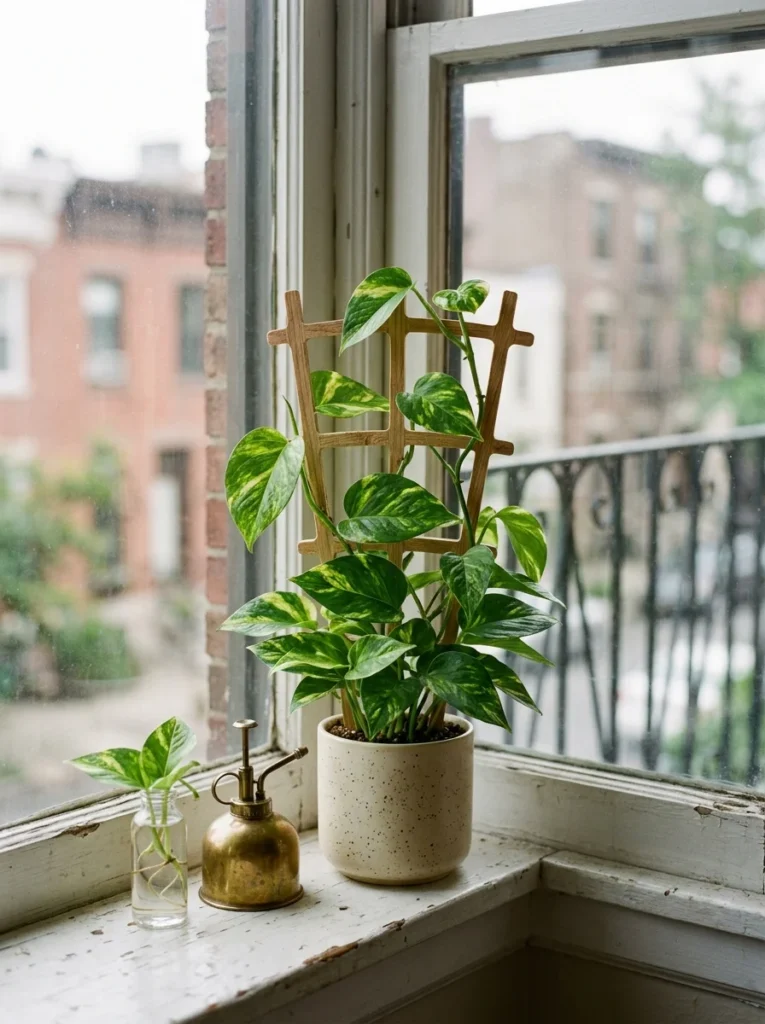
Not every pothos needs the full moss-pole production. If your vine is just leaning rather than actively reaching out with aerial roots, a simple pothos on bamboo stake setup is enough. Bamboo stakes are inexpensive, natural-looking, and easy to find at most garden centers. They won’t encourage the same aerial-root grip as moss or coir, but they’ll keep a slightly floppy stem upright while you decide whether you want to commit to something bigger.
This is also the easiest of all the pothos training ideas to try first, since it takes about thirty seconds and a length of soft twine.
4. Build a Wall-Mounted Trellis or Ladder Trellis
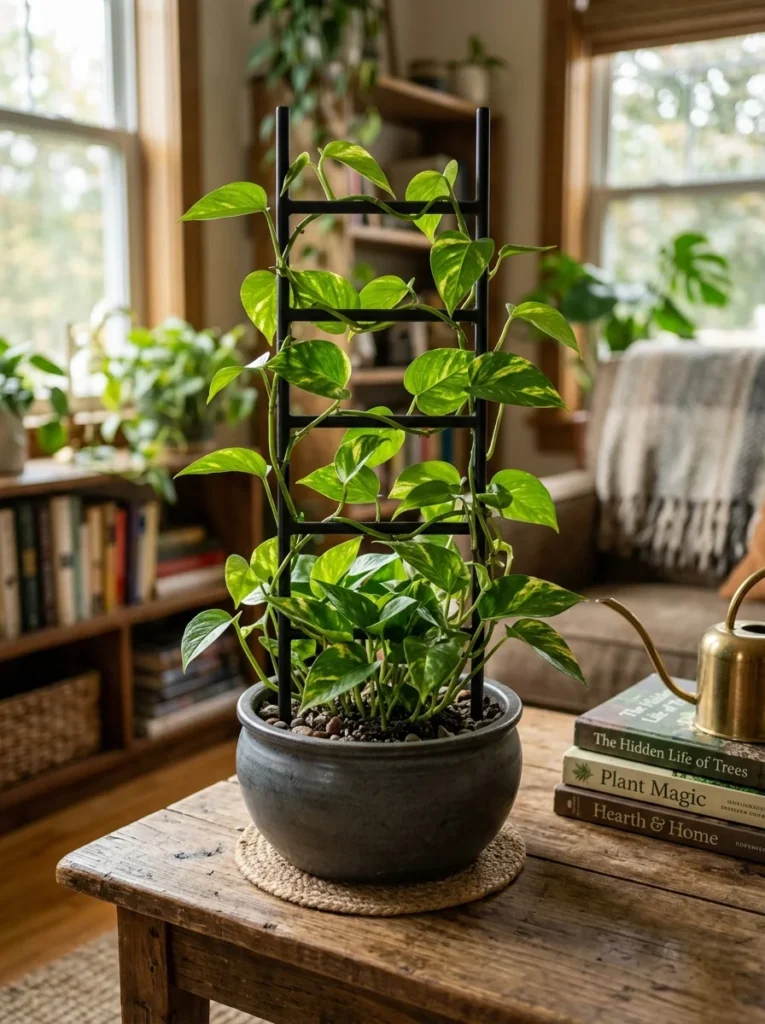
For a more architectural look, a pothos ladder trellis or wall-mounted metal trellis turns your vine into a living piece of decor instead of a houseplant that happens to be growing. These work especially well in pots near a wall or window, where the vine can be guided diagonally instead of straight up — which, frankly, looks more intentional than a vertical pole jammed in a pot.
A decorative trellis won’t hold moisture the way a moss pole does, so don’t expect quite the same leaf-size payoff. But for pothos trellis ideas where the goal is visual structure first and jungle drama second, it’s a solid trade-off.
5. Train It Straight Up a Wall
This is where things get fun. Pothos wall ideas using nothing but command hooks and soft string can turn an entire blank wall into a living backdrop. Space a few damage-free hooks in a loose vertical or diagonal line, then gently guide each vine upward, securing it every foot or so with a soft tie.
The result is closer to a pothos on wall mural than a houseplant in a pot. It’s also one of the better climbing houseplant ideas for renters, since command hooks come off without leaving marks — unlike, say, screwing a trellis directly into drywall.
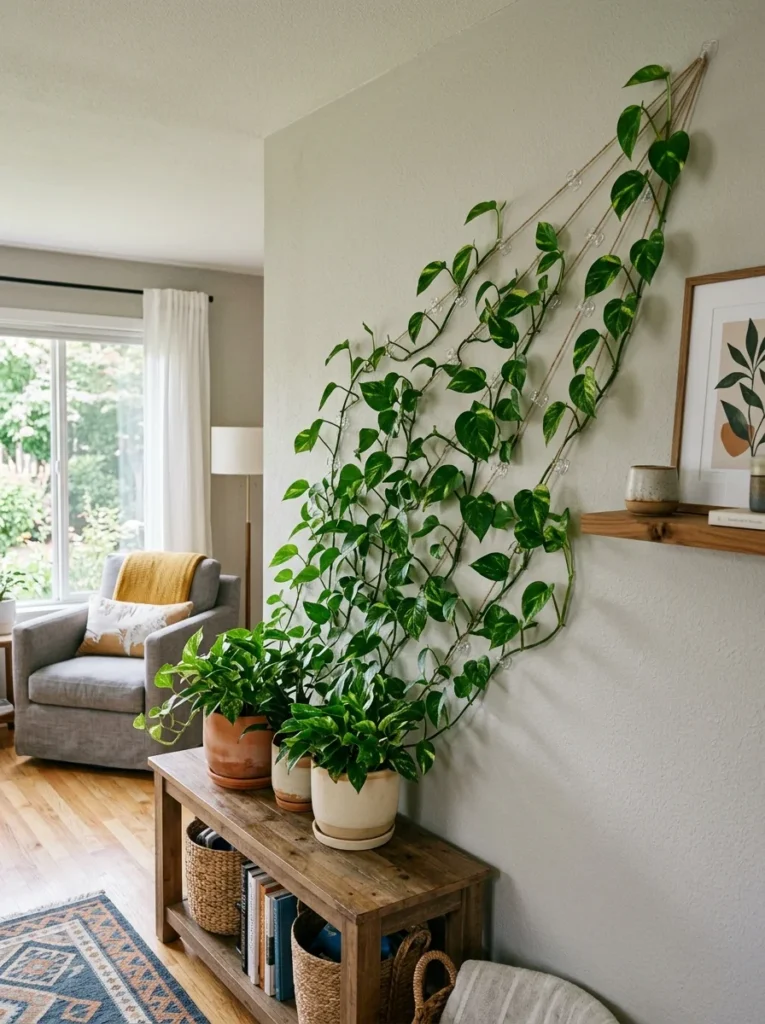
6. Add Decorative Wall Clips for a Living-Wall Effect
If freeform string training feels too loose, dedicated wall plant clips give you more control over the exact shape of the climb. These small clips hold the vine against the wall at precise points, which is genuinely useful if you’re working with pothos plant clips to create a pattern — a heart shape, an arch over a doorway, a frame around a window.
It’s a slower process than tossing a pole in a pot, but the payoff is a setup that looks custom-designed rather than just “plant with a stick in it.”
7. Try a Pothos Climbing Setup in a Decorative Planter
Sometimes the support matters less than the display. Pairing any of the above supports — moss pole, coir pole, trellis — with a planter that actually complements your space turns a basic pothos climbing setup into something that looks deliberately styled rather than improvised. A textured ceramic planter or a woven basket cover does more visual heavy lifting than people give it credit for.
8. Use Soft Ties and Velcro Tape, Not Garden Twine Alone
How you attach the vine matters almost as much as what you attach it to. The most common question I get — how do I attach pothos to a pole without damaging it — has a pretty simple answer: use something soft and adjustable. Velcro plant tape and soft fabric ties work better than tight twine because they give as the stem thickens, instead of cutting in. Check ties every few weeks and loosen anything that looks snug.
If you’re using plain garden twine because it’s what you have on hand, just keep it loose — a finger’s width of slack is the rule of thumb.
9. Pair Your Climbing Setup With Better Light
A climbing support gives the plant a direction to grow in; light gives it the energy to actually do it. Climbing pothos plants do best in bright, indirect light, and a grow light can make a real difference if your space is more “cozy and dim” than “bright corner with a south-facing window.” Without enough light, even a perfectly built moss pole setup will produce small, sparse leaves — the pole isn’t magic on its own.
If your home runs on the darker side generally, this is also where a humidifier earns its keep, since pothos and its aerial roots both lean toward higher humidity than the average heated apartment in winter offers.
10. Solve for Small Spaces With Mini Stakes and Wall Clips
Not everyone has room for a five-foot moss pole, and that’s fine. For apartments or small shelves, the best pothos climbing ideas for small spaces lean compact: a short bamboo stake in a 6-inch pot, a tiny ladder trellis on a windowsill, or a few wall clips guiding the vine along a narrow strip of wall. Climbing doesn’t have to mean “huge.” It just means “up instead of down,” and that works in a studio apartment as easily as it does in a sprawling plant room.
Frequently Asked Questions About Pothos Climbing Ideas
How do I get my pothos to climb?
Give it a vertical support — a moss pole, coir pole, bamboo stake, or trellis — positioned close to the main stem, then loosely tie or guide the vines toward it. The plant will do the rest as its aerial roots find something to grip.
Should pothos climb or trail?
Either is fine; it’s really a style choice. Climbing tends to produce larger, more mature leaves and a denser look, while trailing gives you that classic cascading-vine effect from a shelf or hanging basket.
Do pothos grow bigger leaves when they climb?
Generally, yes. Climbing pothos plants commonly produce noticeably larger leaves than the same plant left to trail, especially when paired with bright, indirect light.
Can I use a moss pole for pothos?
Absolutely — it’s one of the most popular and effective supports, particularly if you want to actively encourage aerial root growth.
Can pothos climb a wall or trellis?
Yes, with a little help. Pothos won’t cling to bare drywall on its own, but with command hooks, clips, or a wall-mounted trellis, you can train it to grow up and across a wall.
How do I attach pothos to a pole without damaging it?
Use soft ties, velcro plant tape, or loose twine — anything with a little give. Check and loosen ties periodically as the stem thickens.
How often should I water a moss pole pothos?
Water the soil as you normally would (when the top couple of inches are dry), and mist the moss pole itself two to three times a week, keeping the two routines separate so you don’t oversaturate the pot.
What kind of light do climbing pothos need?
Bright, indirect light is ideal. Pothos tolerates lower light, but climbing growth and leaf size both respond well to brighter conditions, with a grow light as a solid backup in darker rooms.
Can I train pothos to climb indoors?
Yes — this is exactly what most of these ideas are for. Indoor training works well with any of the supports above, especially moss poles, coir poles, and trellises.
What is the difference between a moss pole and a coir pole?
A moss pole is filled or wrapped with sphagnum moss, which holds moisture and strongly encourages aerial roots, but needs regular misting. A coir pole uses coconut fiber, stays drier, and is lower-maintenance, with slightly less dramatic (but still solid) leaf growth.
How do I make my pothos look fuller while climbing?
Pinch back growth tips occasionally to encourage branching, and tuck shorter vines toward the base of the pole rather than letting them dangle.
Can I use clips or ties to train pothos?
Yes — clips and soft ties are actually the standard method for guiding vines onto any support, from moss poles to wall trellises.
How tall can a climbing pothos grow?
Indoors, climbing pothos can reach several feet with a tall enough support; in the wild, the vines can stretch many times that length up trees.
What are the best pothos climbing ideas for small spaces?
Mini stakes, small ladder trellises, and a few wall clips all work well in tight spaces — climbing setups scale down just as easily as they scale up.
Bringing It All Together
The short version: a pothos that climbs is basically the same plant living a more fulfilled life. Pick a support that matches your patience level — moss pole if you’re willing to mist, coir pole or bamboo stake if you’re not, trellis or wall clips if you want something that doubles as decor — and give it decent light. That’s most of the work done.
If you’re building out a bigger low-maintenance indoor-outdoor plant lineup, it’s worth pairing this with 12 Succulent Garden Ideas for a Yard That Basically Takes Care of Itself for the outdoor side of things, and if you want another nearly bulletproof houseplant to grow alongside your climbing pothos, my honest, no-fuss aloe vera care guide covers that ground well. And if all this plant momentum has you feeling ambitious, How to Grow Strawberries: The Only Guide You’ll Ever Need is a fun next project once the indoor jungle is sorted.
Got a pothos that’s been trailing for years and is finally ready for an upgrade? Pick one idea from this list, grab a support that fits your space, and give it a try this weekend — I’d genuinely love to hear which setup you go with.










4 thoughts on “10 Pothos Climbing Ideas That Turn a Trailing Vine Into an Indoor Showstopper”