

Your curb appeal is doing more talking than you think — here’s how to make sure it’s saying the right things.
There’s this moment every homeowner eventually has. You pull into your driveway after a long day, glance at the front of your house, and think: when did that happen? The shrubs got overgrown. The flower beds are basically weeds at this point. The mulch is so faded it looks more gray than anything. And the path to your front door? Let’s just say it’s not exactly rolling out the welcome mat.
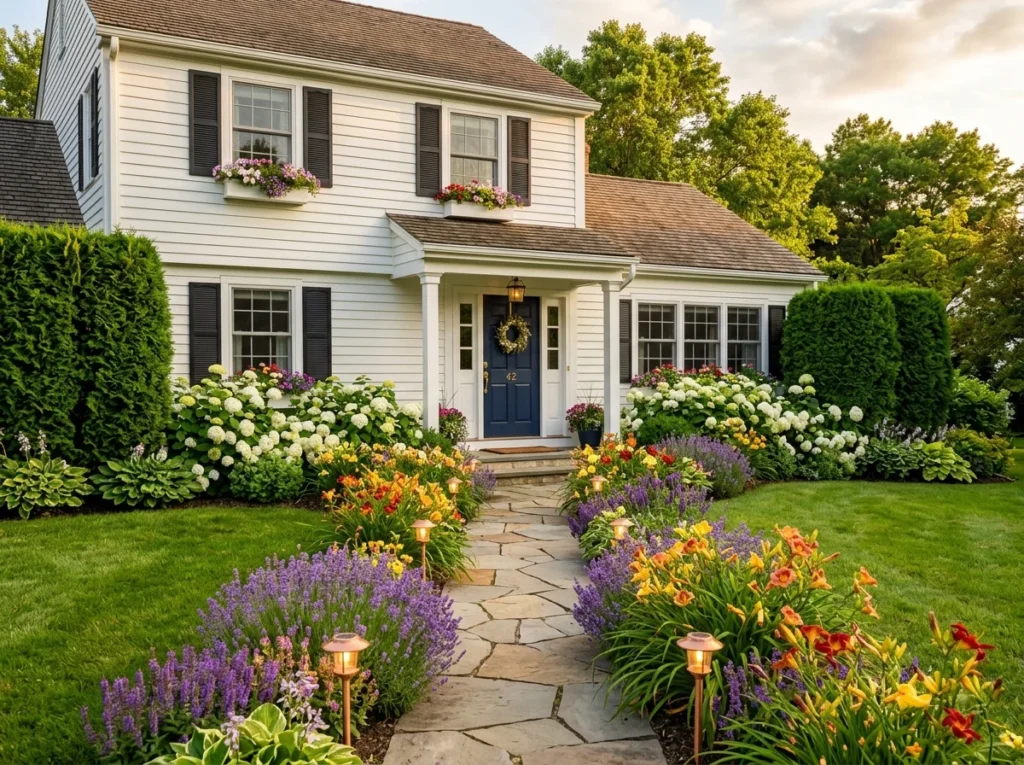
Here’s the good news — front of house landscaping doesn’t have to be expensive, complicated, or take a weekend you don’t have. A few smart ideas, the right plants, and some intentional design can completely transform your home’s exterior into something you’re genuinely proud of. Whether you’ve got a grand double-lot or a tiny postage-stamp yard, there’s something here for you.
Let’s get into it.
Table of Contents
1. Layer Your Foundation Planting Like a Pro
If there’s one front yard landscaping idea that delivers the most visual bang for your buck, it’s layered foundation planting. The concept is simple: plant tall shrubs at the back, medium plants in the middle, and low-growing ground covers or flowers in front.
Think boxwood shrubs anchoring the corners of your house, hydrangeas in the middle layer for seasonal color, and daylilies or creeping phlox spilling out at the edges. This creates depth and makes your house look intentionally designed rather than just “we planted some stuff.”
2. Define Your Pathway — It’s More Important Than You Think
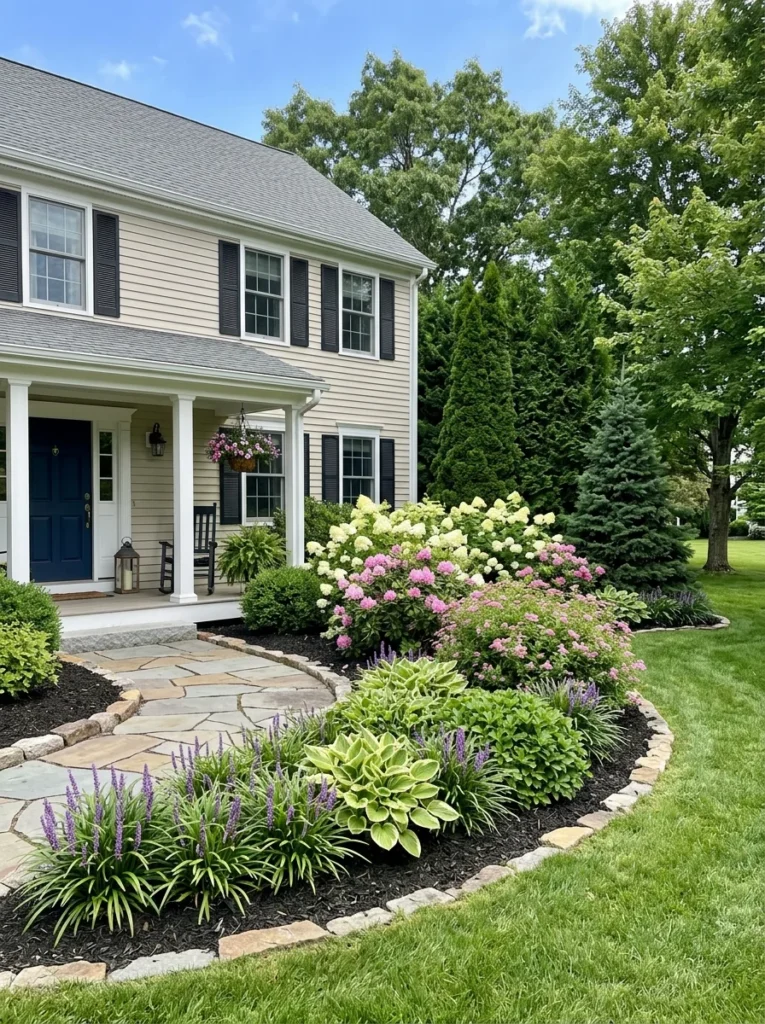
A clear, well-defined path to your front door is one of those things you don’t notice until it’s missing. Walkway landscaping ideas don’t have to be complicated. Edging pavers on either side of an existing concrete path instantly make it feel intentional. Add solar path lights for evening ambiance and safety, and suddenly that walk to your door feels like an experience.
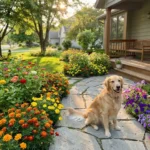
For something more dramatic, consider flagstone stepping stones set into low-growing thyme or moss — it’s that cottage-garden look that stops people mid-scroll on Pinterest.
3. Go Evergreen for Year-Round Structure
Here’s a landscaping truth most people learn the hard way: seasonal flowers are beautiful, but they’re basically gone half the year. Front yard evergreen ideas are your secret weapon for curb appeal that actually works in January, not just May.
Best evergreens for front foundation beds:
- Boxwood (classic, versatile, keeps its shape)
- Holly (great for structure, berries add winter color)
- Dwarf Alberta Spruce (perfect cones, no pruning required)
- Arborvitae (excellent for privacy screens along property edges)
- Japanese Yew (deep green, tolerates shade beautifully)
Mix these with seasonal color plants around them and you’ve got a front yard that looks polished 365 days a year.
4. Refresh Your Mulch — Seriously, Just Do It
It sounds too simple to make this list. It’s on the list anyway.
Fresh premium mulch does something almost magical to a front yard. It makes everything look intentional. It makes your plants pop. It suppresses weeds so you’re not out there pulling them every weekend. And it costs maybe $50–$100 to do a whole front yard refresh.
Dark hardwood mulch is the most popular choice for traditional homes. For a more modern or drought-tolerant look, swap it for decorative river rock — it’s lower maintenance long-term and gives a clean, contemporary vibe.
5. Add Outdoor Planters to Flank Your Front Door
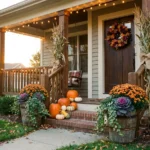
This is one of those front entrance landscaping moves that works on literally every style of home. Two matching planters flanking your front door creates instant symmetry, draws the eye to your entry, and lets you change things up seasonally without committing to permanent planting.
- Classic homes: Go for large ceramic pots in navy, black, or terracotta with boxwoods or topiaries
- Modern homes: Tall fiberglass planters in matte black or concrete gray with ornamental grasses
- Cottage style: Aged terracotta with lavender, trailing vines, and herbs
Swap them out every season if you want. They’re containers — that’s the whole point.
6. Install Landscape Lighting That Actually Works
Front yard landscaping ideas without lighting are only working half the day. The right outdoor lighting makes your home look incredible at night and adds genuine security value too.
Three lighting approaches that actually work:
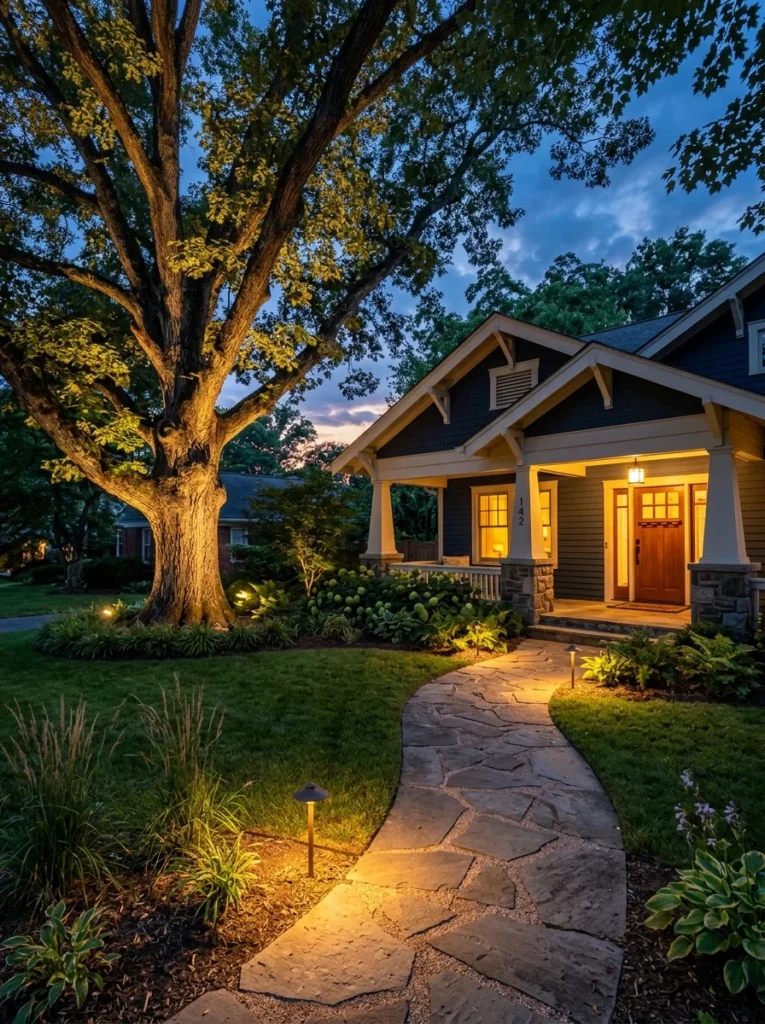
- Path lighting — solar or low-voltage lights along your walkway (approx. 6–8 feet apart)
- Uplighting — outdoor spotlights aimed at your home’s architectural features or a statement tree
- Wash lighting — grazing light across a textured wall or fence for a dramatic, layered look
You don’t need to hire an electrician for all of this. Solar path lights have gotten genuinely good, and most outdoor spotlights plug right into an exterior outlet.
7. Use Metal Landscape Edging for Crisp, Clean Lines
Clean edges are to landscaping what ironing is to clothes. They’re not glamorous, but they make everything look better.
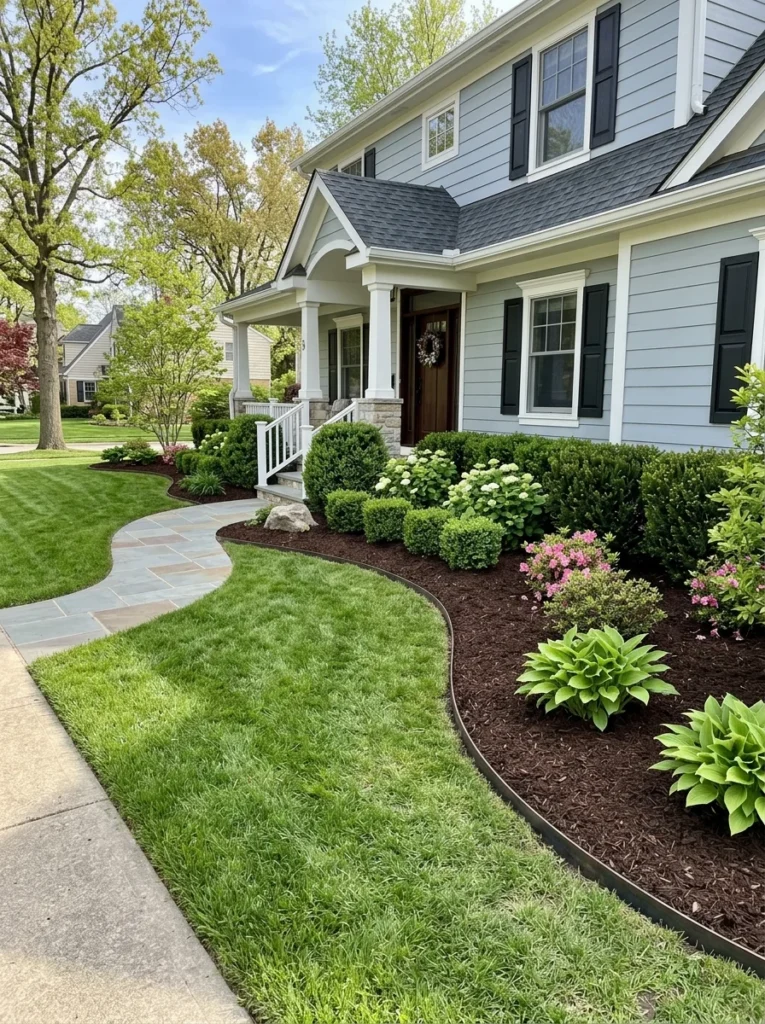
Metal landscape edging creates that razor-sharp line between your lawn and your garden beds that you see in professionally maintained yards. It keeps mulch where it belongs, prevents grass from creeping into your beds, and honestly just looks really intentional and clean.
Install it once and largely forget about it — that’s the dream.
8. Plant Ornamental Grasses for Easy Drama
If you’ve been sleeping on ornamental grasses for front yard landscaping, now’s the time to wake up. These plants do something very few others can: they look great from spring through winter, move beautifully in the breeze, and basically take care of themselves.
Best ornamental grasses for front yards:
- Karl Foerster (upright, tall, architectural)
- Blue Oat Grass (steel blue color, stays compact)
- Muhly Grass (stunning pink plumes in fall)
- Little Bluestem (native, gorgeous fall color, drought tolerant)
Plant them in groups of three for a natural look, or use a single large specimen as a focal point. Either way, they’re chef’s kiss for low-maintenance front yard landscaping.
9. Build a Front Yard Border That Tells a Story
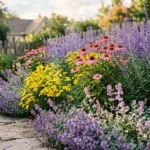
Front yard border ideas are essentially how you frame the whole picture. A well-designed border along your property edge or along the driveway does two things: it adds color and texture, and it defines the space so everything feels intentional.
Some of the best front yard border plants include:
- Lavender — fragrant, drought-tolerant, gorgeous purple blooms
- Black-eyed Susans — native, tough, cheery yellow
- Catmint — soft blue-purple flowers, pollinators love it
- Knock Out Roses — practically no maintenance, blooms all season
- Daylilies — reliable, spread beautifully, tons of color options
For more adventurous ideas, check out 20 Corner Garden Ideas That’ll Turn Every Forgotten Nook Into Your Favorite Spot — the corner planting concepts there translate beautifully to front yard borders.
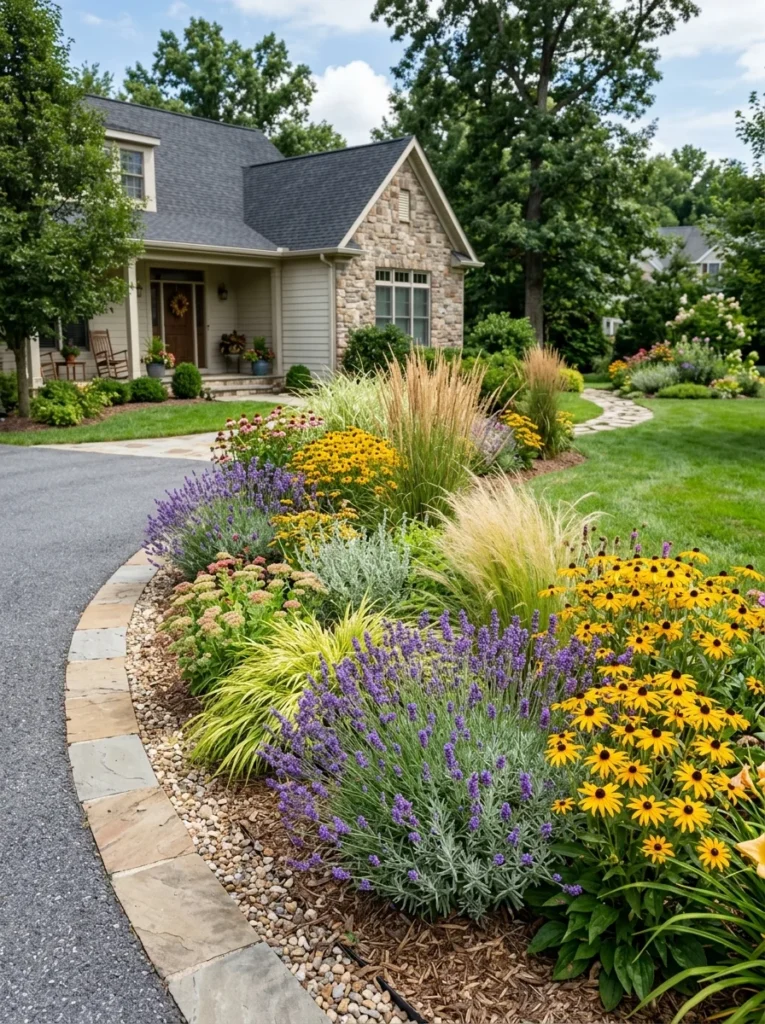
10. Try Low-Maintenance Front Yard Landscaping with Native Plants
Here’s an honest landscaping confession: most people abandon their front yard plans because the plants die or the maintenance becomes a second job. The solution? Go native.
Native perennials are adapted to your local climate, don’t need much water once established, support pollinators, and actually look amazing in a naturalistic garden design. A native perennial mix from Prairie Nursery or your local native plant society is one of the best investments in sustainable curb appeal landscaping you can make.
This approach also pairs beautifully with drought tolerant front yard landscaping strategies — especially useful if you’re in the South, Southwest, or anywhere summers get brutal.
11. Landscape Around Your Front Porch Intentionally
Your front porch is the handshake moment of your home’s exterior. How you landscape around it sets the whole tone. A few principles that always work:
- Soften the edges with climbing plants on a decorative trellis near porch columns
- Ground the base with a low hedge or a row of consistent plantings along the porch perimeter
- Create height with container plants or tall shrubs at the corners
- Add fragrance with lavender, roses, or gardenias near the door (trust me on this one)
Plants should stay at least 18–24 inches from your actual foundation wall to prevent moisture issues and allow for air circulation. For larger shrubs, 3 feet is a safer minimum.
12. Add a House Number Sign That Actually Gets Noticed
This might be the most underrated front entrance landscaping detail on this entire list. A beautiful, visible house number sign does two things: it makes your home easier to find (practical!) and it adds a design detail that signals someone cares about the details.
Brushed metal numbers, carved wood signs, or a backlit plaque all work depending on your home’s style. Pair it with some low landscape lighting aimed at it and you’ve got a front entry that looks genuinely custom.
13. Design for Small Front Yards — Bigger Isn’t Always Better
Got a small front yard? That’s not a limitation. That’s an opportunity for something really curated and intentional.
Small front yard landscaping ideas that work:
- Vertical interest (tall narrow shrubs, trellises, small ornamental trees)
- Repeating one or two plants rather than a dozen different ones
- A single statement planter flanking the door instead of a whole bed
- Hardscape (pavers, gravel, stepping stones) to reduce the lawn area that needs maintenance
- Mirrors — okay, not literally, but lighter-colored plants and open sight lines create visual space
For more ideas on maximizing smaller outdoor spaces, 15 Small Backyard Garden Ideas That’ll Make Every Inch Count has a lot of principles that transfer directly to the front yard.
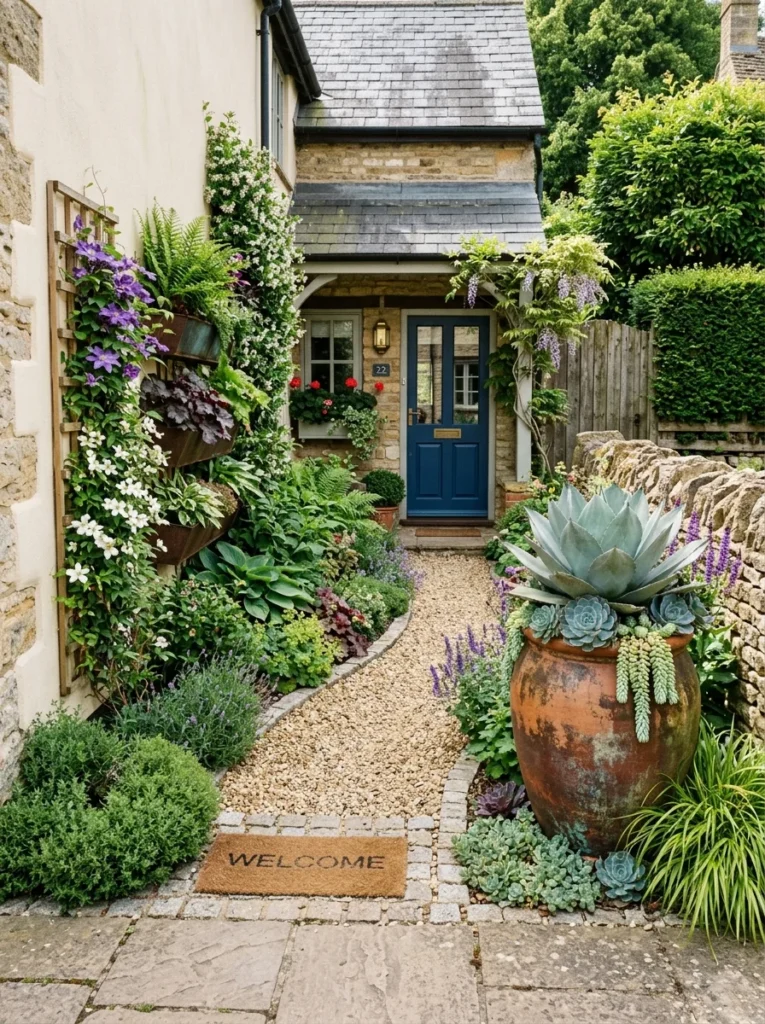
14. Go Modern with Clean Lines and Architectural Plants
Modern front yard landscaping is having a serious moment right now, and honestly? It earns it. The look is defined by clean geometry, a limited plant palette, and materials like concrete, steel, and gravel working alongside the plantings.
Key elements of modern front landscaping:
- Low, clipped hedges in straight lines
- Ornamental grasses for softness and movement
- Large-format pavers with gravel or ground cover in the joints
- Matte black or concrete-colored planters and fixtures
- Uplighting on architectural trees like Japanese maple or olive trees
- Almost no annual flowers — structure over season
It’s a more minimalist approach but one that reads as incredibly intentional and upscale.
15. Add Seasonal Color Without a Full Commitment
Not everyone wants to plan a whole perennial garden. Totally valid. Annual flowers in containers or simple front yard flower bed ideas with easy annuals give you seasonal color with minimal commitment.
Seasonal front yard flower bed ideas by season:
| Season | Best Annuals | Color Impact |
|---|---|---|
| Spring | Pansies, Snapdragons, Violas | Cool purples, yellows, whites |
| Summer | Zinnias, Petunias, Marigolds | Bold reds, oranges, pinks |
| Fall | Mums, Ornamental Kale, Asters | Warm rust, burgundy, purple |
| Winter | Pansies (South), Evergreen branches | Texture and subtle color |
Drop annuals into containers or a simple front bed and refresh each season. Instant curb appeal, no long-term plant management required.
16. Install a Drip Irrigation System for Effortless Watering
If you’ve ever planted a beautiful front yard and watched it slowly die because life got busy — first, relatable. Second, a simple drip irrigation kit solves this forever.
Drip irrigation delivers water right to the root zone, reduces water waste, prevents fungal disease from overhead watering, and runs automatically when you set a timer. For front beds, soaker hoses are a more affordable entry point that work really well along foundation plantings and borders.
17. Use Rocks and Gravel as Low-Maintenance Ground Cover
Mulch is great, but let’s talk about front yard rock landscaping as an alternative. River rock, pea gravel, or decomposed granite in your front beds gives you a clean, low-maintenance ground cover that:
- Never needs replacing (unlike organic mulch)
- Doesn’t blow away in wind
- Looks sharp in modern and drought-tolerant landscaping styles
- Stays in place around drip irrigation lines
Pair rocks with landscape fabric underneath to prevent weed breakthrough, and you’ve got a genuinely maintenance-free bed situation.
18. Add a Decorative Trellis for Vertical Interest
Vertical elements solve a lot of design problems. If your front yard feels flat or lacks visual interest, a decorative trellis near your front entry (with a climbing rose, clematis, or jasmine trained up it) adds height, romance, and seasonal color without taking up any horizontal space.
Bonus: if you’re drawn to more creative garden theming, 20 Witchy Garden Ideas That’ll Transform Your Yard Into a Magical Sanctuary has some gorgeous vertical and structured planting concepts that work beautifully near a front entry.
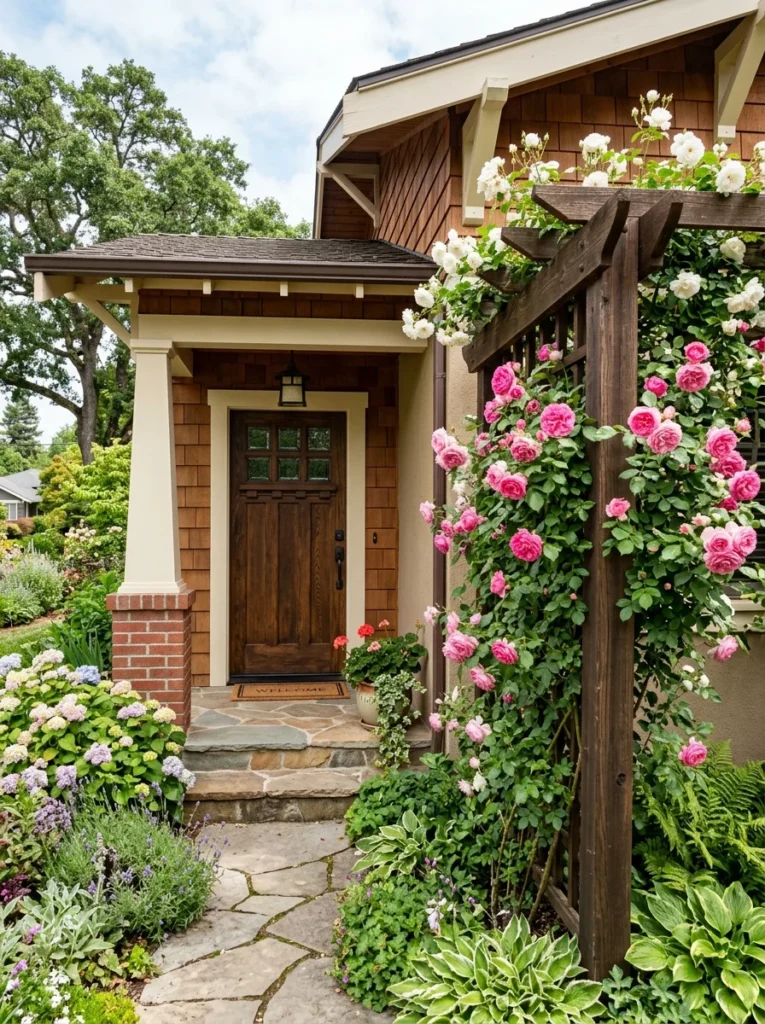
19. Create a Welcoming Focal Point with an Outdoor Bench
A bench near your front entry or at the edge of a front path serves double duty: it’s functional, and it’s a design statement. It tells guests (and passersby) that someone thought about this space. A simple outdoor bench with some container plants around it turns your front yard into a destination rather than just a transition.
Choose a bench that matches your home’s style — painted wood for farmhouse vibes, teak or cedar for traditional, powder-coated steel for modern.
20. Choose Plants That Actually Match Your Home’s Architectural Style
This is the one most people skip, and it’s honestly the most important: your plants should match your home.
| Home Style | Best Plant Palette |
|---|---|
| Colonial/Traditional | Boxwood, hydrangeas, tulips, symmetrical layouts |
| Craftsman | Native plants, ornamental grasses, layered informal beds |
| Modern/Contemporary | Agave, ornamental grasses, topiary, limited palette |
| Cottage | Roses, lavender, hollyhocks, informal and abundant |
| Mediterranean | Lavender, rosemary, olive trees, terracotta planters |
| Ranch | Native meadow mix, ornamental grasses, low xeriscaping |
Getting this right makes everything cohesive. Getting it wrong makes even expensive plants look out of place.
FAQs: Front of House Landscaping Ideas
How close should plants be to the front of the house?
Most shrubs should be planted 2–3 feet from the foundation. Larger shrubs need 4–5 feet. Always check the mature size on the tag — that tiny plant at the nursery might be 6 feet wide in five years.
Should I use mulch, rocks, or ground cover in front yard beds?
It depends on your aesthetic and maintenance preference. Mulch looks rich and natural but needs refreshing annually. Rocks are low-maintenance but can trap heat. Ground cover plants (like creeping thyme or pachysandra) are the most natural-looking but take a season to establish.
What are the best shrubs for front of house landscaping?
Boxwood, Holly, Knock Out Roses, Viburnum, Spirea, and Dwarf Alberta Spruce are consistently excellent front yard performers across most of the US.
How do I make a small front yard look bigger?
Use vertical interest, keep the plant palette simple (2–3 plants repeated), incorporate hardscape to reduce busy lawn areas, and choose lighter-colored flowers and foliage to open up the space visually.
What front yard landscaping ideas add the most value?
Layered foundation planting, a defined front path, fresh mulch, outdoor lighting, and clean edging are the upgrades with the best ROI for home value and curb appeal.
Great front of house landscaping isn’t about spending a fortune or becoming a horticulturist. It’s about making intentional choices — structure, repetition, lighting, and a few focal elements that work together. Start with clean edges and fresh mulch if you’re overwhelmed. Layer in foundation planting. Add path lighting. Work up to the bigger ideas from there.
Your front yard is the first thing people see. Make it feel like someone great lives there.
2 thoughts on “20 Front of House Landscaping Ideas That’ll Make Your Neighbors Stop and Stare”