

📌 Quick Note: This post contains Amazon affiliate links. If you purchase through them, I may earn a small commission at no extra cost to you — it helps keep the lights on here. Thanks!
If you’ve ever Googled how to take care of my aloe vera plant and walked away more confused than when you started — you’re not alone. Let me be real with you: I killed my first aloe vera plant. And if you know anything about aloe vera, you know that’s… embarrassing. These things are basically designed to survive neglect. And yet, there I was, drowning the thing in love — and water — until it turned into a mushy, brown disaster.
Turns out, aloe vera care is mostly about what you don’t do. Less water. Less fuss. Less babying. Once I figured that out, my next aloe absolutely thrived.
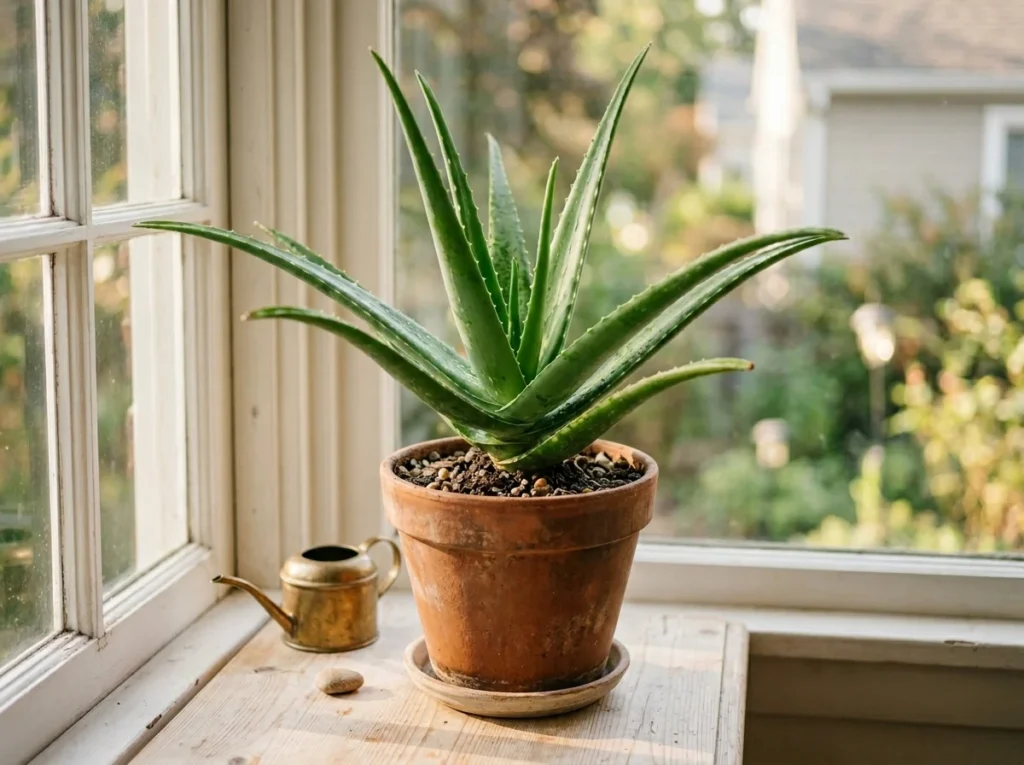
So whether you just picked one up at the grocery store or you’ve had one sitting in a sad corner for months, this complete guide to how to take care of my aloe vera plant will walk you through everything — watering, light, soil, repotting, troubleshooting — all of it.
Table of Contents
1. How Often Should I Water My Aloe Vera Plant?
Here’s the golden rule: water deeply, then wait.
Aloe vera is a succulent. It stores water in its thick, fleshy leaves. Watering it too frequently is the number one way people kill this plant. The soil needs to dry out completely between waterings — we’re talking bone dry, not just “surface dry.”
A general aloe vera watering schedule:
| Season | Watering Frequency |
|---|---|
| Spring & Summer | Every 2–3 weeks |
| Fall | Every 3–4 weeks |
| Winter | Once a month or less |
When you do water, soak the soil thoroughly until water runs out the drainage holes. Then walk away. Don’t water again until the top 2 inches of soil are completely dry — stick your finger in to check.
💡 Affiliate Pick: A moisture meter takes all the guesswork out of watering. Super cheap, super useful, especially if you’re a nervous plant parent.
2. Does Aloe Vera Need Direct Sunlight or Indirect Light?
Short answer: bright light, yes — scorching direct sun all day, maybe not.
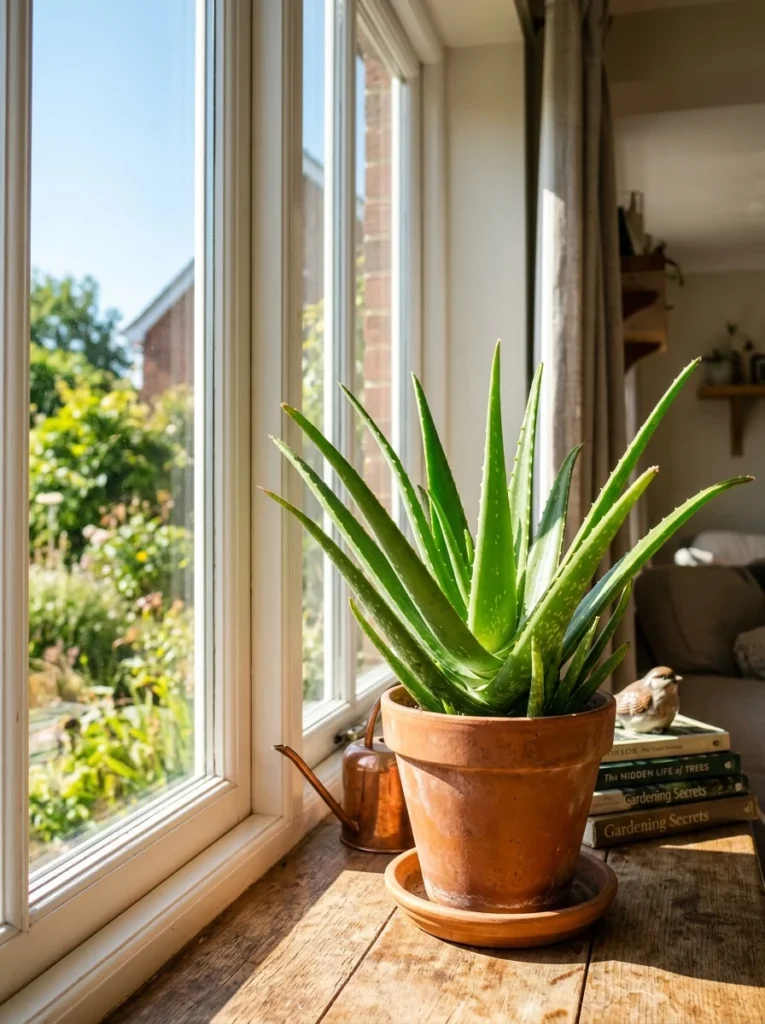
Aloe vera loves light. It wants to be near your sunniest window, ideally a south- or west-facing one. A few hours of direct morning sun is fine and even great. But intense afternoon sun through glass can actually scorch the leaves, turning them a stressed reddish-brown.
The sweet spot: Bright, indirect light for most of the day with some direct sun exposure in the morning.
If you notice your aloe leaning toward the window or its leaves turning pale and flat, it’s telling you it wants more light. Rotate the pot every couple of weeks so all sides get even exposure.
And yes — aloe vera can absolutely grow indoors all year, as long as it’s near a bright window. Grow lights work too if your space is dark.
3. What Is the Best Soil for Aloe Vera?
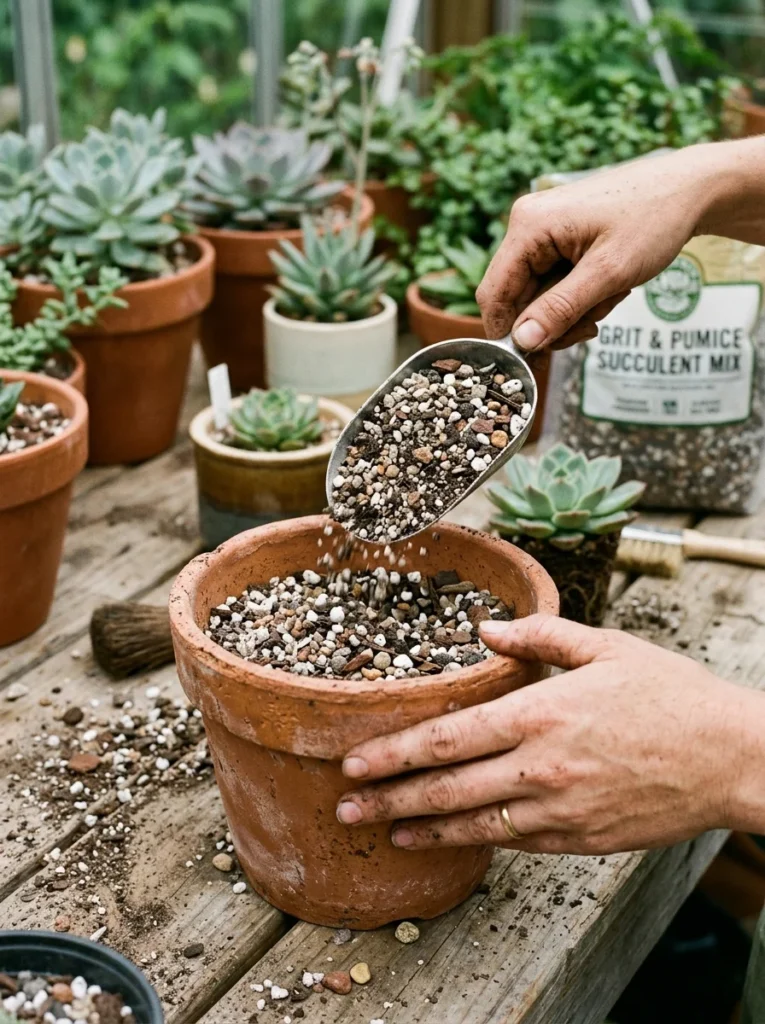
Regular potting soil? Nope. Aloe vera needs soil that drains fast — like, really fast. Standard potting mix holds too much moisture and will lead to root rot before you even realize something’s wrong.
What to use instead:
- ✅ A well-draining succulent and cactus potting mix — this is your best starting point
- ✅ Mix in perlite or pumice (about 50/50 ratio) to boost drainage even further
- ❌ Avoid peat-heavy mixes — they retain water too long
You want the water to flow through quickly, not sit and stagnate around the roots. Think of the gravelly, sandy soil of a desert — that’s what aloe is used to.
If you’re making your own mix, a blend of coarse sand, perlite, and a small amount of regular potting soil works great.
4. What Size Pot Is Best for Aloe Vera?
Pot size matters more than people think. Here’s the thing — an oversized pot holds more soil, and more soil = more moisture sitting around the roots for longer. That’s bad news for aloe.
Go for a pot that’s:
- Only 1–2 inches wider than the plant’s root ball
- Made of terracotta or concrete — these are porous and help soil dry out faster
- Equipped with drainage holes — non-negotiable. No drainage = guaranteed root rot.
A sturdy, well-draining planter with a saucer is a great combo. Just remember to empty the saucer after watering so the roots aren’t sitting in standing water.
5. How Do I Know If My Aloe Vera Is Overwatered?
Overwatering is the silent killer of aloe plants. And the frustrating part is — the symptoms can look similar to underwatering at first. So here’s how to tell the difference.
Signs your aloe vera is overwatered:
- Leaves that feel soft, mushy, or translucent
- Leaves turning yellow or light brown starting from the base
- A foul smell coming from the soil (that’s root rot)
- The base of the plant feels wobbly or weak
Compare that to underwatering, where leaves get dry, crispy, and curl inward — but the texture stays firm, not mushy.
If you catch overwatering early, stop watering immediately and let the soil dry out completely. If root rot has set in, you may need to unpot the plant, trim the rotted roots, let them dry for a day or two, then repot in fresh, dry soil.
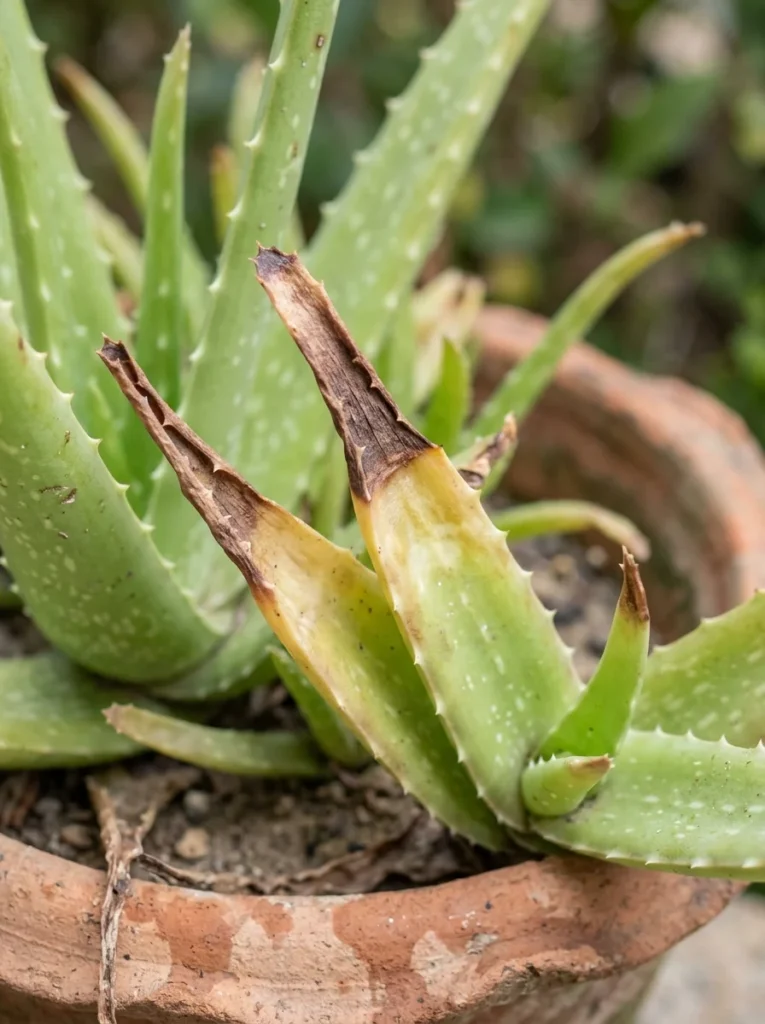
6. Why Are My Aloe Vera Leaves Turning Brown or Soft?
Brown leaves on aloe can mean a few different things. Let’s diagnose:
| Symptom | Likely Cause |
|---|---|
| Brown tips, firm leaves | Too much direct sun or underwatering |
| Soft, mushy brown base | Overwatering / root rot |
| Entire leaf brown & crispy | Extreme heat or cold stress |
| Brown spots scattered | Sunburn from sudden light exposure |
| Brown & curling leaves | Underwatering or low humidity |
The fix depends on the cause, but the most common culprit? Overwatering. Always check the soil moisture before assuming the plant needs more water.
7. Why Are My Aloe Vera Leaves Curling?
Curling leaves are usually a distress signal. Here’s what your plant might be telling you:
- Curling inward (toward the center): Usually underwatering. The plant is conserving moisture by pulling the leaves in. Give it a thorough drink.
- Curling downward: Could be overwatering, root rot, or too little light.
- Curling and yellowing: Often overwatering combined with poor drainage.
The fix? Check the roots. If they’re healthy and white, water more consistently. If they’re brown and mushy, you’ve got root rot and need to act fast.
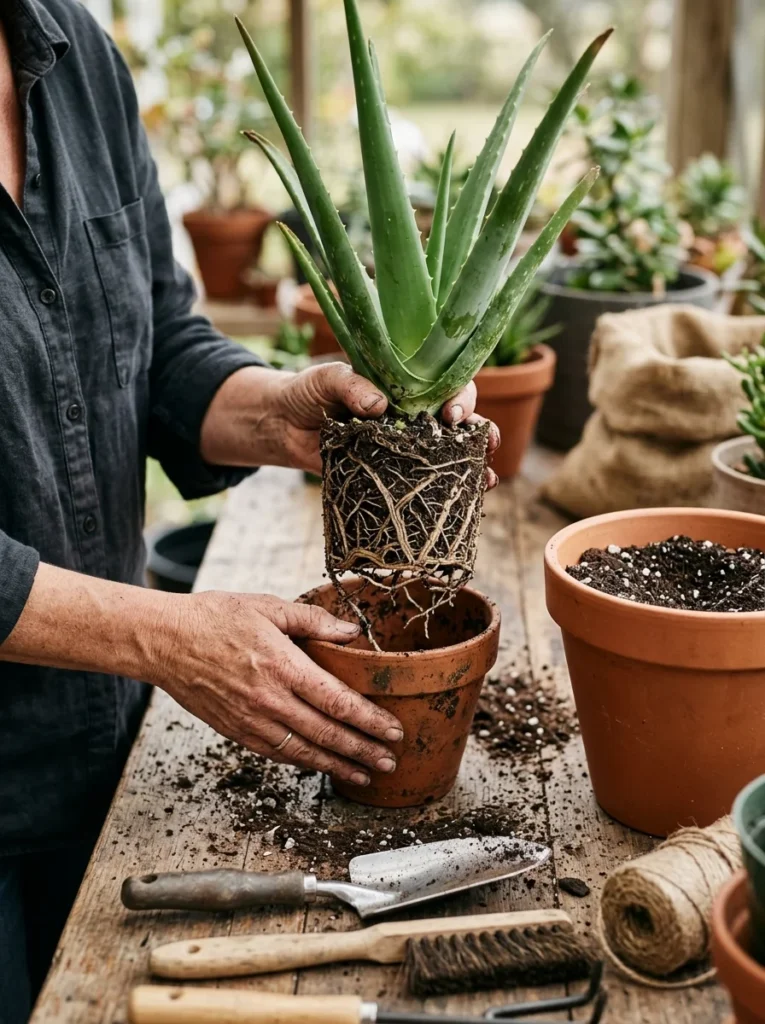
8. How Do I Repot an Aloe Vera Plant?
Aloe vera grows slowly, but when it starts looking cramped — roots peeking out the bottom, the plant wobbling, or pups (baby aloes) crowding the pot — it’s time to repot.
How to repot aloe vera step by step:
- Choose a new pot that’s 1–2 inches wider than the current one, with drainage holes
- Water the plant a day before to make removal easier
- Gently tip the pot and ease the plant out — don’t yank
- Shake off old soil and inspect the roots; trim any dead or rotten ones
- Let the roots air-dry for a few hours if you trimmed any
- Fill the new pot with fresh succulent mix, place the plant, and backfill
- Wait 1 week before watering to let any root damage heal
Repotting is also a great time to separate and propagate any pups. Speaking of which — if you’re curious about propagating succulents, check out our guide on [How to Propagate Succulents: The Ultimate Beginner’s Guide].
9. Does Aloe Vera Need Fertilizer?
Honestly? Not much. Aloe vera is not a heavy feeder. In fact, over-fertilizing can cause more harm than good — it can lead to salt buildup in the soil and burn the roots.
What to do instead:
- Use a balanced liquid houseplant fertilizer diluted to half strength
- Feed once or twice during spring and summer only
- Never fertilize in fall or winter when the plant is resting
That’s really it. If your aloe is growing in fresh potting mix, it probably doesn’t need fertilizer for the first year at all. Less is genuinely more here.
10. Can Aloe Vera Live Outside?
Yes — and it can absolutely love it, depending on where you live.
Aloe vera outdoor care:
- Thrives in USDA Hardiness Zones 9–11 (think Florida, Southern California, Texas)
- Loves full sun to partial shade outdoors
- Cannot survive frost — bring it inside before temperatures drop below 40°F (4°C)
- In hot climates, give it some afternoon shade to prevent scorching
If you’re in a colder region, treat it as a seasonal outdoor plant in summer, then move it back inside as fall approaches. This actually works really well — the extra sun and airflow during summer can really perk up an aloe that’s been sitting in a dim indoor corner all winter.
If you’re inspired to do more with succulents outside, you might love these [15 Stunning Succulent Rock Garden Ideas That’ll Transform Your Yard].
11. How Do I Save a Dying Aloe Vera Plant?
Don’t panic. Aloe vera is resilient. Here’s a quick triage checklist:
Step 1 — Check the soil. Is it soggy or bone dry?
- Soggy → Stop watering. Check for root rot. Repot if necessary.
- Bone dry → Water deeply right now.
Step 2 — Check the light. Is it getting enough?
- Dark spots or leggy growth → Move to a brighter location.
Step 3 — Check the roots. If repotting, look at the color.
- White/light tan → Healthy
- Brown/mushy → Root rot. Trim and repot in dry, fresh soil.
Step 4 — Be patient. Aloe recovers slowly. Give it a few weeks after making changes before expecting visible improvement.
Most dying aloe plants are victims of overwatering and/or poor drainage. Fixing those two things solves about 80% of problems.
And if you have a spider plant in your care lineup too, here’s a guide we love: [Spider Plant Care: The Only Guide You’ll Ever Need].
The Bottom Line on Aloe Vera Care
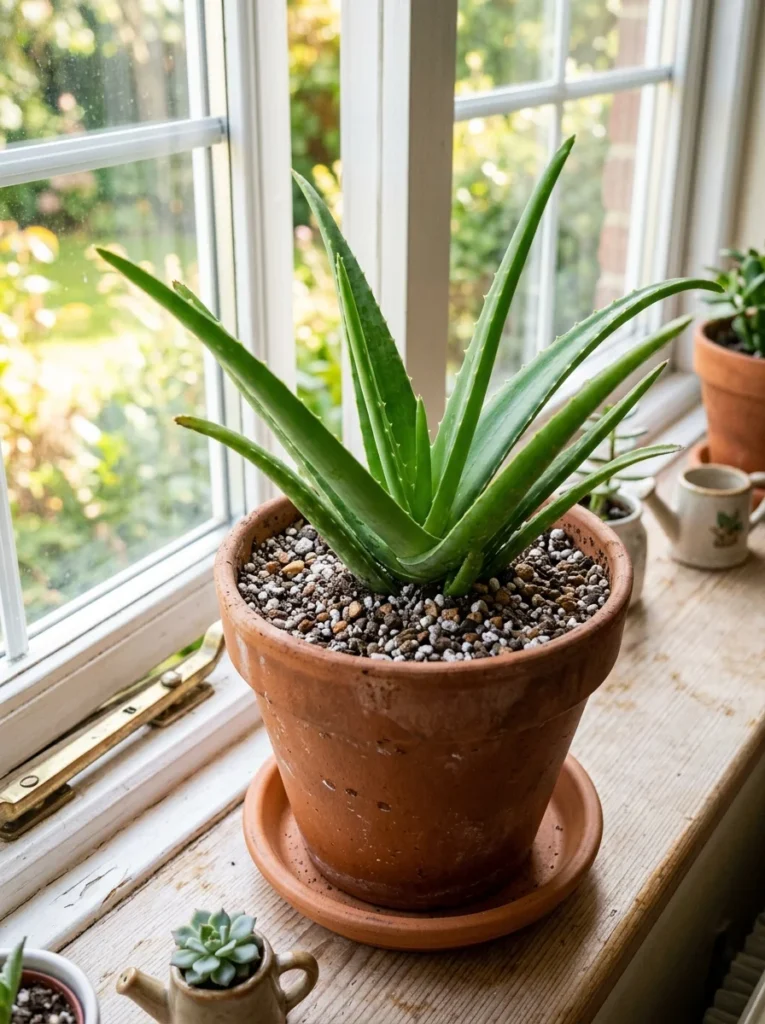
Here’s the honest truth: aloe vera is low-maintenance by design. It doesn’t want daily attention. It wants bright light, fast-draining soil, infrequent deep watering, and a pot that fits just right. That’s basically it.
The biggest lesson I learned from killing my first aloe? Trust the plant. When in doubt, don’t water. When leaves look a little dry, still wait a few more days. Aloe is built to handle drought — it’s the drowning it can’t survive.
Get those basics right, and you’ll have a thriving, beautiful aloe vera for years to come. And hey — you’ll always have fresh gel on hand for the occasional sunburn. Bonus.








2 thoughts on “How to Take Care of My Aloe Vera Plant (The Honest, No-Fuss Guide)”