

Who says you need an acre to have a stunning outdoor space? These compact garden ideas pack serious style into even the tiniest backyards.
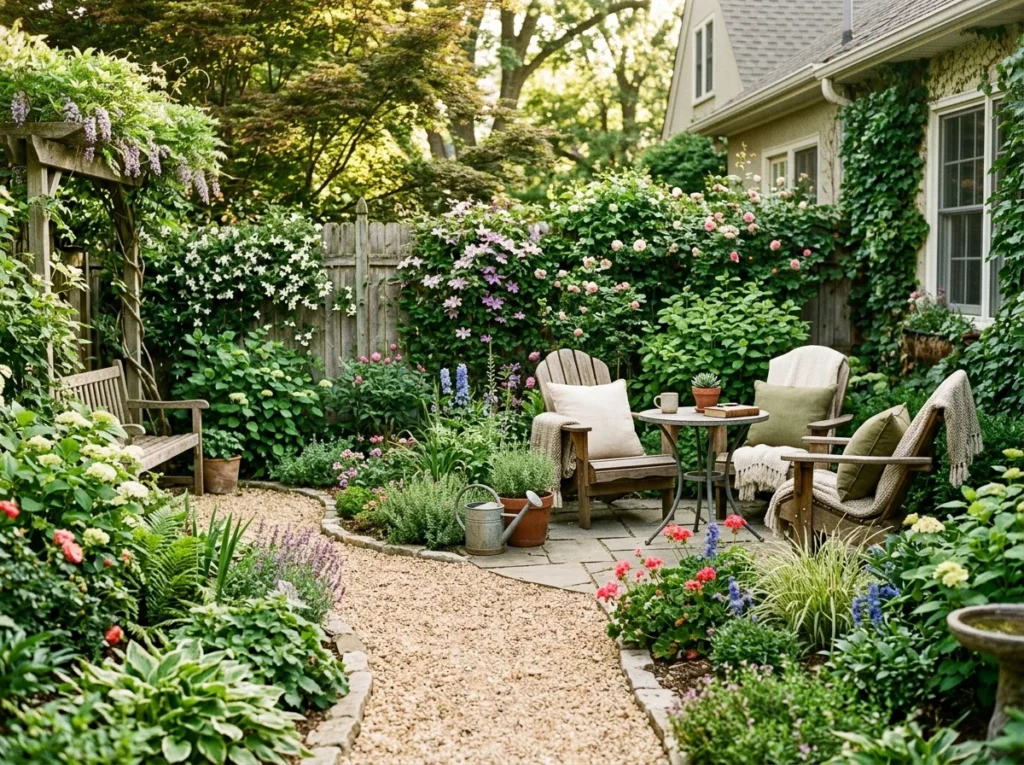
Let’s be honest — most of us aren’t working with sprawling half-acre lots. We’ve got a patio, a narrow strip of yard, maybe a fence on both sides, and approximately zero room to waste. And you know what? That’s actually fine.
Small backyard garden ideas have come a long way.
I’ve seen tiny outdoor spaces transform into lush, personal sanctuaries — and the secret isn’t money or a landscape architect. It’s knowing how to use what you’ve got. Think vertical. Think zones. Think focal points. Think less lawn, more character.
Whether you’re dealing with a postage-stamp patio in a Chicago suburb or a narrow side yard in LA, these 15 compact garden ideas will help you design a backyard that feels intentional, beautiful, and genuinely usable — even if it tops out at 200 square feet.
“A small garden isn’t a limitation — it’s an invitation to be deliberate about every single inch.”
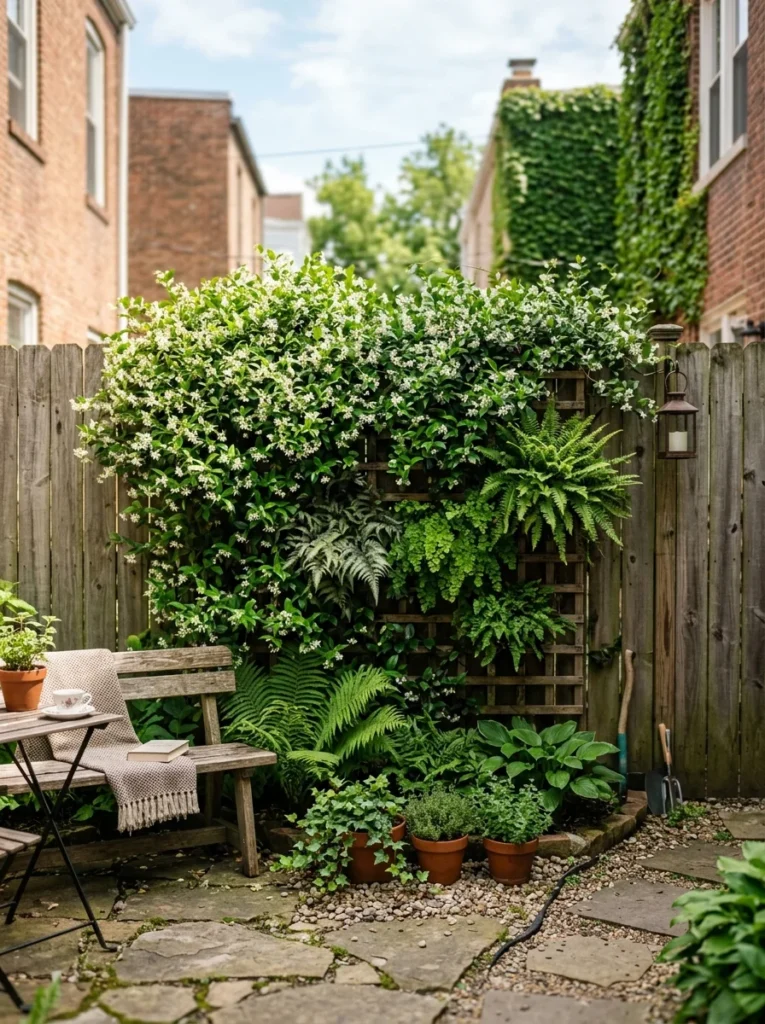
01. Go Vertical With a Trellis Garden
When floor space is gone, look up. A trellis or vertical garden panel transforms a bare fence or wall into a living, breathing green backdrop — and it’s one of the most powerful moves in small backyard design. Climbing plants like clematis, jasmine, or even pole beans do the heavy lifting while taking up almost zero ground space.
You can go as simple as a cedar lattice panel from the hardware store, or as refined as modular planter pockets in powder-coated steel. Either way, vertical garden ideas immediately make a tight space feel taller, airier, and layered.
Pro TipTry a mix of climbing flowers and edible vines — like nasturtiums and peas — for beauty that also feeds you.
02. Define Zones With Gravel Paths
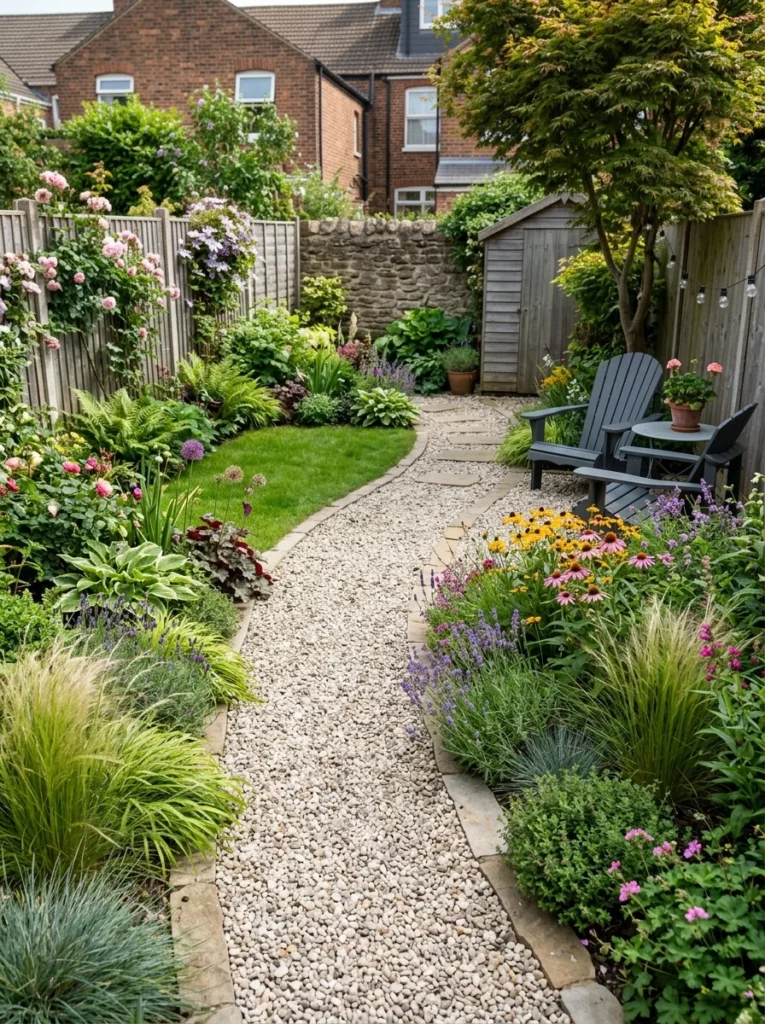
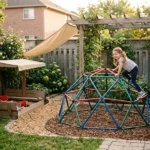
One of the biggest mistakes in small backyard design is treating the whole space as one undifferentiated blob. The fix? Zoning. A simple gravel path — even just two feet wide — instantly creates a “route” through your garden and gives the eye something to follow. It signals: there’s a seating area over here, and a planting bed over there. Suddenly the space feels organized, not cramped.
Pea gravel is inexpensive, drains well, and gives that relaxed French potager vibe that’s very much having a moment right now. Pair it with steel or wood edging for a clean line between gravel and grass (or planting beds).
🪨
Related15 Rock Garden Ideas for Kids That Make Your Backyard the Coolest Spot on the Block
03. Build Raised Beds for Structure (and Veggies)
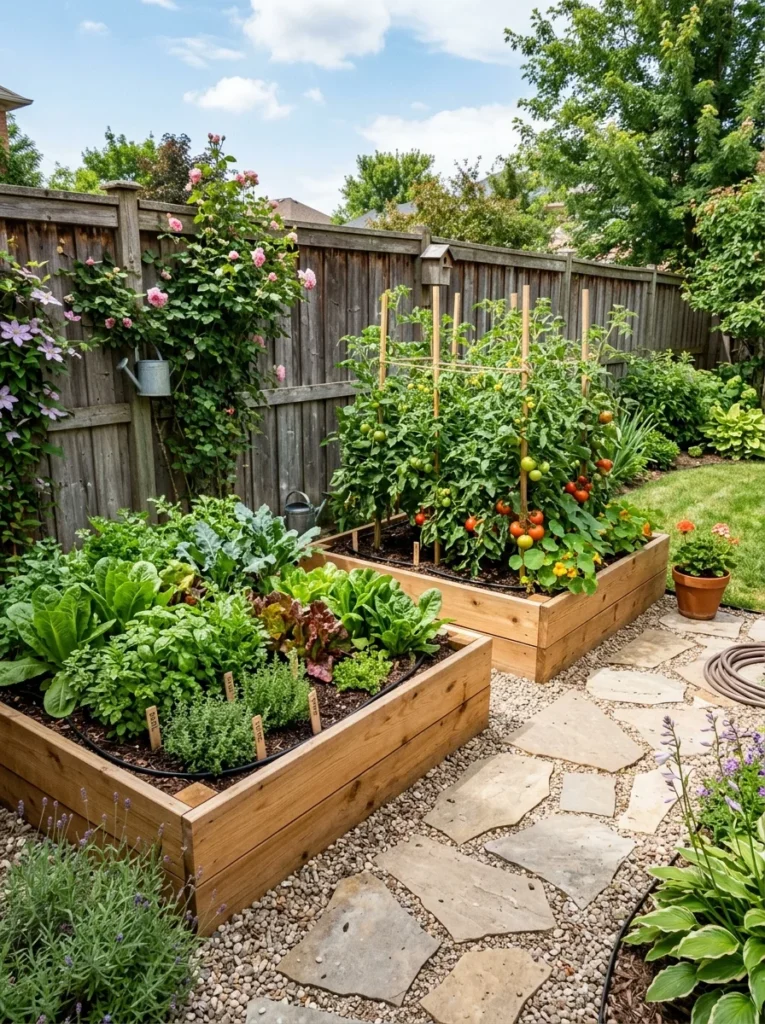
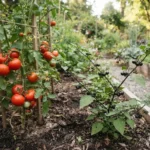
Are raised beds good for small backyards? Absolutely — they might be the single best investment you make. A raised bed gives your garden structure, keeps roots happy in well-drained soil, and makes the whole yard look intentional instead of random. They also make it wonderfully easy to grow vegetables in a small backyard without tilling up your entire lawn.
Stack two 4×4 cedar beds along one fence line, fill them with quality compost-enriched soil, and you’ve got room for tomatoes, herbs, lettuce, and peppers — all within arm’s reach. The height also creates a visual anchor that grounds the rest of your layout.
04. Create Privacy With Tall Grasses and Bamboo Screens
Nothing kills backyard vibes faster than feeling like you’re on display for all your neighbors. Creating privacy in a small backyard doesn’t have to mean a solid wood fence (boring) or an expensive pergola (expensive). Try ornamental grasses like Karl Foerster feather reed grass — they grow 5–6 feet tall, sway beautifully in the breeze, and take up maybe 8 inches of ground space per clump.
Alternatively, clumping bamboo in large planters along a boundary creates an instant green wall. The key word is clumping — running bamboo will take over your yard and your neighbor’s yard and possibly your entire zip code. Don’t do it.
- Ornamental grasses: Karl Foerster, Miscanthus, Blue Oat Grass
- Clumping bamboo in large containers (no ground planting)
- Lattice panels with fast-growing jasmine or ivy
- Tiered planters with evergreen shrubs
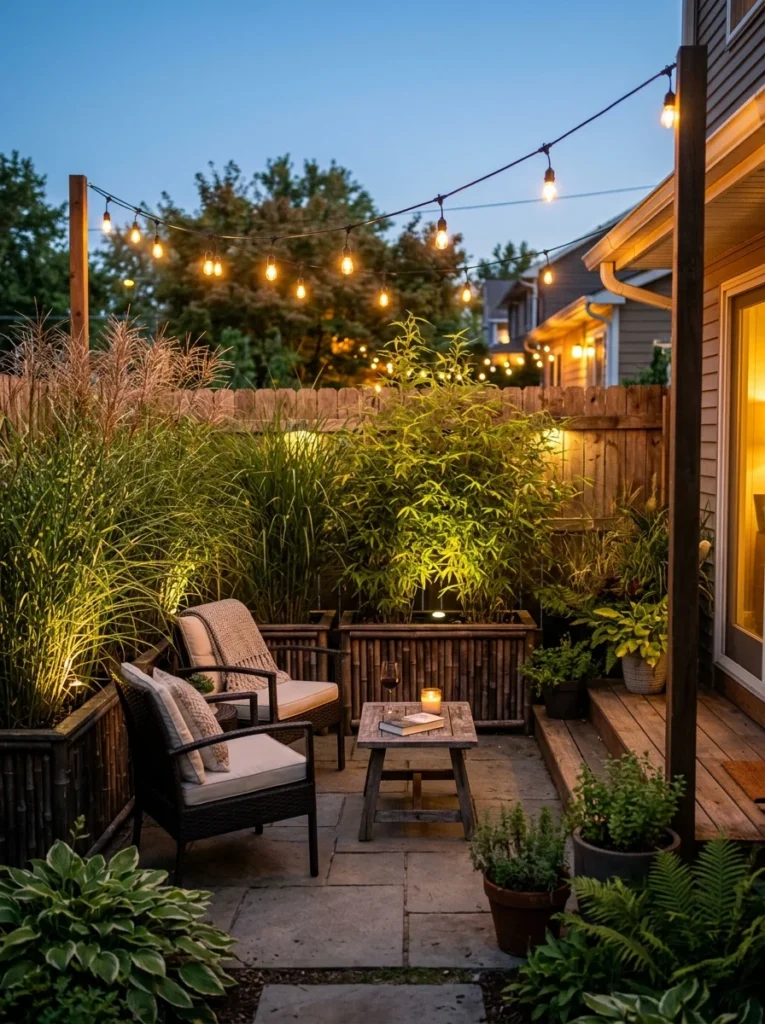
05. Add a Compact Seating Nook That Actually Fits
A small garden with a seating area is the goal. But craming a full outdoor dining set into 120 square feet? That’s how you end up with a yard you can’t use. Instead, go small and intentional. A bistro table for two, a built-in bench along the fence, or a pair of folding chairs that tuck away when not in use — any of these creates a “moment” without overwhelming the space.
Built-in benches are especially useful because they double as storage (lift the seat, store cushions and garden tools) and define the edge of a seating zone without requiring extra floor area. Add a small side table and a string of Edison bulbs overhead, and suddenly your tiny patio is the most charming spot on the block.
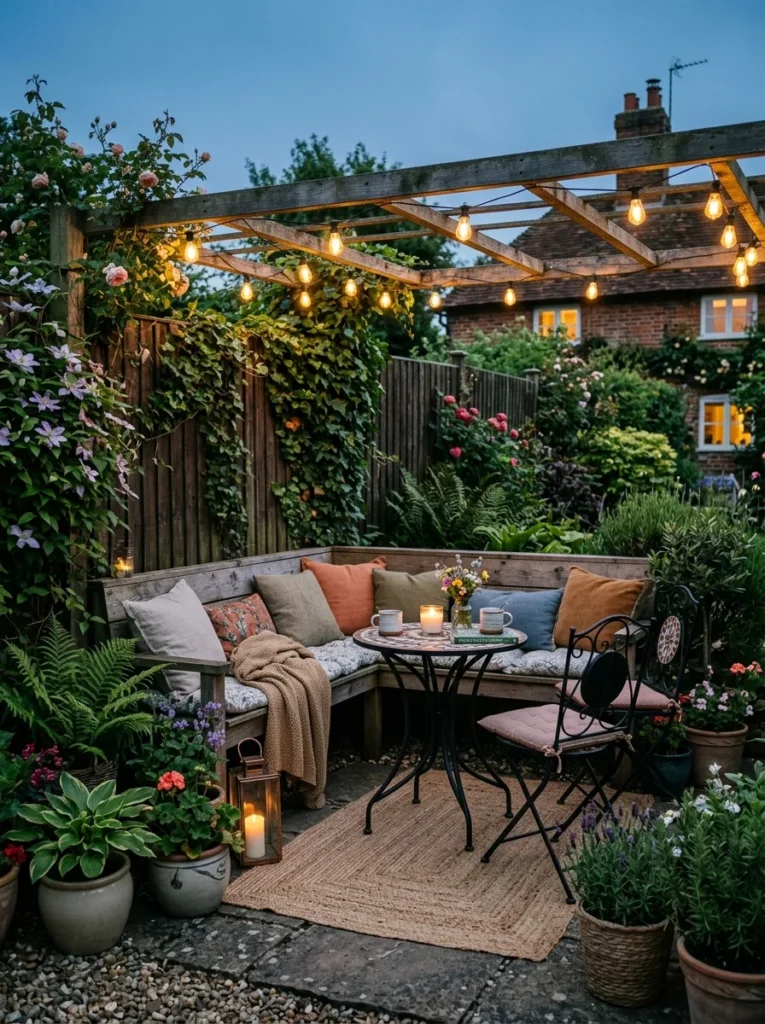
06. Add a Small Water Feature as a Focal Point
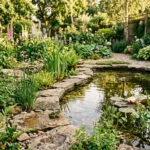
Every great small garden design has a focal point — one thing that your eye goes to first and that anchors the whole composition. A small water fountain, a birdbath, a sculptural planter, a bold-colored door, even an oversized pot — any of these works. A water feature adds movement and sound, which does something remarkable in a compact space: it makes it feel alive.
You don’t need anything elaborate. A self-contained tabletop fountain or a small tiered stone feature works perfectly. The sound of trickling water also has a way of drowning out street noise, giving your small backyard a surprisingly serene quality.
⛲
Related15 DIY Water Fountain Ideas That’ll Transform Your Backyard Into a Zen Paradise
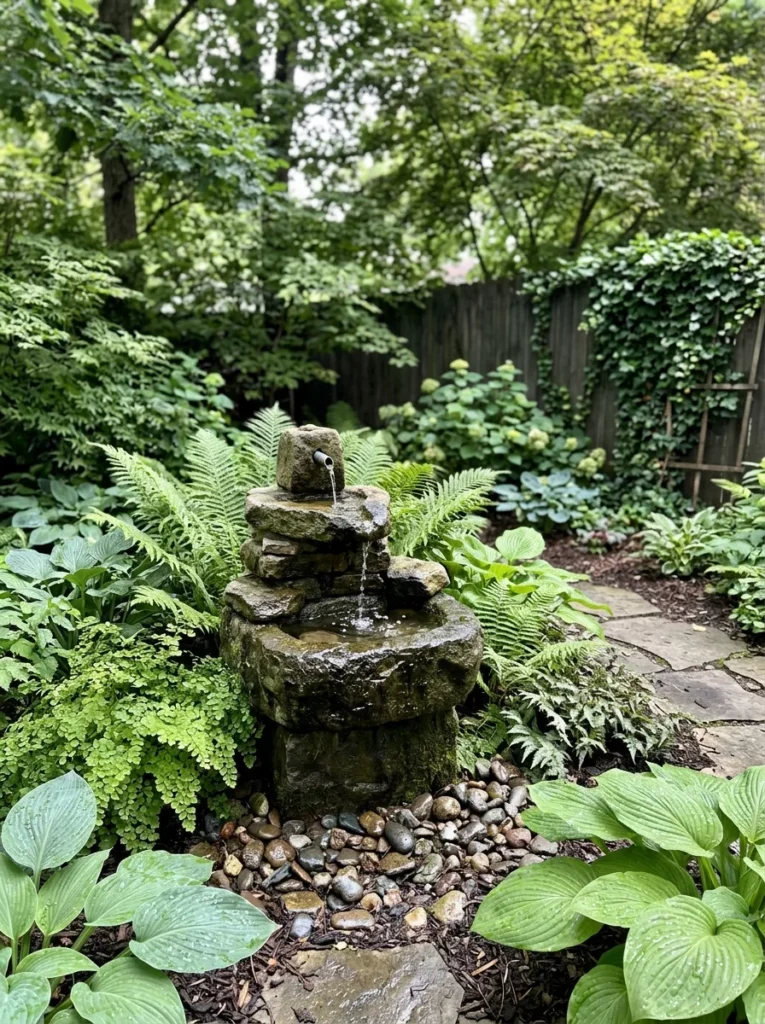
07. Go All-In on Container Gardening
Here’s the thing about containers — they’re not a consolation prize for people without garden beds. Done well, a small backyard container garden is sophisticated, flexible, and seriously beautiful. You can move things around as seasons change, group pots at different heights for visual interest, and swap in new plants without disturbing anything.
The trick is going bigger than you think. Most people use pots that are too small, which makes the space look cluttered with fussy little containers. Instead, invest in two or three large statement pots — 18 inches or wider — and plant them generously. Texture contrast matters: pair a spiky cordyline with a trailing sweet potato vine and a mounding salvia and you’ve got a miniature landscape in one pot.
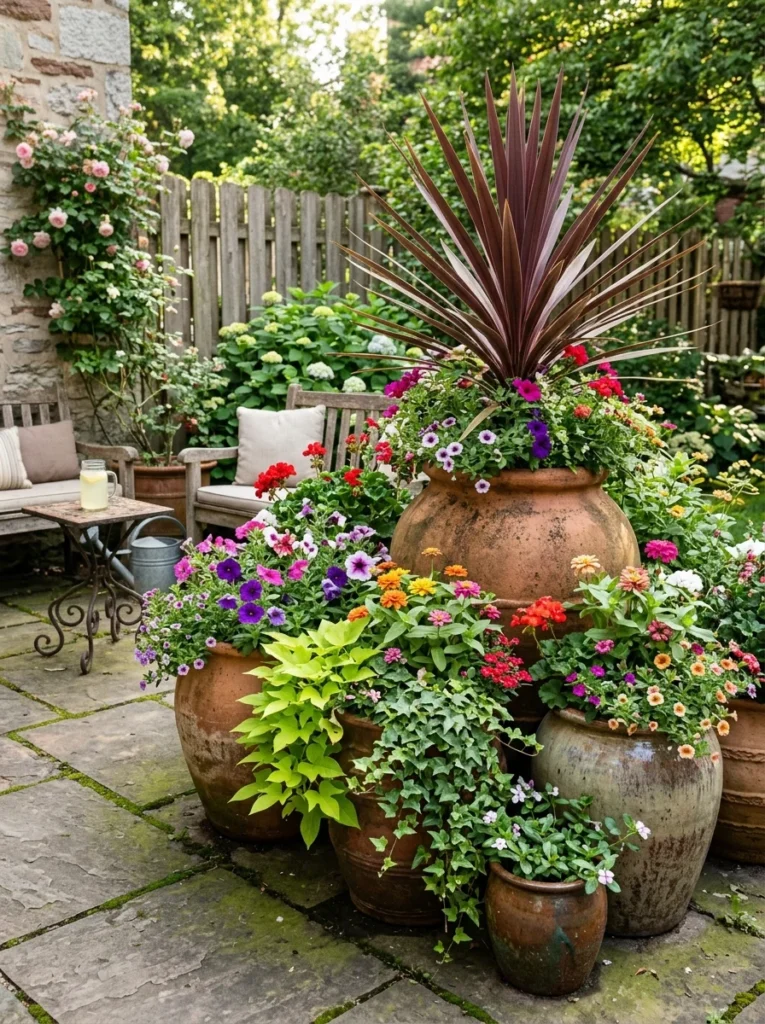
08. Do a Budget Backyard Makeover With Mulch and Edging
Want to transform your small backyard without breaking the bank? Here’s the most underrated move in budget small backyard landscaping: fresh mulch and clean edging. I’m serious. Go out this weekend, define your planting beds with a flat spade, lay down three inches of dark wood chip mulch, and stand back. The contrast alone — dark mulch against green plants — makes everything look polished and intentional.
Combined with a bag of black metal edging strips (about $25 at any hardware store), this two-hour project can genuinely make your yard look like someone spent real money on it. Add a flat of annuals for color and you’re done.
Budget Pick
Cedar or hardwood mulch, $4–6 per bag. Metal landscape edging, $20–30 per roll. Total transformation for under $100.
Small Backyard Landscaping: Comparing Your Options
| Feature / Option | Cost | Maintenance | Space Needed | Best For |
|---|---|---|---|---|
| Raised Beds | $50–$300 | Low–Medium | 4×4 ft min | Vegetables & herbs |
| Container Garden | $30–$200 | Medium | Any size | Flexible, portable |
| Vertical Trellis | $20–$150 | Low | Wall/fence | Climbers, privacy |
| Gravel + Edging | $50–$400 | Very Low | Any size | No-lawn look |
| Artificial Turf | $500–$2000+ | Very Low | Any size | Kids, pet-friendly |
| Water Feature | $50–$500 | Low | 2×2 ft min | Focal point, sound |
09. Design a Low-Maintenance Garden That Actually Looks Good
Here’s a truth about small garden design: the best low-maintenance small gardens aren’t lazy — they’re smart. The key is replacing high-fuss elements (a lawn that needs weekly mowing, annual flowers that die in fall) with permanent, self-sustaining ones. Think ornamental grasses, native perennials, ground covers, and hardscape that doesn’t need attention.
Replace turf grass with creeping thyme or clover — both are drought-tolerant ground covers that stay green, feel soft underfoot, and bloom without any effort. Layer in some boxwood for structure, a few ornamental grasses for movement, and you’ve got a backyard that looks great in every season without demanding your weekends.
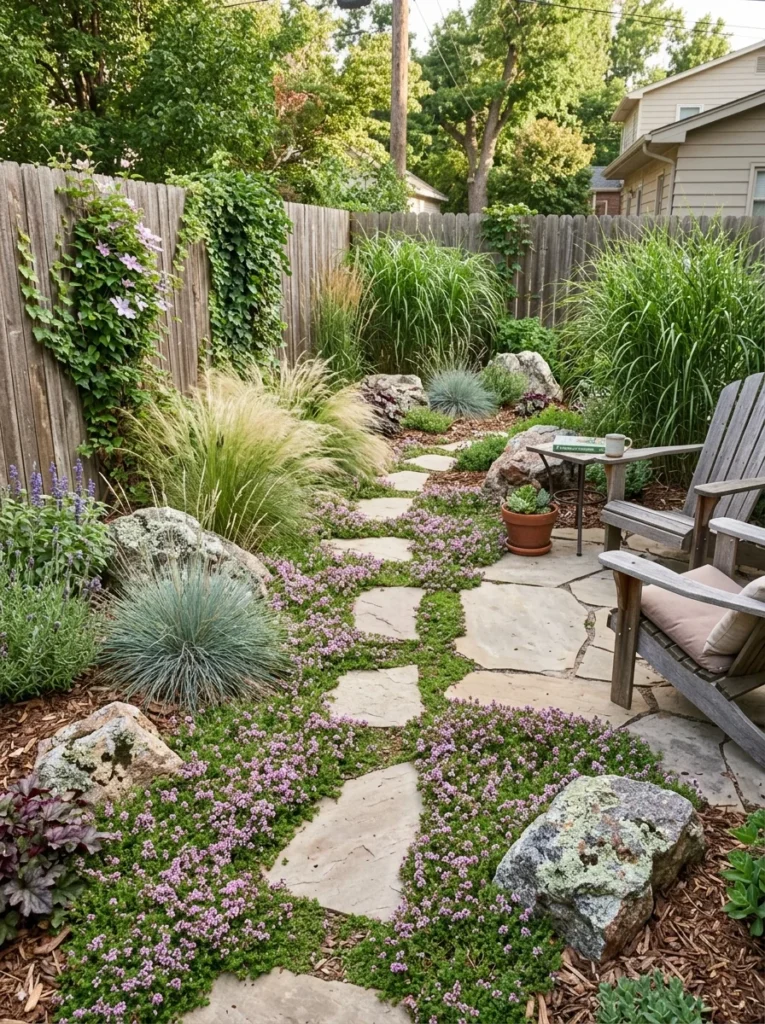
10. Ditch the Lawn Entirely — Here’s What to Do Instead
Should you use a lawn in a small backyard? Honestly? In a space under 400 square feet, probably not. A tiny patch of grass requires just as much maintenance as a big lawn but gives you almost none of the benefit. It gets patchy in shade, brown in drought, and muddy in rain. And in a small space, it just makes the yard look… smaller.
The alternatives are so much better. A full gravel garden with stepping stones feels elegant and distinctly European. A decomposed granite base with island planting beds gives you a modern drought-tolerant look. A full flagstone patio with containers brings serious style. The small backyard without grass trend is real, and honestly, it’s winning.
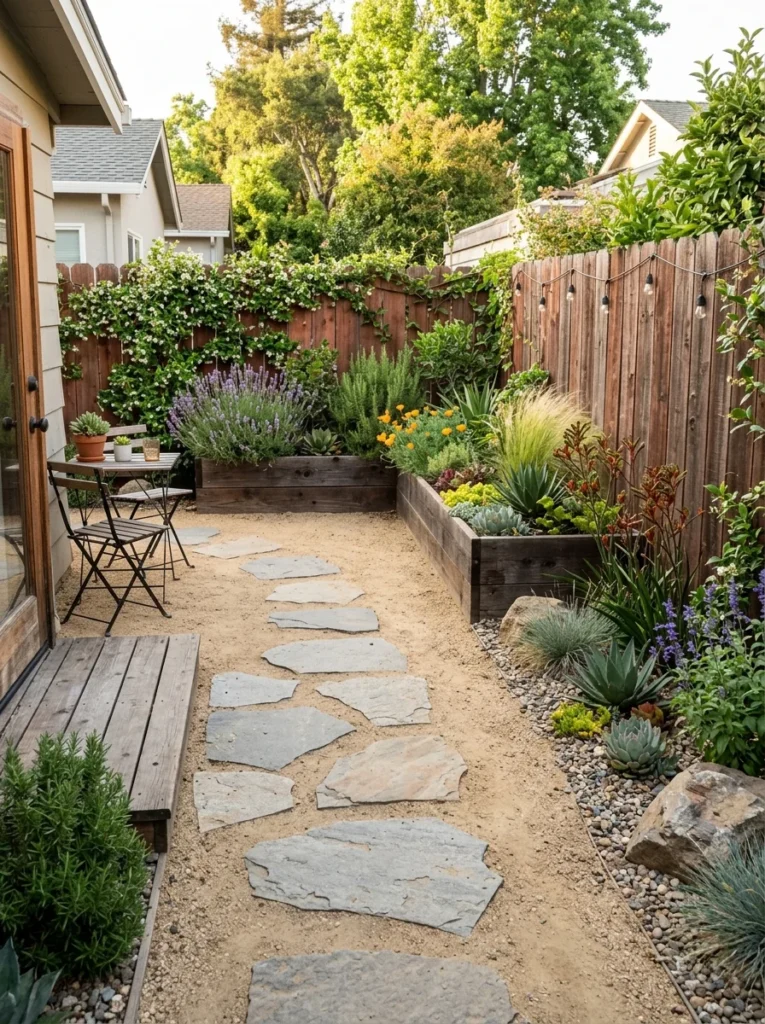
11. Use Lighting to Double Your Backyard’s Usable Hours
String lights. Solar path lights along gravel borders. A single well-placed uplighter hitting a statement plant. Outdoor lighting is genuinely transformative and deeply underused in small gardens. Good lighting extends your outdoor living season into evenings, makes the space feel warm and inviting, and — importantly — adds depth after dark that makes a small yard feel much larger than it is.
Solar-powered stake lights are nearly free to run. String lights across the full width of your yard, suspended between two fence posts or a pergola and your house wall, create an instant outdoor room effect that costs about $30 and takes 20 minutes to install.
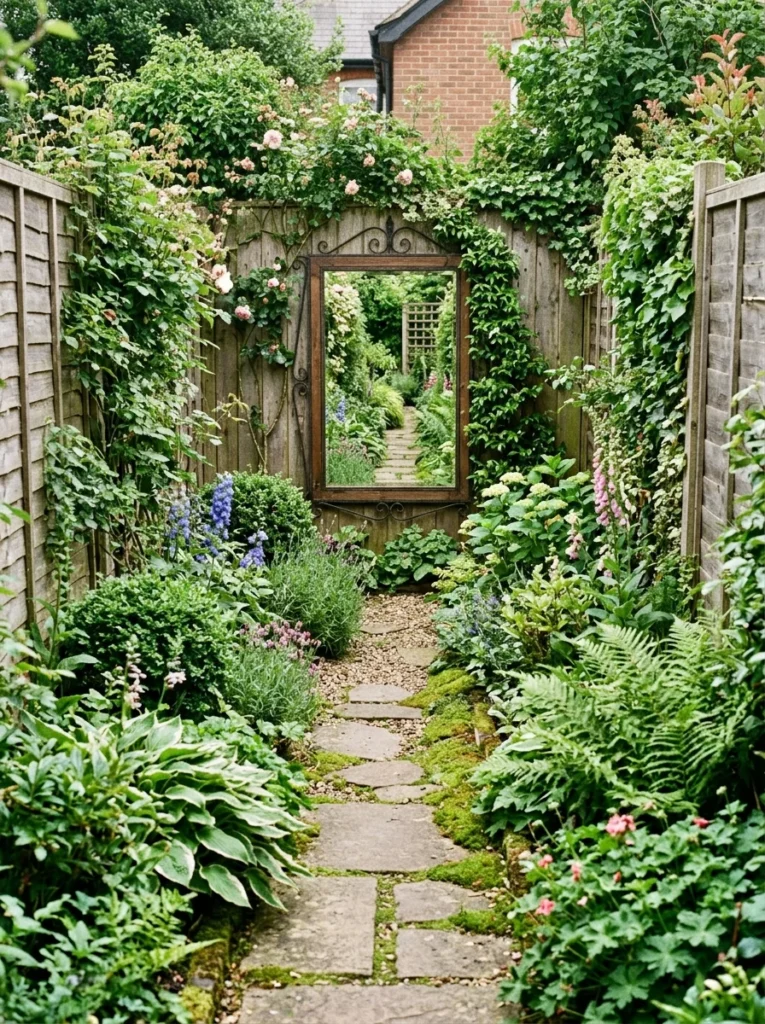
12. Make It Look Bigger With Garden Mirrors and Light Colors
Want to know how to make a small backyard look bigger? A few clever visual tricks go a long way. Garden mirrors — yes, actual mirrors designed for outdoor use — reflect green space back into the garden and create a genuine sense of depth. Mount one at the end of a narrow path and the backyard suddenly feels like it continues.
Light-colored hardscape (pale gravel, cream limestone pavers, white-painted fences) reflects more light and opens up the space visually. Dark-colored boundaries — like a very dark fence — actually push the edges back visually, creating the same effect in a different way. Meanwhile, choosing plants with fine, delicate foliage rather than large tropical leaves makes the scale of everything feel bigger.
13. Squeeze In a Fire Pit With the Right Layout
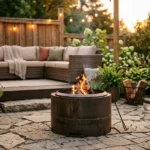
A small backyard with fire pit sounds contradictory, but it’s completely achievable with thoughtful placement. The key is going with a portable or tabletop propane fire pit rather than a built-in wood-burning ring — it’s safer in a compact space, doesn’t require clearance permits in most cities, and you can move it when you’re not using it.
Set it on a small gravel pad surrounded by two or three folding or stackable chairs, and you’ve created a genuine gathering spot that takes up no more than an 8×8 foot footprint. On cool fall evenings, this becomes the best seat in the house.
🏊
Related: 15 Nice Above Ground Pool Ideas That’ll Make Your Backyard Look Like a Resort
14. Choose the Right Plants for a Small Backyard Garden
What are the best plants for a small backyard garden? The golden rule is to go for plants that earn their place through multiple seasons or multiple purposes. A peony blooms in May, looks nice, and does nothing else. A dwarf Japanese maple offers spring growth, summer shade, fall color, and winter structure — that’s a lot of value per square foot.
- For structure: Boxwood, dwarf Japanese maple, ornamental grasses
- For color: Salvia, echinacea, lavender (also deer-resistant)
- For edibles: Dwarf tomatoes, herbs (basil, mint, rosemary), compact pepper varieties
- For ground cover: Creeping thyme, sedum, ajuga
- For vertical interest: Climbing hydrangea, clematis, sweet autumn clematis
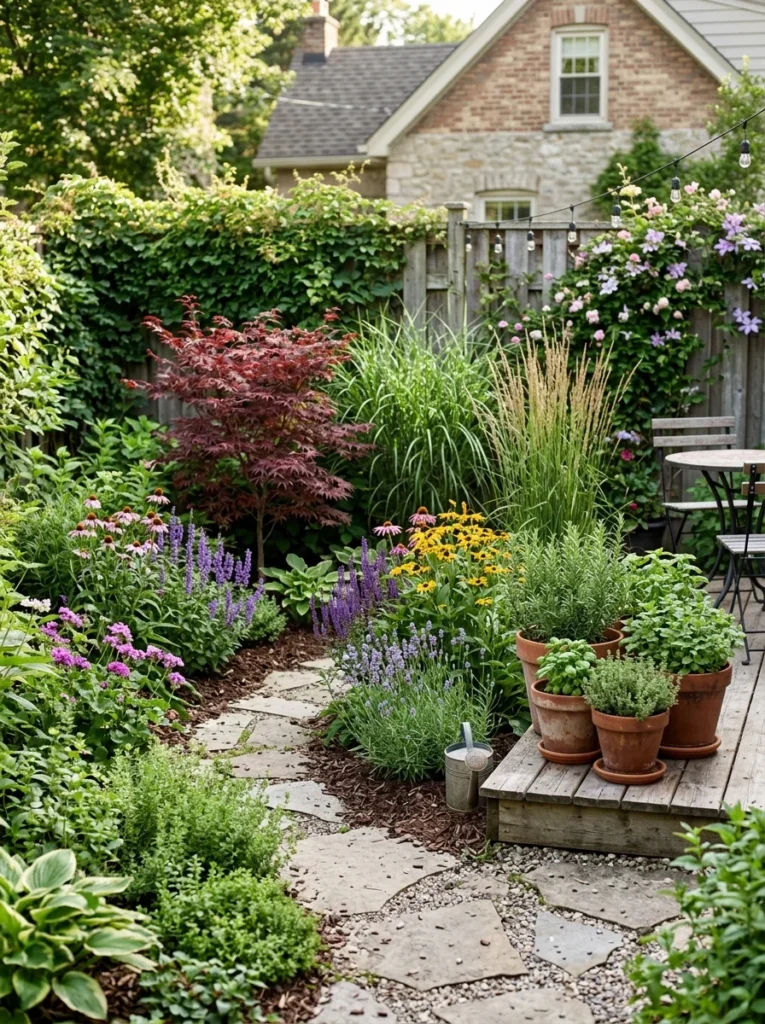
15. Plan a Layout That Actually Makes Sense
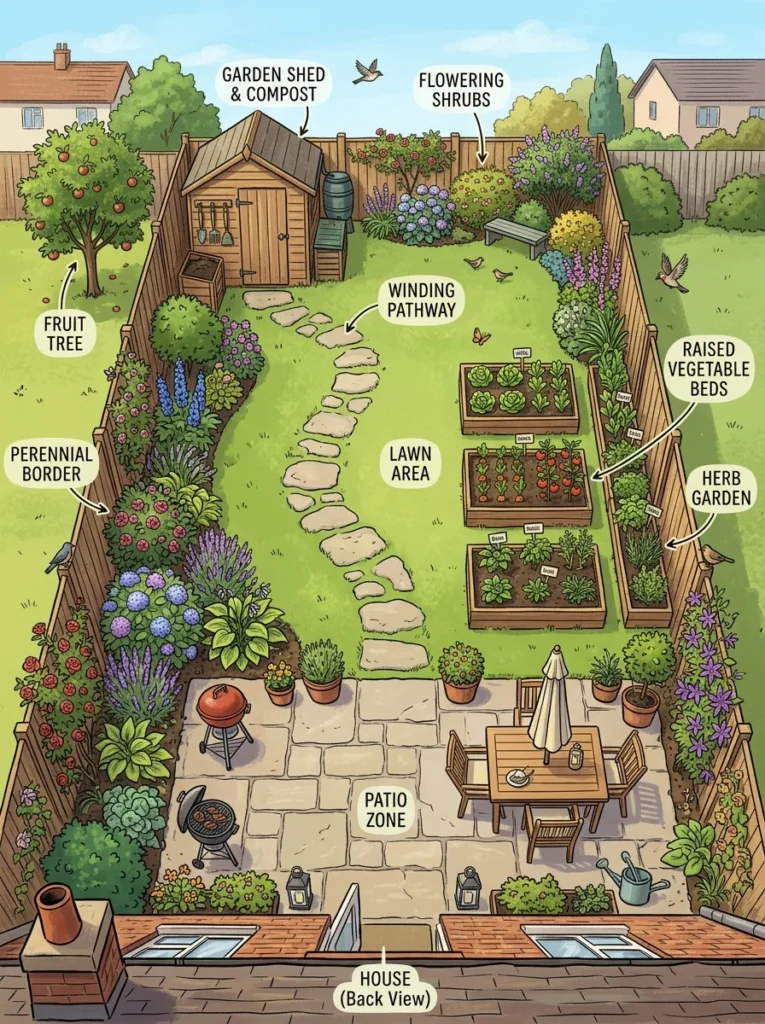
The best layout for a small backyard garden follows one core principle: the “outdoor room” model. Think of your yard as a room in your house. It needs a floor (hardscape or lawn), walls (fences, hedges, or trellises), and a ceiling (a pergola, a tree canopy, or string lights overhead). When you think this way, even a 15×20 foot space starts to feel deliberate.
For a typical small rectangular backyard, a go-to layout looks like this: one-third hardscape at the back of the house (your patio or seating area), a pathway leading through the middle, and planting beds or raised beds along both fences. This layout creates movement, separates functions, and uses every inch without crowding.
Frequently Asked Questions
Everything You Want to Know About Small Backyard Garden Design
How do I design a small backyard garden?
Start by measuring your space, then sketch three zones: seating, movement/pathway, and planting. Use vertical elements to add height without using floor space. Pick one focal point and design outward from it. Keep hardscape and plantings in roughly a 50/50 balance to avoid both a concrete slab and an unstructured jungle.
What should I put in a small backyard garden?
Prioritize elements that serve multiple purposes: a raised bed for growing food, a built-in bench for seating plus storage, a trellis for privacy plus vertical planting, and a focal point like a water feature or bold planter. Avoid too many small accessories — they make tiny spaces feel cluttered.
How can I make a small backyard look bigger?
Use light-colored hardscape, garden mirrors, and vertical elements to draw the eye upward and outward. Diagonal lines in paving layouts make spaces feel wider. Choose fine-textured plants over large-leafed tropicals. And consider removing a grass lawn — open hardscape with defined planting beds reads as more spacious than a small patchy lawn.
Are raised beds good for small backyards?
Yes — they’re one of the best investments in a compact outdoor space. Raised beds add structure, create visual separation between zones, allow for deep healthy soil without major excavation, and make gardening physically easier. Two 4×4 foot beds along a fence can grow more food than most people eat in a season.
How do I create privacy in a small backyard?
Use a combination of tall ornamental grasses, clumping bamboo in containers, and trellis panels with fast-growing climbers. Layering works best — a trellis at the fence, grasses in front of it, and lower shrubs in front of those creates a green wall that’s dense without being overwhelming.
How do I landscape a small backyard on a budget?
Start with the biggest visual impact for the lowest cost: fresh mulch and clean edging ($50–$100), a flat of colorful annuals ($20–$40), and one statement container planting. Save on plants by dividing perennials from neighbors or buying small plugs instead of gallon pots. Gravel paths cost $40–$80 in materials and transform the structure of a yard instantly.
What low-maintenance ideas work best for small backyards?
Replace grass with creeping thyme, sedge, or gravel. Plant native perennials that come back every year without intervention. Use a drip irrigation system with a timer so containers and beds water themselves. Choose shrubs that don’t require annual pruning — boxwood, dwarf nandina, and ornamental grasses are all naturally tidy.
Should I use a lawn in a small backyard?
In most cases, no. A small lawn patch requires the same maintenance as a large one, looks patchy in shade, and makes a tight space feel smaller. Better alternatives include gravel, decomposed granite, flagstone, or ground-cover plants. If you have kids or dogs, consider a small area of quality artificial turf instead of real grass.
The Bottom Line: Small Spaces, Big Impact
Here’s what I want you to take away from all of this: you don’t need a big backyard to have a great garden. You need a clear plan, a few high-impact choices, and the confidence to treat your outdoor space like it deserves real design attention — because it does.
Start with one thing. Define a zone. Build a raised bed. Install a trellis. Plant something vertical along that fence you’ve been ignoring. These small backyard garden ideas are all scalable — you can do one over a weekend, or you can combine several into a full backyard makeover over a season.
The most beautiful small gardens I’ve ever seen weren’t the biggest ones or the most expensive ones. They were the most deliberate. Every plant earned its spot. Every material was chosen on purpose. And every inch was treated like it mattered — because it does.
Now go make your backyard earn its keep.
Ready to Transform Your Backyard?
Browse more garden and landscaping inspiration on can1.online — ideas for every size, budget, and style.
4 thoughts on “15 Small Backyard Garden Ideas That’ll Make Every Inch Count”