

This post contains Amazon affiliate links. I may earn a small commission if you purchase through my links, at no additional cost to you.
Growing strawberries at home is one of those garden wins that feels almost unfair — a little effort, a little patience, and suddenly you’re biting into fruit that tastes nothing like the ones at the grocery store. Ready to get your hands dirty?
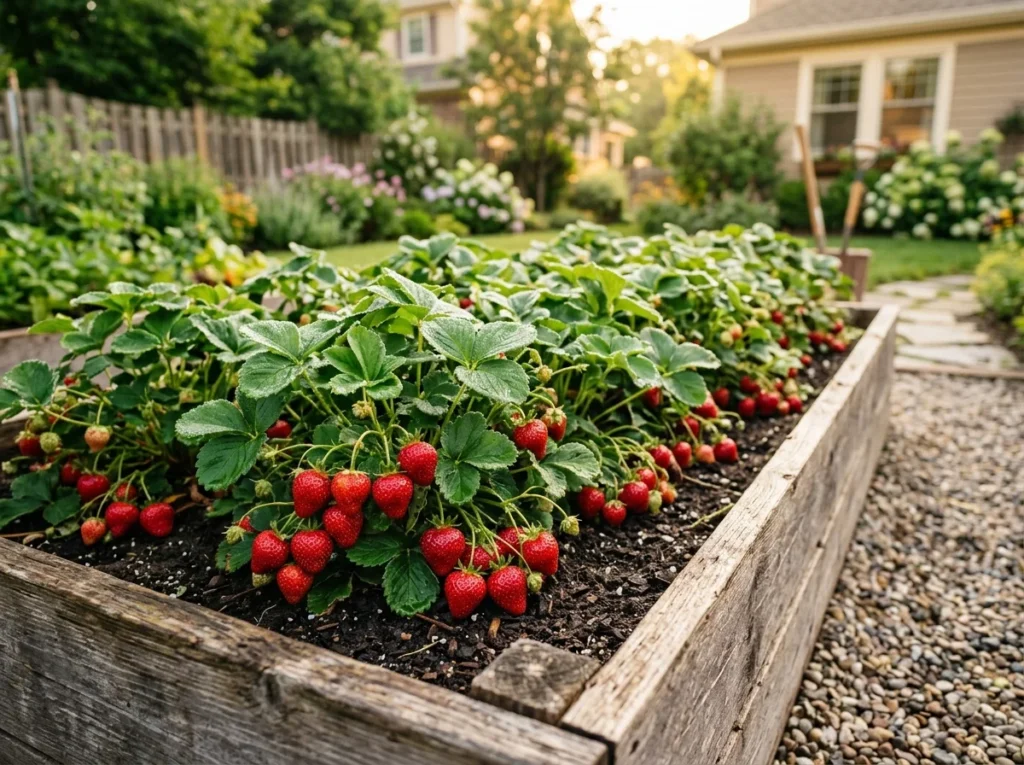
There’s something oddly satisfying about growing your own strawberries. Maybe it’s the fact that store-bought ones always seem just slightly off — a little pale, a little tasteless, like they gave up somewhere between the farm and your fridge. Homegrown strawberries? Different story entirely.
Whether you’ve got a sprawling backyard, a small raised bed, or just a sunny balcony with a pot, I’m here to tell you: you can absolutely grow strawberries. This guide walks you through every step of the strawberry growing guide — from picking the right soil to harvesting your first juicy berry. Let’s dig in.
Table of Contents
1. Choose the Right Strawberry Variety
Before you buy a single plant, you need to know which type of strawberry fits your goals. There are three main types:
- June-bearing: Heavy producers that fruit once a year, usually in early summer. Great for big harvests and making jam.
- Everbearing: Produce two crops — one in spring, one in fall. Ideal if you want fruit across the season.
- Day-neutral: Fruit continuously throughout the growing season as long as temps stay between 35–85°F. Best for small-space and container growers.
For most home gardeners in the USA, June-bearing varieties like ‘Earliglow’ or ‘Jewel’ are crowd favorites. But if you’re container growing or want a longer harvest window, go day-neutral.
2. When to Plant Strawberries
Timing is everything with strawberries. The best time to plant strawberries in most of the US is early spring, as soon as the soil can be worked — typically March through May, depending on your zone. In warmer southern states (zones 8–10), a fall planting (September–November) works even better.
A quick rule of thumb:
- Northern states (zones 3–6): Plant in spring after the last frost.
- Southern states (zones 7–10): Plant in fall for winter production.
- Pacific Coast: Nearly year-round planting is possible.
If you’re starting from bareroot transplants (more on that in a second), soak the roots in Tui Organic Seaweed Plant Tonic for about 20 minutes before planting. It reduces transplant shock noticeably — especially worth doing if your bareroot looks a little sad from the drive home.
3. What Soil Is Best for Strawberries?
Strawberries are a little picky about soil — but in a good way, because once you get it right, they thrive. Here’s what you’re aiming for:
- pH level: 5.5 to 6.5 (slightly acidic)
- Texture: Loamy, well-draining soil with good organic content
- No standing water: Wet feet = root rot. Drainage is non-negotiable.
A bag of Tui Strawberry Mix is a solid shortcut for getting the soil conditions dialed in from day one. If you’re building your own mix, blend native soil with plenty of organic compost to get that nutrient-rich, loamy texture.
Before planting, grab a soil pH test kit — it takes 5 minutes and saves you a season of disappointment. If your soil is too alkaline, work in sulfur. Too acidic? Lime is your friend.
Pro tip: Raised beds are incredibly popular for strawberries precisely because you control every aspect of the soil. If you’re dealing with clay-heavy or compacted native soil, a raised bed kit might be the best investment you make this season.
If you love small-space gardening, check out our guide on 15 Small Backyard Garden Ideas That’ll Make Every Inch Count — including smart container and raised bed setups that pair perfectly with strawberry growing.
4. How to Plant Strawberries (Without Killing Them)
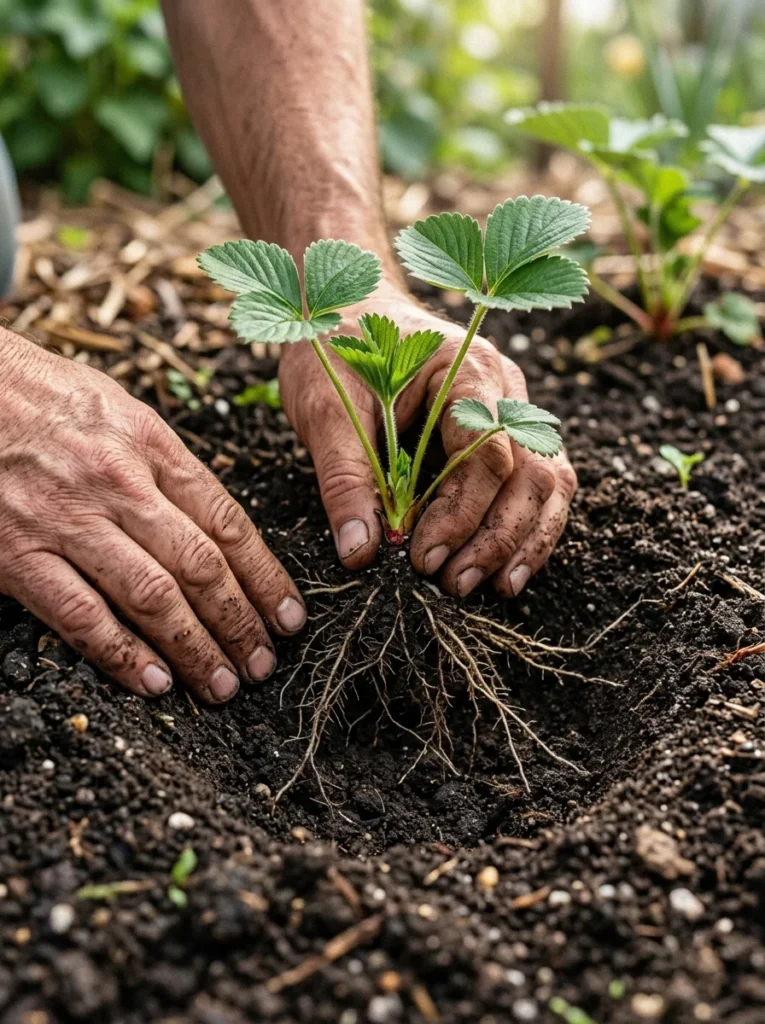
The single most common strawberry planting mistake? Burying the crown. Here’s how to do it right:
- Dig a hole wide enough to spread the roots out flat.
- Place the plant so the crown (the base where leaves meet roots) sits at soil level — not buried, not sticking too far up.
- Fan the roots downward and outward into the hole.
- Backfill with soil and press gently around the plant.
- Water in thoroughly.
Strawberry plant spacing matters too. Space plants 18–24 inches apart in rows, with rows 3–4 feet apart. Too close and you’ll get poor air circulation and disease problems. Too far and you’re just wasting space. Get it right and you’ll have a dense, productive patch.
Types of Transplants
| Type | Description | Best For |
|---|---|---|
| Bareroot | Dormant, no soil. Cheapest option. | Budget-conscious growers, spring planting |
| Plug transplants | Container-grown starts. Establishes fast. | Beginners, fall planting |
| Strawberry transplants | Ready-to-go nursery plants | Any time, most reliable |
5. How Much Sun Do Strawberries Need?
Short answer: a lot. Strawberries need at least 6–8 hours of direct sunlight daily to produce well. Less than that and you’ll get lots of lush green foliage and barely any fruit.
Pick the sunniest spot in your yard. South or west-facing beds are usually ideal. If you’re growing in containers, the advantage is you can move them to follow the sun — which is genuinely useful in spring when light angles are still shifting.
6. How to Water Strawberry Plants
Strawberries want consistent moisture, not soggy soil. Here’s the watering rhythm that works:
- Newly planted: Water every 2–3 days for the first couple weeks to help roots establish.
- Established plants: About 1–1.5 inches per week, either from rain or irrigation.
- During fruiting: Increase slightly — berries are mostly water, after all.
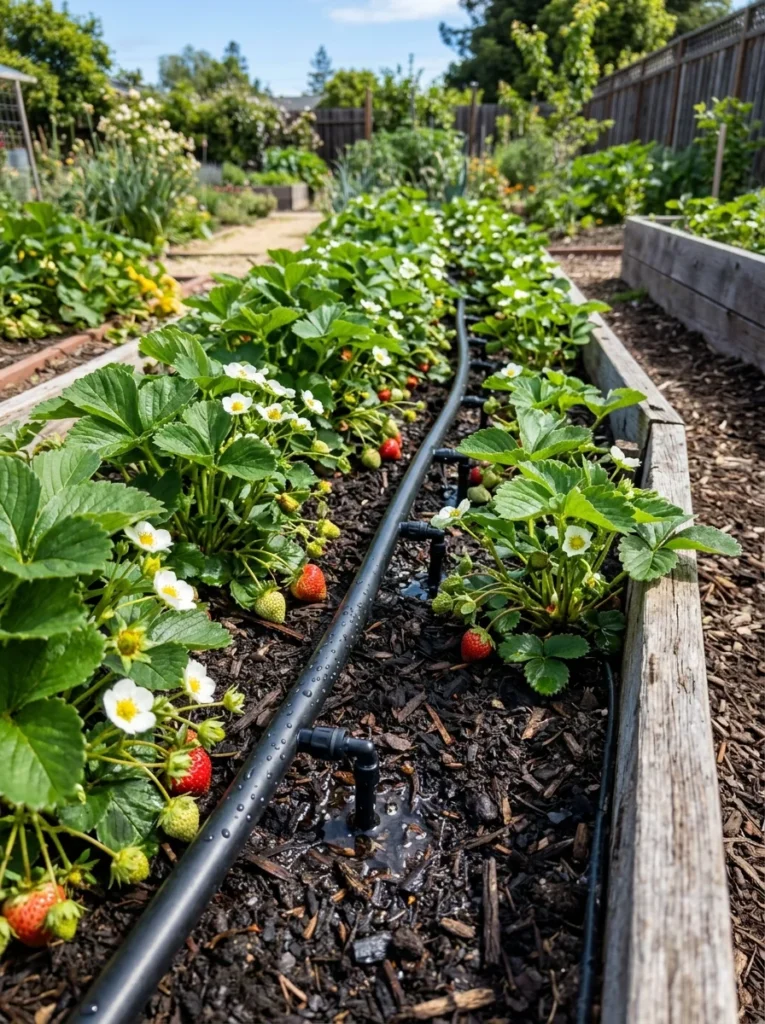
Avoid overhead watering when possible. Wet leaves and fruit invite fungal disease. A drip irrigation kit is genuinely worth the setup time — it delivers consistent moisture directly to the root zone, keeps foliage dry, and saves water. If you’re hand-watering, use a watering can or hose with a gentle spray and aim at the base of the plant.
7. Fertilizing Strawberry Plants
Think of fertilizer as the follow-through on your soil prep. Here’s a simple schedule:
- At planting: Work in compost and a balanced slow-release fertilizer.
- After the first harvest (for June-bearing): Feed with a high-potassium fertilizer to support next year’s fruit buds.
- Every 4–6 weeks (for everbearing/day-neutral): Light, consistent feeding through the season.
Tui Strawberry Food is formulated specifically for strawberries — it hits the right nutrient balance for fruit development without pushing excessive leafy growth. That nitrogen-phosphorus-potassium balance matters more than most people realize.
One thing to avoid: over-feeding with nitrogen in midsummer. It produces gorgeous green plants that stubbornly refuse to fruit. More leaves ≠ more berries.
8. Mulching: The Step Most Beginners Skip
Mulching strawberries does three things at once: keeps moisture in, keeps weeds out, and keeps fruit clean off the soil. That last one matters more than you’d think — berries resting on bare soil rot fast and attract slugs.
Use Tui Strawberry Straw or general mulching straw around your plants. Apply it after planting, leaving the crown exposed. In raised beds, black plastic mulch is another excellent option — it suppresses weeds aggressively and keeps the soil warmer, which strawberries love in early spring.
9. Managing Strawberry Runners
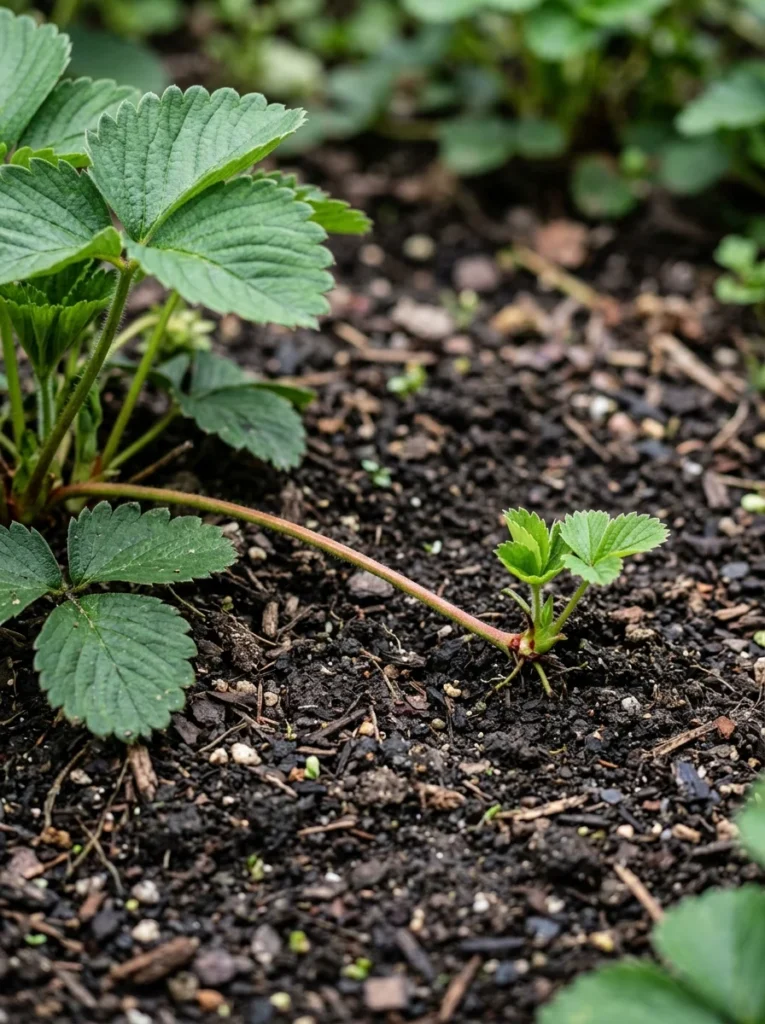
Once your plants are established, they’ll start sending out runners — long stems with baby plants at the end. This is how strawberries naturally spread.
Should you remove runners? It depends on your goal:
- Remove them during the first year to redirect energy into root and crown development. More crown = more fruiting capacity next year.
- Keep a few in year two or three to propagate new plants for free.
- Remove most if you’re in a container — runners in pots steal energy without room to establish.
Strawberry propagation tip: If you want to expand your patch, pin a runner to a small pot of soil nearby. Once it roots (usually 3–4 weeks), snip the runner and transplant the new plant.
10. Protecting Strawberries from Birds and Pests
You’re not the only one who likes your strawberries. Birds, slugs, and aphids all have opinions about your harvest. Here’s how to protect your patch:
Birds
Bird netting stretched over hoops is the most reliable deterrent. Put it up as soon as berries start turning pink — birds are fast. Alternatively, some growers use reflective tape or fake owls, but honestly, netting is the only thing that actually works consistently.
Slugs
Straw mulch helps keep slugs at bay by keeping berries lifted off the soil. Diatomaceous earth around the plant base also works well.
Aphids and Spider Mites
If you spot tiny bugs on the underside of leaves, a strong blast of water usually knocks them off. For persistent infestations, insecticidal soap spray is safe and effective.
Frost Protection
Late frosts in spring are the sneaky killer of strawberry flowers — and no flowers means no fruit. When temps are forecast to dip below 32°F during bloom time:
- Cover plants with garden fleece or frost cloth
- In a pinch, old bed sheets work surprisingly well
- Commercial row covers offer more reliable protection if late frosts are common in your area
11. Can Strawberries Grow in Pots or Containers?
Absolutely — and they do it really well. Growing strawberries in containers is ideal for small patios, apartments, and anyone who wants to keep pests more controlled.
Best practices for container growing:
- Choose a pot at least 12 inches wide and deep
- Use a strawberry-specific potting mix (Tui Strawberry Mix works great here)
- Ensure the container has drainage holes — non-negotiable
- Water more frequently than in-ground plants (pots dry out faster)
- Feed every 3–4 weeks since nutrients leach out with watering
Day-neutral varieties like ‘Albion’ or ‘Seascape’ are the top picks for pots because they produce continuously rather than in one big flush.
And if you want to transform your whole outdoor space with smart container arrangements, 15 DIY Water Fountain Ideas That’ll Transform Your Backyard Into a Zen Paradise has some stunning layout ideas worth stealing.
12. Why Are My Strawberry Plants Not Producing Fruit?
This is the question that breaks hearts every spring. A few common culprits:
- Not enough sun: Fewer than 6 hours a day and fruit production tanks.
- Wrong planting depth: Buried crowns rot. Exposed crowns dry out. Nail the depth.
- First-year plants: Many growers intentionally remove all flowers in year one to build plant strength. If you did this, expect a bigger harvest in year two.
- Over-fertilizing with nitrogen: Great leaves, no fruit. Dial back the nitrogen.
- Crowded plants: Poor air circulation leads to disease; spacing issues reduce yield.
- Pest or disease damage: Check for root rot, botrytis (gray mold), or heavy insect pressure.
If plants look healthy but aren’t producing, the problem is almost always sun, spacing, or fertilizer balance.
13. When Are Strawberries Ready to Harvest?
Here’s the good news: strawberries practically tell you when they’re ready.
Look for:
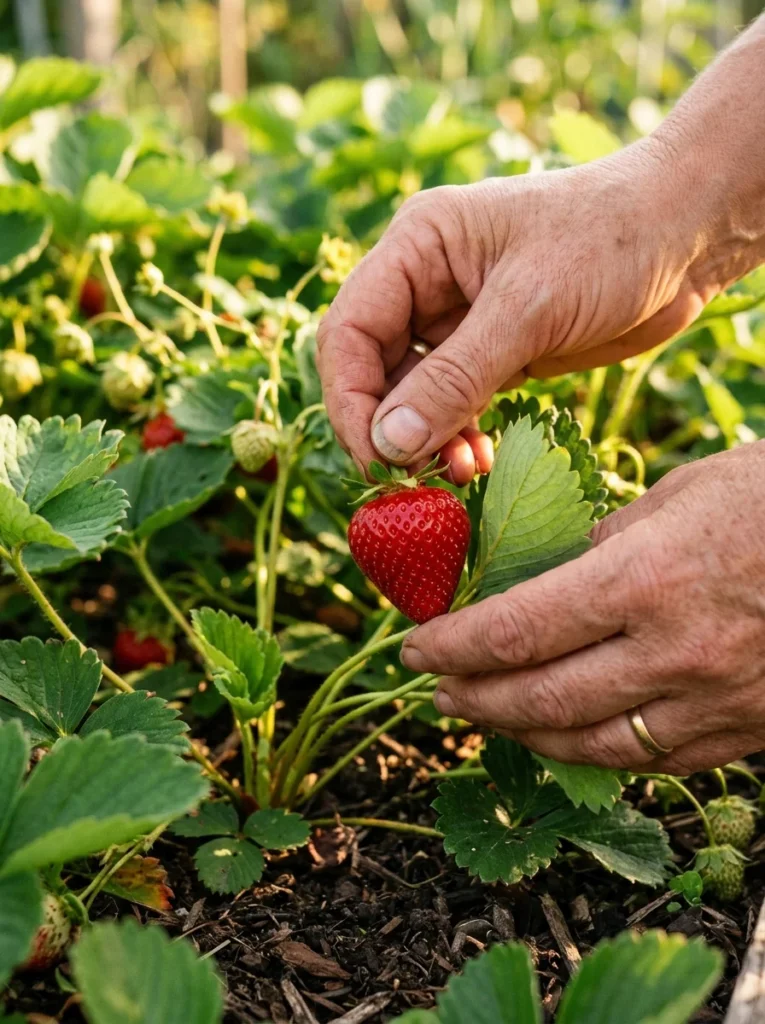
- Full red color across the entire berry (no white or green shoulders)
- Slight give when gently squeezed
- Fragrance — ripe strawberries smell amazing even before you pick them
Strawberry harvesting tip: Pick every 2–3 days during peak season. Leaving ripe berries on the plant invites rot and pests, and signals the plant to slow production. Harvest in the morning when berries are cool and firm. Snip with scissors or pinch the stem just above the berry — don’t pull or you’ll damage the plant.
Freshly picked strawberries last about 2–3 days in the fridge. They don’t improve after picking, so eat them fast, freeze them, or make jam.
Quick Reference: Strawberry Growing Cheat Sheet
| Factor | Ideal Condition |
|---|---|
| Sunlight | 6–8 hours direct sun daily |
| Soil pH | 5.5–6.5 |
| Spacing | 18–24 inches between plants |
| Watering | 1–1.5 inches per week |
| Fertilizer | Balanced at planting; potassium-rich after harvest |
| Mulch | Straw or black plastic |
| Crown depth | At soil level (not buried) |
| First harvest | 4–6 weeks after planting (for transplants) |
Shop the tools
Frequently Asked Questions
How do you grow strawberries from plants?
Start with healthy transplants — bareroot or plug starts both work well. Plant in spring or fall (depending on your zone), set the crown at soil level, space 18–24 inches apart, and water in thoroughly. Soil preparation with good drainage and a pH of 5.5–6.5 is the foundation.
What is the best time to plant strawberries?
Early spring (March–May) in northern states; fall (September–November) in zones 7–10. The goal is to establish roots before summer heat or winter cold sets in.
How much sun do strawberries need?
A minimum of 6–8 hours of direct sunlight daily. Less than this and fruit production will significantly decline.
What soil is best for strawberries?
Loamy, well-draining soil with a pH of 5.5–6.5. Add organic compost to improve texture and nutrients. Avoid heavy clay or waterlogged areas.
How often should strawberry plants be watered?
About 1–1.5 inches per week. More frequently for newly planted starts and during fruiting. Drip irrigation is the most effective method.
How far apart should strawberries be planted?
18–24 inches between plants, with rows 3–4 feet apart. Proper spacing improves air circulation and disease prevention.
Should I remove runners from strawberry plants?
Yes, in the first year — this redirects energy into root development. In year two and beyond, selectively keep runners for propagation or remove them to focus energy on fruit production.
Do strawberries need fertilizer, and how often?
Yes. Feed at planting with a balanced fertilizer, then use a high-potassium option after harvest for June-bearing types. For everbearing varieties, feed every 4–6 weeks through the season.
Can strawberries grow in pots or containers?
Absolutely. Choose a 12-inch or larger pot with drainage holes, use a strawberry-specific soil mix, and opt for day-neutral varieties for the best results.
How do you protect strawberries from birds and pests?
Bird netting stretched over the bed is the most reliable protection. For frost, use row covers or frost cloth. Address slugs with straw mulch; aphids with insecticidal soap or a strong water blast.
Why are my strawberry plants not producing fruit?
Usually comes down to insufficient sunlight, incorrect crown depth, nitrogen over-fertilization, crowded spacing, or being a first-year plant (which often produces minimally). Check each factor systematically.
When are strawberries ready to harvest?
When they are fully red with no white or green patches, have a slight softness when squeezed, and have a fragrant smell. Harvest every 2–3 days during peak season.
Growing strawberries isn’t complicated — but it does reward the people who pay attention to the details. Get the soil right, plant at the right depth, give them sun and consistent water, and protect them from the things that want to eat them before you do.
Whether you’re working with a backyard garden bed, a raised bed, or a collection of pots on a sunny patio, strawberries are genuinely one of the most satisfying plants a home gardener can grow. The flavor difference compared to store-bought is real, and it never stops being a little magical.
Now get out there and plant something. Your future self — and your taste buds — will thank you.
Have questions about your strawberry setup? Drop them in the comments — I’d love to help troubleshoot.








2 thoughts on “How to Grow Strawberries: The Only Guide You’ll Ever Need”