

“This post contains Amazon affiliate links. I may earn a small commission if you purchase through my links, at no additional cost to you.“
So you’ve got one succulent and suddenly you want twenty. Welcome to the club — it’s free to join, and honestly, it never gets old.
Propagating succulents is one of those gardening skills that feels like magic the first time it works. You pluck a single chubby leaf, lay it on some soil, mist it a couple of times a week — and a few weeks later? Tiny pink roots. A baby rosette forming out of thin air. It’s genuinely one of the most satisfying things you can do with a plant, and the best part is that it costs you almost nothing.
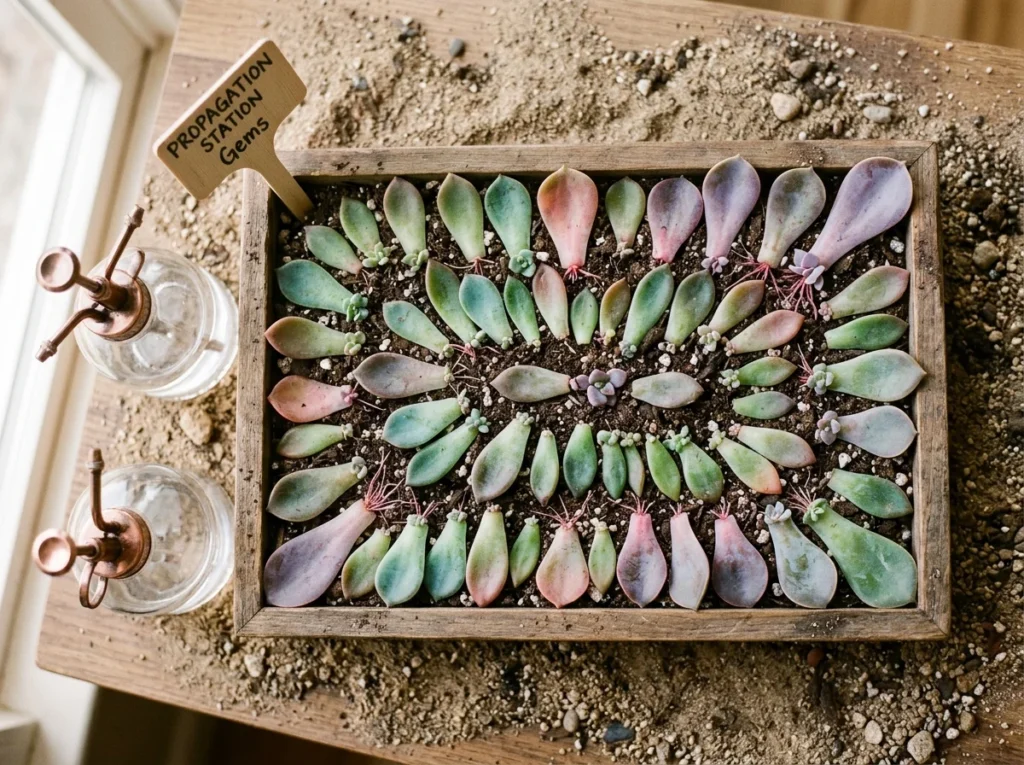
Whether you’re a total beginner or you’ve tried propagating before and watched everything shrivel up and die, this guide covers everything — leaf propagation, stem cuttings, offsets, soil, watering, common mistakes, and the exact timing that makes the whole thing work.
Table of Contents
Let’s get into it.
📌 Before You Dive In: If you’re also thinking about where to display your new succulent babies once they’re grown, check out these 15 Stunning Succulent Rock Garden Ideas That’ll Transform Your Yard — perfect for planning ahead.
What Is Succulent Propagation, Exactly?
Propagation just means growing new plants from parts of an existing one. Unlike most plants that need seeds or a full cutting, many succulents can regrow from a single leaf. A single. Leaf. That’s the kind of biological generosity that makes succulents genuinely special.
There are three main methods:
- Leaf propagation — plucking a healthy leaf and letting it sprout
- Stem cuttings — cutting a section of stem (great for leggy plants)
- Offsets/pups — separating the baby plants that cluster around the mother plant
Each method works differently depending on the species, your environment, and how patient you are. We’ll cover all three.
Method 1: How to Propagate Succulents from Leaves
This is the method everyone starts with — and for good reason. It’s low-effort, requires almost no tools, and watching a tiny rosette emerge from a dead-looking leaf feels miraculous every single time.
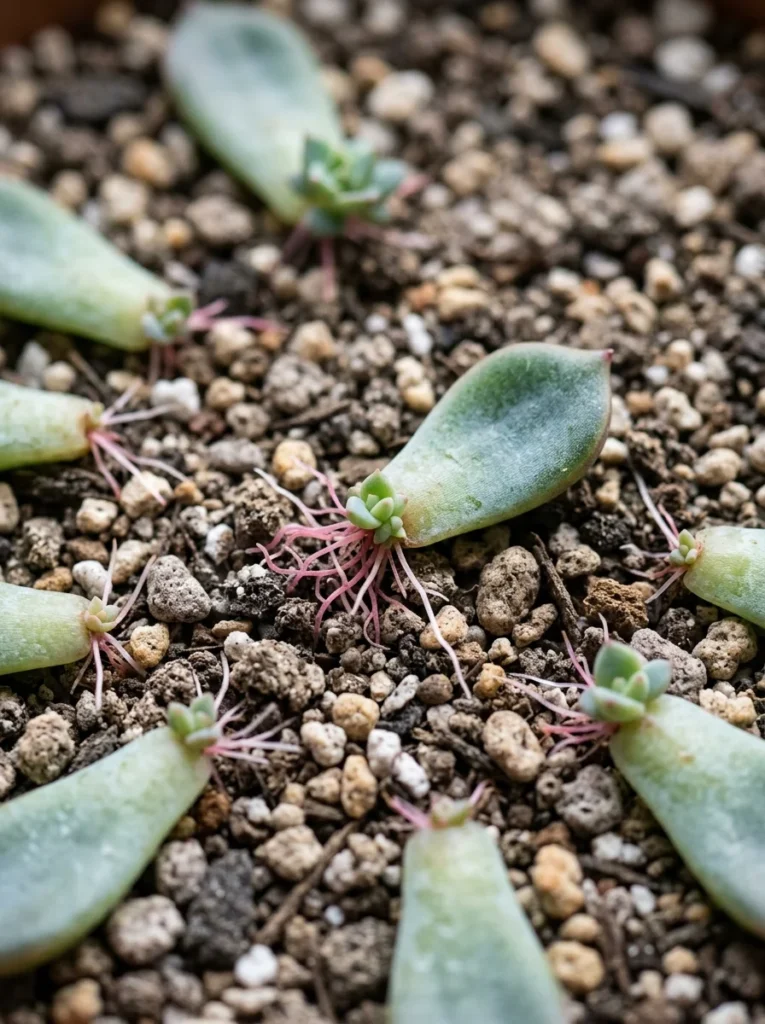
Step-by-Step: Leaf Propagation
Step 1: Choose the right leaves. Look for plump, healthy, unbroken leaves. Gently twist the leaf side to side while pulling — you want a clean snap at the base where it meets the stem. If the leaf tears or you leave the base behind, it won’t root. That base connection point is everything.
Step 2: Let them callus. This is the part most beginners skip — and why their leaves rot. Place the leaves on a dry surface (a paper towel works great) and leave them in a spot with bright indirect light for 2 to 4 days. The cut end needs to dry and form a small callus before it touches soil. Skip this and moisture enters the wound. Rot follows.
Step 3: Lay them on soil. Don’t bury them. Just lay the callused end on top of a cactus/succulent soil mix — or a mix of regular potting soil cut with perlite. A shallow propagation tray works perfectly here. No need to press them in.
Step 4: Mist lightly every 2–3 days. Use a spray bottle to mist the soil surface — not soak it. The goal is just enough moisture to encourage roots without creating the wet conditions that cause rot.
Step 5: Wait. In 2 to 8 weeks, you’ll see tiny pink or white roots reaching toward the soil, followed by a miniature rosette forming at the base of the leaf. The original leaf will eventually shrivel — that’s totally normal. It’s feeding the baby plant.
Step 6: Pot them up. Once the new plant has a few leaves and the roots look established, carefully move it into its own small nursery pot with drainage holes. Start watering more normally from this point.
Method 2: How to Propagate Succulents from Stem Cuttings
Got a leggy, stretched-out succulent? One that’s grown tall and awkward because it was reaching for light? Don’t toss it — behead it. Seriously. “Beheading” a succulent is not only acceptable, it’s actually the fastest propagation method there is.
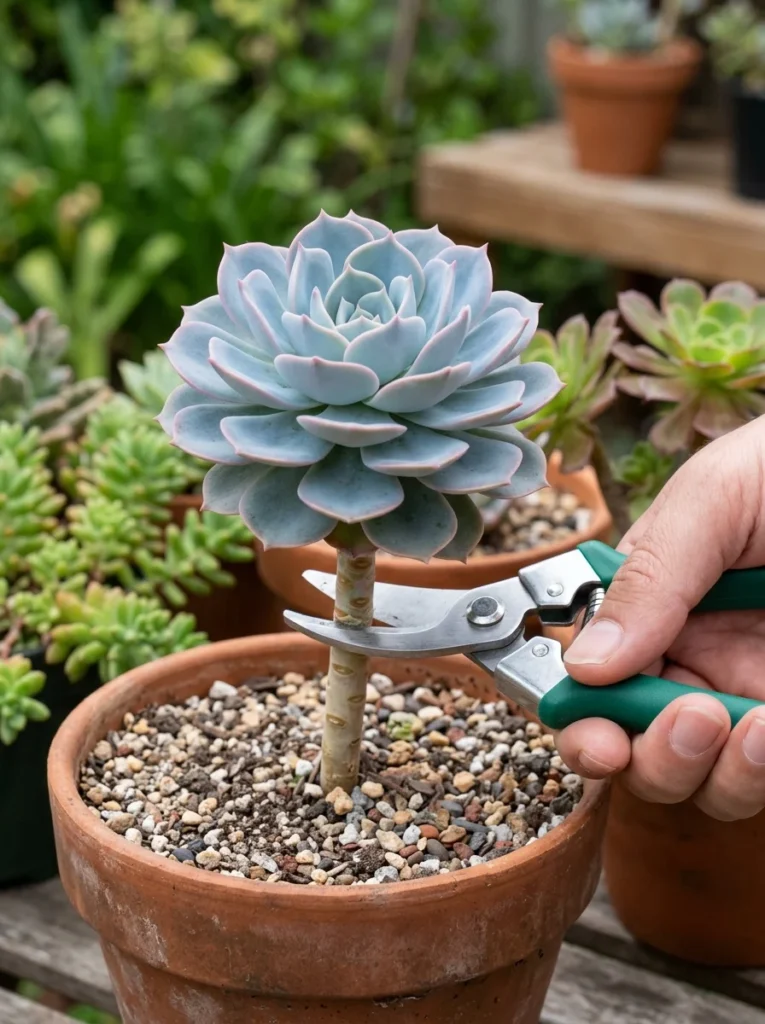
Step-by-Step: Stem Cutting Propagation
Step 1: Make a clean cut. Use sharp, sterilized pruners or clean scissors to cut the stem just below a healthy rosette or cluster of leaves. Clean tools matter — dirty blades introduce bacteria and increase rot risk.
Step 2: Remove lower leaves. Strip the bottom inch or two of leaves from the stem. These leaves can be set aside for leaf propagation (see above). You want a bare stem section to plant into the soil.
Step 3: Callus the cut end. Set the cutting upright (or lying on its side) in a dry spot for 3 to 7 days. The end needs to be completely dry before planting. You can rest it on a shallow plant saucer or paper towels. Don’t rush this step.
Step 4: Plant in well-draining soil. Push the callused stem end about an inch into a fast-draining succulent mix in a pot with drainage holes. Press the soil gently around it so the cutting stands upright on its own.
Step 5: Wait before watering. Hold off on watering for the first week. Let the roots seek out moisture — this encourages faster, stronger root development. After the first week, water lightly every 5 to 7 days.
Step 6: Watch it root. In 2 to 4 weeks, you should see new growth at the top of the rosette. Give the cutting a very gentle tug — resistance means roots have formed.
The original stem you cut? It’ll likely grow new offshoots right from where you made the cut. So you end up with two plants from one. Now that’s efficient.
Method 3: How to Propagate Succulent Offsets and Pups
This is honestly the easiest method. Some succulents — like Aloe, Haworthia, and Echeveria — produce little baby plants at their base called offsets or pups. All you have to do is separate them from the mother plant.
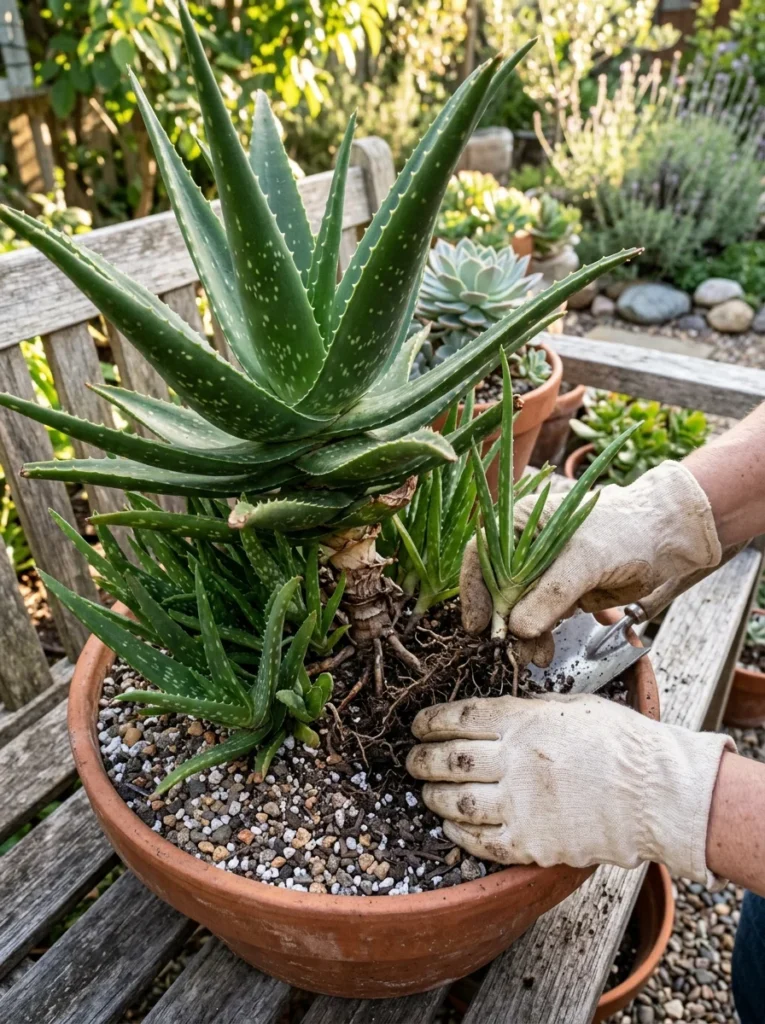
Step-by-Step: Offset Propagation
Step 1: Wait for the right size. Offsets should be at least one-third the size of the mother plant before separation. Tiny pups don’t have enough reserves to survive on their own.
Step 2: Remove the mother plant from its pot. Gently brush away soil to expose the roots connecting the pup to the mother.
Step 3: Separate carefully. Use clean scissors or pruners to cut the connecting root. If it separates easily by hand, even better. Try to keep as many roots on the pup as possible.
Step 4: Let the cut callus (if needed). If the connection point was cut, give it a day or two to dry before potting.
Step 5: Plant in fresh soil. Put the pup in its own drainage-hole pot with fresh cactus mix. Water lightly after a few days once it’s settled.
The Best Soil for Succulent Propagation
This part matters more than most people think. Succulents are not built for moisture-retaining potting mixes. They evolved in rocky, sandy, low-nutrient soil — and that’s what you need to mimic.
Your best options:
| Soil Type | Notes |
|---|---|
| Pre-made cactus/succulent mix | Convenient, widely available, decent drainage |
| Potting soil + perlite (50/50) | Budget-friendly DIY mix, very effective |
| Perlite alone | Used by some growers for leaf propagation |
| LECA / clay pellets | Advanced option, mostly for water propagation setups |
💡 Affiliate Tip: A bag of perlite is one of the best $10 investments for any succulent grower — mix it into almost anything and your drainage instantly improves.
Avoid regular potting soil on its own. It holds too much moisture and will rot your cuttings before they even get started.
When Is the Best Time to Propagate Succulents?
Spring and early summer are ideal — this is when succulents are in their active growing phase. Warmer temperatures, longer days, and natural growth momentum all work in your favor.
You can propagate in fall, but results will be slower. Winter propagation indoors is possible but requires a grow light to make up for low natural light.
The key temperature range for most succulents is 65°F to 80°F (18°C to 27°C). Too cold and roots won’t form. Too hot and cuttings dry out before they root.
How Often Should You Water Succulent Cuttings?
Less than you think. I know — it feels counterintuitive. But overwatering is the number one killer of propagating succulents.
- Leaf cuttings: Mist the soil surface every 2 to 3 days
- Stem cuttings (first week): Don’t water at all
- Stem cuttings (after rooting): Water when the top inch of soil is dry
- Offsets: Water lightly every 5 to 7 days until established
Use a spray bottle for leaf propagation. A watering can with a fine spout is great for gentle, targeted watering of cuttings.
Why Are My Succulent Cuttings Rotting
Rot is the most common propagation problem, and it almost always comes down to one of these reasons:
- ❌ Didn’t callus the cut end before planting
- ❌ Soil is too wet or doesn’t drain well
- ❌ Pot has no drainage hole
- ❌ Watering too frequently
- ❌ Cut was made with a dirty tool, introducing bacteria
The fix: dry soil, good drainage, clean cuts, patient watering. That’s it.
Why Are My Succulent Leaves Not Rooting?
A few possible culprits:
- The leaf tore instead of snapping clean at the base — that base node is required for rooting
- Too much direct sun is drying out the leaf before roots form
- Temperature is too cold (below 60°F)
- The variety you’re using doesn’t propagate well from leaves — Aloe, Aeonium, and most cacti generally don’t
Not every succulent propagates from leaves. Echeveria, Sedum, Graptopetalum, and Crassula are among the most reliable leaf-propagators.
Can You Propagate Succulents in Water?
Technically yes, but it’s not recommended. Most succulents root much better in soil. Water propagation works faster initially, but the roots that form are “water roots” — they’re fragile and often struggle when transplanted to soil.
If you want to try it: suspend the cutting above water (roots touching, leaves dry), change the water every few days, and transfer to soil as soon as roots are 1–2 cm long. Just know that soil propagation is more reliable and produces stronger plants overall.
Succulent Propagation Indoors: What You Need to Know
Propagating indoors is totally doable, but light is everything. Succulents need bright indirect light — ideally 4 to 6 hours per day near a south or east-facing window.
If your home doesn’t have great natural light (especially in winter), a grow light placed 6 to 12 inches above your propagation tray makes a massive difference. Set it on a timer for 12 to 14 hours a day.
Keep humidity in mind too. Low humidity speeds up callusing (good), but high humidity can lead to rot. Avoid using humidity domes unless absolutely necessary — and if you do, vent them regularly.
📌 New to indoor plants in general? This guide to 15 Best Indoor Plants for Beginners (That Are Actually Hard to Kill) is a great companion read if you’re setting up a whole indoor green corner.
Quick-Reference: Propagation Methods at a Glance
| Method | Difficulty | Time to Root | Best For |
|---|---|---|---|
| Leaf propagation | Easy | 2–8 weeks | Echeveria, Sedum, Graptopetalum |
| Stem cuttings | Easy–Medium | 2–4 weeks | Leggy plants, most rosette types |
| Offsets/pups | Easiest | 1–3 weeks | Aloe, Haworthia, clustering types |
| Water propagation | Tricky | 1–3 weeks (fragile) | Experimental only |
Common Succulent Propagation Mistakes (And How to Fix Them)
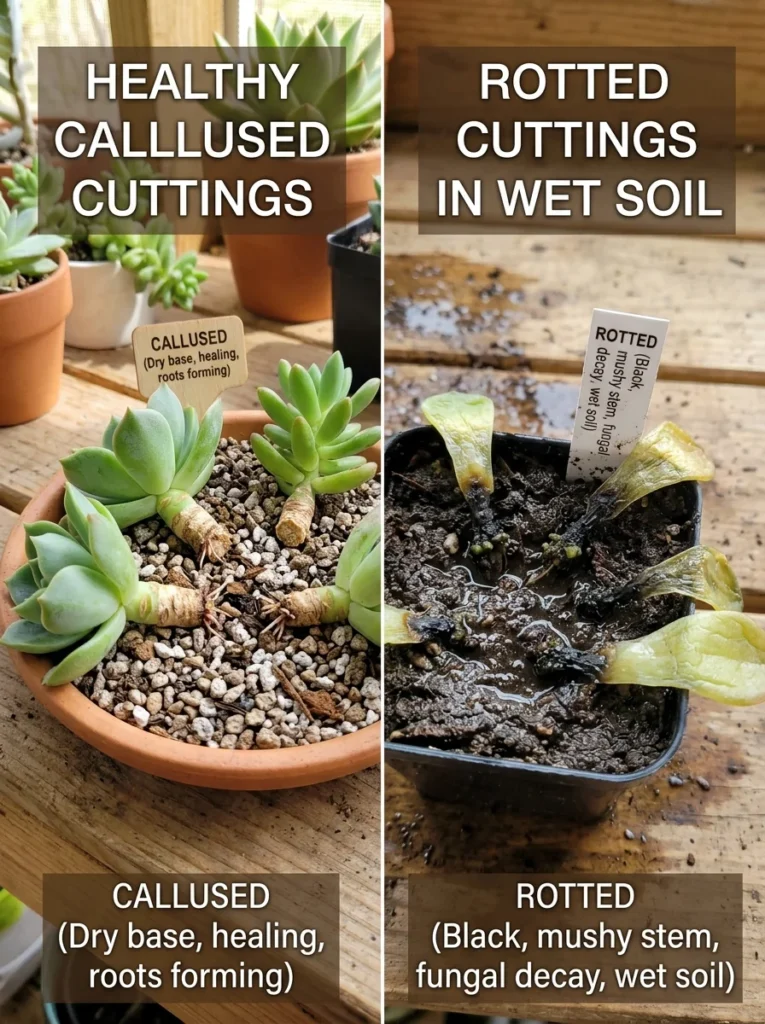
- Skipping the callus step — Always dry your cuts first. No exceptions.
- Using the wrong soil — Dense, water-retaining mixes will kill your cuttings.
- Overwatering — Mist, don’t soak. Wait longer than you think.
- Not enough light — Bright indirect light is essential, especially indoors.
- Planting too deep — Leaves should sit on top of soil, not buried in it.
- Impatience — Some cuttings take 8 weeks to show visible progress. Trust the process.
Final Thoughts: Your Succulent Army Awaits
Propagating succulents is one of those skills where the first success makes you want to fill every windowsill in your house. And honestly? That’s a perfectly reasonable outcome.
Start with a few leaves from a plant you already own. Give them time to callus. Lay them on good soil. Mist lightly. Be patient. The rest takes care of itself.
It’s not complicated — it just requires trusting a process that works, and resisting the urge to overwater everything. (We’ve all been there.)
Once you’ve got a tray full of baby succulents rooting away, you’ll understand why people get obsessed. There’s something deeply satisfying about growing a full plant from a single fallen leaf. It’s slow. It’s simple. And it’s genuinely one of the best things about keeping succulents.
Now go find your best-looking Echeveria and start twisting.
Frequently Asked Questions
How do you propagate succulents from leaves?
Gently twist a healthy leaf from the base of the stem — it must snap cleanly. Let it callus for 2 to 4 days, then lay it on dry cactus mix. Mist every 2 to 3 days and wait 2 to 8 weeks for roots and a new rosette to form.
How do you propagate succulents from cuttings?
Cut a stem with sharp, clean pruners just below a rosette. Remove lower leaves, let the cut end dry for 3 to 7 days, then plant in well-draining soil. Avoid watering for the first week, then water lightly as roots develop.
What is the easiest way to propagate succulents?
Separating offsets (pups) from a mother plant is the easiest and fastest method. The pups already have roots forming and simply need to be potted up independently.
How long does succulent propagation take?
Leaf propagation takes 2 to 8 weeks to show visible roots and a new rosette. Stem cuttings typically root in 2 to 4 weeks. Offsets establish within 1 to 3 weeks.
When is the best time to propagate succulents?
Spring and early summer are ideal, when plants are in active growth. Indoor propagation can work year-round with a grow light.
Do succulent cuttings need to callus before planting?
Yes — this is one of the most important steps. A callused cut end resists rot and moisture. Always allow 2 to 7 days of drying time before any cutting touches soil.
Can you propagate succulents in water?
Yes, but it’s not recommended as the primary method. Water roots are fragile and often struggle when transferred to soil. Soil propagation produces stronger, more resilient plants.
What soil is best for succulent propagation?
A fast-draining cactus/succulent mix, or a 50/50 blend of potting soil and perlite. Avoid dense, moisture-retaining soils.
How often should you water succulent cuttings?
Very lightly. Mist leaf cuttings every 2 to 3 days. Avoid watering stem cuttings for the first week, then water only when the top inch of soil is dry.
Why are my succulent cuttings rotting?
The most common causes: skipping the callus step, overwatering, poor drainage, pots without drainage holes, or cuts made with dirty tools.
Why are my succulent leaves not rooting?
The leaf likely didn’t separate cleanly at the base node, or the variety you’re using doesn’t propagate well from leaves (Aloe and Aeonium are common examples).
Can all succulent types be propagated from leaves?
No. Echeveria, Sedum, Graptopetalum, and Crassula are reliable leaf-propagators. Aloe, Aeonium, and most cacti generally don’t propagate from leaves.










2 thoughts on “How to Propagate Succulents: The Ultimate Beginner’s Guide (That Actually Works)”